The CNB hiked the policy rate to 3.75% and will likely keep them there until the autumn
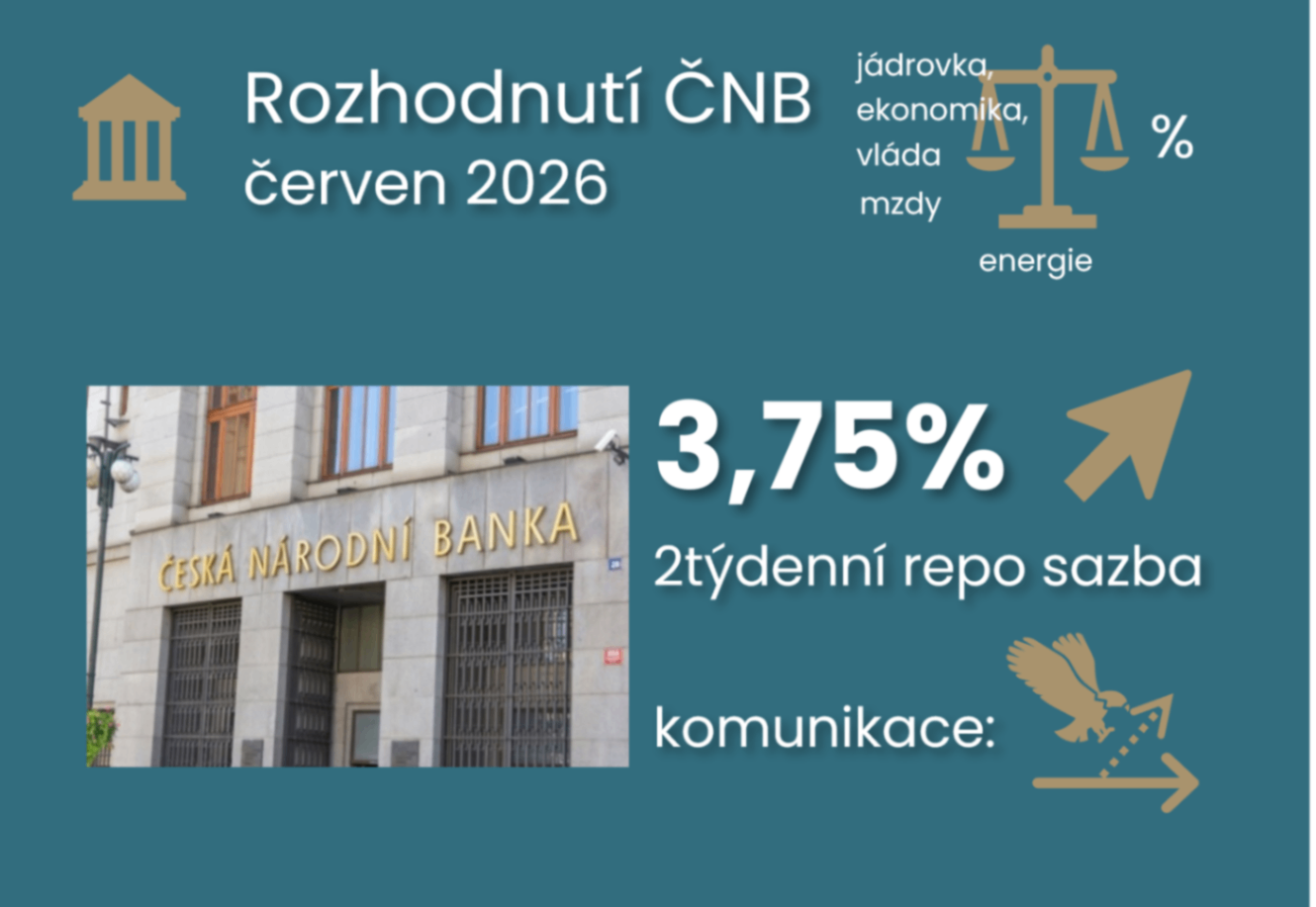
Today's decision did not surprise me because of the two factors I highlighted in the outlook: Low inflation is misleading. Domestic pressures may prompt the CNB to raise rates.
The CNB’s Bank Board will likely wait for further economic data to assess whether domestic inflationary pressures are easing. If not, or if we see a more accommodative fiscal policy outlook this summer, then the CNB may return to discussing another modest interest rate hike to 4% in September or November. If this is accompanied by persistently strong growth in real estate prices and continued brisk growth in lending activity—particularly for housing and consumer spending— then the debate on interest rates may be accompanied by an autumn debate on a possible further tightening of the CNB’s macroprudential policy. That is, in a situation where strong growth in demand for mortgages and real estate continues, despite the CNB’s stricter requirements regarding so-called investment mortgages, and in the absence of structural changes on the supply side in the construction sector.
A return of energy prices to an upward trajectory could also reignite the discussion on raising interest rates. However, this would require continued inflationary pressures from the domestic economy. Conversely, if energy prices surprise on the upside and fall back to February levels, and the Czech economy curbs the strong, inflationary wage growth that is currently not accompanied by productivity growth, then the central bank could shift to a dovish stance and prepare to cut interest rates at the turn of this year and next.
Today’s decision should not cause a shock to the yield curve, as it has already priced in up to two future interest rate hikes to 4%. However, three-month rates—and thus short-term corporate financing—will rise, though not sharply above the CNB’s 2-week repo rate, as any further increase in the CNB’s interest rate is likely to be gradual.
The middle and longer end of the yield curve, which has a greater impact on investment loans, mortgage rates, and government bond yields, will react more gradually and wait for Czech data on June consumer prices, which will be released on July 7 and 13. However, further developments in the Strait of Hormuz—as well as a potential shock from movements in global yields, whether in the U.S. or Europe, due to a reassessment of inflationary pressures and fiscal policy developments there—could provide a stronger impetus to these “longer-term” interest rates. If the central bank succeeds in dampening core inflation (which, of course, would also be accelerated by a more proactive government policy on the supply side of the economy), then this may be reflected in a slight decline at the longer end of the yield curve.
Six of the seven members of the Bank Board voted in favor of today’s decision. The minutes of the meeting on Thursday, June 25, will offer further insight; they will serve as an interesting supplement to the Financial Stability Report and the minutes of the meeting on the setting of the countercyclical buffer (+0.25 p.b. to 1.5% starting in July 2027—see commentary here: CNB Tightens Banks’ Capital Buffer. Responds to Faster Loan Growth and New Risks).
