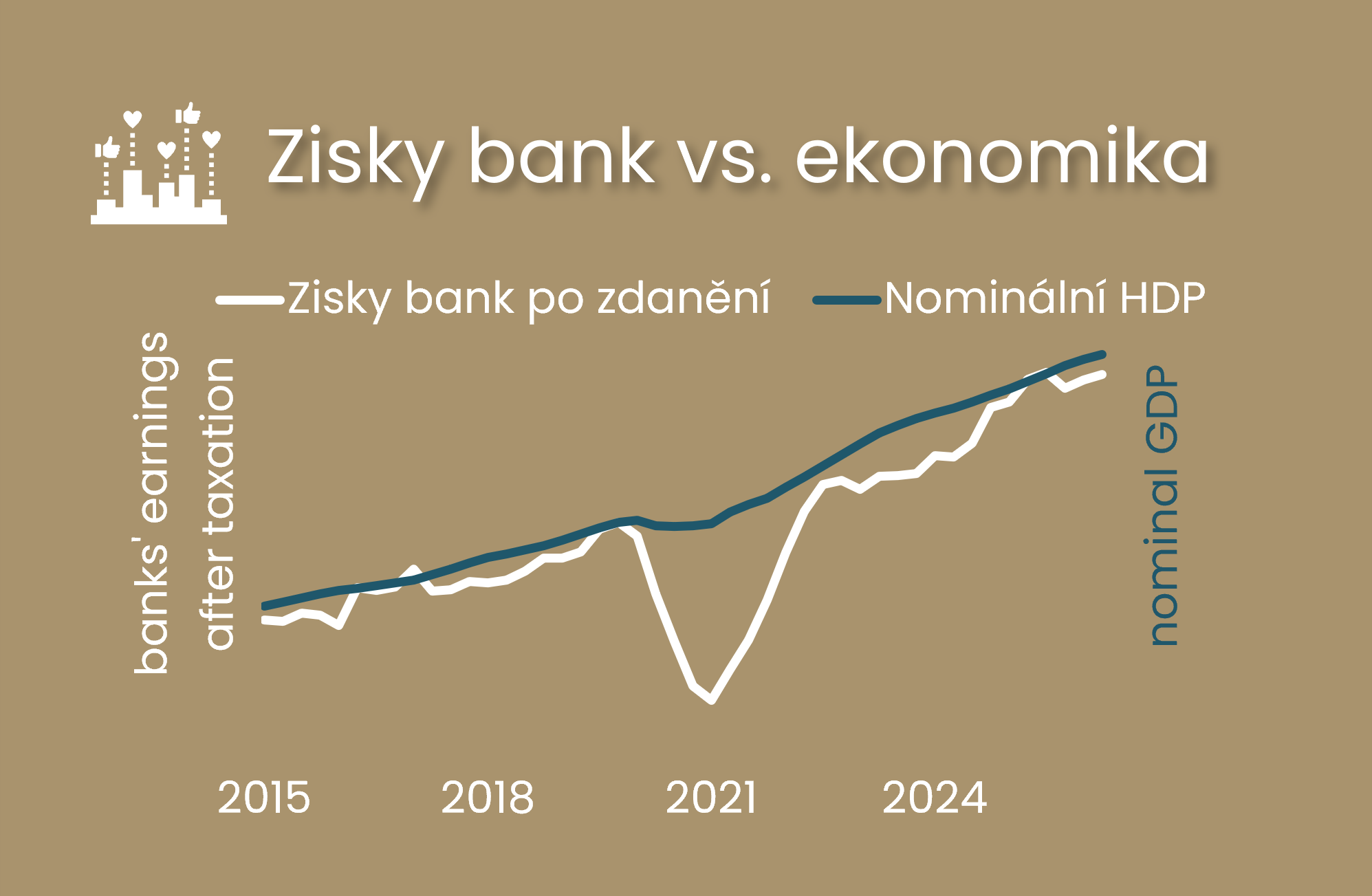
The growth in banks’ nominal profits must be viewed in the context of the overall economic trend. Compared with the pre-pandemic year of 2019, bank profits in previous years grew more slowly than nominal GDP, household wage income, and government tax revenues. This depends not only on the base year but also on whether we are comparing the current level or the average annual amount of bank profits over the entire period, in which case the gap relative to the rest of the economy is more pronounced. Nevertheless, it is true that the banking sector’s growing profits are not driven by net interest income, but rather by cost efficiency—thanks in part to the solid performance of the Czech economy.
Jaromír Šindel
14. 10. 2026
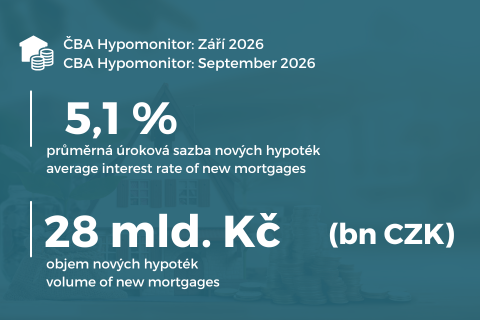
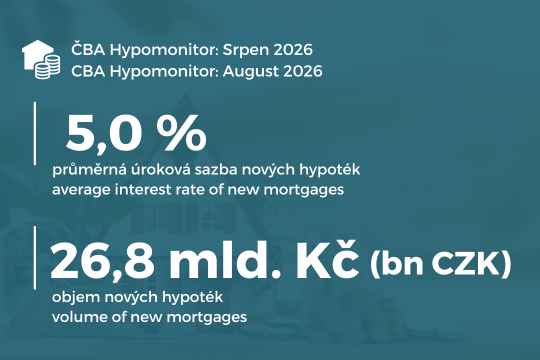
Compared to August, their volume increased by 5%, even though in recent years it has typically declined month-over-month in September
Jaromír Šindel
08. 10. 2026
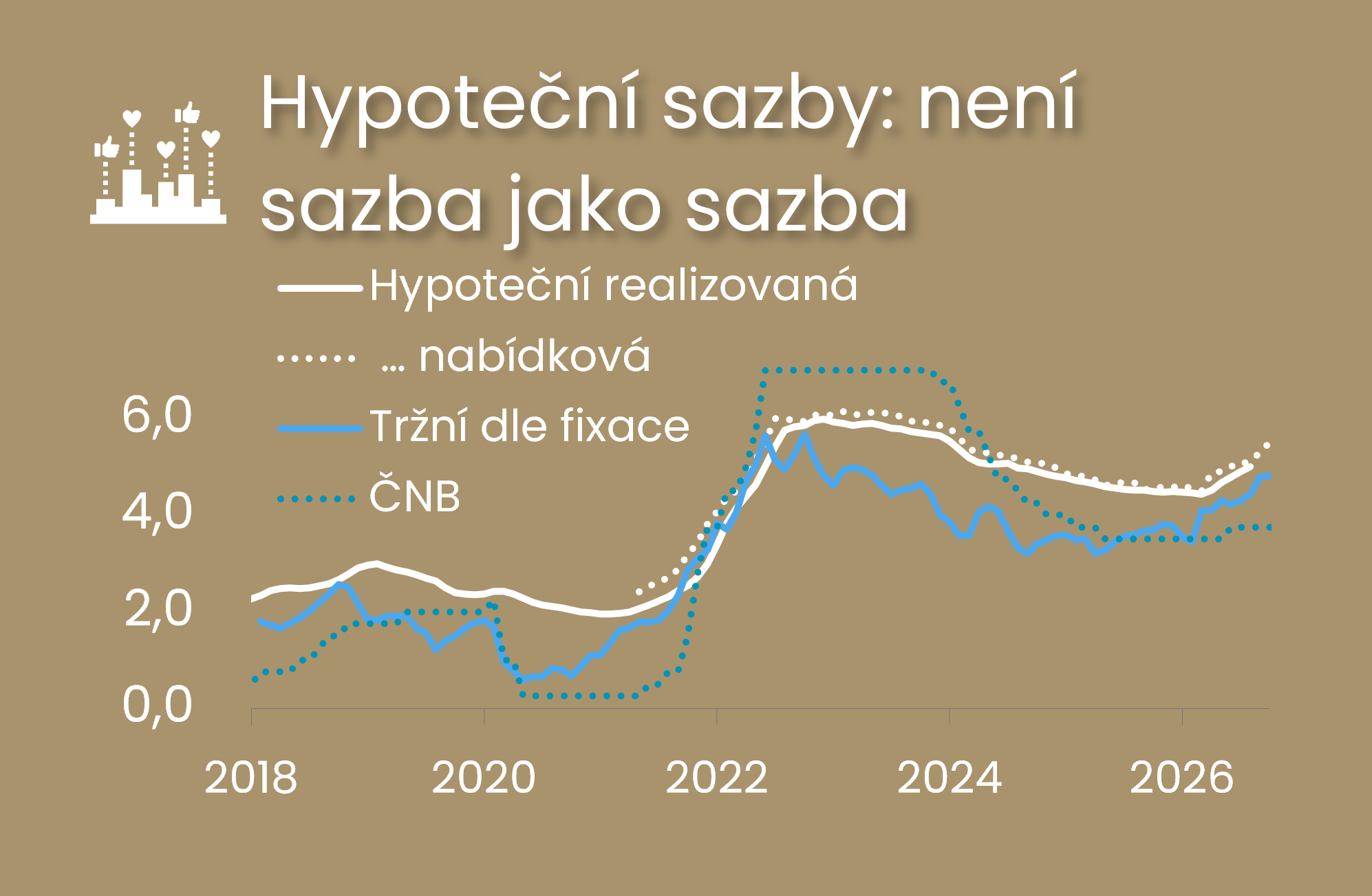
The market price of three-year funds has risen by approximately 1.4 percentage points since February, while mortgage rates have risen by roughly one point. The rise in market rates has thus been only partially reflected in mortgage rates so far. It is important to distinguish between the aggregate offered rate, the rate for the most commonly chosen fixed-rate term, and the interest rate that the client actually negotiates. The spread between mortgage and market rates—which should not be confused with net profit—has long been among the lowest in the EU for banks in the Czech Republic and has even fallen below its long-term average in recent years. This is also consistent with banks’ lower net interest margin, expressed as the ratio of net interest income to assets.
Jaromír Šindel
06. 10. 2026
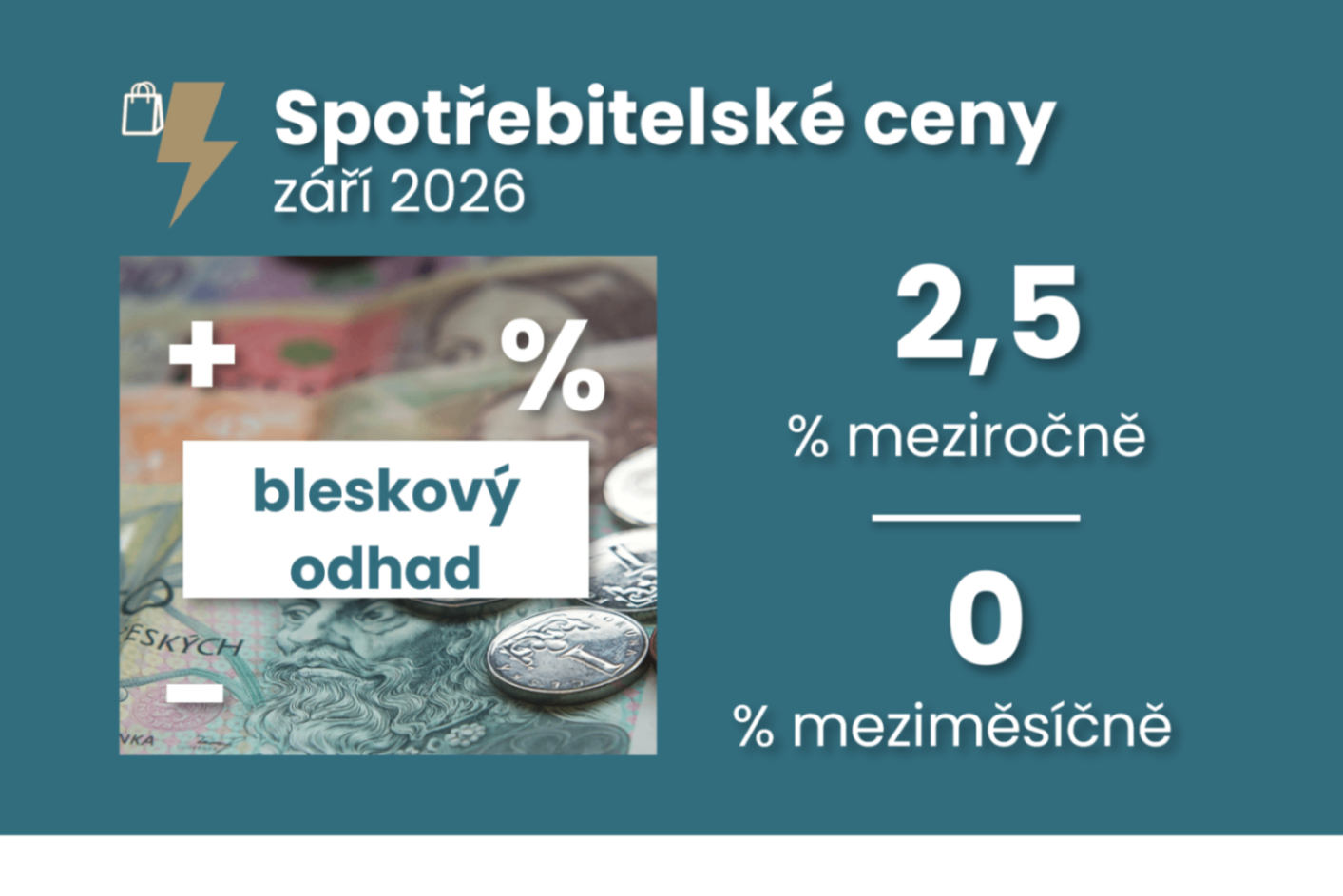
The acceleration in September inflation from 1.9 to 2.5 percent year-over-year is roughly half due to last year’s low base. Although consumer prices remained flat month-over-month in September, this still represents a stronger trend than is typical for this month. The structure of price growth also deserves attention. Food prices continue to have a disinflationary effect, but their decline was not enough to offset higher prices for alcohol, fuel, and energy, nor the persistent domestic price pressures. Real estate asking prices returned to a stronger pace in the third quarter, which is, however, consistent with a milder future 8 percent year-over-year growth. If detailed data confirm that domestic inflationary pressures remain elevated despite slightly higher suvbey-based unemplyoment, a hike in the CNB’s base rate from 3.75 to 4 percent at the November meeting will be a relevant option.
Miroslav Zámečník
02. 10. 2026
Strong demand for loans and excellent repayment performance on mortgages and business loans continued into the second month of the summer vacation season
Jaromír Šindel
30. 09. 2026
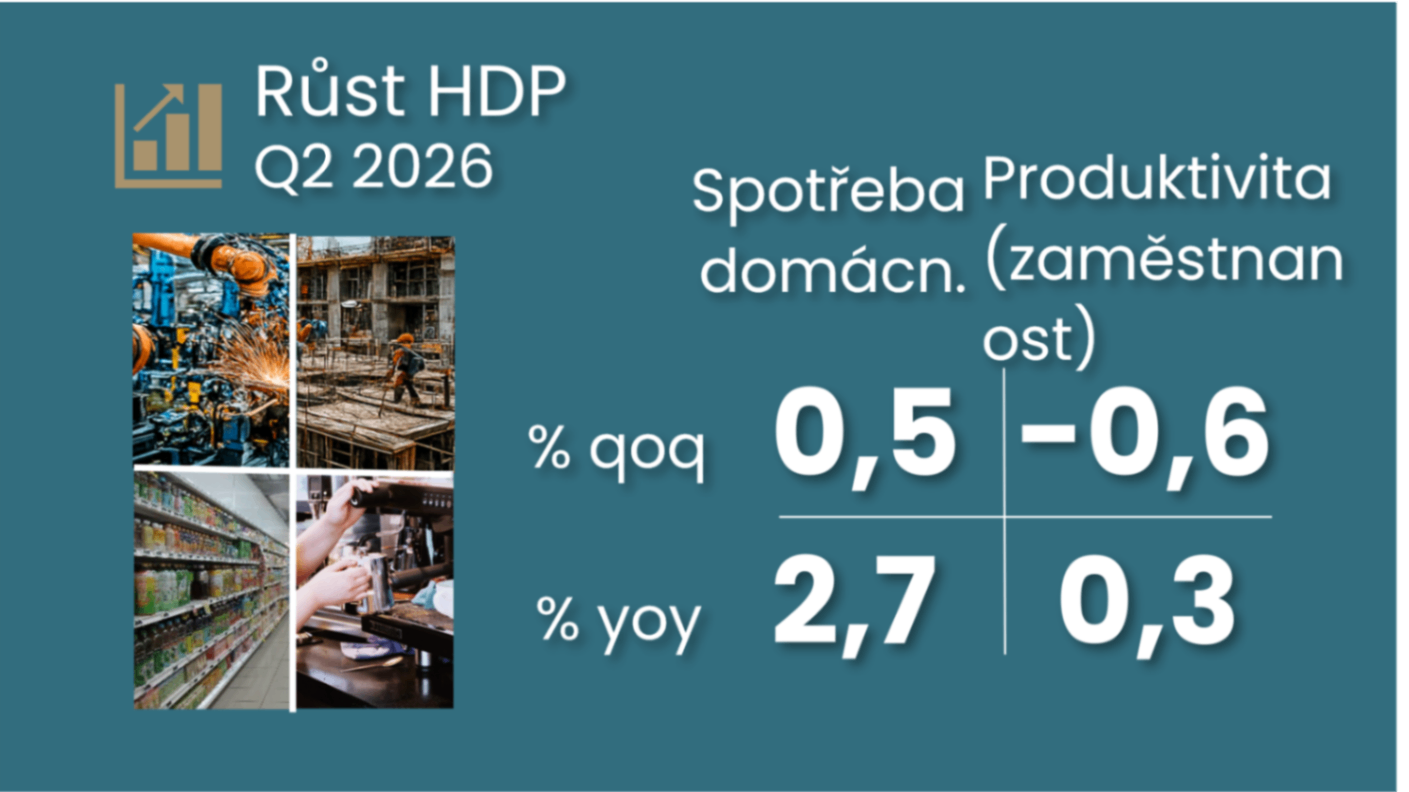
The Czech economy grew by 0.3% quarter-over-quarter and 1.8% year-over-year in the second quarter. This is a slower pace than before, and growth for the first half of the year stood at 0.6%. The weaker GDP growth is also consistent with slower growth in value added and productivity. The latter reflects continued employment growth, which is now contributing to high growth in unit labor costs. Meanwhile, households are maintaining a high savings rate, which returned to 19.9% in the second quarter. It also remains true that fixed investment is driven by the construction sector, while investment in ICT, machinery, and weapons declined in the second quarter, falling even below pre-COVID levels.
Jaromír Šindel
29. 09. 2026
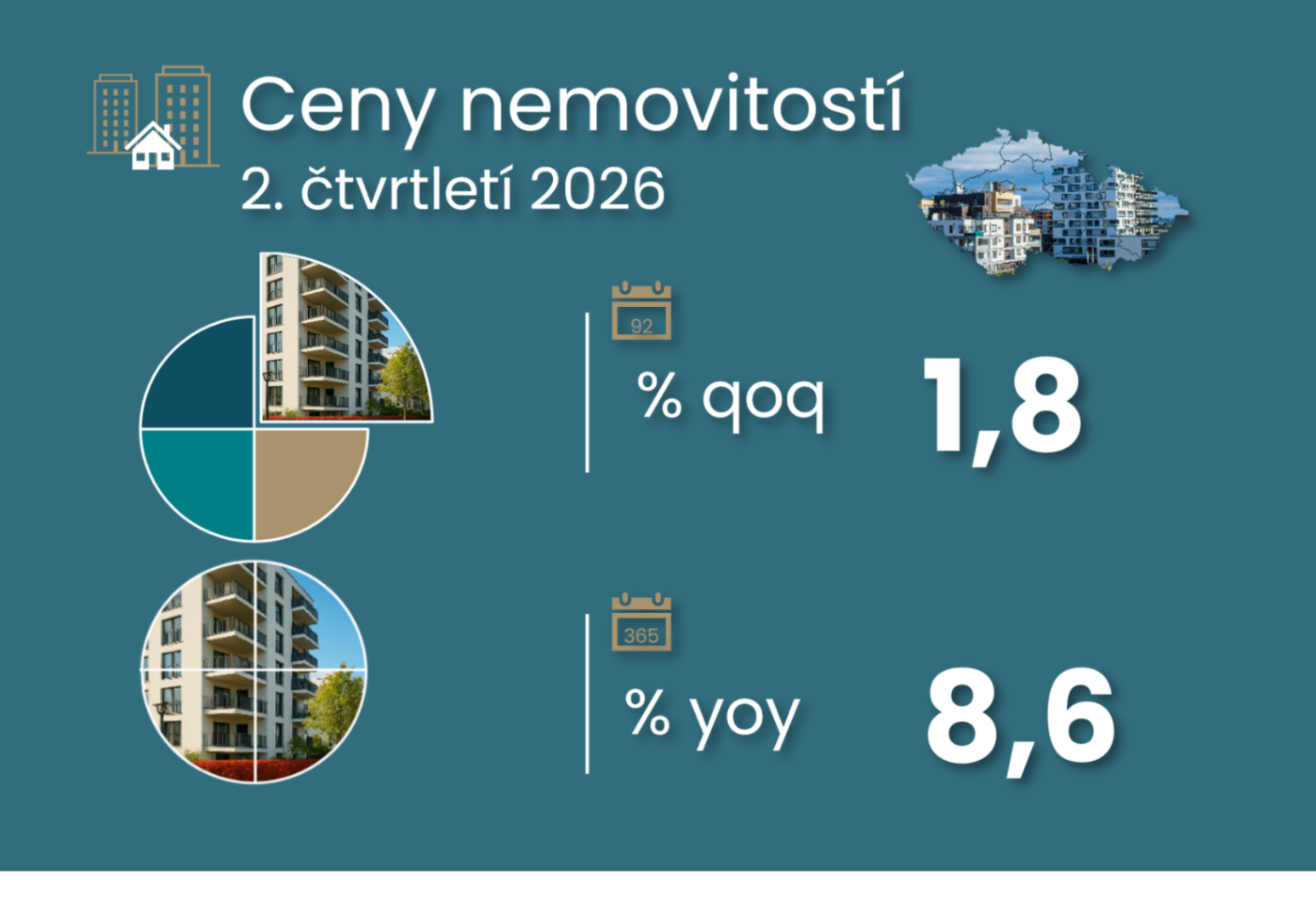
The growth in real estate prices slowed slightly in the second quarter. Year-over-year, real estate prices were up 8.6%, while in the first quarter they had risen by 10%. The slowdown is primarily due to a slight quarter-over-quarter decline in prices for new properties in Prague. Older housing, on the other hand, continues to maintain roughly 10% year-over-year and annualized growth. The price and cost index for owner-occupied housing traditionally showed a weaker pace, but the 1.6% increase ranks among the stronger ones over the past two years. Over the past fifteen years, the increase in the cost of acquiring real estate—including self-help construction and repairs (so-called “owner-occupied housing”)—has accounted for 51% of the increase in the real estate index, i.e., the house price index. While quarterly acceleration of disposable income fit the real estate price growth, its annual growth reamined weaker.
Jaromír Šindel
24. 09. 2026
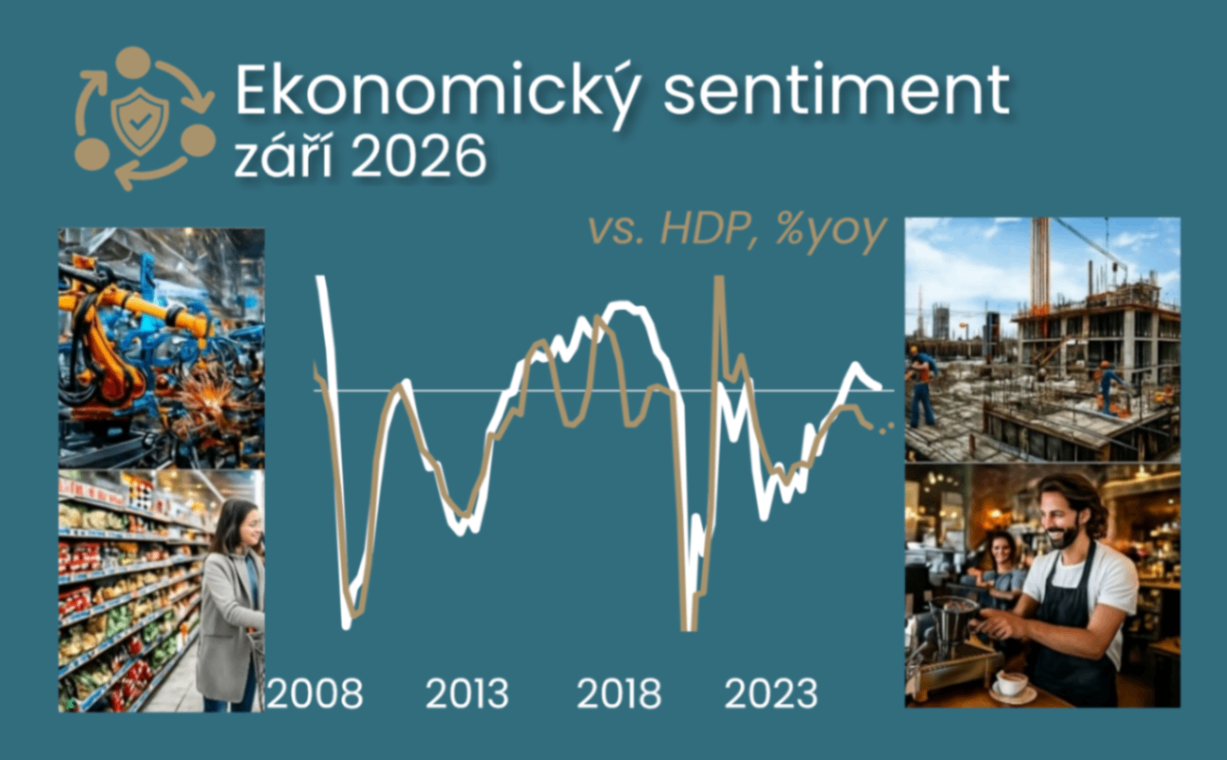
September confidence indicators showed a slight deterioration in overall economic sentiment, but they do not represent a significant negative signal for the economic outlook. Sentiment in the services sector, in particular, is deteriorating, while the retail sector and consumers are sending more favorable signals. Moreover, improved expectations in the industrial sector suggest that the September decline in sentiment may be temporary. For the CNB, in addition to the slight weakening of confidence, slightly more favorable employment expectations and higher price expectations—particularly in the construction and services sectors—will also be important.
Jaromír Šindel
21. 09. 2026
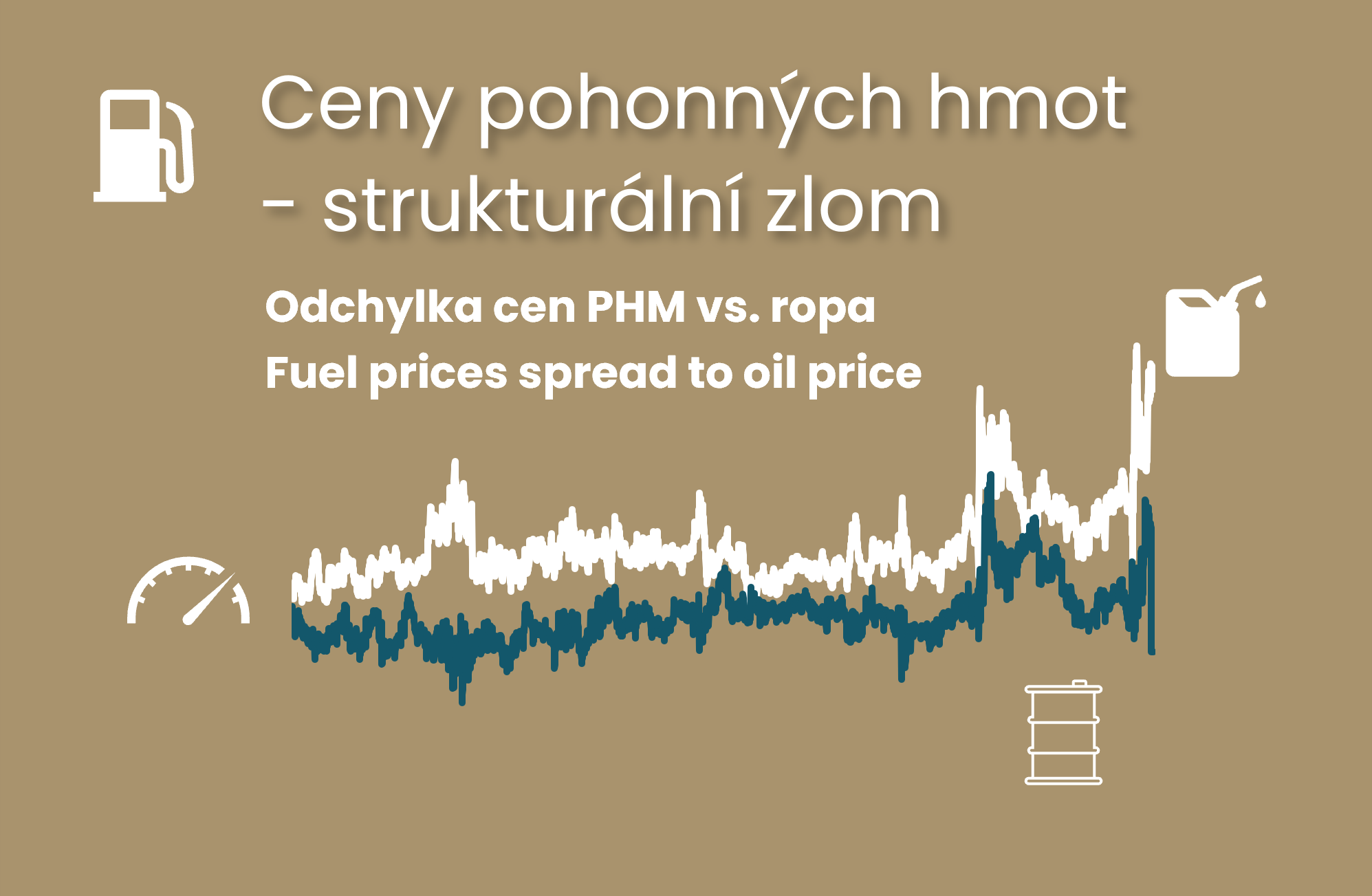
Since 2022, the relationship between oil prices and fuel prices has changed significantly. A model based on pre-war correlations would currently indicate that gasoline would be about eight crowns cheaper and diesel nearly 12 crowns cheaper. However, the data suggest that the bulk of the difference does not arise from average gas station margins, but rather in the European refining and wholesale markets.
The analysis breaks down price markups along the supply chain, describes structural problems in the Czech and Central European diesel markets, and also examines the possibility of a fiscally neutral excise tax structure during oil price shocks. On the supply side, there is uncertainty regarding supplies, disruptions in ties to Russian oil, and limited capacity, while Czech and Central European demand for diesel remains strong. This combination is putting upward pressure on prices.
Jaromír Šindel
17. 09. 2026
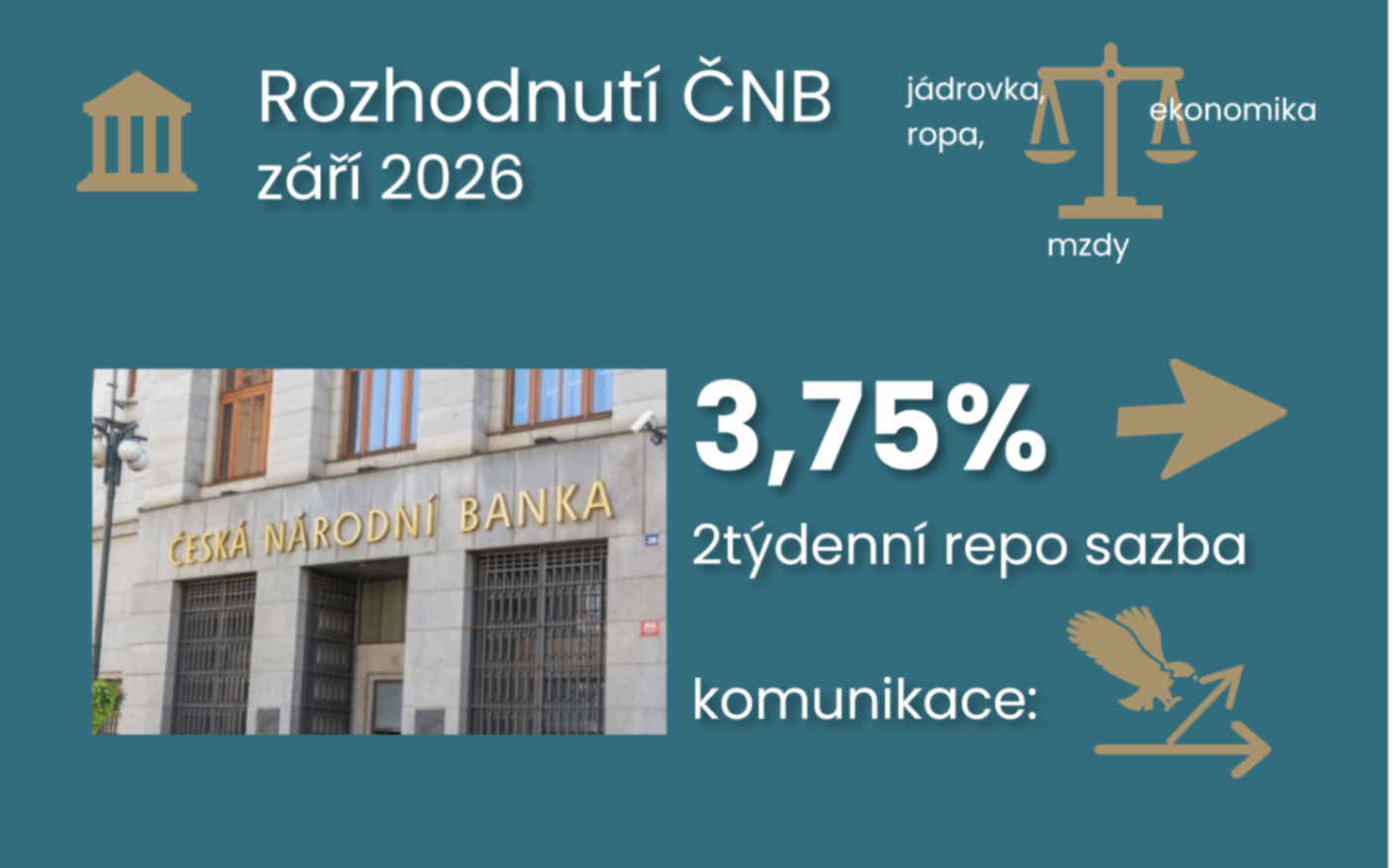
The September decision was unanimous, and the Bank Board did not consider it necessary, for the time being, to follow up on the June rate hike with a further tightening of monetary conditions. Furthermore, financial conditions are tightening due to rising longer-term market rates, which are also affecting lending. In November, the CNB will revisit the question of whether to keep the rate at 3.75% or raise it to 4%. The second option seems more likely to me, unless there is a significant cooling off in domestic data or a normalization of commodity prices. Meanwhile, the market expects an even more pronounced rate hike to 4.75% over a nine-month horizon. However, the Czech yield curve is also significantly influenced by foreign rates, partly due to domestic factors. The CNB’s leeway to not place greater weight on these developments will depend primarily on the future trajectory of core inflation and the koruna exchange rate, the importance of which was also emphasized by the governor.
Jaromír Šindel
16. 09. 2026
Activity declined by 13 percent in terms of volume compared to July
Jaromír Šindel
14. 09. 2026
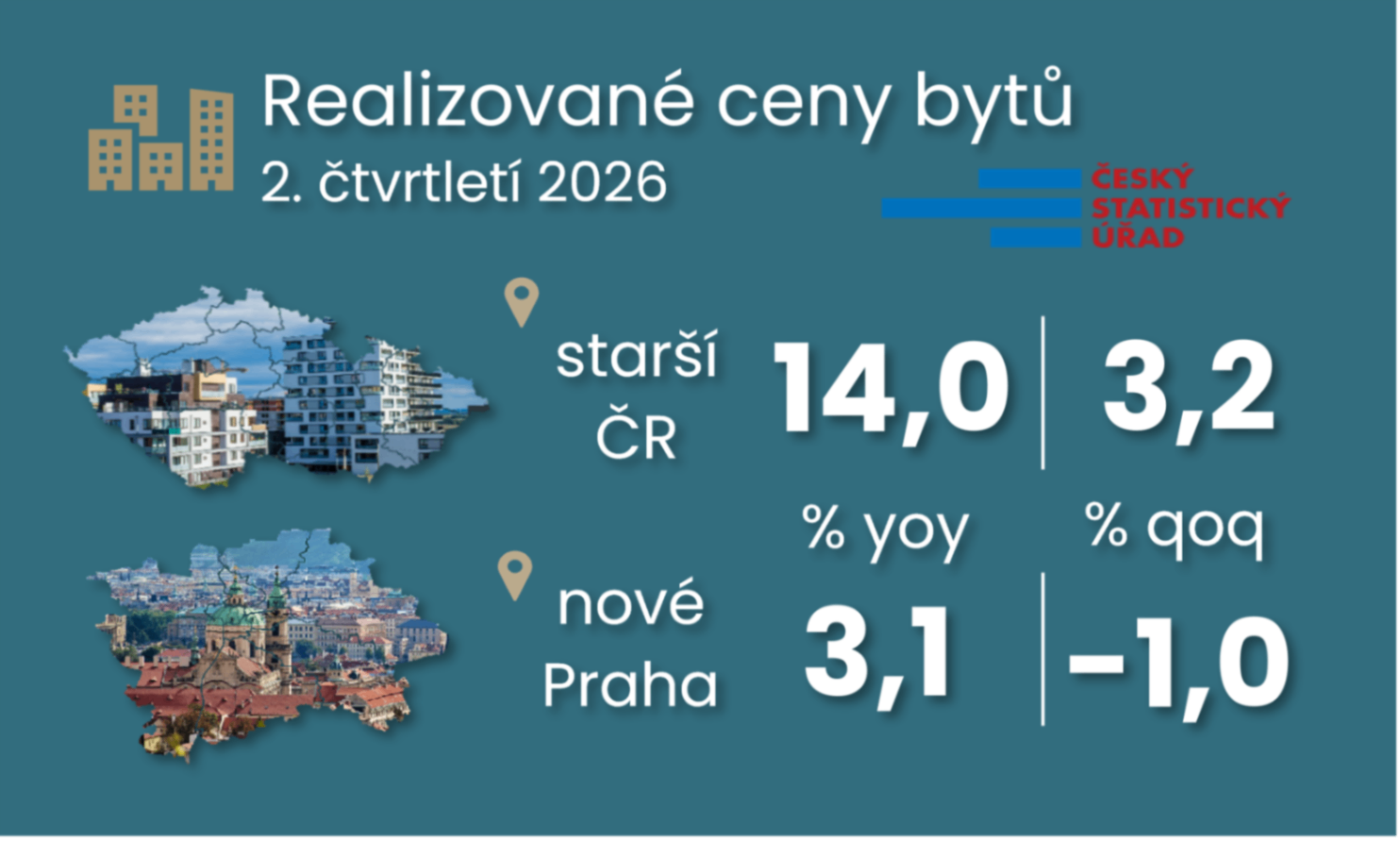
According to my estimate, the overall year-on-year growth in realised residential property prices slowed from 14.0% to 12.3% in the second quarter. Prices of existing flats nevertheless continued to rise at a very strong pace, while prices of new flats in Prague fell by 1% quarter on quarter according to the Czech Statistical Office, leading to a marked slowdown in their annual growth rate. However, the surprising decline in Prague new-build prices is not broadly corroborated by transaction data from Flat Zone, and I would therefore not yet interpret it as the beginning of a more pronounced cooling of the housing market, although the gradual normalisation of the mortgage market should, with some lag, also be reflected in housing market developments. This should be transmitted through two channels – the CNB's macroprudential regulation and higher market interest rates.
Jaromír Šindel
10. 09. 2026
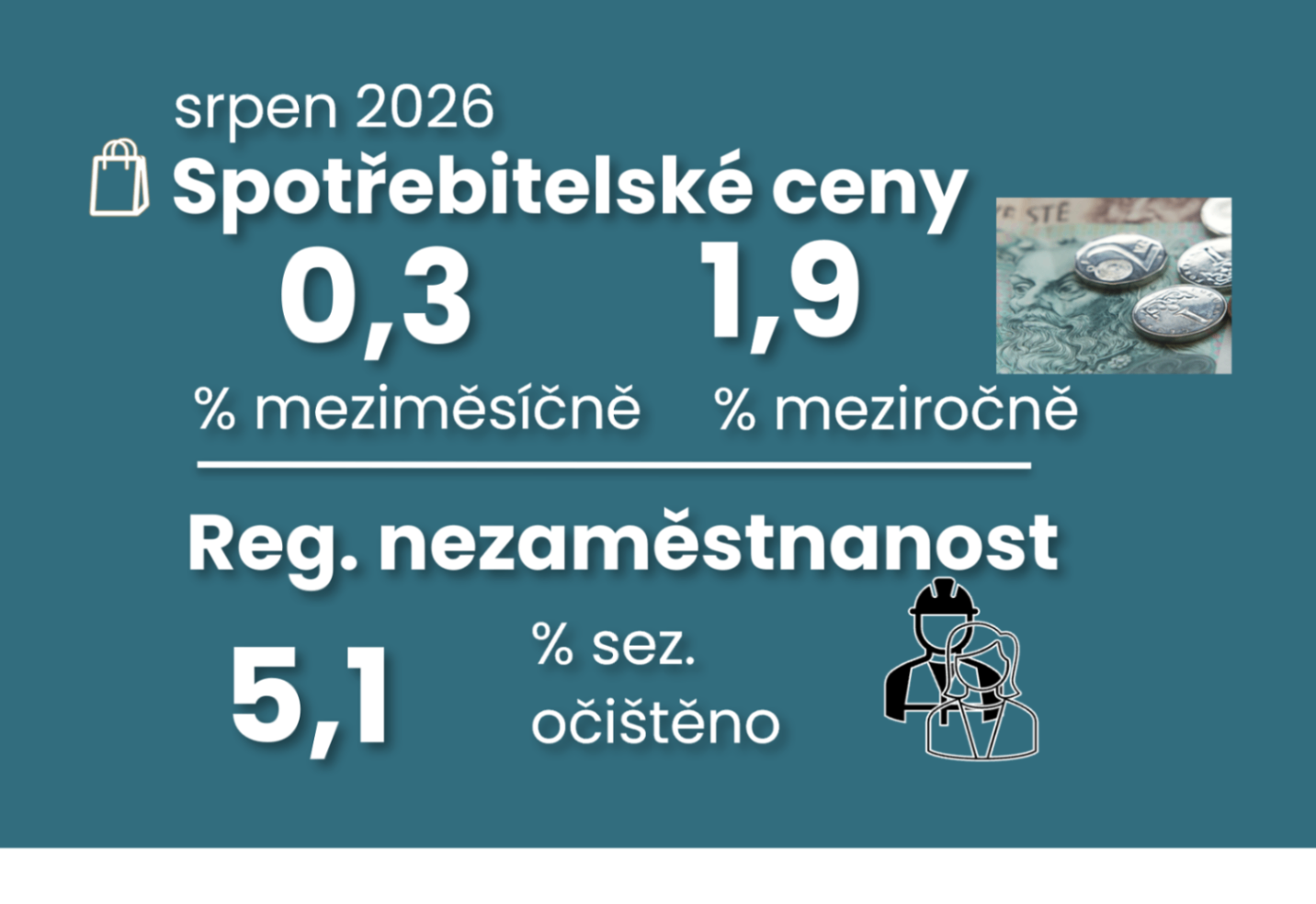
Inflation in August accelerated slightly to 1.9% year-over-year, but a more significant problem remains beneath the surface: core inflation remains at 3%, and service prices have accelerated again on a month-over-month basis. Labor market data point to a mild pro-inflationary risk rather than a disinflationary one. The CNB may leave interest rates unchanged at 3.75% in September and wait impatiently for the November forecast.
Jaromír Šindel
07. 09. 2026
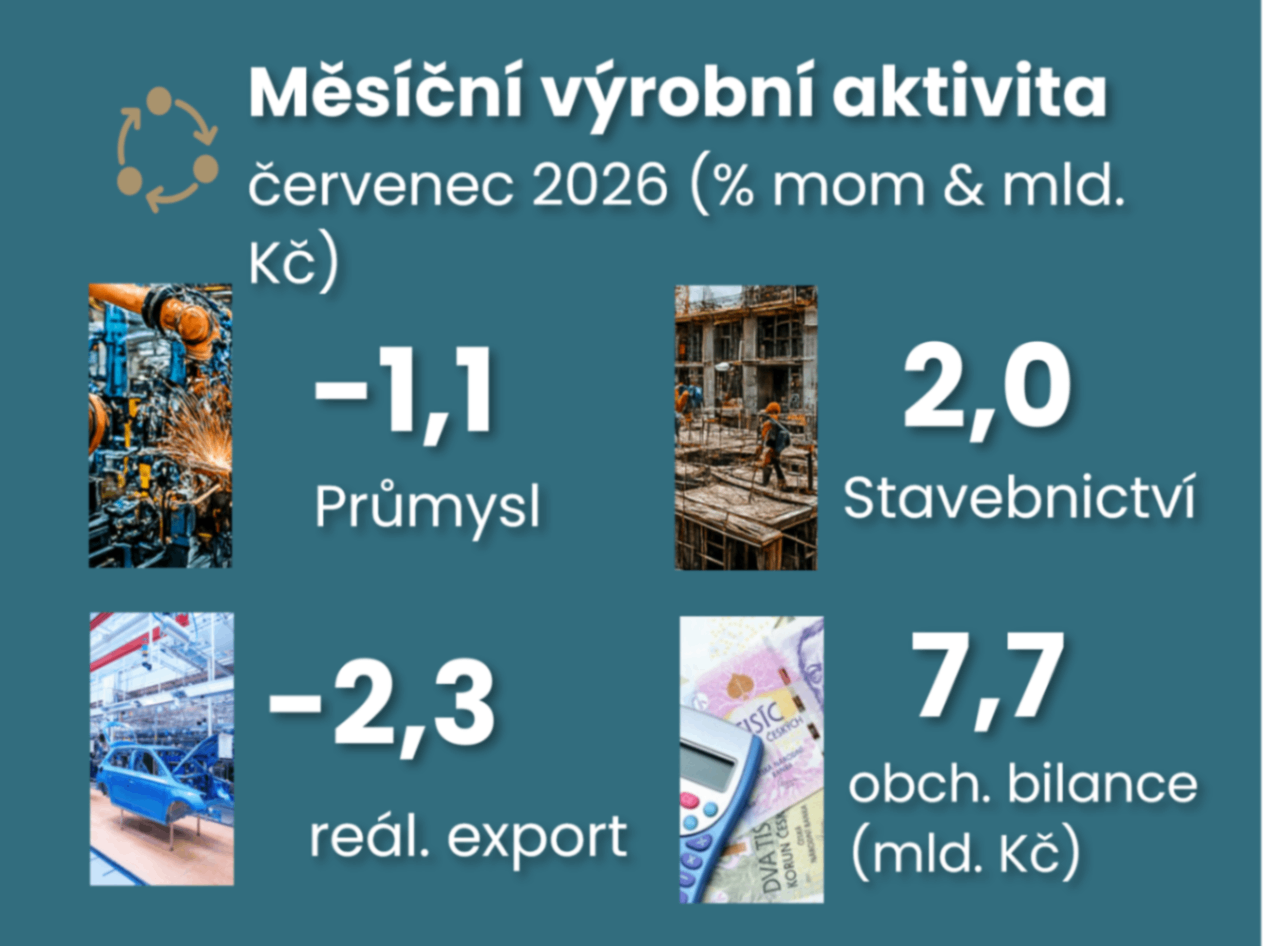
July’s industrial and foreign trade figures pointed to a weaker start to the third quarter. The overall economic picture, however, remains mixed: weaker industrial output and exports contrast with more resilient construction, retail, and services. The data thus pose a certain risk to the expected modest recovery of the Czech economy in the third quarter, projected at 0.6% quarter-over-quarter. Moreover, the weakness in July’s industrial output was not across the board, and a solid trend in production outside the automotive sector and energy-intensive industries remains evident, as confirmed by export figures. Foreign trade remains under pressure from higher energy prices. Trends in residential construction remain favorable for both housing starts and completions, despite renewed weakness in building permits.
Jaromír Šindel
04. 09. 2026
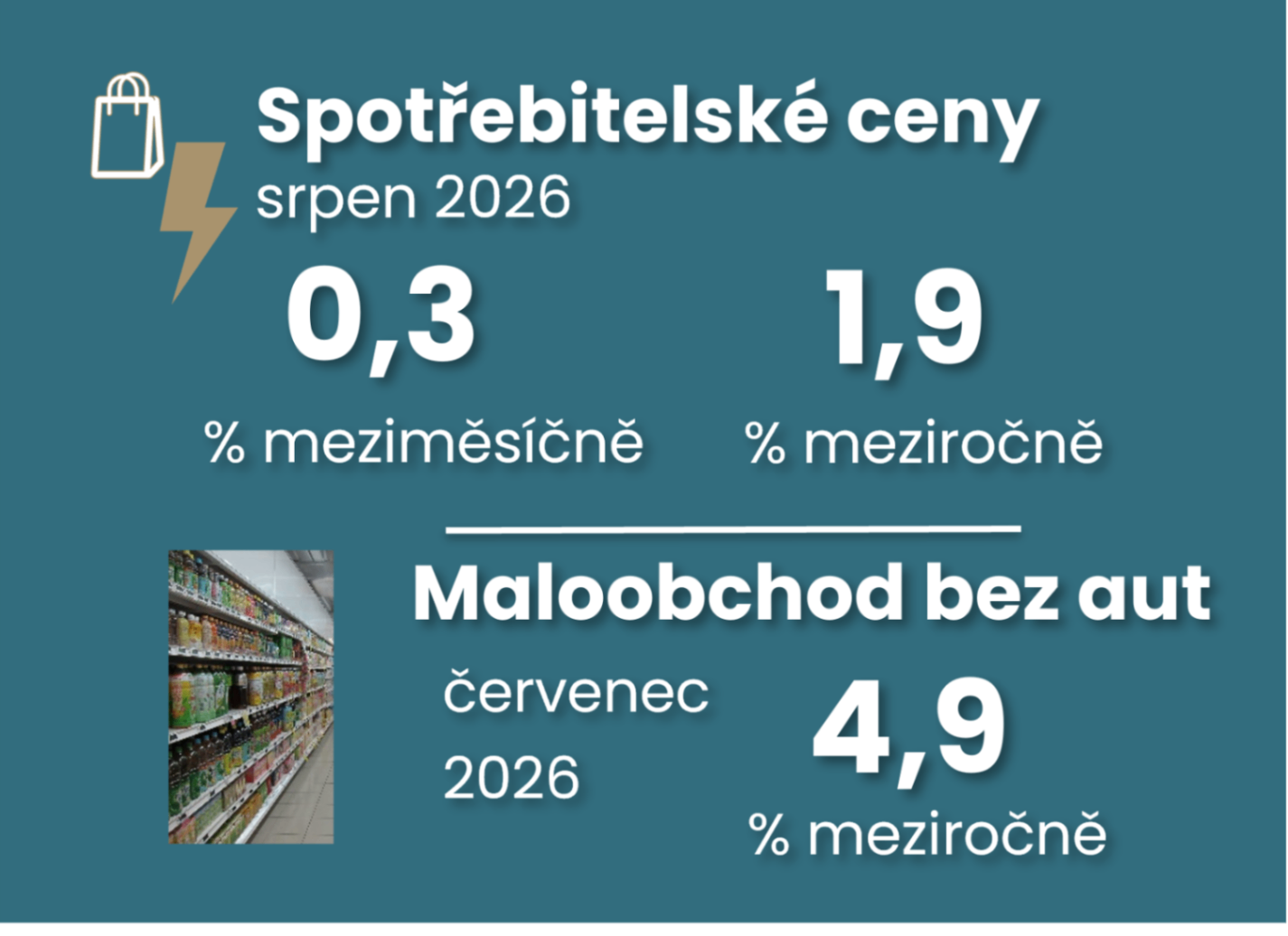
Consumer prices rose by 0.3% month-over-month in August, and year-over-year inflation accelerated to 1.9%. The higher rate of growth was driven mainly by fuel prices, while food prices had the opposite effect. According to preliminary estimates, core price pressures eased slightly. At the same time, July retail sales (excluding autos) returned to stronger figures, reflecting a sustained strong trend in retail and services. Inflation, adjusted for wage growth, brings some relief to the central bank, but momentum in retail sales and wages will likely keep the CNB in hawkish mode.
Jaromír Šindel
03. 09. 2026
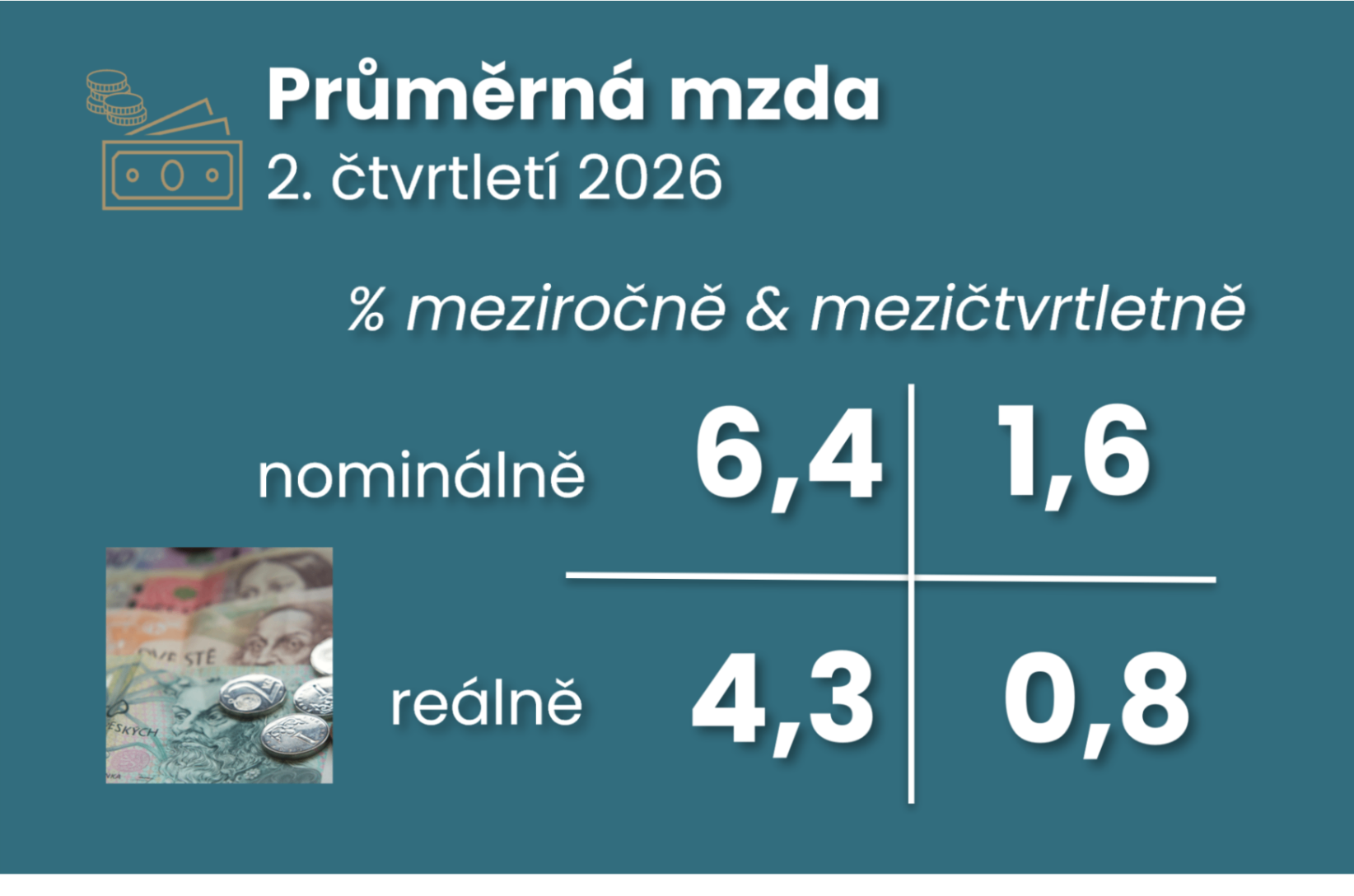
Wage growth accelerated to 6.4% year-over-year in the second quarter; however, following a significant revision of first-quarter data, the pace is much more moderate than the original figures suggested or the central bank had expected. Real wages, however, continue to grow briskly, and the persistently strong quarter-over-quarter growth in nominal wages—at 1.6%—maintains the risk of inflation. For the CNB, the wage data thus represent a less hawkish signal than before, but not a reason to change the current monetary policy stance, even in light of the planned stronger wage growth in the public sector.
The CBA Forecast is compiled quarterly as a consensus of forecasts from selected domestic banks. A basic summary of the current CBA Forecast, presented in a few figures and comments, is outlined below; detailed information can be found in the “CBA Forecast” section.
Macroeconomic Forecast for the Third Quarter of 2026
CBA MACROECONOMIC FORECAST FOR THE THIRD QUARTER OF 2026
19. 08. 2026
August 2026: The Czech economy continues to grow steadily, but core inflation pressures will keep interest rates higher
CBA Macroeconomic Forecast for 3Q26 (Part 1): Interview with Economist Petr Dufek
20. 08. 2026
The Czech economy will grow by 2% this year and accelerate to 2.3% next year. This is the forecast in the latest outlook from the Czech Banking Association’s Forecast Panel. Overall growth remains virtually unchanged from the May forecast, but its structure has shifted: the outlook for household consumption, investment, and exports is more favorable, supported by stronger wages, lending activity, and more resilient foreign demand.
CBA Macroeconomic Forecast for Q3 2026 (Part 2): An Interview with Economist Adam Ruschka
21. 08. 2026
The Czech Banking Association’s forecasting panel expects the Czech economy to grow by 2% this year. Growth is projected to accelerate to 2.3% in 2027. These expectations are in line with the May forecast, but the structure has changed: the outlook for household consumption, investment, and exports is more favorable, supported by stronger wages, lending activity, and more resilient foreign demand.
Chief Economist of the Czech Banking Association (Part 15)
Jaromír Šindel
31. 07. 2026
This time, the discussion focused on current developments in the Czech economy, the situation in industry, household consumption, and the high savings rate. CBA Chief Economist Jaromír Šindel also discussed June’s very low inflation, the Czech National Bank’s monetary policy, and the expected trajectory of interest rates in light of domestic and foreign economic risks.
Chief Economist of the Czech Banking Association (Part 14)
Jaromír Šindel
11. 06. 2026
This time, we discussed the performance of the Czech economy and the slower quarter-over-quarter GDP growth, which was primarily caused by a negative contribution from foreign trade. Jaromír Šindel, chief economist at the Czech Banking Association (CBA), also spoke about stagnating productivity and the related inflation trends. We also discussed possible steps the central bank might take.
Jaromír ŠindelChief Economist CBA
Jaromír Šindel is the Chief Economist of the Czech Banking Association, where he uses his extensive experience in the field of macroeconomic analysis and forecasting. Prior to that, he worked for more than 17 years as the Chief Economist at Citibank. In 1999 - 2004, he received a master’s degree from the University of Economics Prague with a major in economic policy and continued to focus on this field during his doctoral studies, which he completed in 2011.
During his time at Citibank (2007-2024), he worked mainly on macroeconomic analysis with a focus on economic trends in the Czech Republic, Slovakia and Slovenia. He prepared forecasts of economic developments and economic policy, including the impact on financial markets. Related to this, he also monitored global economic and political trends and their impact on the local economic situation.