Economics
Latest data on the domestic economy, from gross domestic product to unemployment and inflation
(3mma index compared to January–February 2020)
July 2026
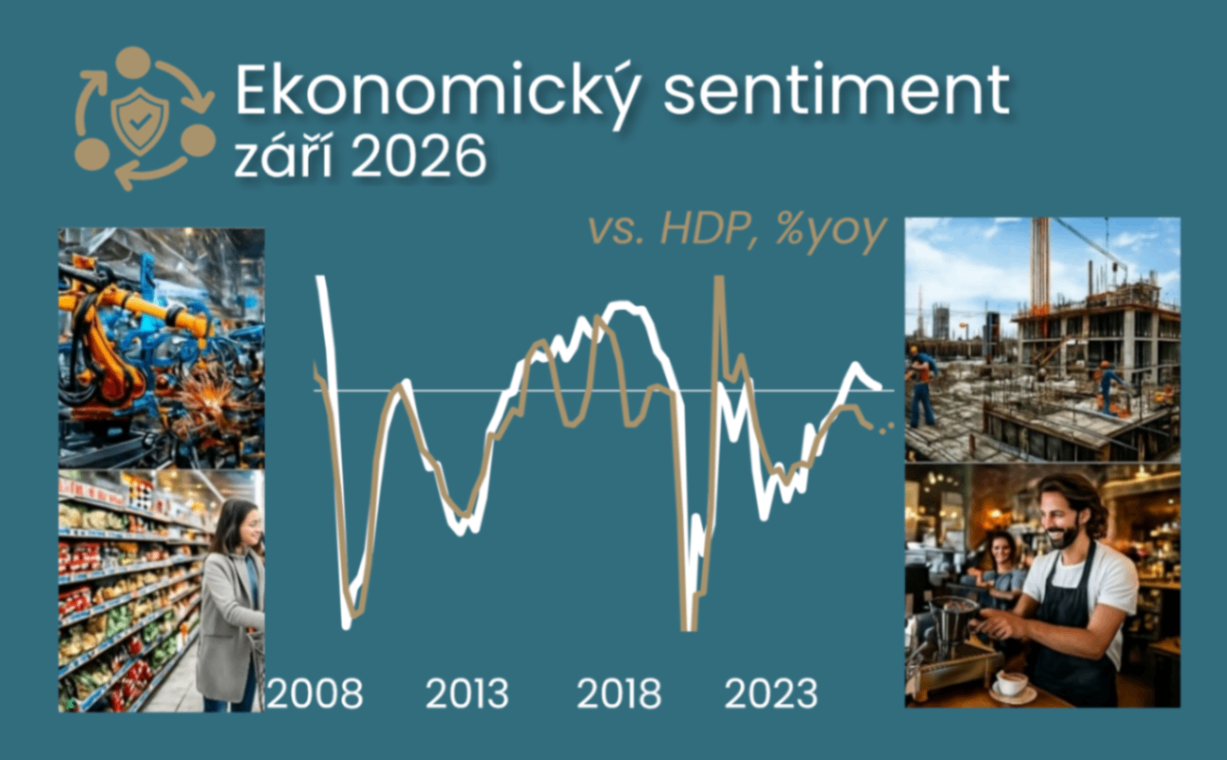
September confidence indicators showed a slight deterioration in overall economic sentiment, but they do not represent a significant negative signal for the economic outlook. Sentiment in the services sector, in particular, is deteriorating, while the retail sector and consumers are sending more favorable signals. Moreover, improved expectations in the industrial sector suggest that the September decline in sentiment may be temporary. For the CNB, in addition to the slight weakening of confidence, slightly more favorable employment expectations and higher price expectations—particularly in the construction and services sectors—will also be important.
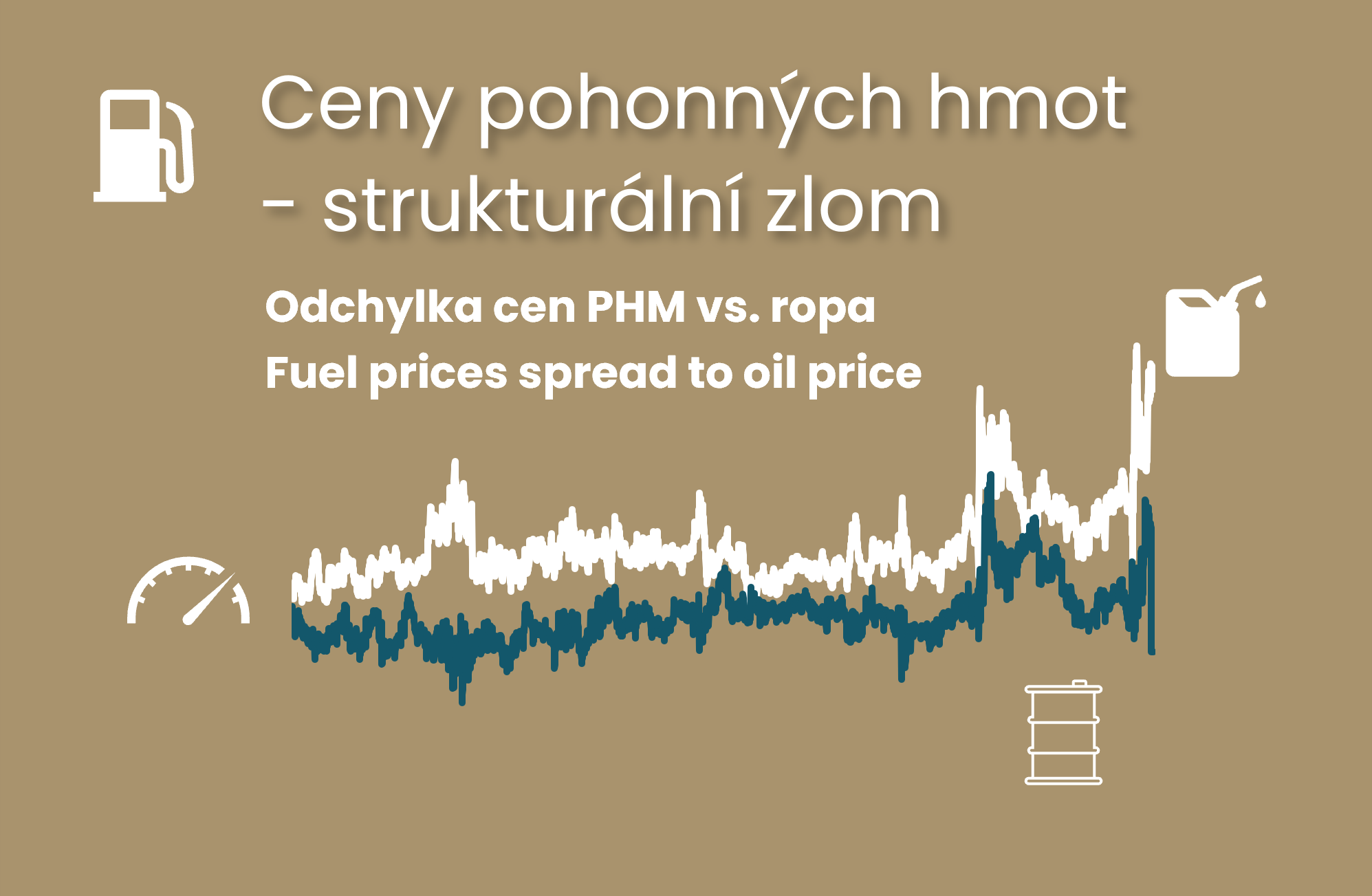
Since 2022, the relationship between oil prices and fuel prices has changed significantly. A model based on pre-war correlations would currently indicate that gasoline would be about eight crowns cheaper and diesel nearly 12 crowns cheaper. However, the data suggest that the bulk of the difference does not arise from average gas station margins, but rather in the European refining and wholesale markets. The analysis breaks down price markups along the supply chain, describes structural problems in the Czech and Central European diesel markets, and also examines the possibility of a fiscally neutral excise tax structure during oil price shocks. On the supply side, there is uncertainty regarding supplies, disruptions in ties to Russian oil, and limited capacity, while Czech and Central European demand for diesel remains strong. This combination is putting upward pressure on prices.
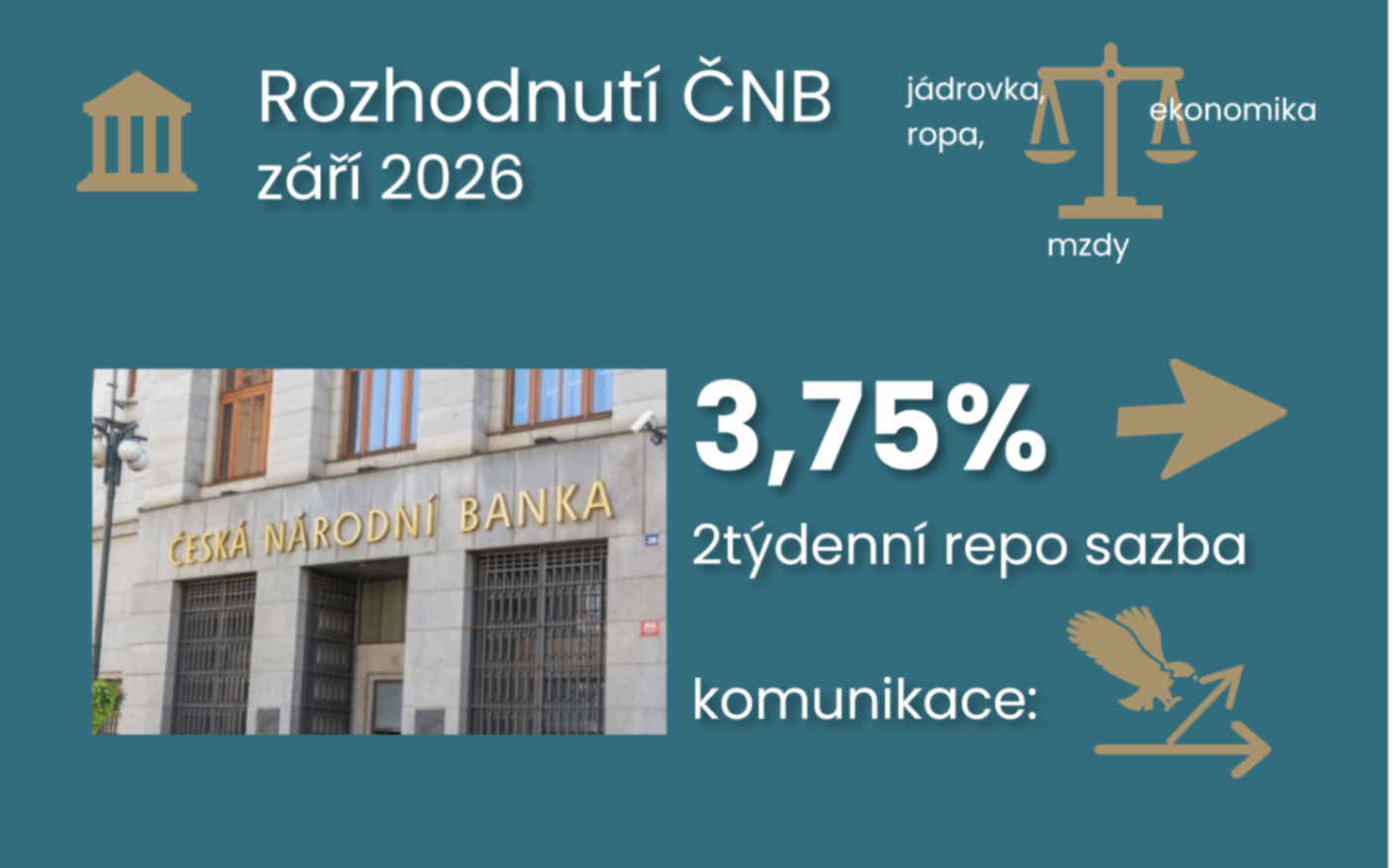
The September decision was unanimous, and the Bank Board did not consider it necessary, for the time being, to follow up on the June rate hike with a further tightening of monetary conditions. Furthermore, financial conditions are tightening due to rising longer-term market rates, which are also affecting lending. In November, the CNB will revisit the question of whether to keep the rate at 3.75% or raise it to 4%. The second option seems more likely to me, unless there is a significant cooling off in domestic data or a normalization of commodity prices. Meanwhile, the market expects an even more pronounced rate hike to 4.75% over a nine-month horizon. However, the Czech yield curve is also significantly influenced by foreign rates, partly due to domestic factors. The CNB’s leeway to not place greater weight on these developments will depend primarily on the future trajectory of core inflation and the koruna exchange rate, the importance of which was also emphasized by the governor.
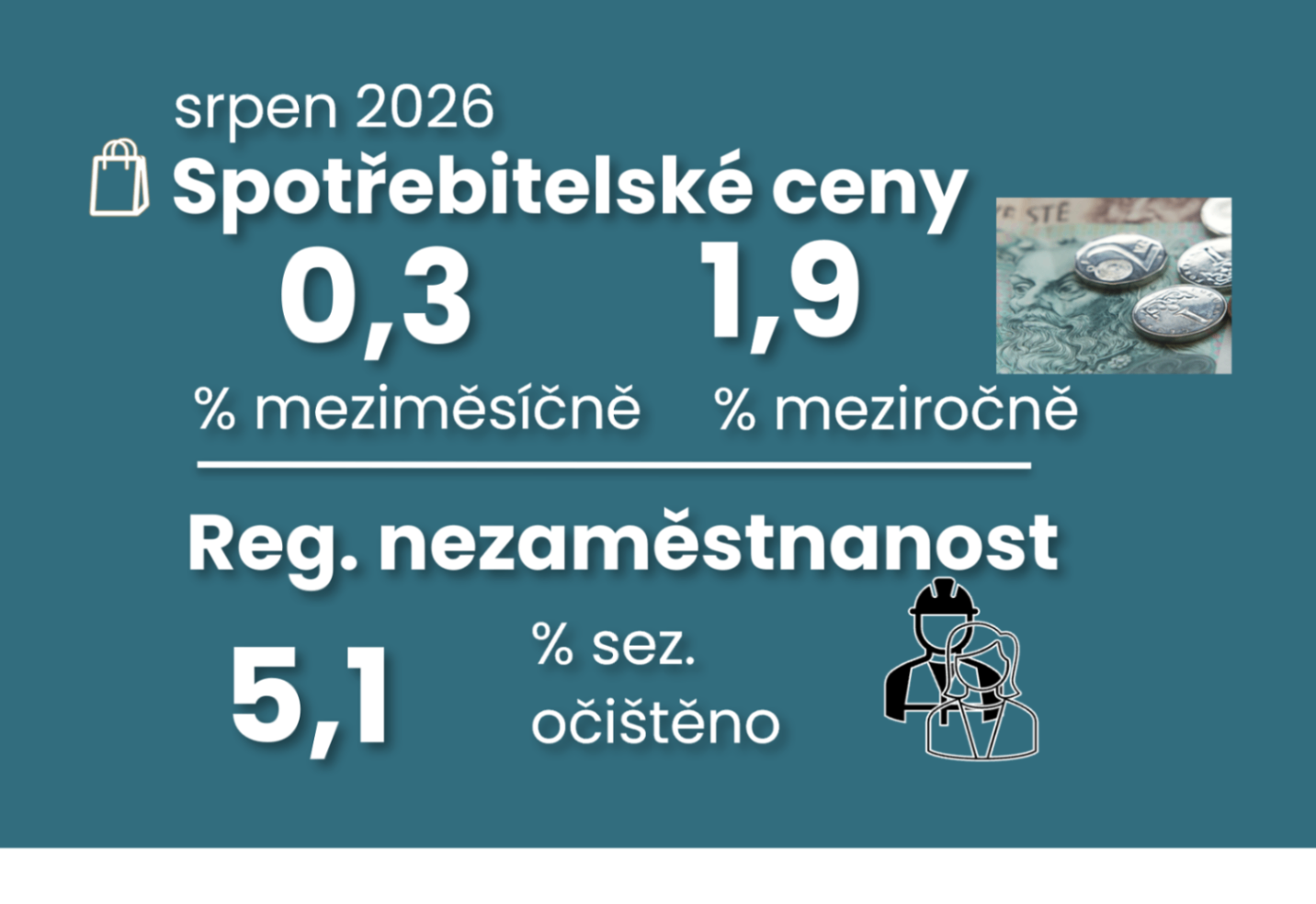
Inflation in August accelerated slightly to 1.9% year-over-year, but a more significant problem remains beneath the surface: core inflation remains at 3%, and service prices have accelerated again on a month-over-month basis. Labor market data point to a mild pro-inflationary risk rather than a disinflationary one. The CNB may leave interest rates unchanged at 3.75% in September and wait impatiently for the November forecast.
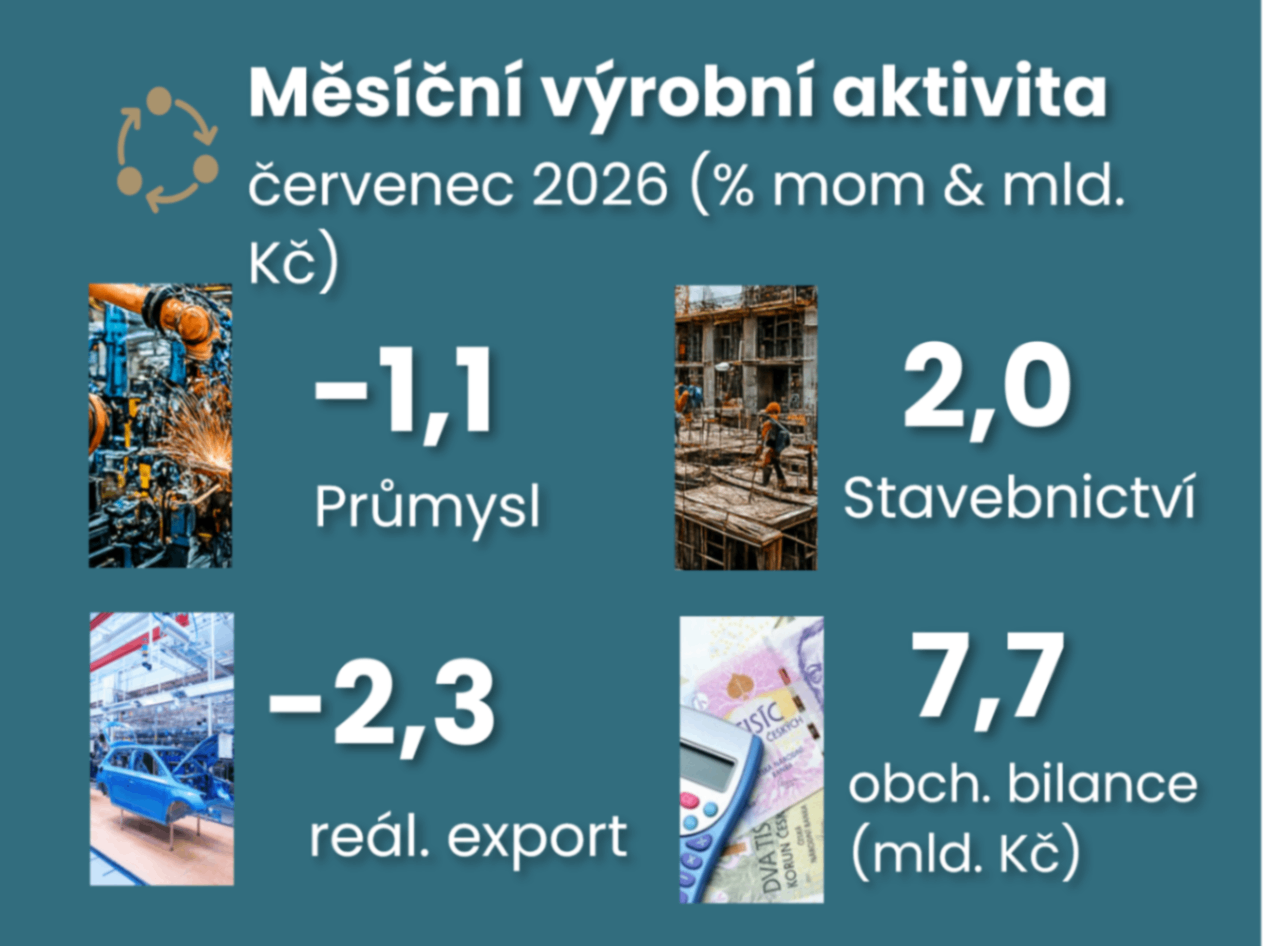
July’s industrial and foreign trade figures pointed to a weaker start to the third quarter. The overall economic picture, however, remains mixed: weaker industrial output and exports contrast with more resilient construction, retail, and services. The data thus pose a certain risk to the expected modest recovery of the Czech economy in the third quarter, projected at 0.6% quarter-over-quarter. Moreover, the weakness in July’s industrial output was not across the board, and a solid trend in production outside the automotive sector and energy-intensive industries remains evident, as confirmed by export figures. Foreign trade remains under pressure from higher energy prices. Trends in residential construction remain favorable for both housing starts and completions, despite renewed weakness in building permits.
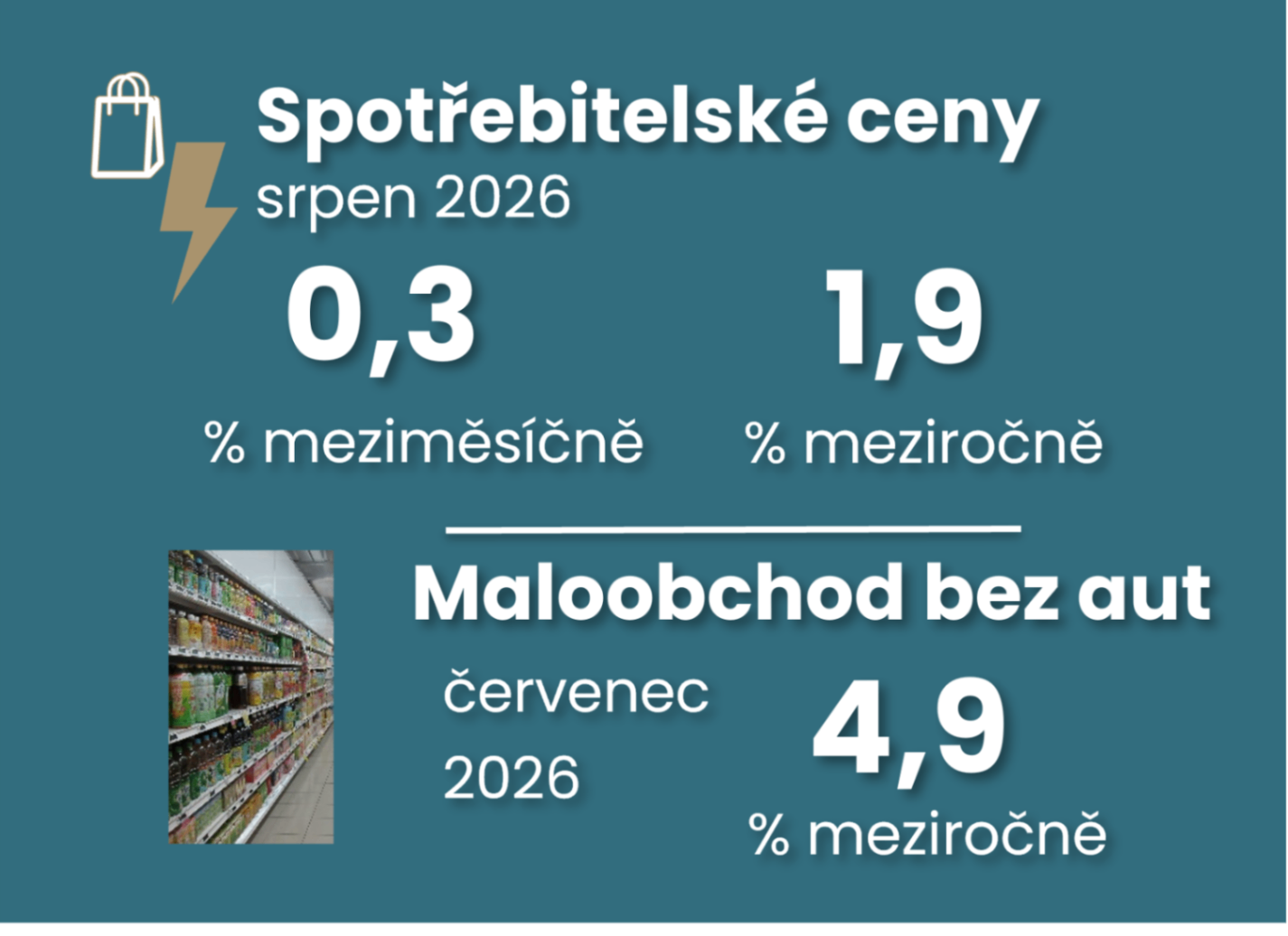
Consumer prices rose by 0.3% month-over-month in August, and year-over-year inflation accelerated to 1.9%. The higher rate of growth was driven mainly by fuel prices, while food prices had the opposite effect. According to preliminary estimates, core price pressures eased slightly. At the same time, July retail sales (excluding autos) returned to stronger figures, reflecting a sustained strong trend in retail and services. Inflation, adjusted for wage growth, brings some relief to the central bank, but momentum in retail sales and wages will likely keep the CNB in hawkish mode.
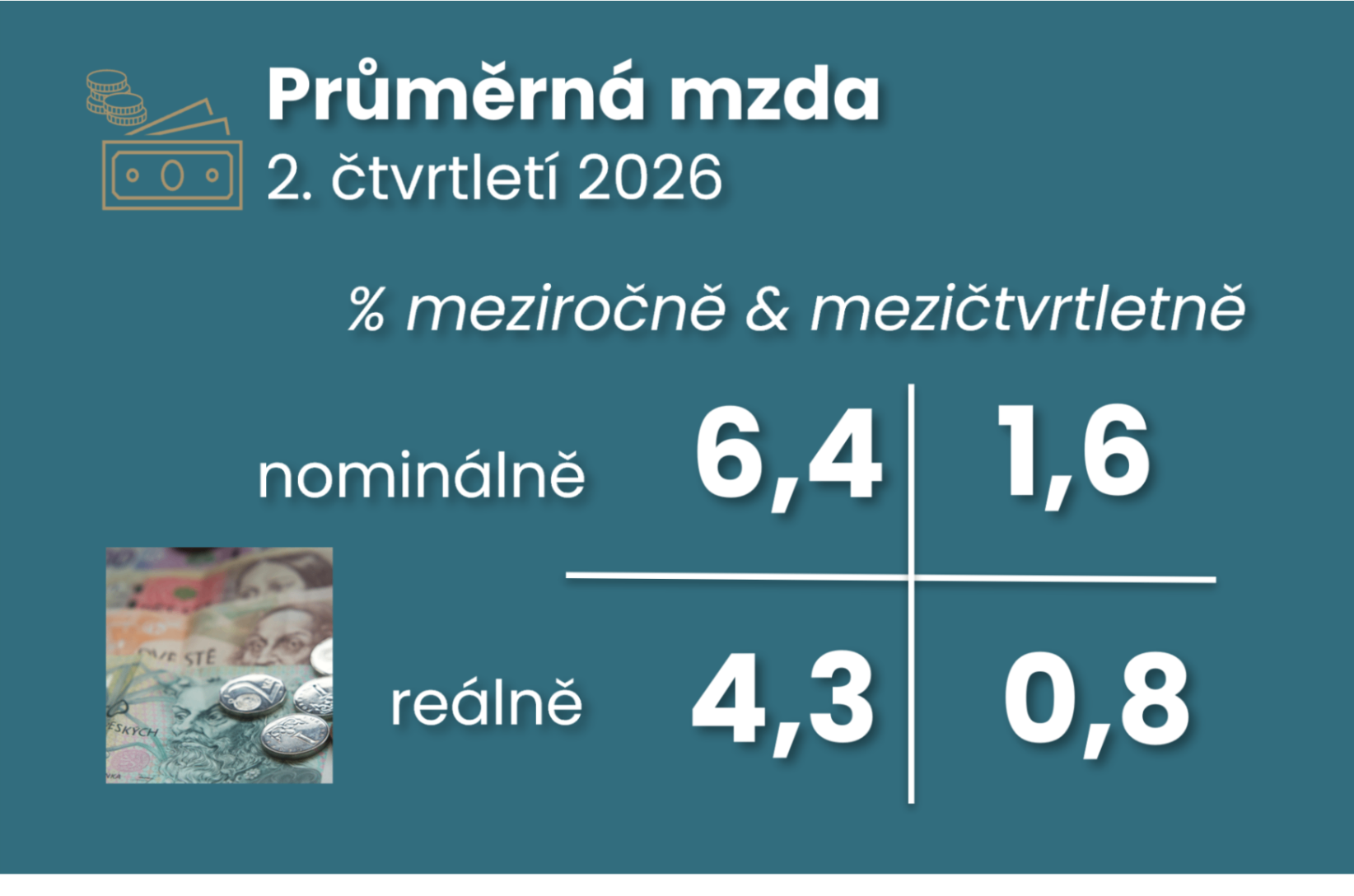
Wage growth accelerated to 6.4% year-over-year in the second quarter; however, following a significant revision of first-quarter data, the pace is much more moderate than the original figures suggested or the central bank had expected. Real wages, however, continue to grow briskly, and the persistently strong quarter-over-quarter growth in nominal wages—at 1.6%—maintains the risk of inflation. For the CNB, the wage data thus represent a less hawkish signal than before, but not a reason to change the current monetary policy stance, even in light of the planned stronger wage growth in the public sector.
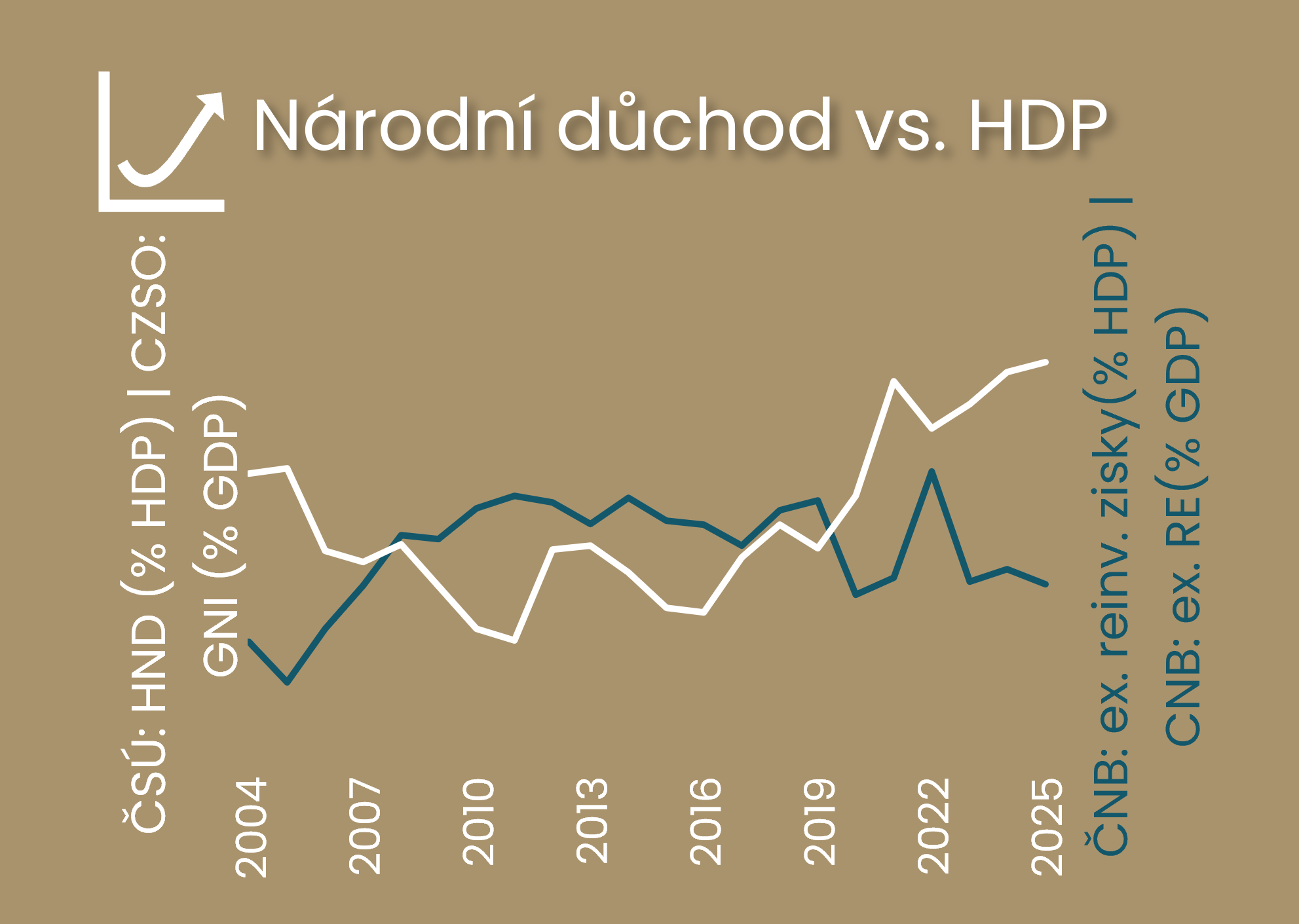
Czech gross national income has improved in recent years, although probably less markedly than suggested by the aggregate data from the Czech Statistical Office. These show that the gap relative to GDP narrowed by 4.2 percentage points, with GNI reaching 97.4% of GDP in 2025, compared with an average of 93.2% in 2006–2015. However, once the specific role of reinvested earnings is taken into account, or when balance-of-payments data from the Czech National Bank are used, the improvement comes to only around 1 to 2.5 percentage points. At the same time, the FDI story is entering a new phase: dividend outflows have moderated in recent years, while reinvested earnings on foreign capital remain high. The role of Czech capital abroad, and the income it generates, is also increasing. This adds a new dimension to the debate about dividend outflows, which by its very nature cannot be separated from the export performance of the Czech economy.
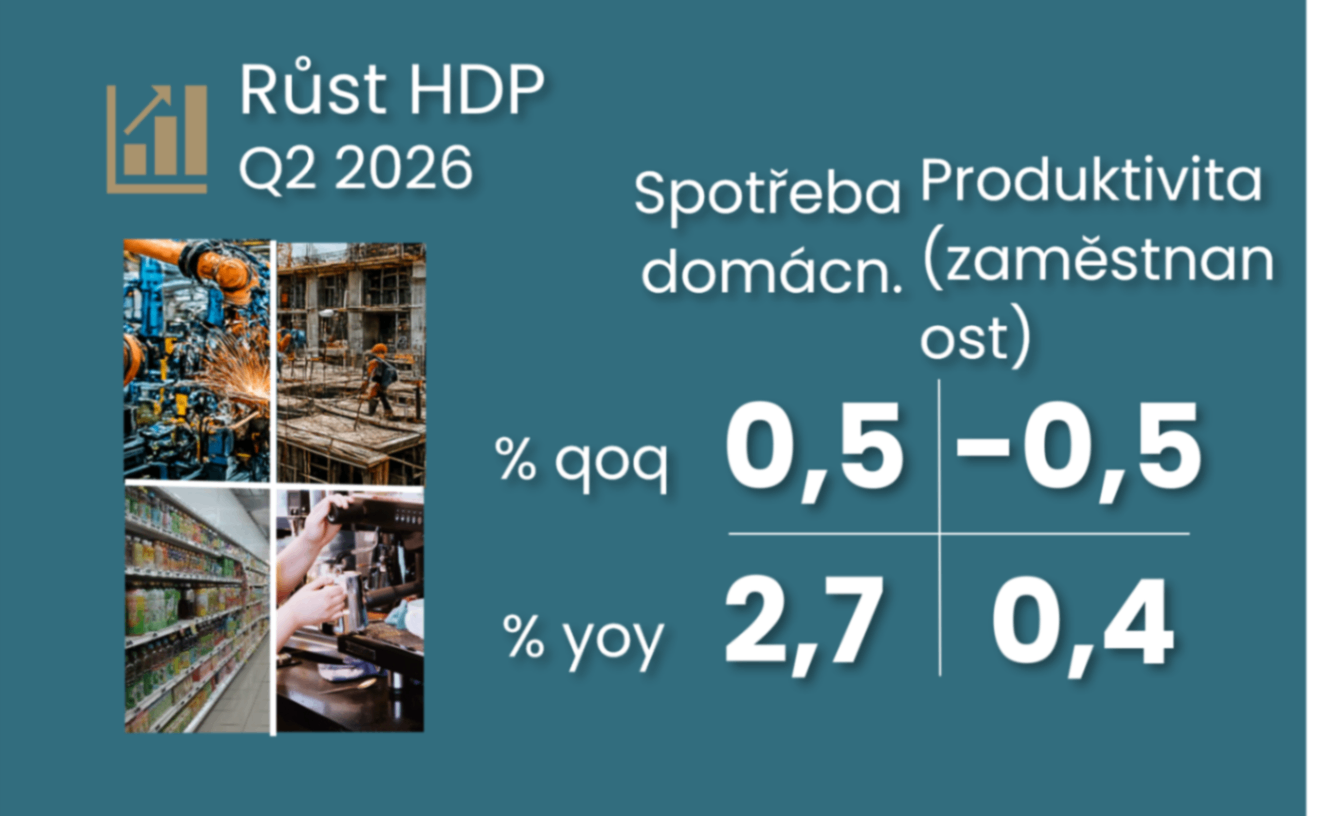
The Czech economy accelerated to 0.4% quarter-over-quarter in the second quarter, but its recovery remains less convincing than monthly data had suggested. It therefore poses only a marginal risk to our outlook for a moderate economic recovery, with GDP growth projected at 2.3% year-on-year in 2027 after 2.0% in 2026 (1.9% in the second quarter). Household consumption is lagging behind real wage growth, and business investment in production capacity is weakening. Construction investment and exports, on the other hand, remain a source of support. Furthermore, weak productivity, combined with rapid wage growth, is keeping inflationary pressures high. Labor productivity thus remains a significant weakness of the Czech economy—both for growth and for inflation.
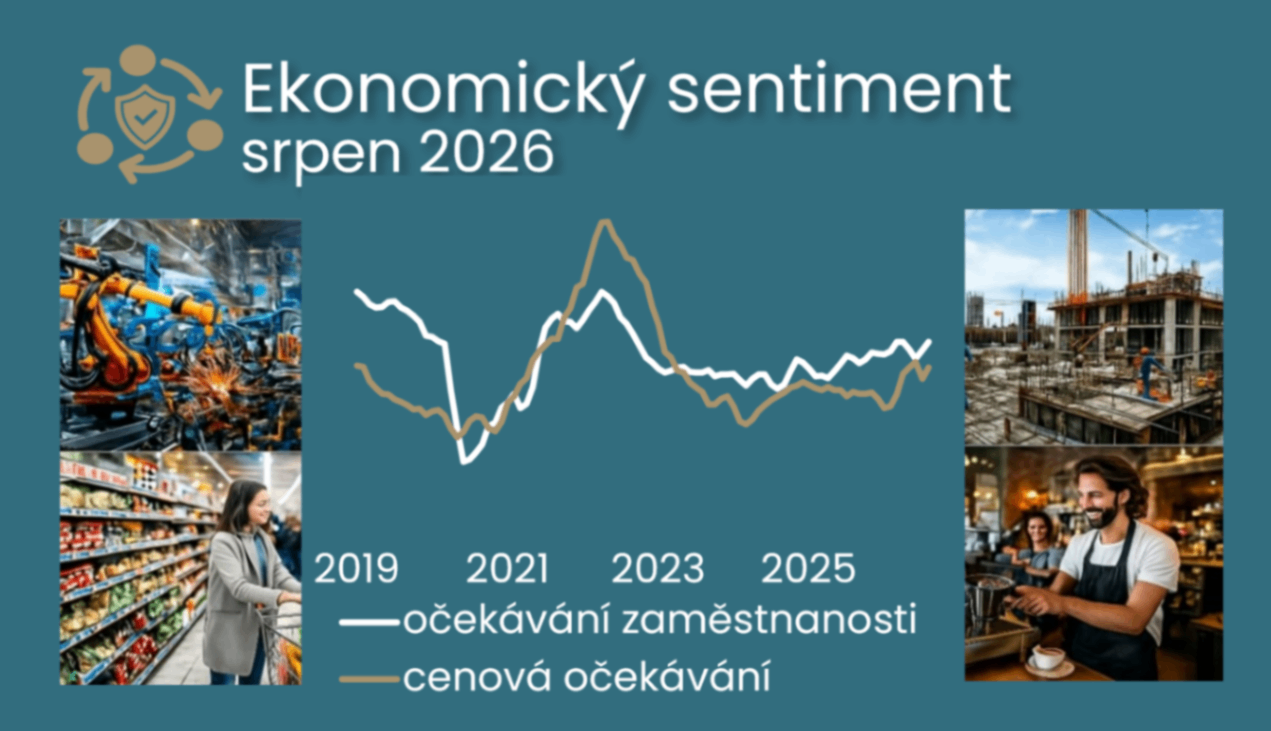
Economic sentiment in August deteriorated slightly and fell just below this year’s average. However, it still points more toward a gradual recovery of the Czech economy than a significant slowdown. Consumer and business confidence, in particular, took a turn for the worse, with expectations for future economic developments deteriorating. By contrast, industrial confidence improved slightly, and employment expectations have been rising for the second month in a row. From the CNB’s perspective, the combination of improved labor market expectations and heightened price expectations—particularly in the services sector—remains significant and will continue to warrant a hawkish stance.
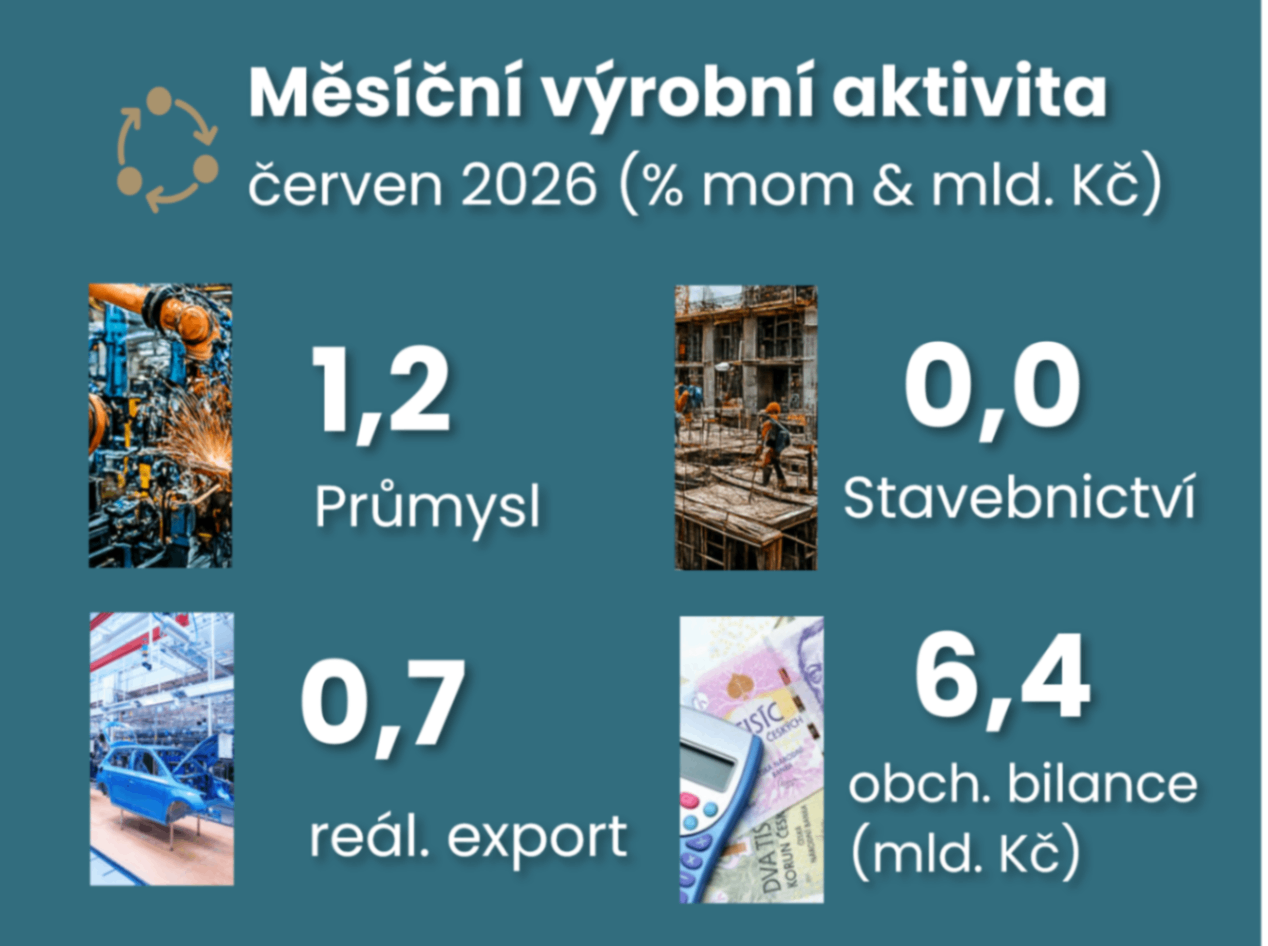
Stronger industrial growth in June was driven mainly by the energy sector, while auto production stabilized. Exports were a positive surprise, including in key segments (ICT, electronics, and machinery), while higher-priced raw material imports worsened the trade balance. Activity in the construction sector remains weak, but the number of completed apartments in Prague and new construction starts across the Czech Republic increased, despite the continued low number of building permits. However, strong growth in industrial wages does not give the CNB much room to ease policy.

The Bank Board left the interest rate unchanged at 3.75%. The projected rise in the interest rate to 4% was apparently not sufficient for the Bank Board, perhaps due to weaker economic growth, the strong koruna, and lower month-over-month core inflation. Added to this is a communication challenge stemming from the essentially weak growth in overall consumer prices. Inflationary risks persist, even in the context of expected stronger, but less inflationary, economic growth.
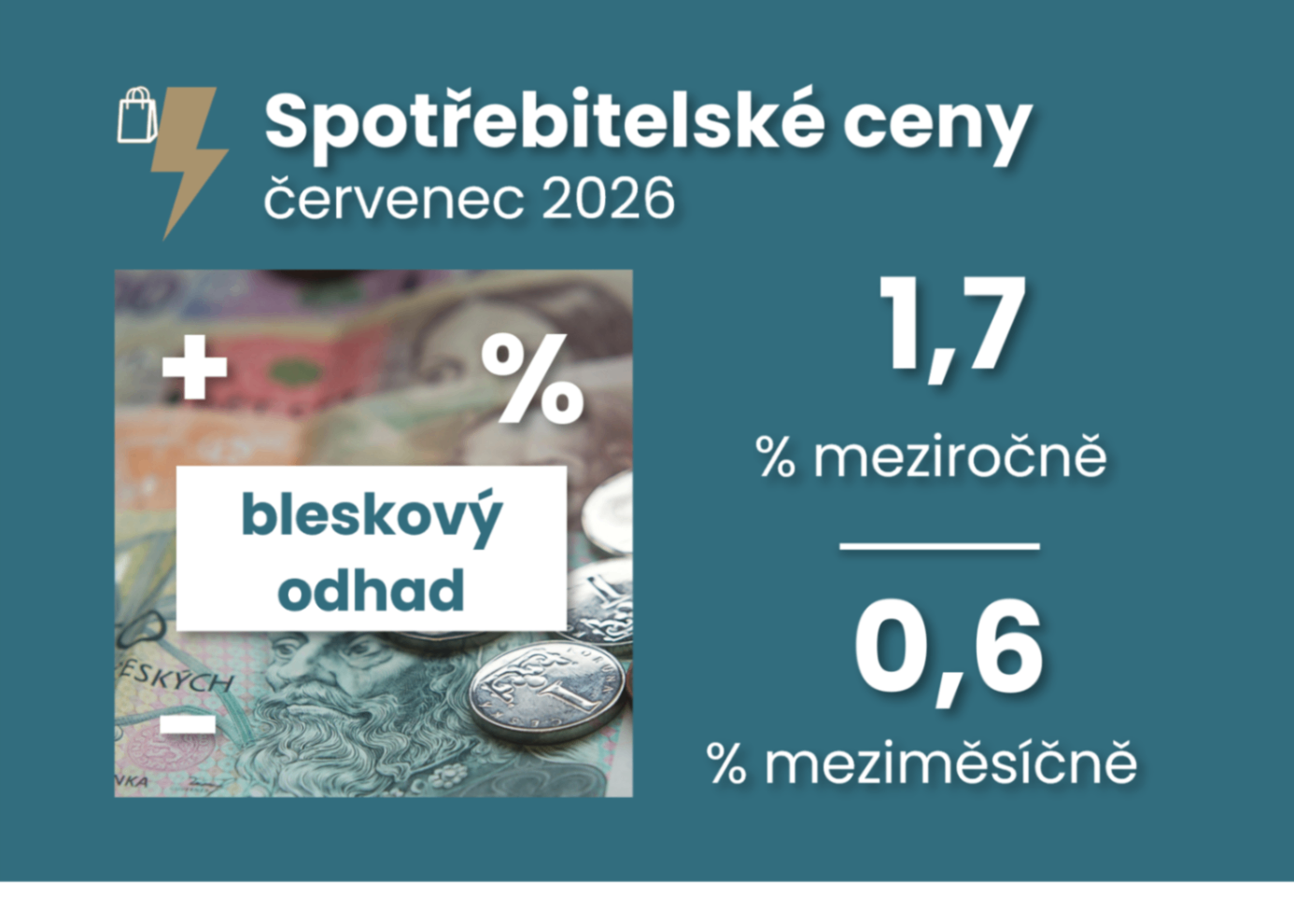
While the acceleration in consumer price growth to 1.7% in July was likely accompanied by a return of demand-driven core inflation to 2.9%, this signals a further slight slowdown in its monthly momentum. Furthermore, retail sales declined slightly in June. This combination gives the central bank room to keep interest rates at the current level of 3.75%. However, core inflation remains above the central bank’s inflation target, which will keep it vigilant and open to another interest rate hike to 4%. This is especially true if August consumer prices continue the stronger momentum seen in July.
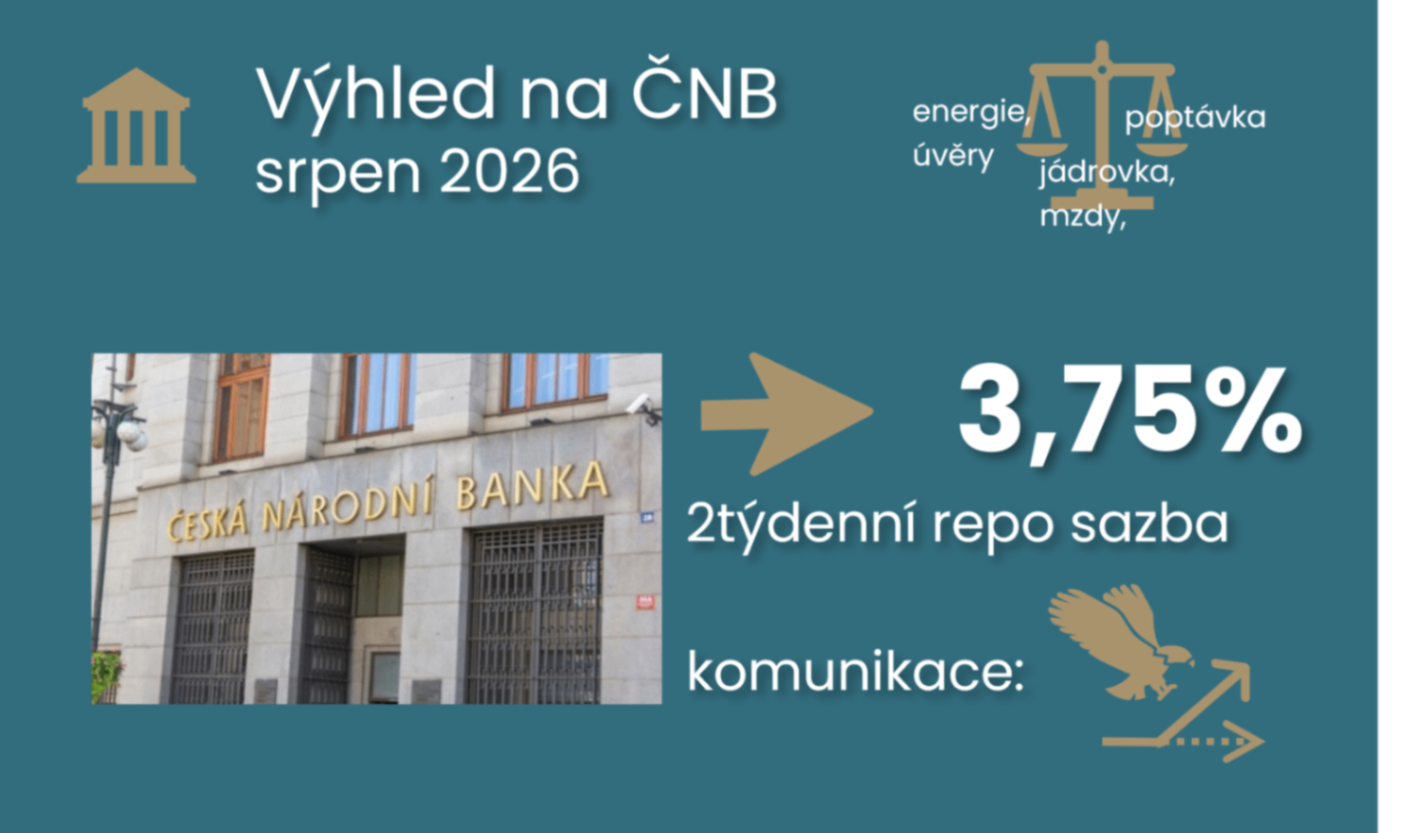
The CNB is likely to keep the two-week repo rate at 3.75% in August. However, the ECB’s wait-and-see approach is not a definitive guide for Czech monetary policy: domestic core inflation, the labor market, and lending activity are having a more inflationary effect. However, it is not just mortgages that are driving Czech lending; there is also a noticeable recovery in investment loans, which could ease inflationary pressures on the supply side. If service prices start rising again in July and August, the Bank Board may raise the rate to 4% on September 17. Markets are pricing in interest rate hikes by both the CNB and the ECB this fall.
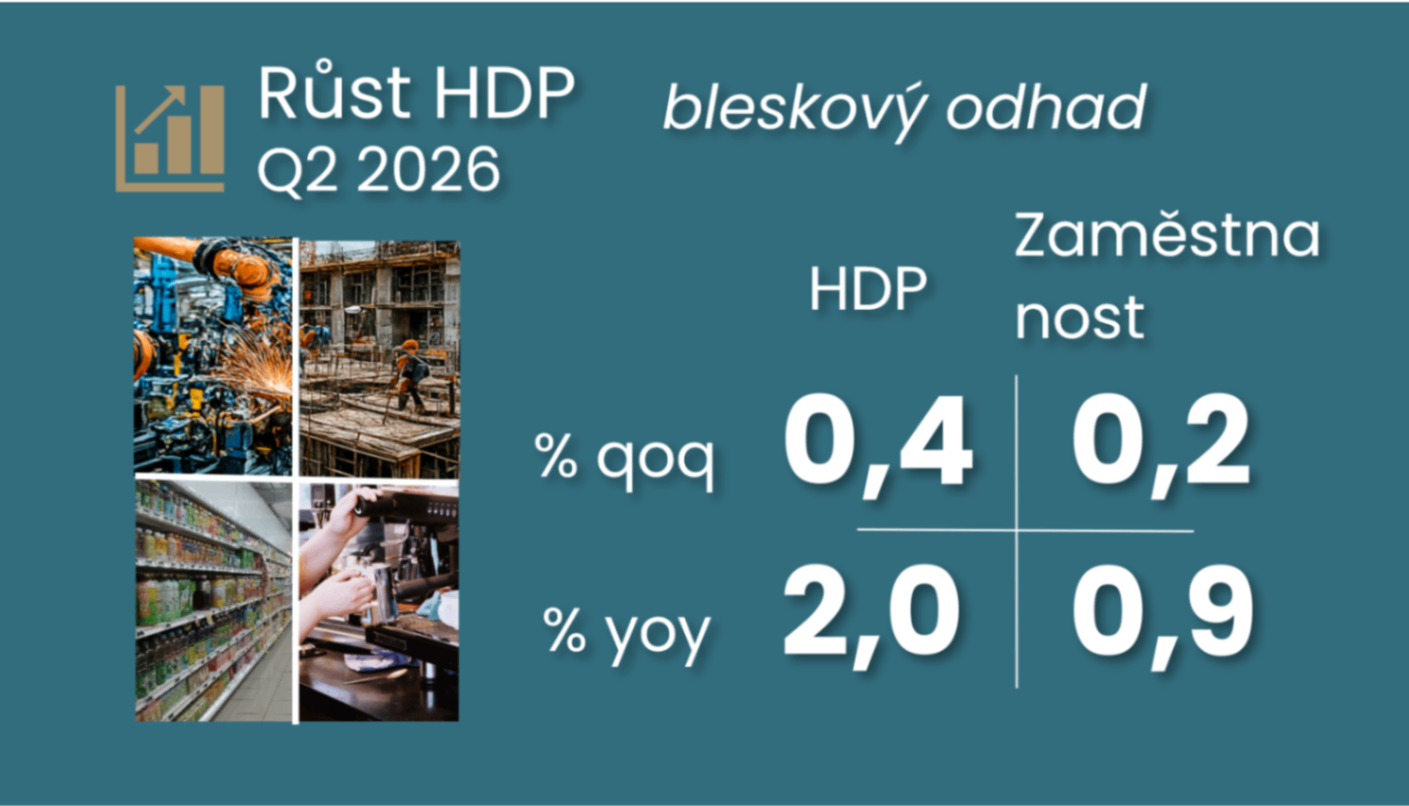
The Czech economy accelerated its quarter-over-quarter growth to 0.4% in the second quarter, up from 0.2% previously. The result was in line with the pace of growth across the entire eurozone but once again fell short of the CNB’s forecast, which may temper its hawkish stance. GDP growth in the second quarter was driven by household consumption and foreign trade, while investment activity held the economy back. The Czech Banking Association’s (CBA) forecast for the second half of the year anticipates only a slight further acceleration.
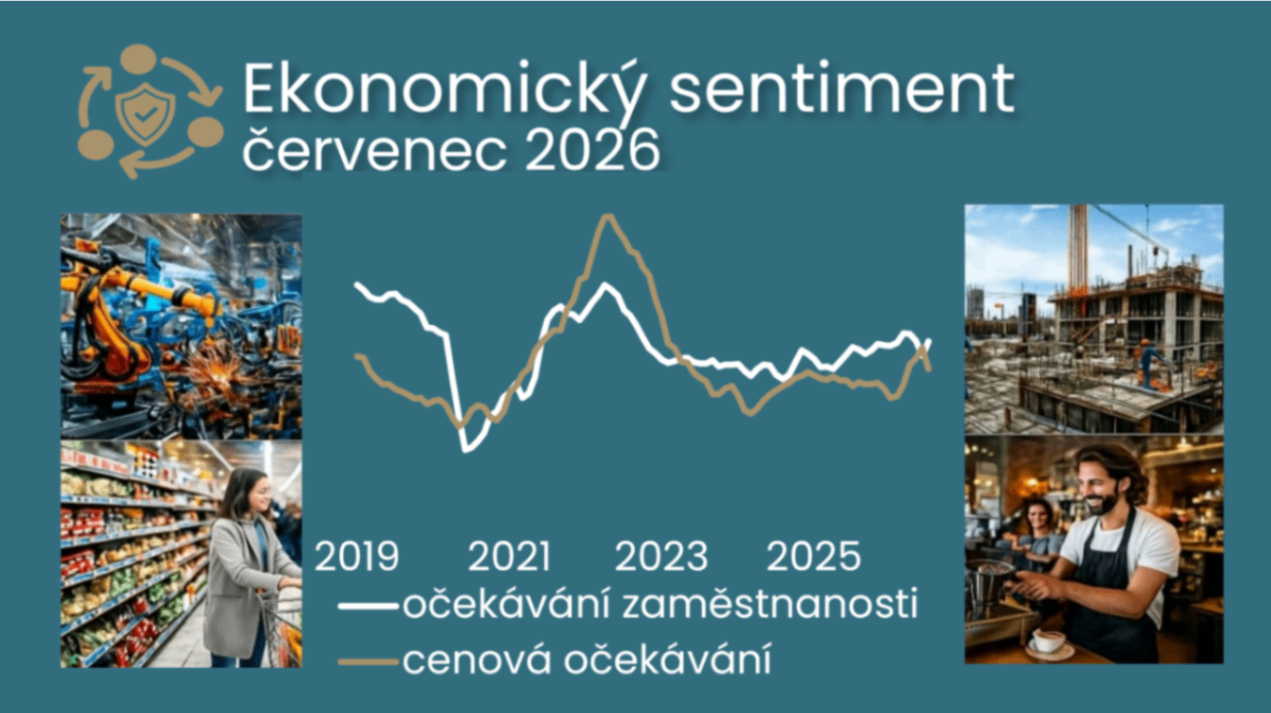
Although confidence in the Czech economy improved only slightly in July, it did so for the second month in a row, confirming its resilience despite heightened geopolitical uncertainty. Positive signals are coming mainly from the industrial sector, where assessments of demand and capacity utilization are improving, as well as from employment expectations. At the same time, declining price expectations are easing the CNB’s concerns about persistent inflationary pressures; however, the return of higher oil prices does not yet give the central bank a reason to deviate from its rather hawkish communication.
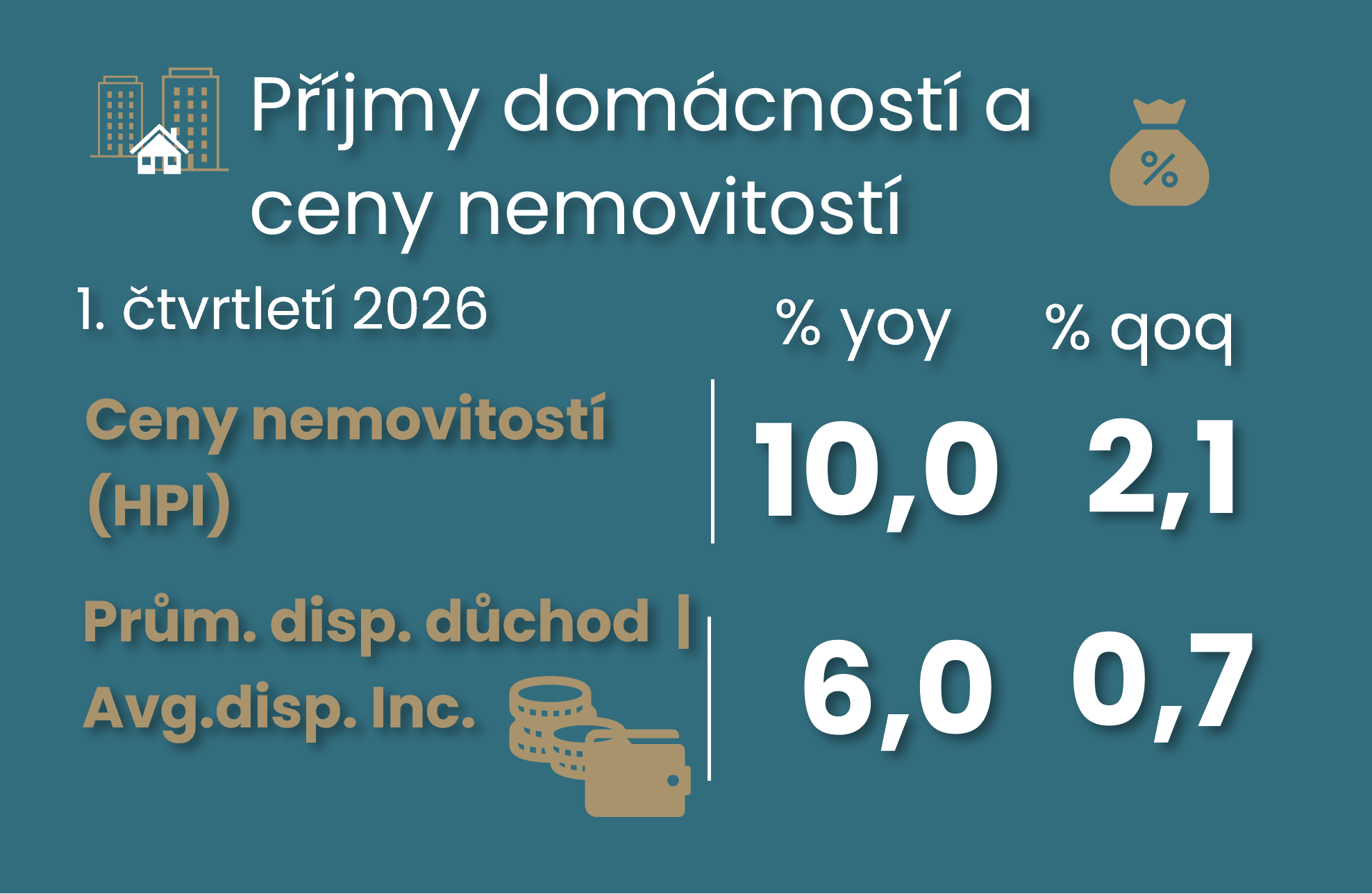
The Czech household savings rate remained at 20% in the first quarter of this year, still high even by international standards. Household disposable income slowed to 0.7% quarter on quarter, while property prices continued to rise by roughly 2%. The GDP revision showed weaker household consumption, but also a less negative productivity story thanks to stronger value added in industry. However, despite somewhat more moderate growth in the past, unit labour costs remain on a strong upward trend, which, together with high core inflation growth, is unlikely to bring a dovish turn at the CNB. That said, my interpretation of the new data from the Czech Statistical Office, especially for the first quarter, is significantly affected by the alignment of quarterly figures with the new annual data for 2025. The next quarterly release may therefore bring yet another story about the economy in the first quarter.
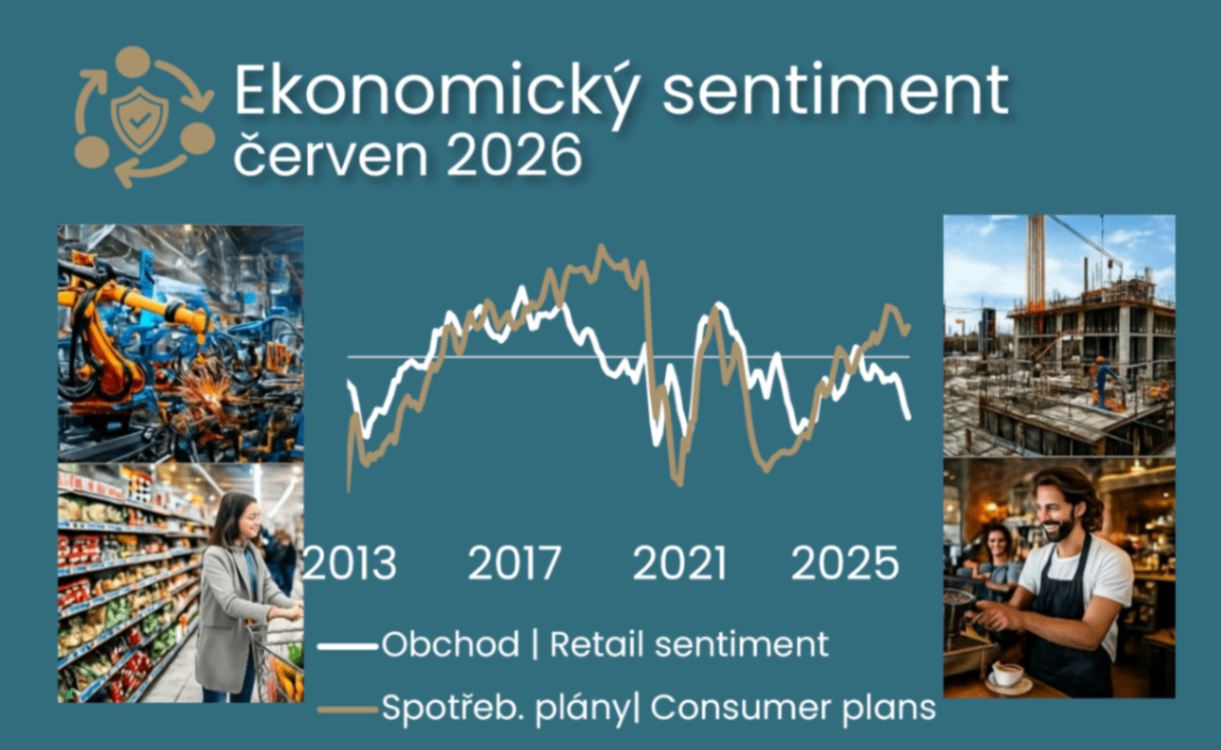
Economic confidence improved slightly in June. Stronger sentiment among households and manufacturers outweighed continued weakness in retail trade, although retail conditions may improve over the coming months. At the same time, the services sector points to higher risks for both unemployment and core inflation—that is, inflation excluding the volatile prices of energy and food. For the Czech National Bank (CNB), the June sentiment survey suggests a need for caution, reflecting stronger household demand and a renewed rise in price expectations in services.
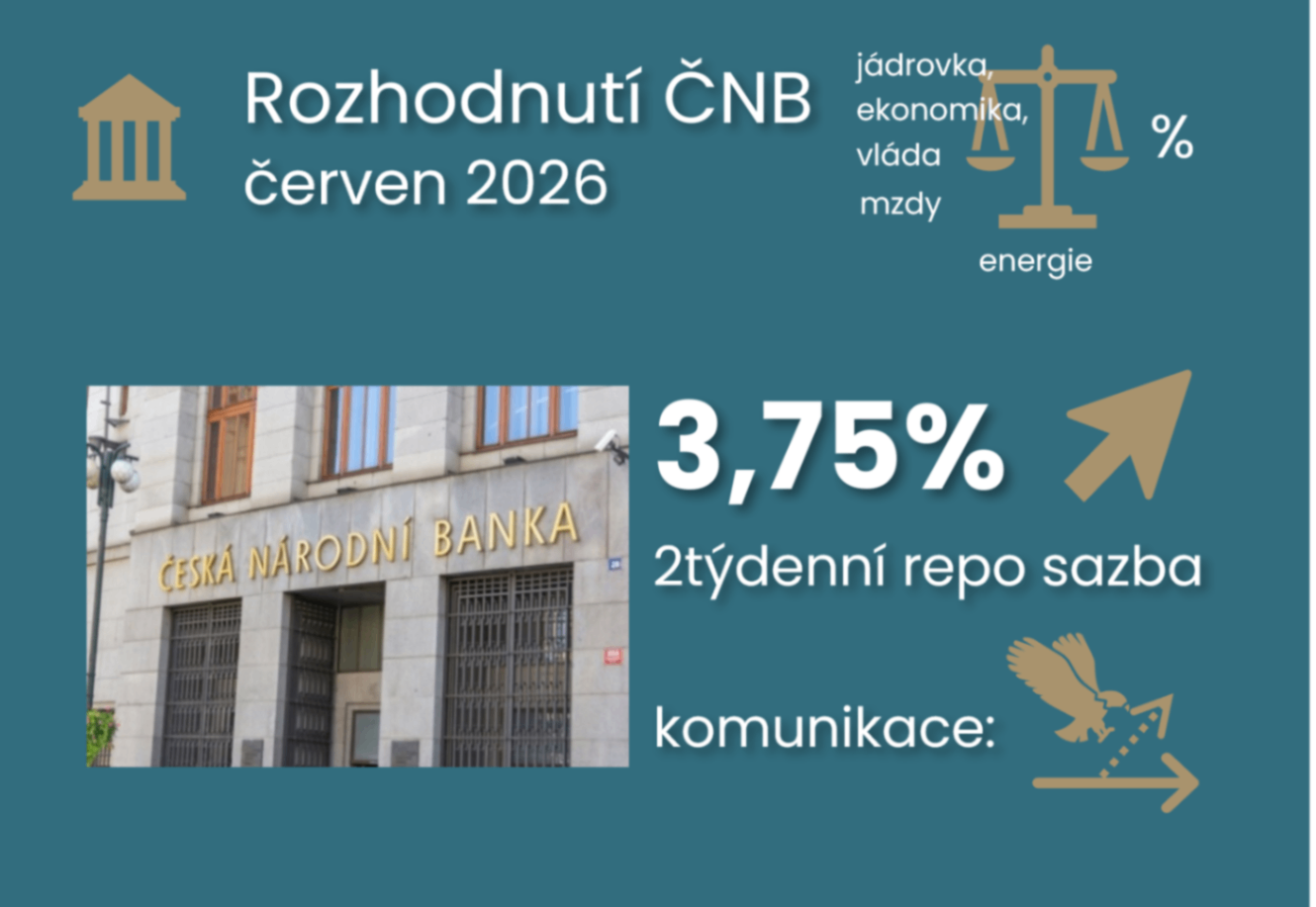
The Bank Board raised the interest rate by a quarter of a percentage point to 3.75%. Unsurprisingly, the main reason was the continued high growth in demand-driven, or “core,” inflation, which reflects stronger wage growth. However, the decision also reflects stronger credit growth and rising real estate prices. I view today’s decision as an effort by the central bank to keep consumer inflation in line with its inflation target over the longer term, which is not possible with core inflation hovering around 3%. Today’s decision reduces the risk premium—or rather, the uncertainty regarding the credibility of achieving the inflation target and the central bank’s independence. Below, I discuss further possible steps and their implications for the economy and the banking sector. If energy prices remain lower, this will reduce the likelihood of the CNB reaching a 4% interest rate. However, core inflation must lose momentum for the CNB to avoid reaching that level.
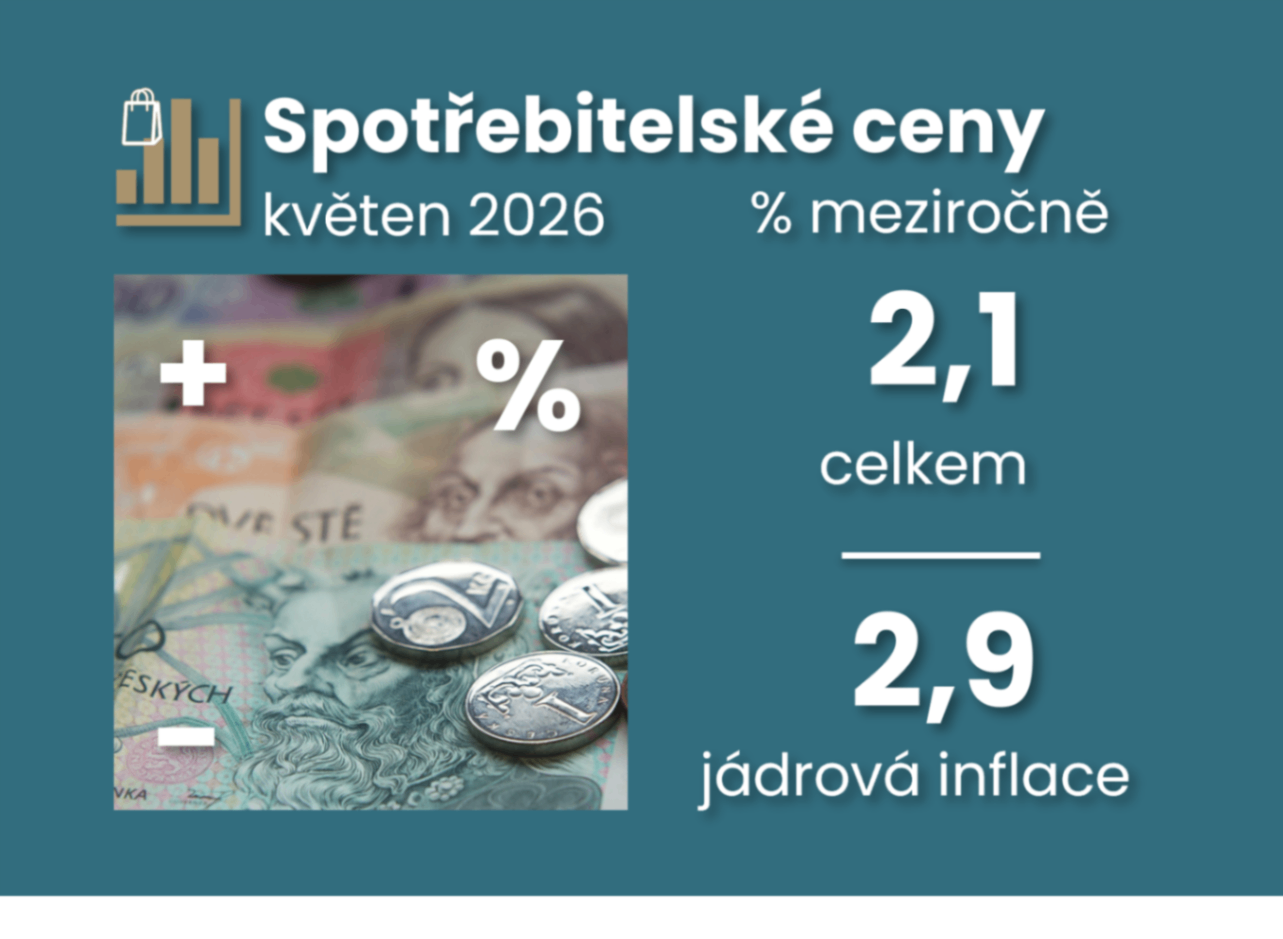
Consumer price inflation slowed to 2.1% year on year in May, close to the CNB's target. However, domestic inflationary pressures continue to operate beneath the surface. Core inflation remained at 2.9% y/y and its short-term dynamics suggest an acceleration closer to 4%. The latest economic numbers do not suggest a reversal and thus a relief of the inflationary nature of the Czech economy due to strong wage growth and weak productivity growth. This constellation, together with the ongoing Iranian conflict, reinforces the rationale for a 0.25 percentage point increase in the central bank's interest rate to 3.75% at the June meeting. This will not be an easy decision for the Board.
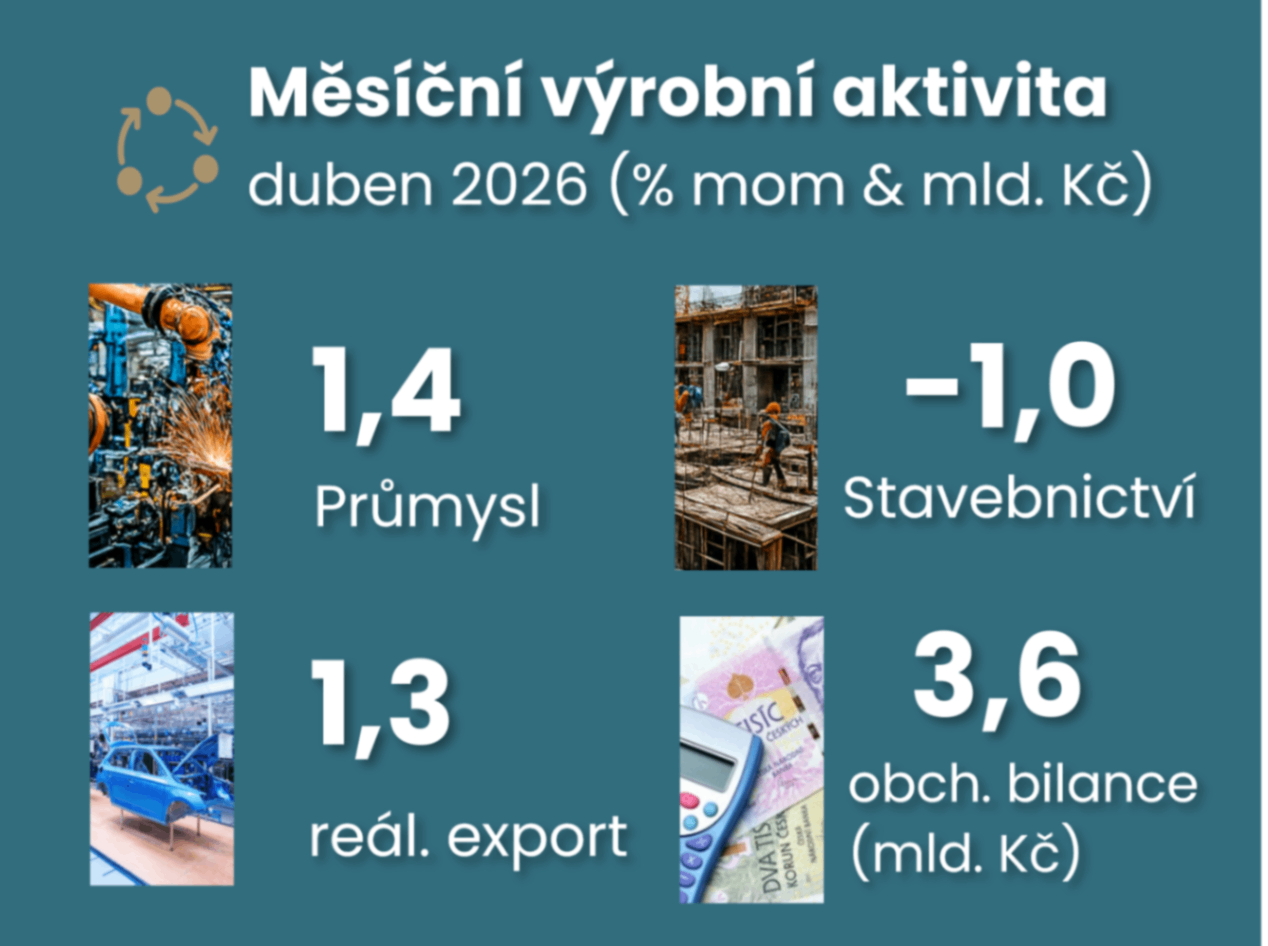
April's monthly figures open the way for stronger GDP growth in Q2 for now, after slowing to 0.2% q-o-q in Q1. The April industrial numbers are 1.8% above the first quarter average thanks to the April rebound. Despite a slight April decline, the construction sector is on an uptrend, thanks in part to strong housing starts, which rebounded from weaker building permits. Moreover, its sentiment does not suggest a change in trend. Foreign trade reached its lowest surplus below CZK4bn since the end of the energy crisis in 2022. However, this mainly reflects higher non-energy imports, while export activity also showed solid growth thanks to ICT. Thus, net exports are unlikely to drive GDP, similar to the first quarter when their weaker contribution was offset by stronger investment activity.
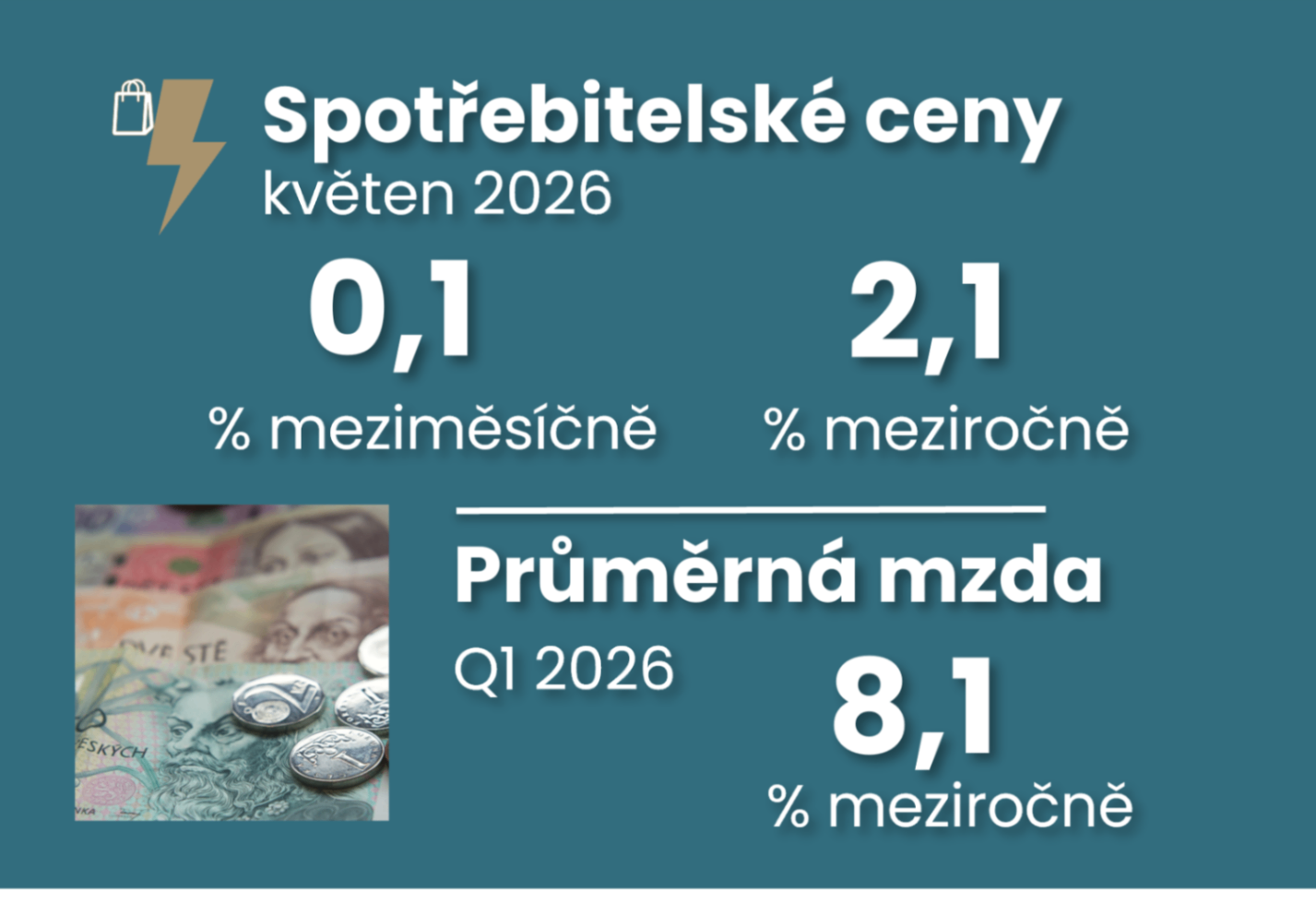
Consumer price inflation slowed to 2.1% in May, surprising at a more moderate pace than the market had expected. However, some of the factors now dampening inflation may not be permanent. This is particularly true for food prices, which may be affected by rising global commodity prices in the months ahead. At the same time, strong wage growth of 8.1% year-on-year is divorced from labour productivity, creating pressures for higher core inflation. It is the contradiction between low headline inflation and persistent domestic inflationary pressures that poses a non-trivial economic and political dilemma for the CNB.
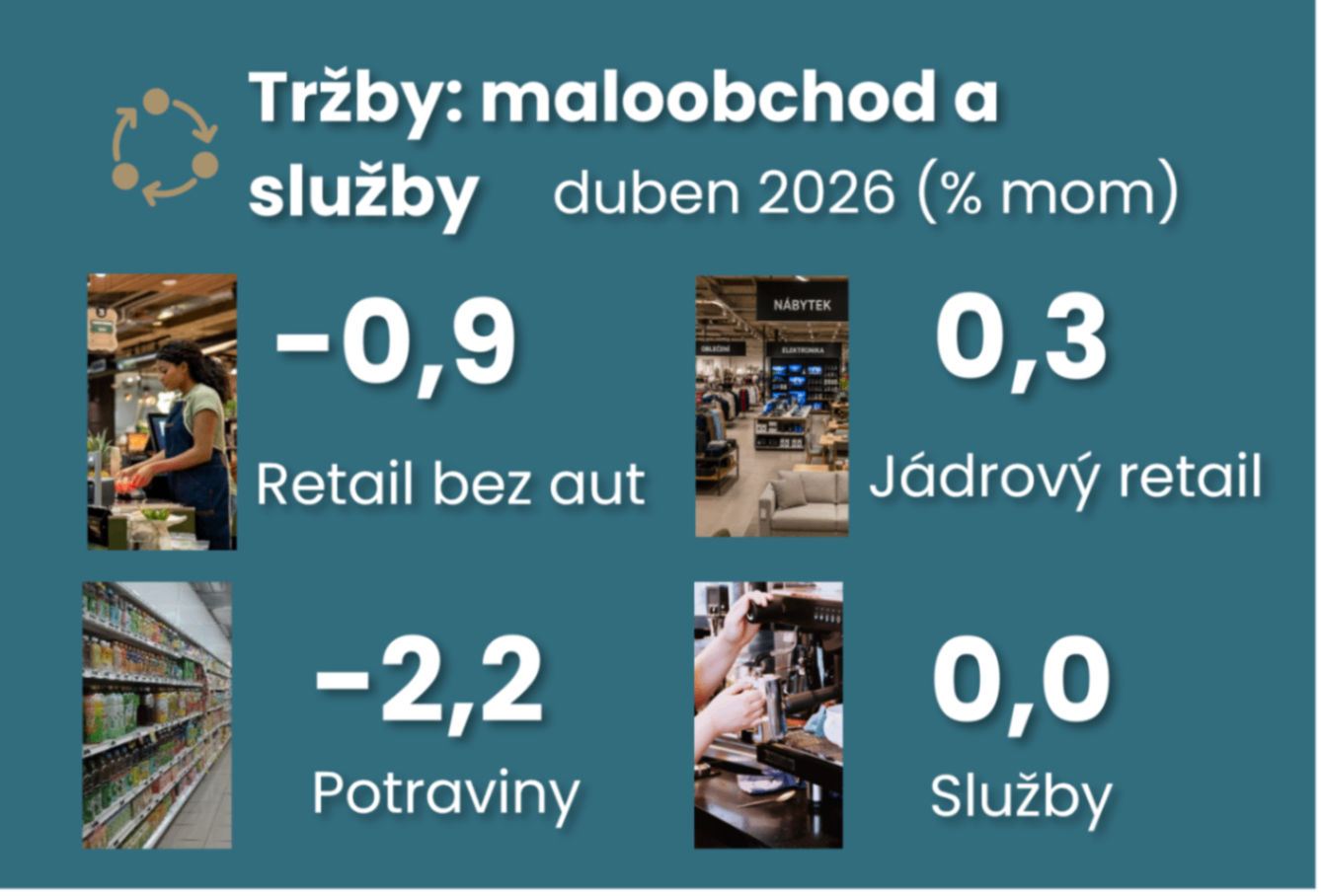
April's decline in retail sales was largely the result of a correction of the previous strong growth in fuel and food. Although the correction after a strong March was also evident in core retail sales, they maintained their growth momentum, confirming the continued willingness of households to spend, supported by real wage growth and credit activity. However, factors are beginning to emerge in the second quarter that may slow the pace of household consumption. We discuss three of them below - real wage growth, credit activity and retail bonds.
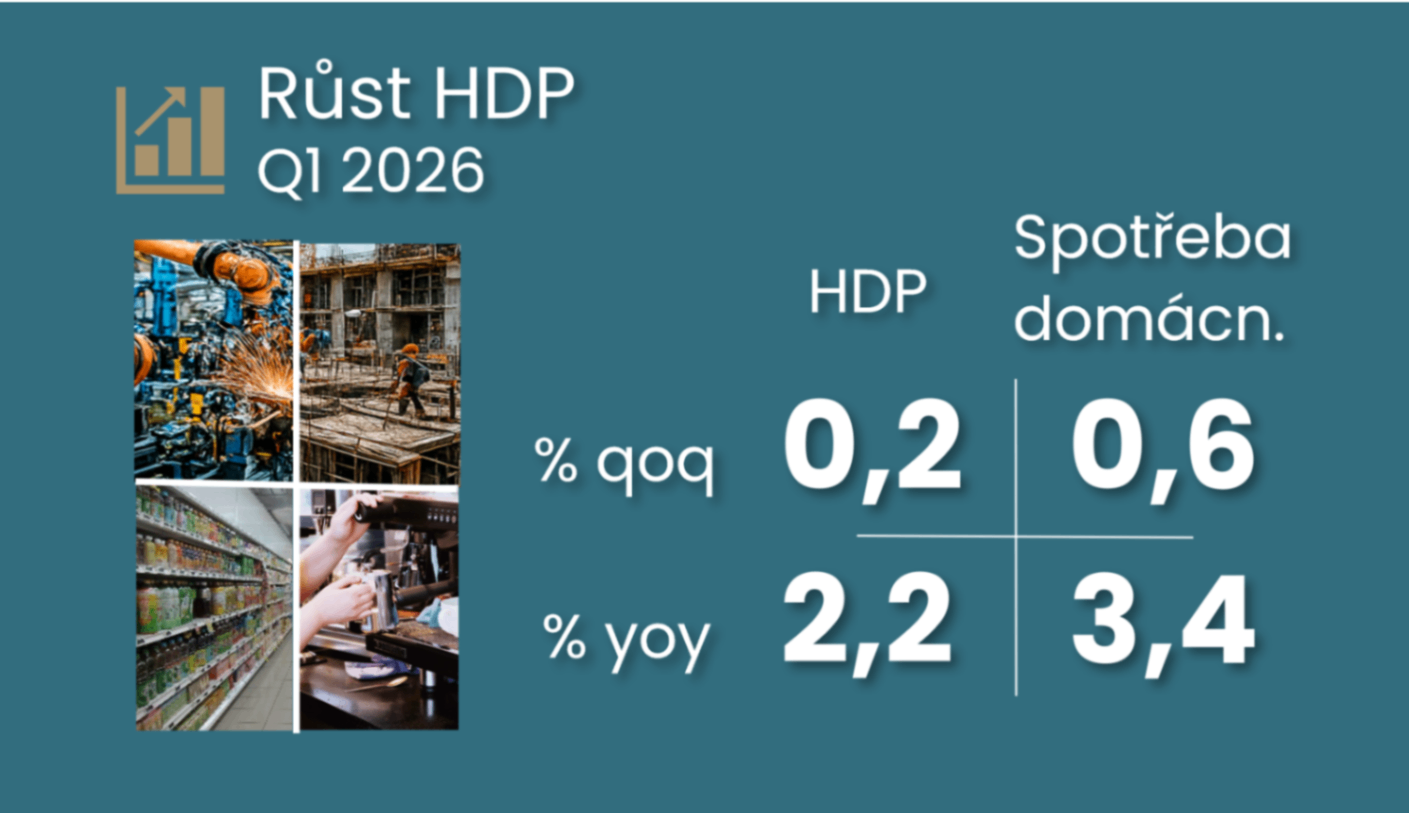
The Czech economy grew by 0.2% quarter-on-quarter in Q1. The weaker result was mainly due to technical factors, including the negative contribution of net exports and the budget provisionality. However, the structure of growth remains favourable thanks to continued growth in household consumption, investment and exports. In addition to the Iran war, weaker industry and persistent wage inflation pressures with slower productivity growth pose risks to the recovery to 2% economic growth this year.
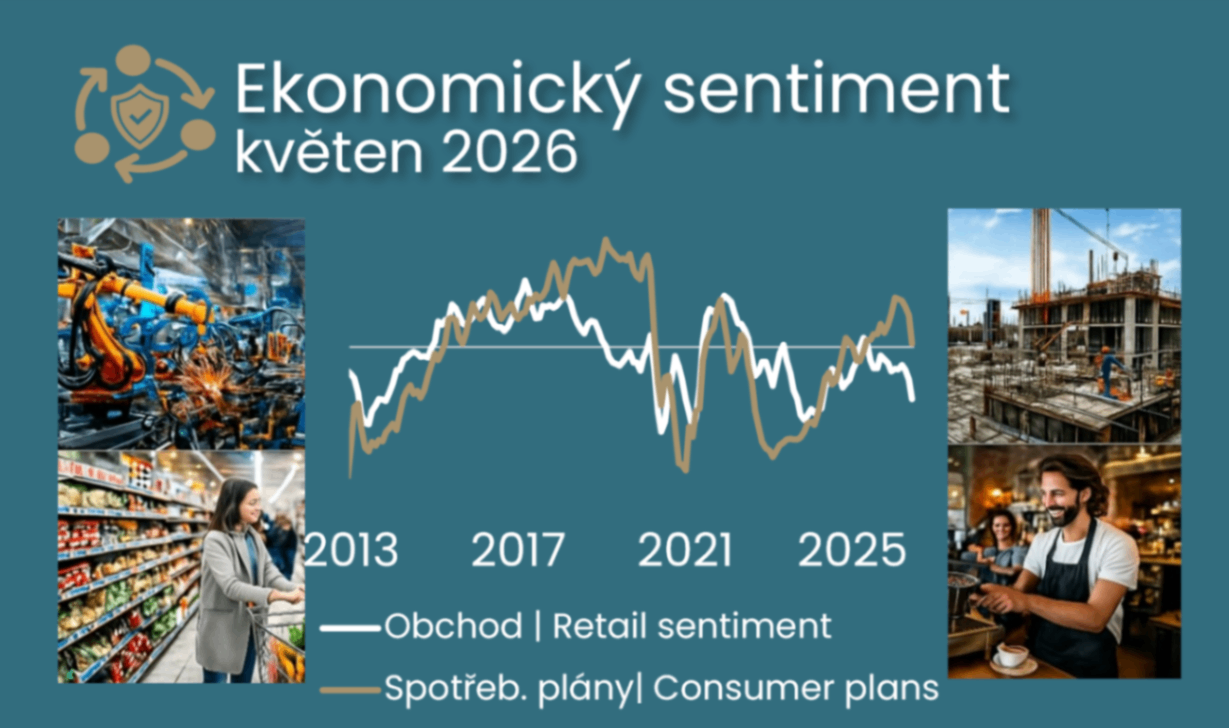
Slightly worse sentiment in May hides a drop in expected large purchases by consumers. If they translate into worse retail sales results in the coming months, these more modest plans would pose a downside risk to the 2% growth outlook for the Czech economy this year. This is based on a stable growth of almost 3% in household consumption. Other details reveal a slight correction in price expectations, which mitigates upside risks to inflation. The labour market receives a neutral report given its recent trend, i.e. slightly negative.
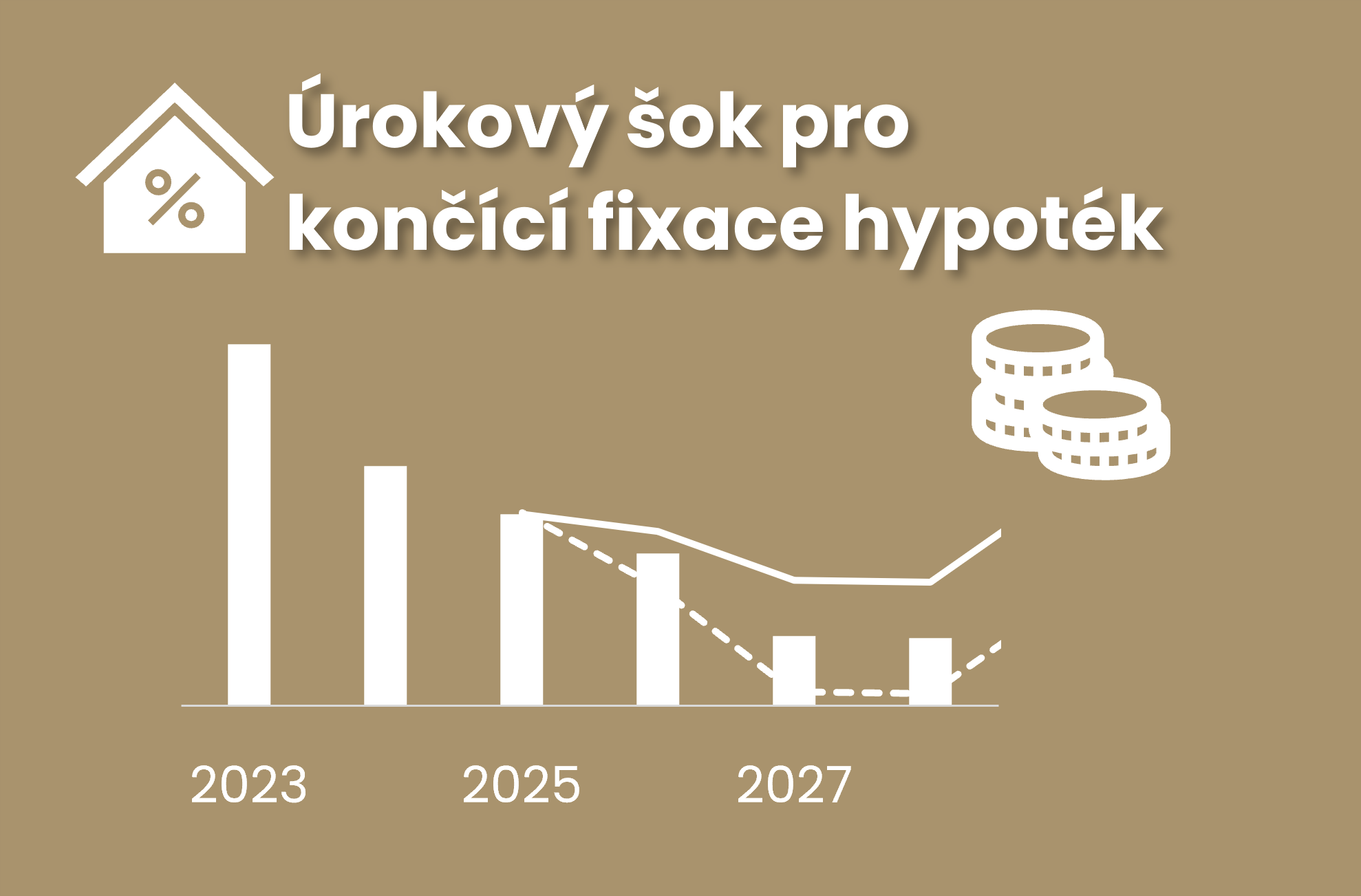
This year is bringing a strong wave of expiring mortgage rate fixations, while the shorter fixation periods agreed in recent years will further increase these volumes in the years ahead. Building on the central bank’s latest estimate that mortgage fixations worth an average of CZK 534 billion per year will expire between 2026 and 2028, we present alternative interest-rate shock scenarios depending on the path of mortgage rates. In 2027–2028, the negative interest-rate shock is expected to ease to 0.1–0.6 percentage points, down from 1.1–1.4 percentage points this year. However, we also outline a more adverse scenario involving a stronger interest-rate shock. This year, the negative interest-rate shock affecting expiring mortgage fixations from the low-rate period will amount to roughly 3.5% of the average household income of mortgage applicants, although across all households the average impact will be about half that level. In both cases, the expected real growth in wages and salaries should be sufficient to offset the shock.
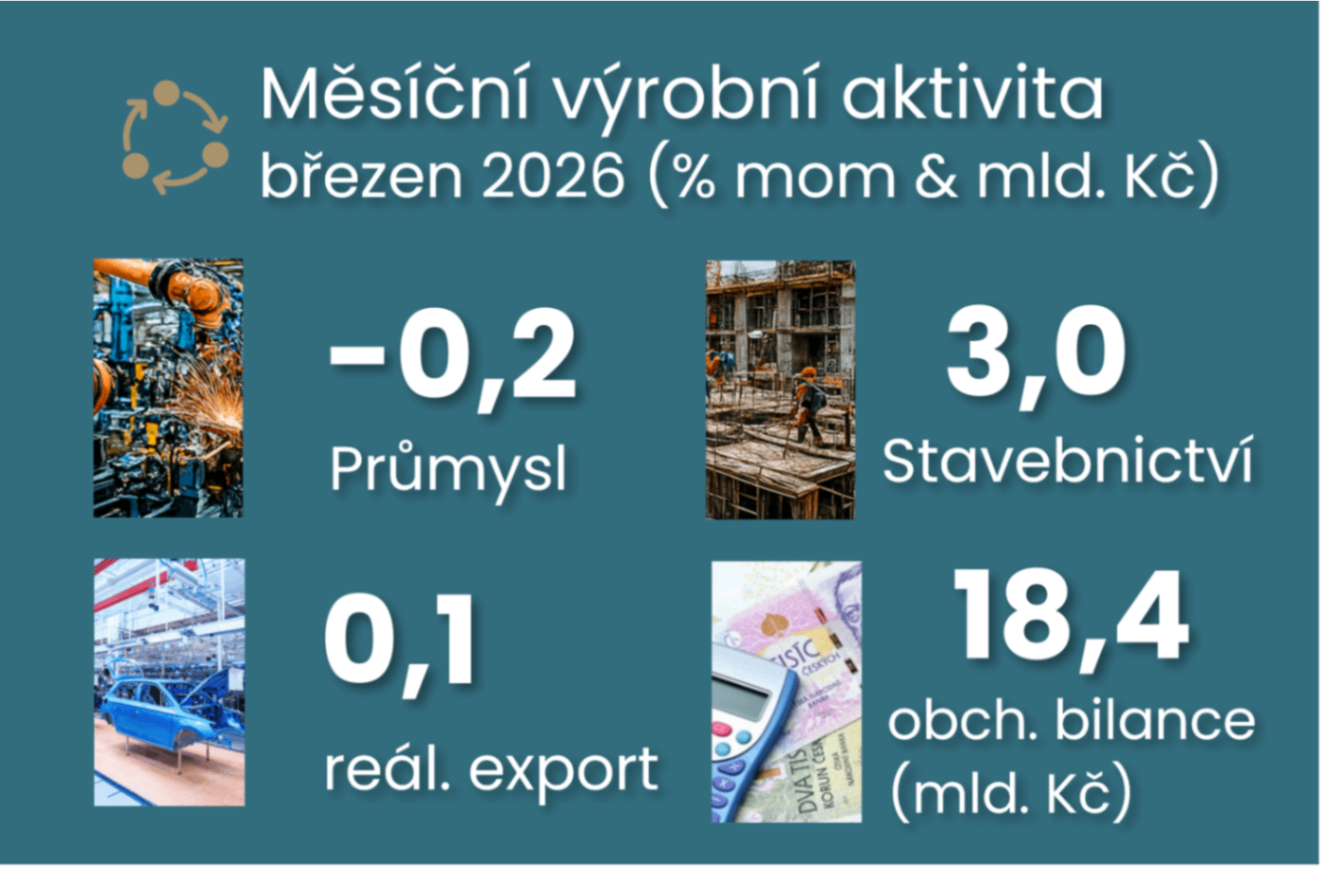
March retail sales returned to strong growth, while March did not bring a turnaround in the stagnation of services. Industrial production did not build on February's better numbers, and a more significant deterioration was prevented by energy-intensive sectors, which does not look like a robust support in the current energy shock. Export activity also remained weaker. However, the month-on-month decline in imports resulted in the return of a solid foreign trade surplus of CZK 18 billion. Construction output, on the other hand, continued to outperform, especially in the buildings segment. However, despite still weak building permit numbers, the number of construction starts continued to rise. Infrastructure construction, on the other hand, remains weaker, presenting an opportunity for future growth. The output side of the economy thus developed in March in line with the weaker GDP growth of 0.2% q-o-q in the first quarter, which was characterised by a decline in industrial activity and a deterioration in foreign trade. These factors were only partly offset by stronger construction output and solid growth in trade and services sales (still with February data). For the CNB, the data, along with higher unemployment and softer industrial wage growth, signal a less hawkish environment than the still elevated momentum in core inflation suggests.

The CNB Bank Board unanimously left interest rates unchanged at 3.5% in the face of uncertainty over the Iranian conflict, although its new forecast suggests an increase to 4% this quarter. The decision is likely to have been driven by a combination of lower economic growth at the start of the year, which may have increased the weight of an alternative scenario with slower growth and lower rates. But probably also the fact that the baseline scenario with higher rates is only assumed for two quarters. It is therefore not surprising that the Board would want to have this monetary policy move sanctified by future developments. However, the latter may surprise with an inflationary development, of which a part of the Board is aware.
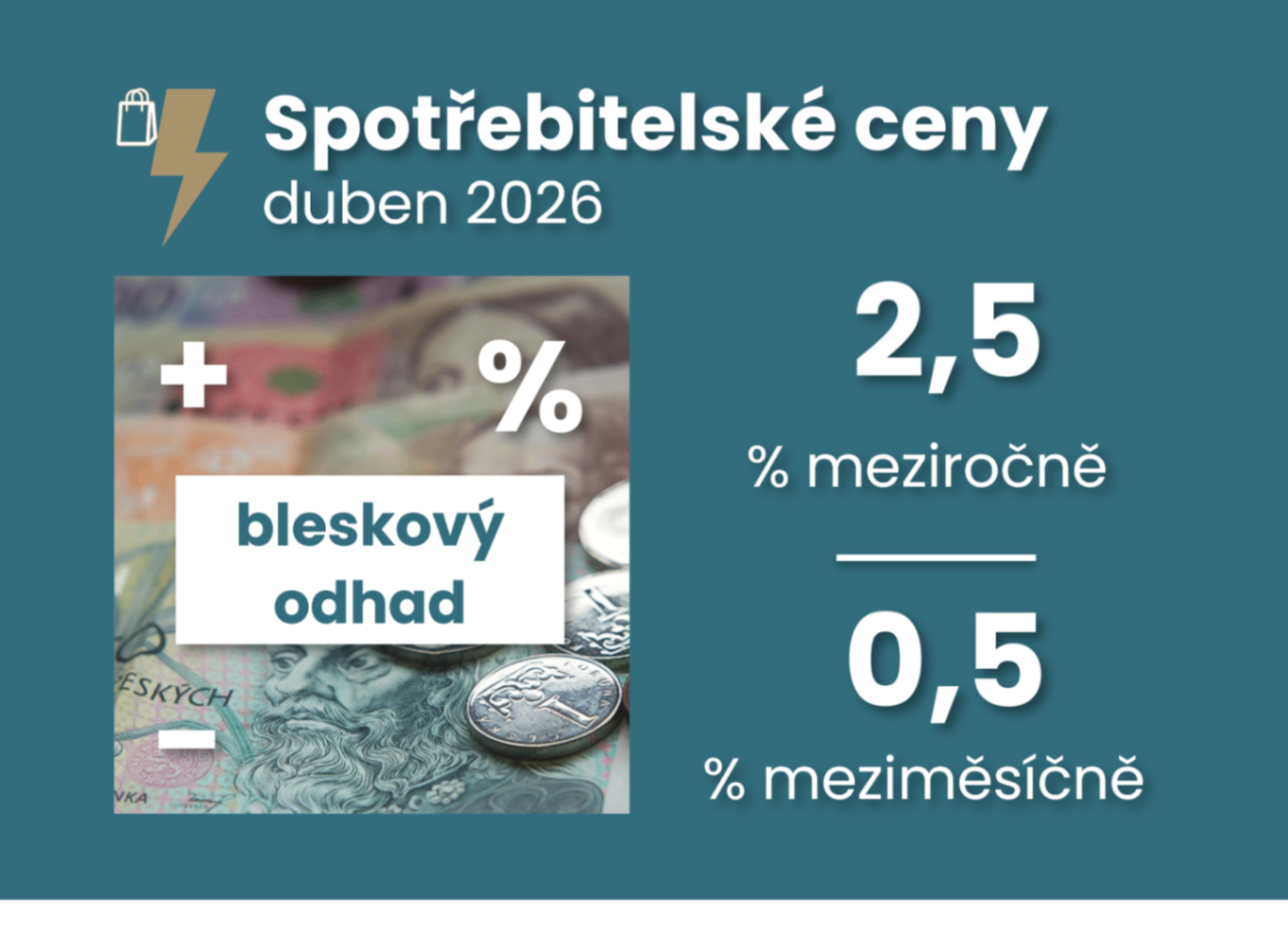
April consumer prices accelerated to 2.5% year-on-year and the story behind the inflation numbers is very similar to March. The acceleration mainly reflects higher fuel prices, but higher core demand inflation and, more recently, higher alcohol and tobacco prices are also creeping in. While energy and food prices still dampened the acceleration. The current dynamics and the Iranian conflict pose a risk of higher inflation for this year, and for the outlook for next year. While risks to the forecast remain volatile due to the uncertainty associated with the Iranian conflict, even if it calms down, higher core inflation represents a hawkish signal for the CNB in the form of a higher interest rate.
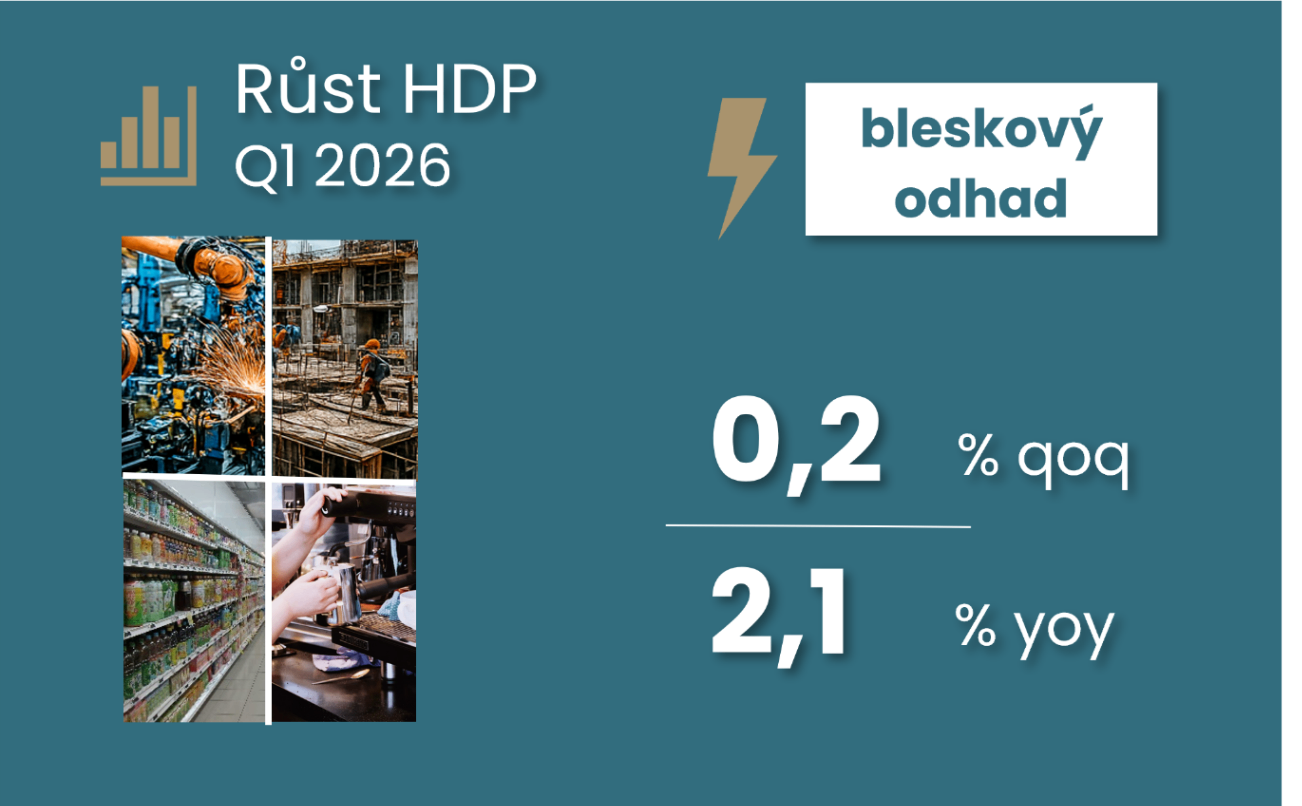
GDP growth slowed to below 0.2 percent in the first quarter, a negative surprise. Instead of the expected household consumption, the economy was mainly driven by investment, while foreign trade worked against growth. However, the weaker consumption may be only a temporary correction after the strong end of last year. The same applies to industrial production, and the government's temporary budget provision also had a negative impact on the first quarter. The outlook will be significantly affected by the intensification of the commodity supply crisis due to the Iranian conflict.
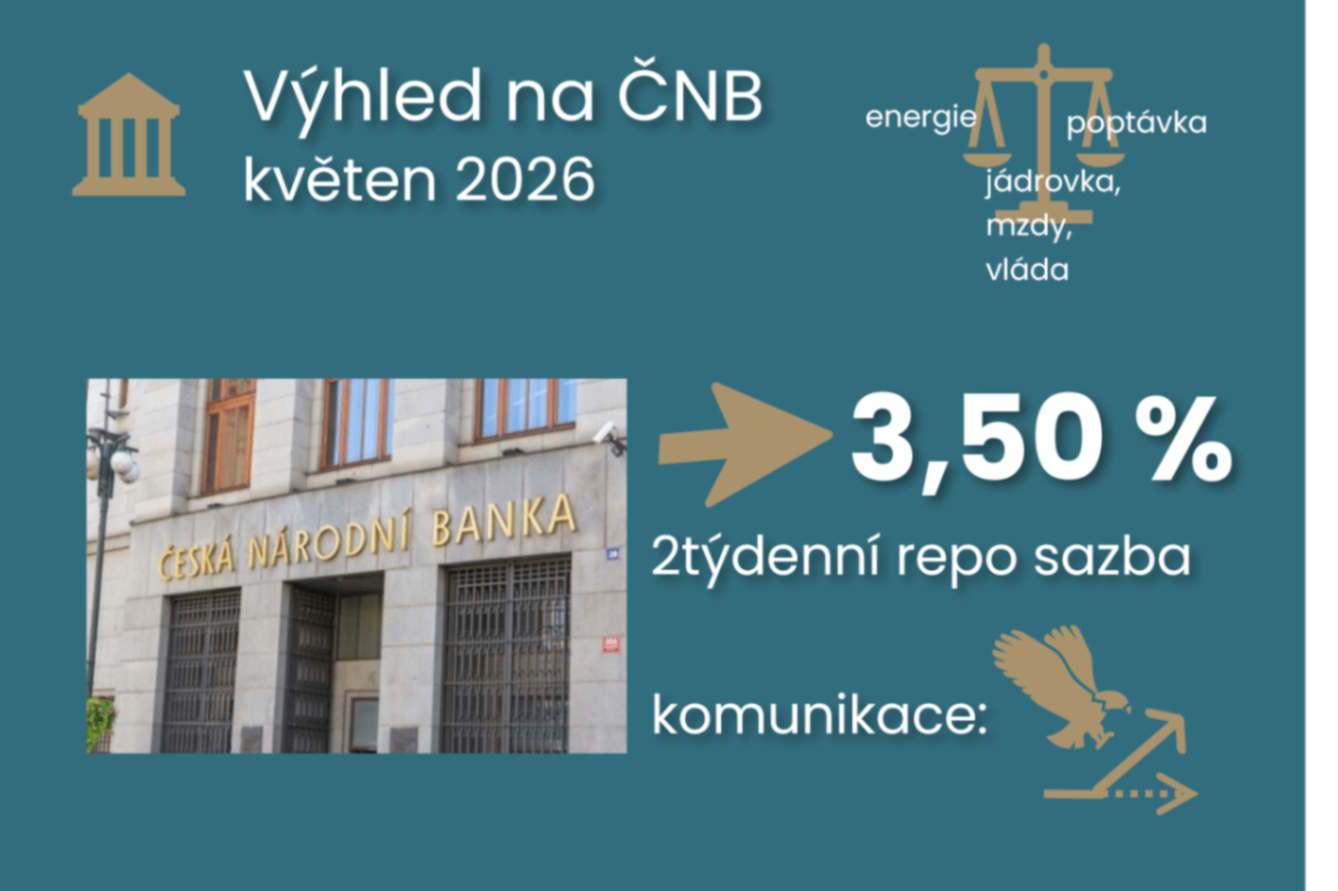
At its meeting on 7 May, the Czech National Bank is likely to leave its interest rate unchanged at 3.5% and the tone of its communication is likely to be hawkish. This will neither surprise nor offend, but neither will it please. In the meantime, long-term market rates are rising, pricing in not only an unresolved Iranian conflict but also upside risks that may allow the effects of an energy shock to seep through. This is reflected in a further rise in the long-term equilibrium interest rate, which is at levels seen in 2023 when the central bank rate was double, which is bad news for long-term investments. Data at the end of May and beginning of June will show the state of the inflationary underpinning in the Czech economy. This will be crucial not only for the market interest rate reaction but also for the monetary policy stance if the Hormuz closure continues. In the meantime, economic policy should respond with structural changes to ease long-term interest rates.
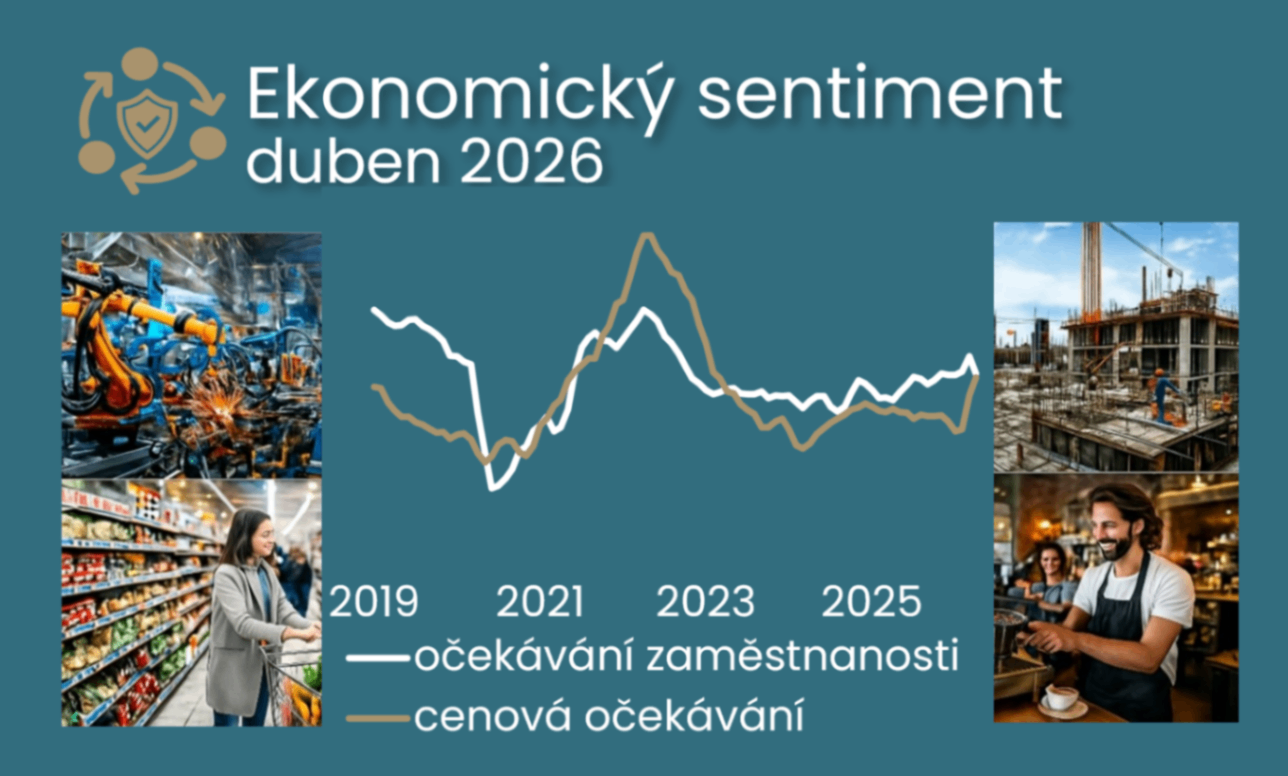
April sentiment already reflects the impact of the Iranian conflict on the Czech economy more strongly, but unevenly across sectors. Sentiment deteriorated as expected in industry, households and retail trade, while services dampened the overall deterioration thanks to stronger demand and construction. Price expectations continued to rise in industry, households and construction, while retail sales remained close to the long-term average and services corrected slightly after the previous increase. Meanwhile, labour market effects remain limited even in the harder-hit sectors and, in fact, the overall slightly worse sentiment still does not provide an immediate signal for worse growth expectations for the economy.
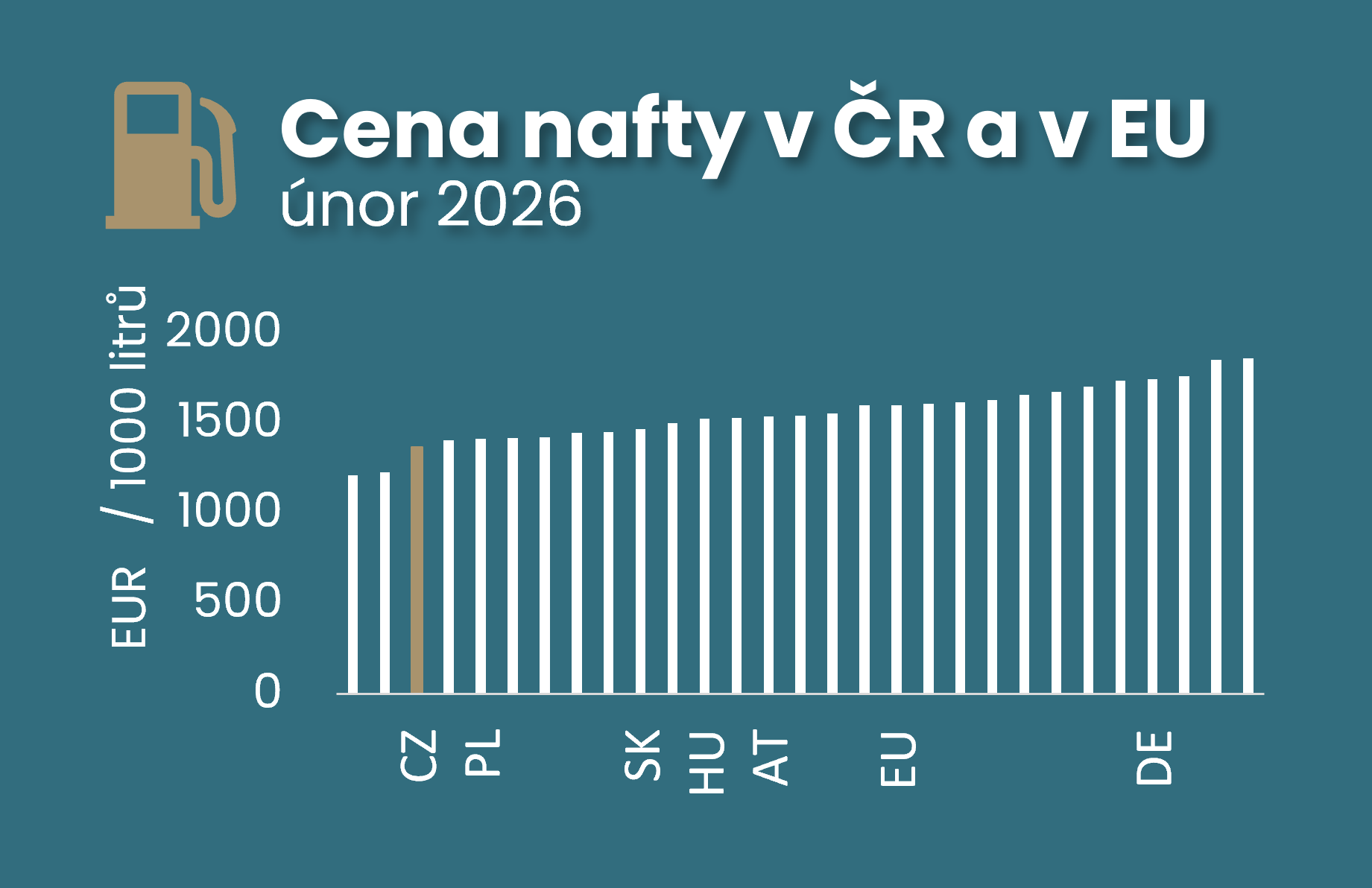
According to Eurostat data for March, the price of diesel at Czech petrol stations rose the most in the EU, by almost 28% month-on-month, while the average increase in the EU was 19%. I am not an expert on the pricing policy of petrol stations, the density of petrol stations or the pricing policy of refineries. However, if I look at the EU fuel price statistics, it is clear that the March jump reflects: 1) the low starting price in the Czech Republic - the third lowest in the EU; 2) the lower taxation of diesel in the Czech Republic - the fourth lowest in the EU; 3) the different pricing and tax policies across EU countries in March.
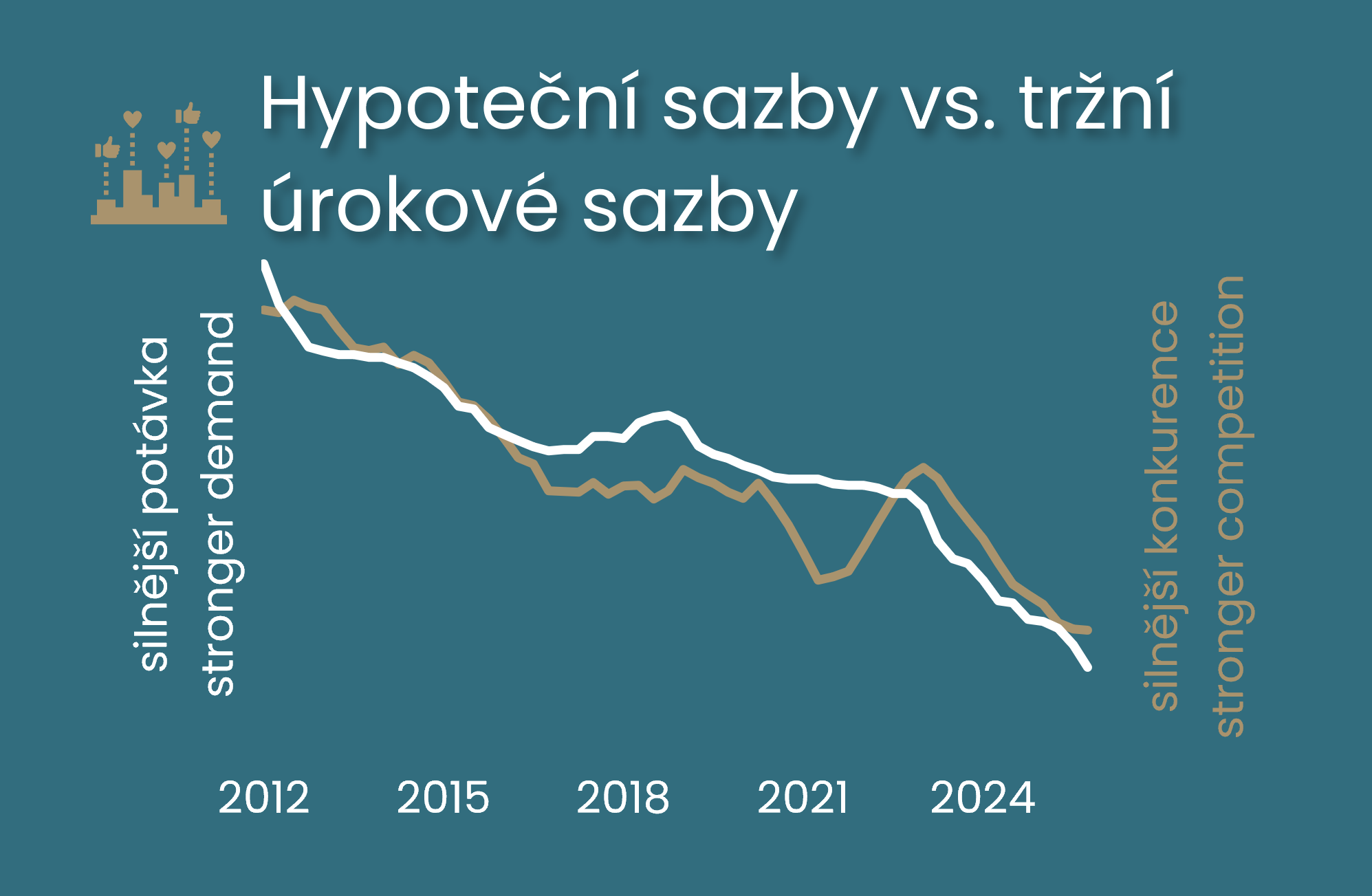
Comment by Jaromír Šindel, Chief Economist of the CBA: Mortgage rates are significantly determined by the movement of market interest rates. However, structural factors in the banking market are also important. The CNB's investigation of credit conditions in our analysis helps to explain what factors influence the difference between mortgage and market interest rates deviating from its normal level. The CBA analysis shows that a combination of stronger demand and competition among banks plays a key role. It is the latter that can lead to more favourable rates for clients without undermining market stability. The difference between mortgage rates and market rates that we have been monitoring is therefore mainly dampened by stronger demand, but in an environment of growing competition, which is key. Banks' profitability also plays a role, acting as a corrective mechanism to maintain competitive interest rate spreads but also market stability.
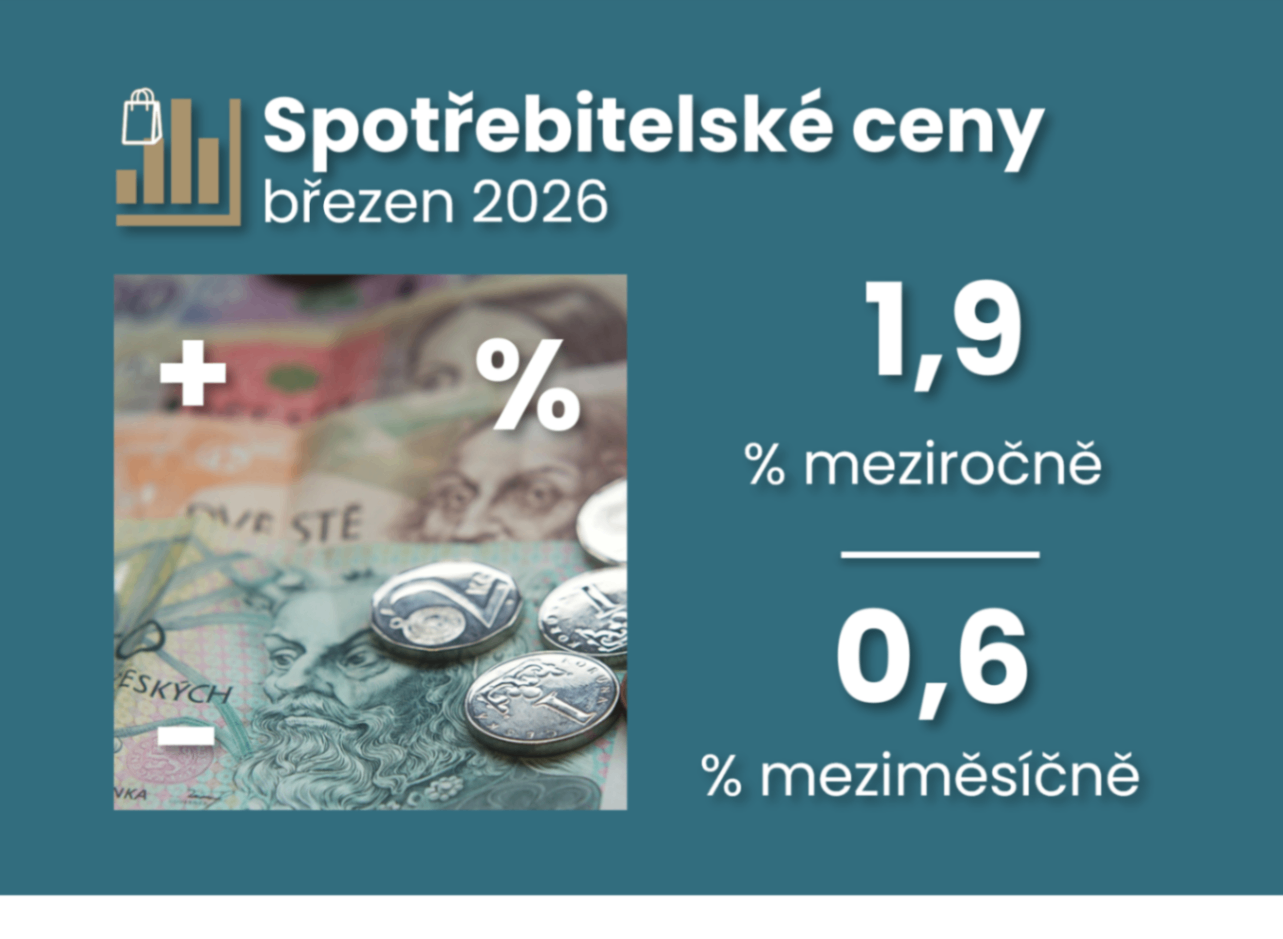
The March acceleration in consumer price inflation to 1.9% was not surprising in itself, but the acceleration in core inflation to 2.9% was less favourable, including the momentum across key segments. This indicates that price pressures in the domestic economy remain strong, especially for labour-intensive services and imputed rents, but also the koruna no longer provides a disinflationary factor for goods prices, amid strong household demand. For the Czech National Bank, the March core inflation is a hawkish signal that may reinforce interest rate growth expectations, especially if the current energy shock persists.
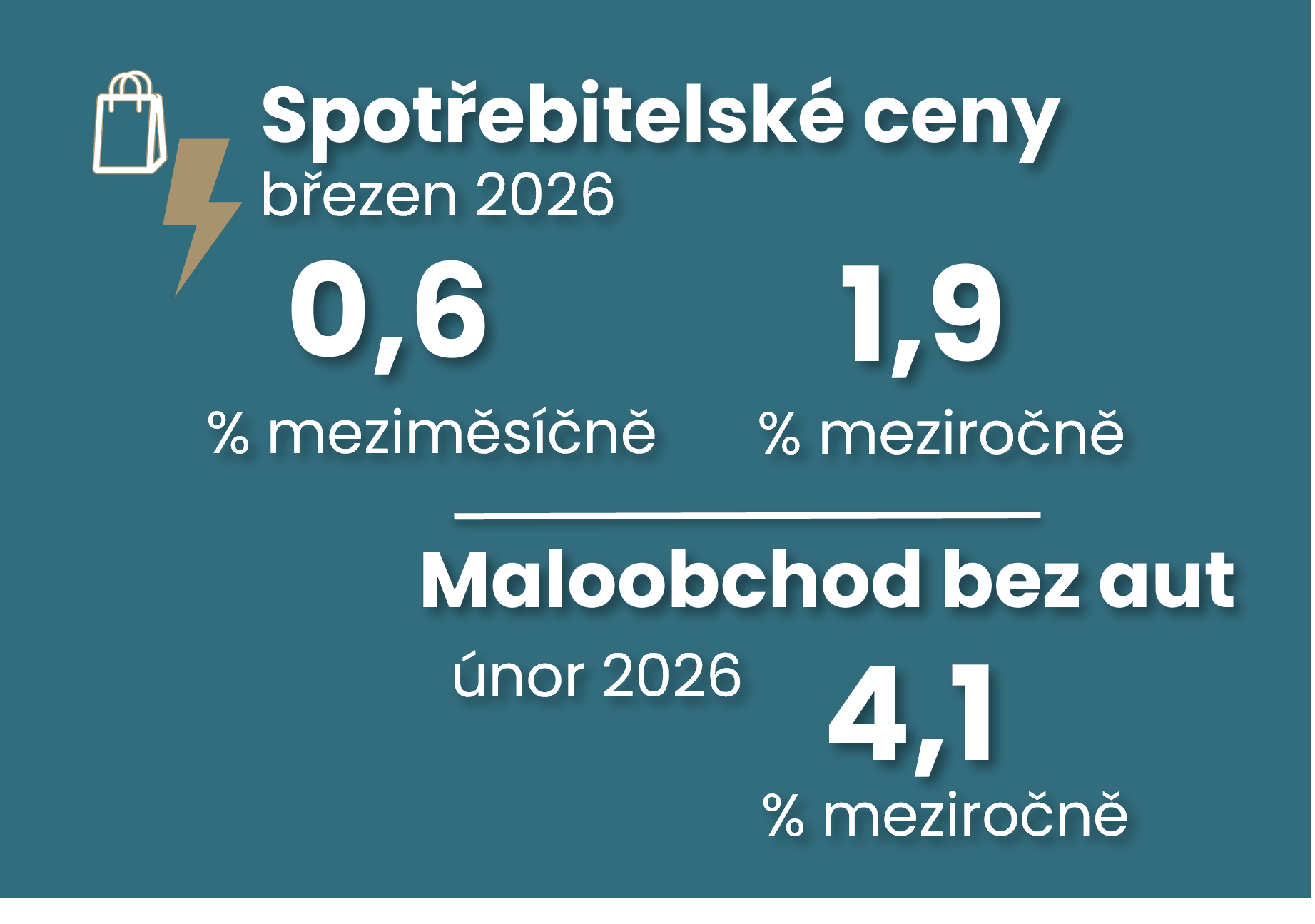
March inflation accelerated to 1.9% year-on-year in March, mainly reflecting higher fuel prices. However, the acceleration was somewhat milder than expected, helped by lower food prices. However, preliminary data suggest an acceleration in core inflation to 2.8%, which is not surprising given the still strong growth in retail sales. Although these did slightly correct the previous strong increase in January in the core segment in February. However, the strength of demand is relatively limited given the rather sluggish sales in services in the first two months of the year. The central bank will monitor the dynamics of these demand pressures, wages and core inflation, which will determine the speed and extent of its interest rate hikes in the coming months. Stronger demand is also translating into more robust imports, shrinking the foreign trade surplus that has not yet been affected by the energy price shock.
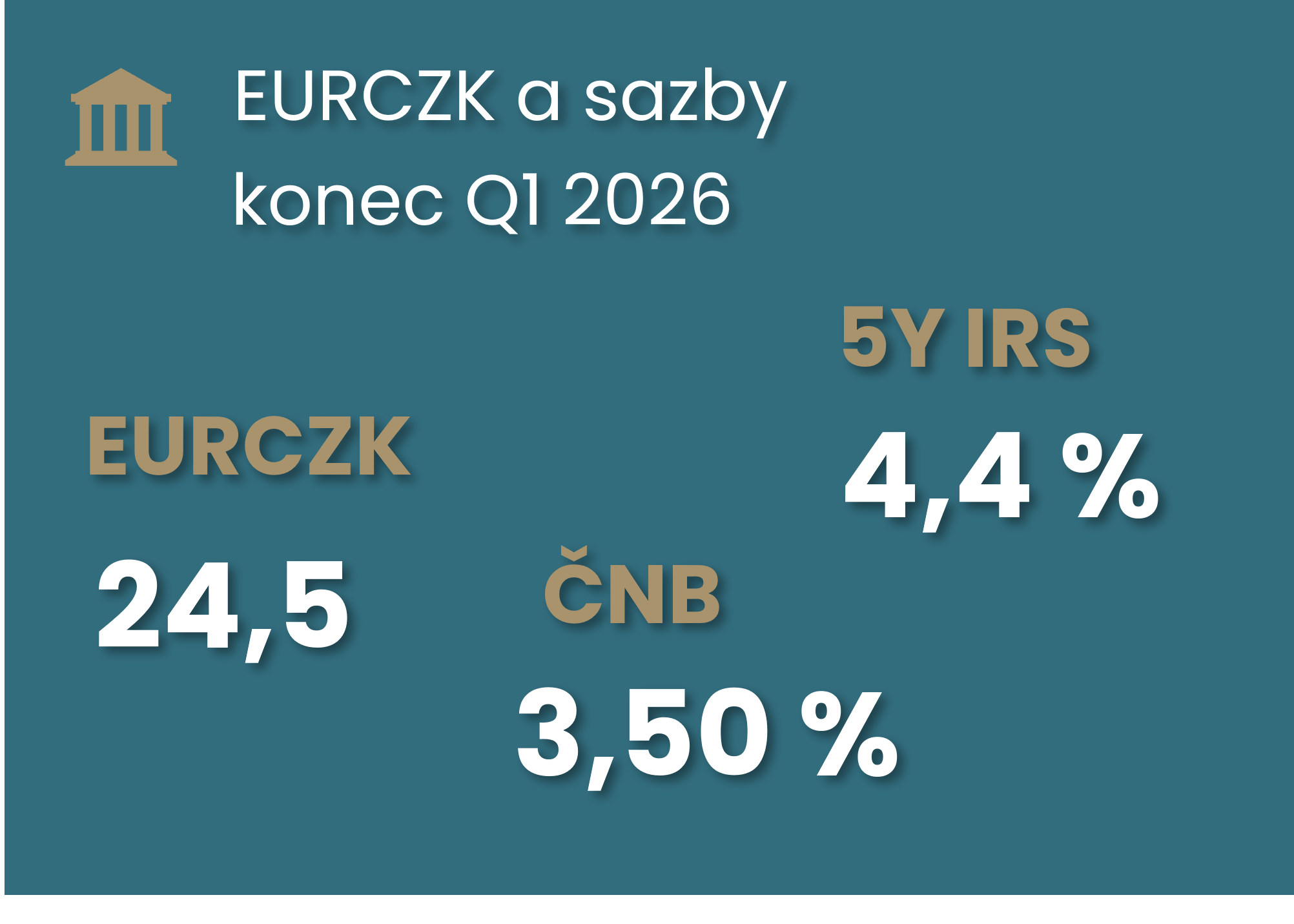
The koruna weakened slightly in Q1, especially in March, under the influence of geopolitical tensions and higher risk aversion in the markets. However, higher interest rates prevented a more pronounced depreciation. The Czech currency thus remains stronger than at the beginning of last year, which is also cushioning the effects of the current energy price shock.
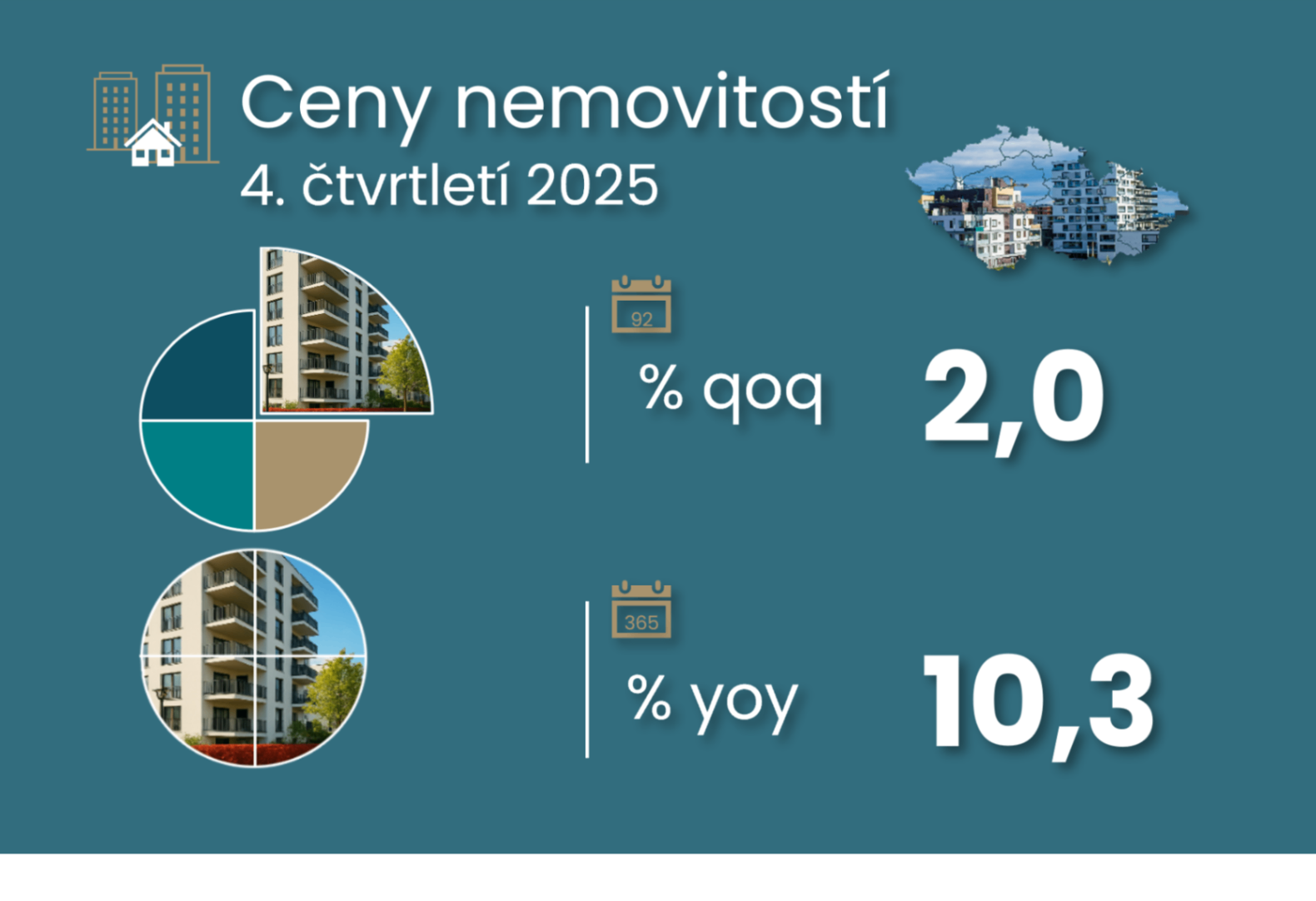
According to the CSO statistics, property prices, which include land and family houses, rose by 2% quarter-on-quarter in the final quarter of 2025. This slowed from the previous average 2.6% increase in the previous four quarters. Although the income side of demand is still lagging, real household incomes accelerated more sharply at 1.4% q-o-q (up nearly 3% in nominal terms) at the end of last year. And so did the household savings rate, which rose to 19.7%. Moreover, both figures were positively revised and there was a slight positive revision to GDP growth in the final quarter of 2025, albeit with more limited effects on the economic outlook.
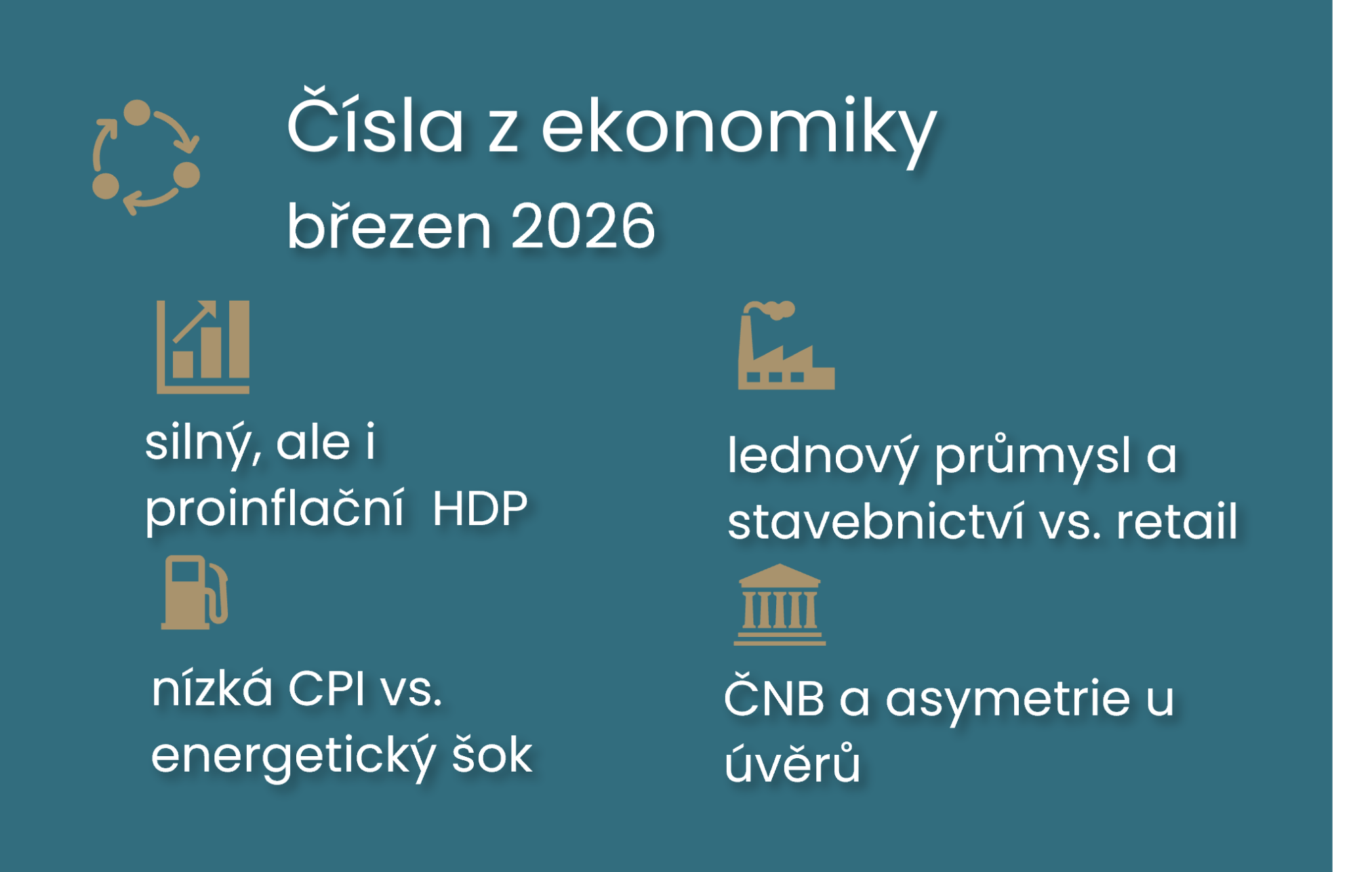
The Czech economy accelerated at the end of last year and maintained its inflationary bias due to strong household consumption and strong wage growth unsupported by productivity. However, the central bank's New Year communication hinted at a possible interest rate cut. However, this rhetoric has been changed by the recent energy shock. For the central bank, the dynamics of core inflation will be key in the coming months, but also the pass-through of higher oil and gas prices to other price segments in the economy. March price expectations rose, but their April perception will be more guiding for the central bank.
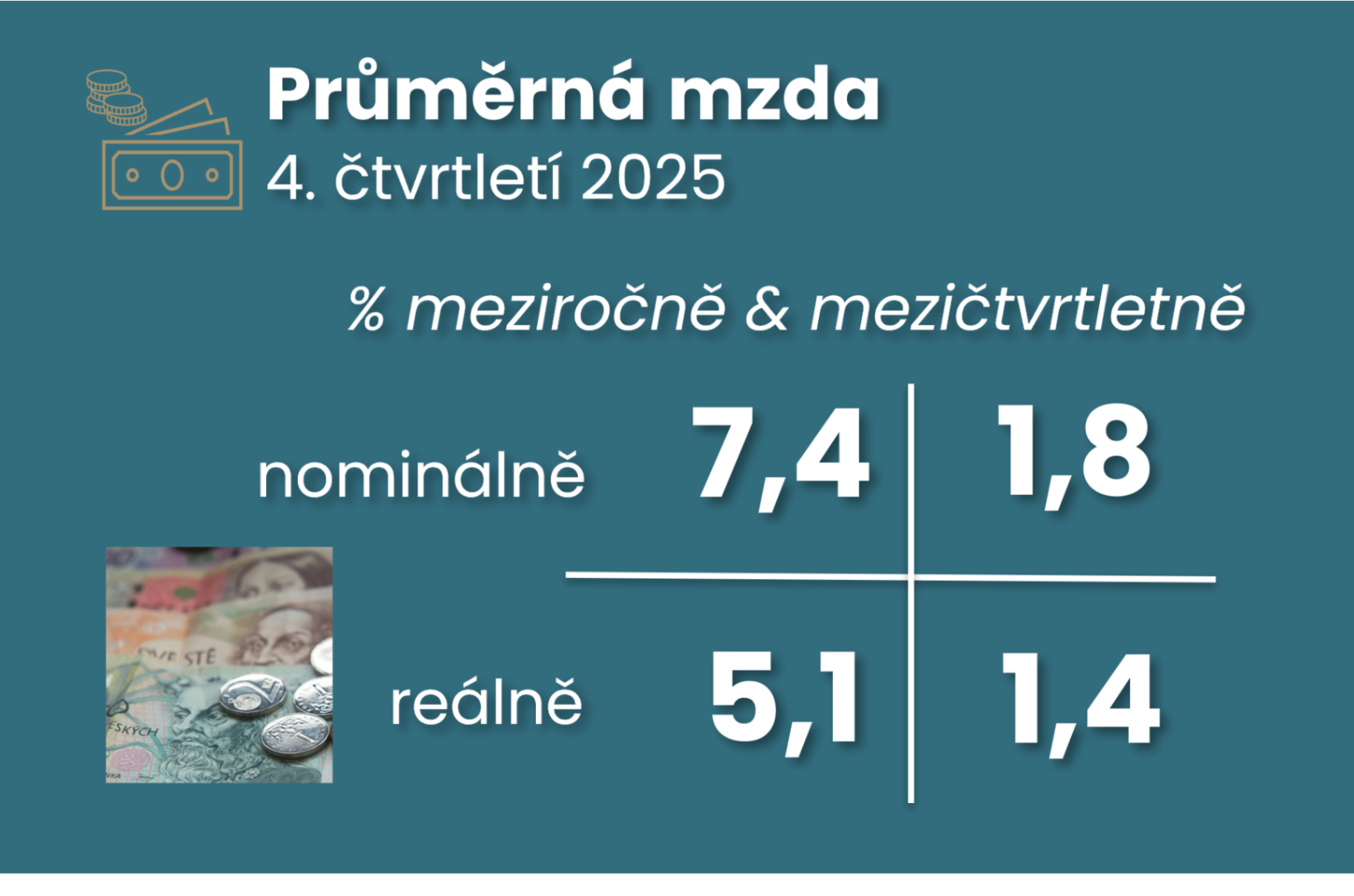
Wage growth remained strong at the end of 2025. Average wages rose by 7.4% year-on-year and added 7.2% for the year as a whole. Thanks to low inflation, this meant real wage growth of 4.7%, higher than forecast. While nominal growth should slow this year, real wages may continue to grow solidly. The average nominal wage reached CZK 49.2 thousand last year, surpassing CZK 50 thousand at the end of the year on a seasonally adjusted basis and reaching almost CZK 51 thousand in market sectors. The median wage of CZK 42 thousand was approximately 85% of the average wage.
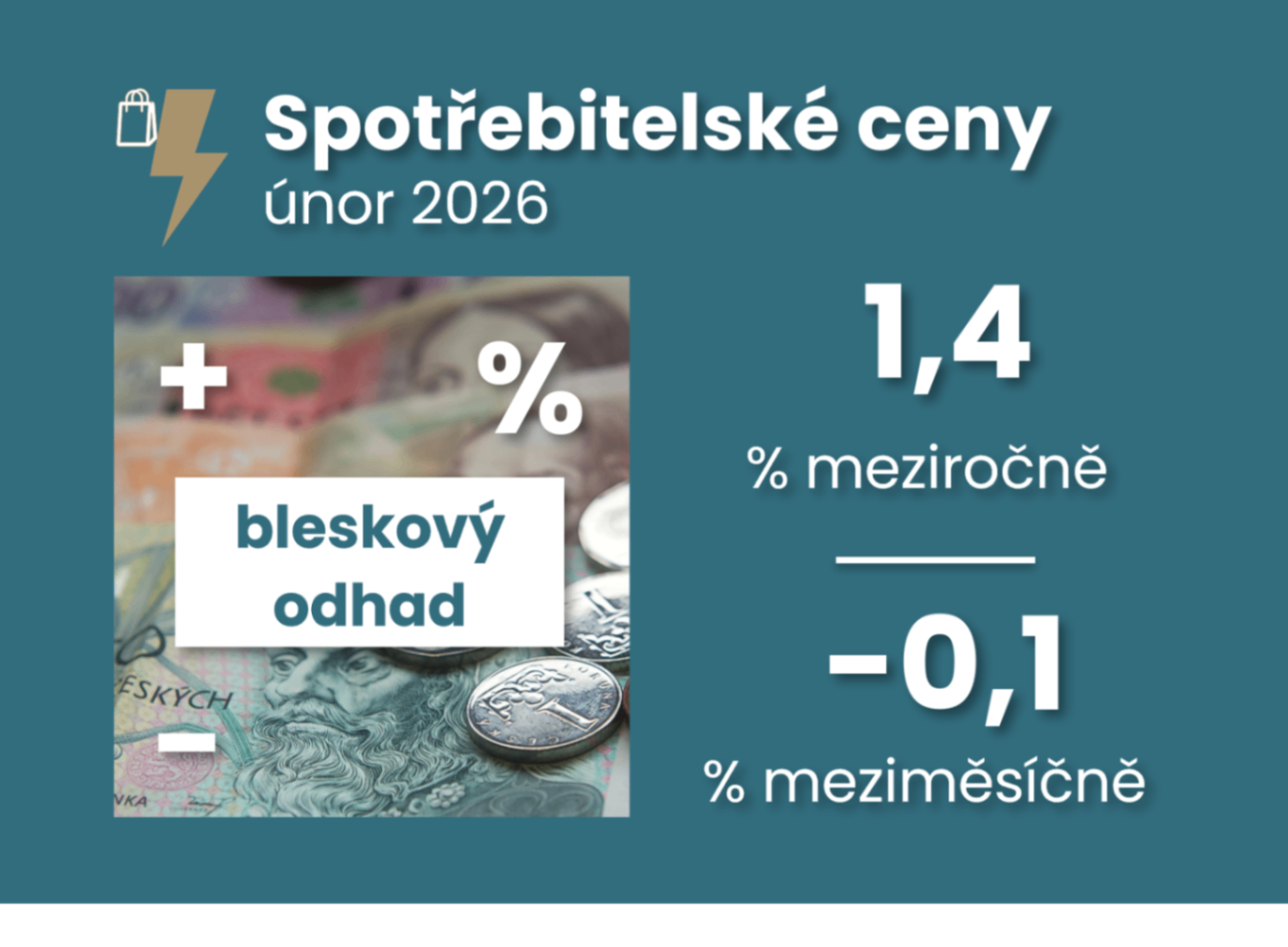
Comment by Jaromír Šindel, Chief Economist of the CBA: February consumer inflation pleasantly surprised the consensus and the central bank by slowing to 1.4% year-on-year. The inflation was mainly helped by a further decline in food prices, but also by a slightly milder rise in services prices. However, the energy shock due to the Iran war, together with still higher core inflation, is likely to pull annual consumer price growth back to an average 1.7% for the rest of the half-year. Details on core inflation, and hence services prices, will be important for both the inflation outlook and the central bank's interest rate outlook in the context of continued wage and unit labour cost growth (see charts below for market developments).
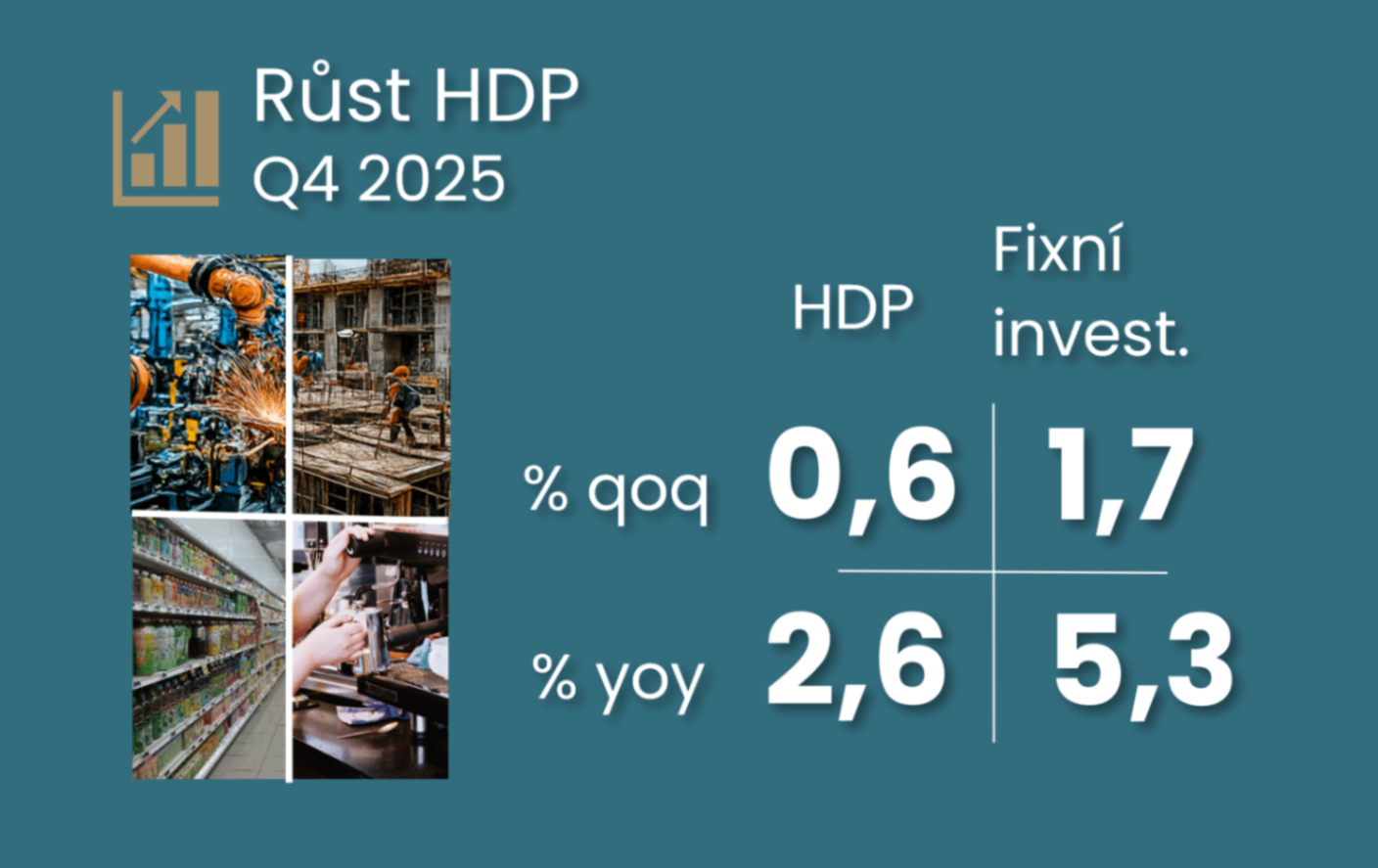
Comment by Jaromír Šindel, Chief Economist of the Czech Bank of Economics: The Czech economy closed last year with stronger growth than originally expected. The Czech economy could repeat its 2.6% annual growth this year. Household consumption was the driving force at the end of last year, supported by stronger wage growth, but also by strong growth in manufacturing. However, higher wage costs have far outpaced productivity growth, and so still elevated core inflation will remain the central bank's focus, which should result in the CNB interest rate holding steady at 3.5%.
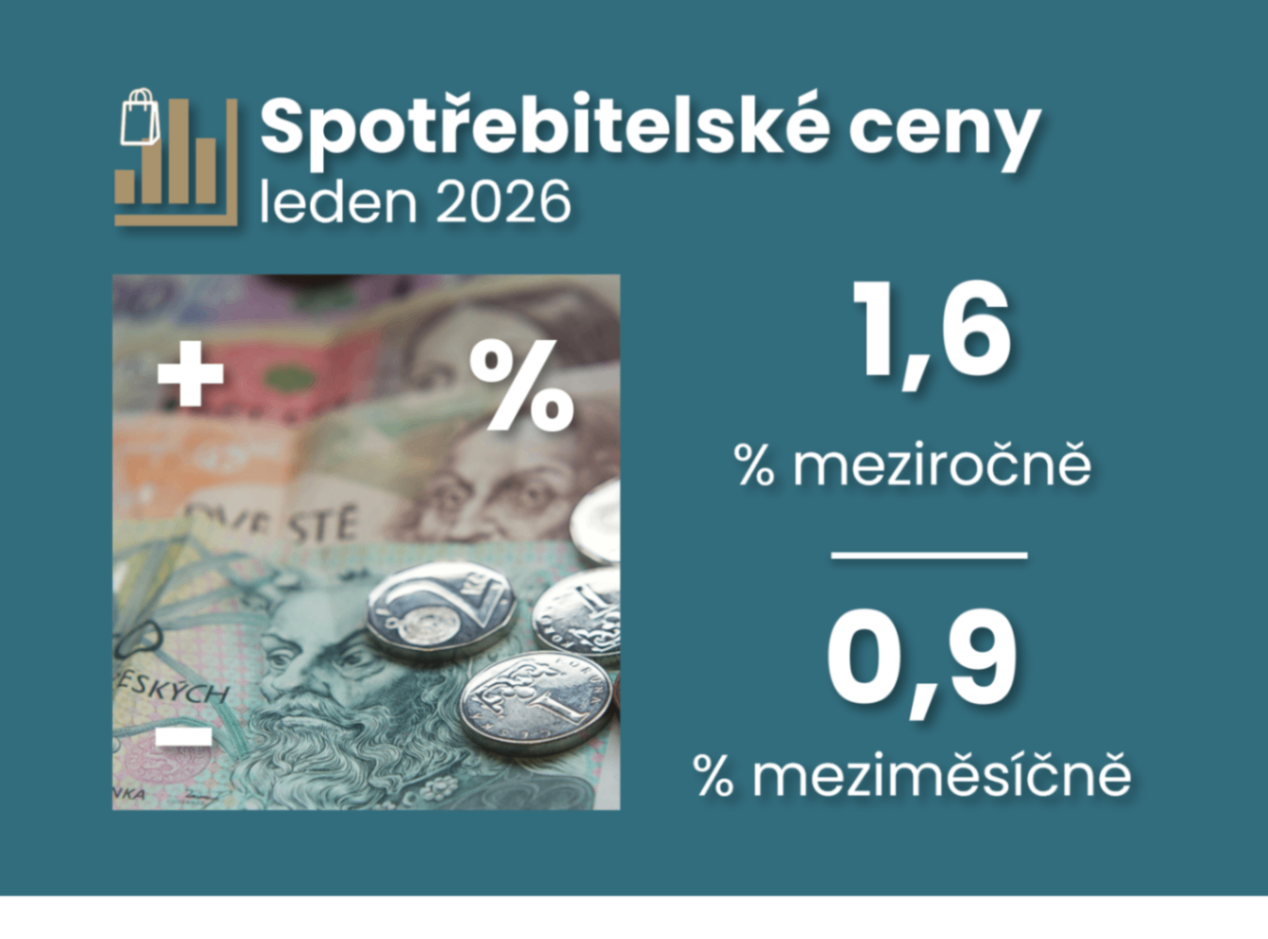
Comment by Jaromír Šindel, Chief Economist of the CBA: January's significant slowdown in consumer prices to 1.6% year-on-year mainly reflected the transfer of contributions for renewable energy from household invoices to the state budget. By contrast, core inflation eased slightly to 2.7% y/y from 2.8% at the end of last year. Food prices, which had contributed significantly to the moderation of inflation at the end of last year, rose in January, but less than would have been seasonally consistent. Consumer price growth is expected to reach around 1.7% yoy this year, following a 2.5% rise in 2025, but with core inflation still rising at around 2.5%, this will also require a disinflationary impulse, which is not yet coming from the property market segment, for example. Higher core inflation should keep the CNB interest rate steady at 3.5%, although the market is pricing in a slight cut, as are half of the CBA forecast panelists.
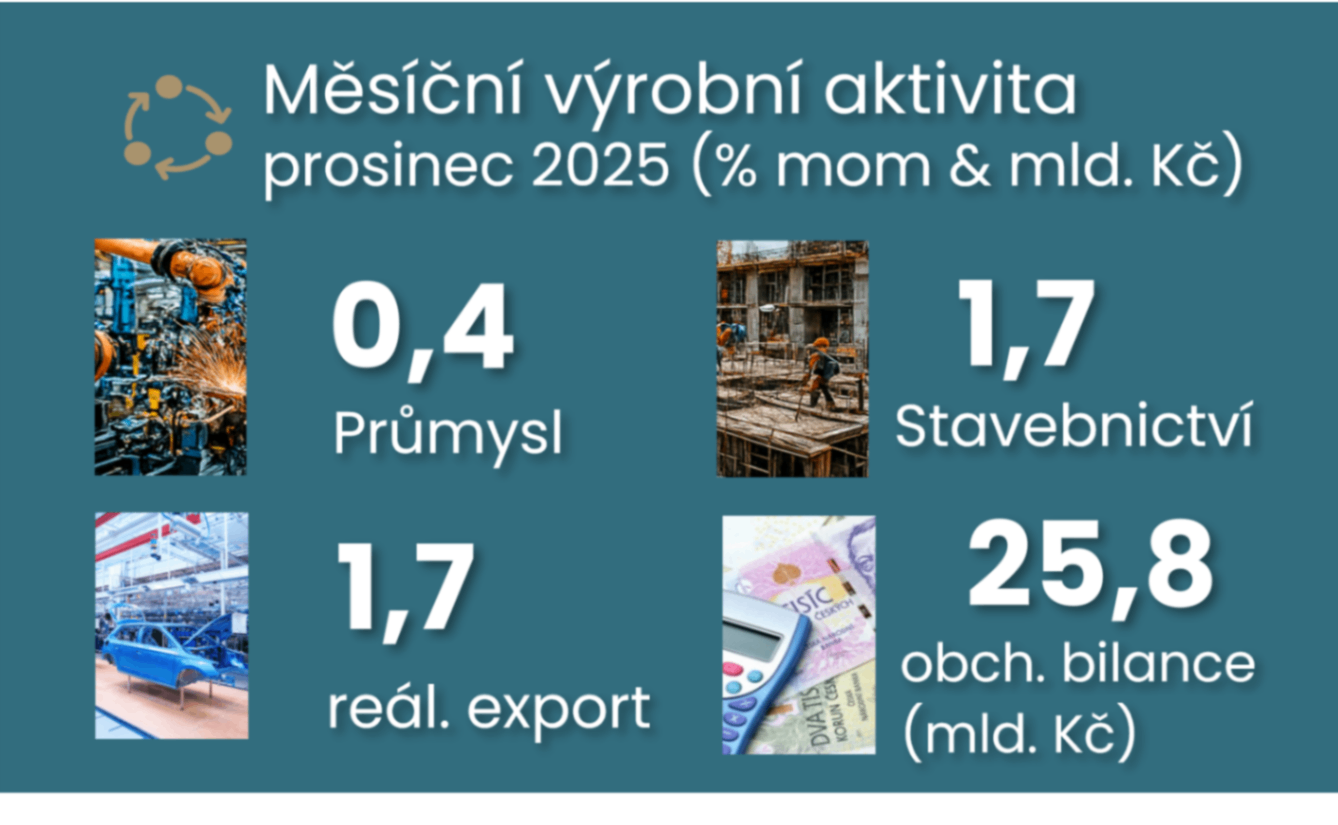
Comment by Jaromír Šindel, Chief Economist of the CBA: December data brought a positive end to the year with continued better-than-expected industrial production, including its structure. The same is true for construction output, which returned to a better performance, but the weaker number of building permits remains a drag. Foreign trade posted an improved surplus of over 25 billion kronor in December and nearly 220 billion kronor for the full year 2025. This is equivalent to 2.6% of GDP, down from 2.8% a year ago. While retail trade did not impress at the end of the year, this was not the case for industrial wages, which returned to double-digit annualized growth at the end of the year. Overall, the December data should not prompt more dovish rhetoric from the CNB, as it does not yet signal a disinflationary contribution from the real economy towards core inflation. However, in its new, stronger outlook, the CNB is also assuming an improvement in labour productivity, which, together with tighter monetary conditions, will bring inflation back towards its target.
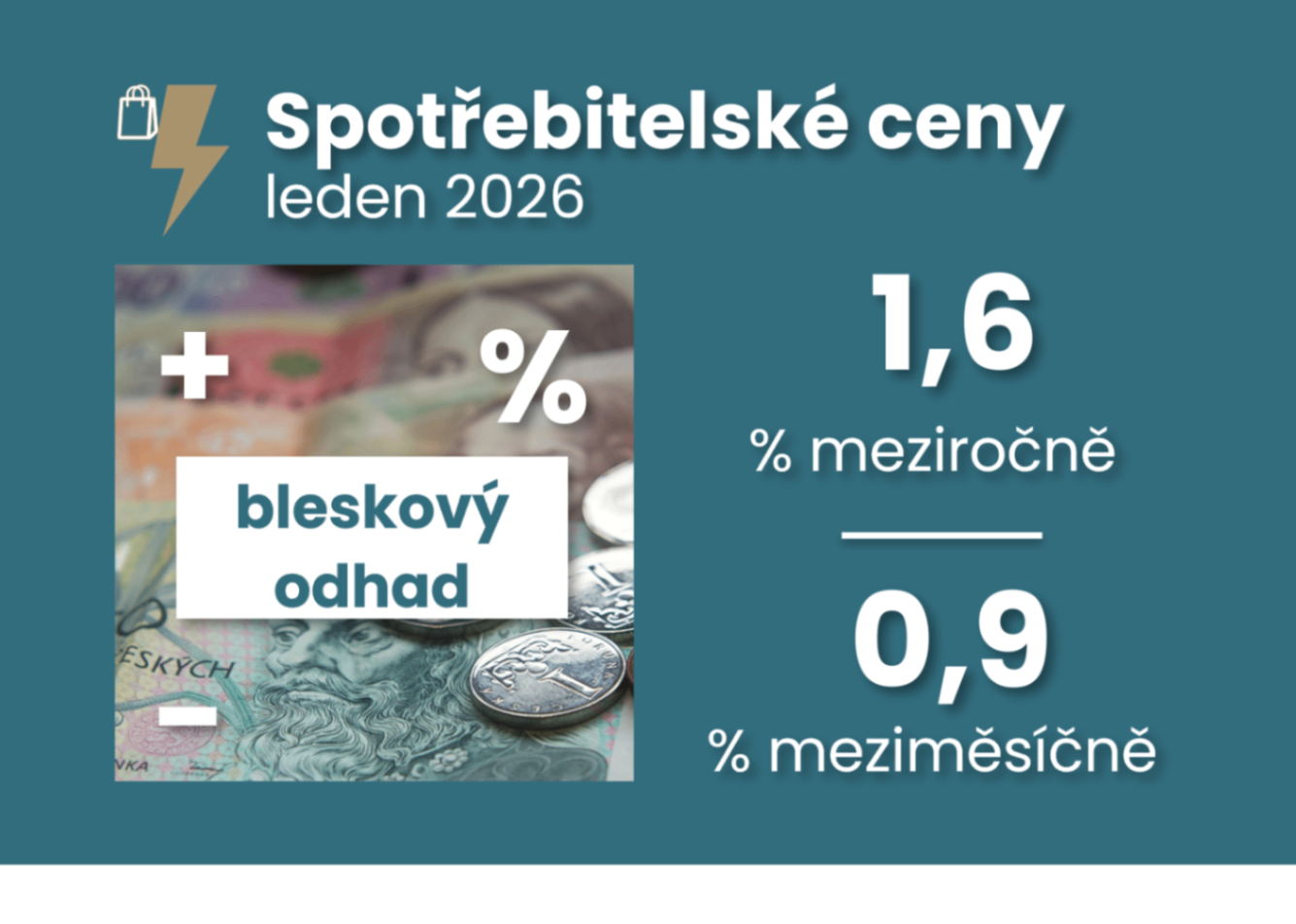
Comment by Jaromír Šindel, Chief Economist of the CBA: The significant slowdown in consumer prices to 1.6% year on year in January did not surprise the consensus and mainly reflects lower energy prices, but also food and fuel prices. On the contrary, I expect core inflation to remain at at least 2.8% growth from the end of last year. Although core retail sales corrected with a 0.6% month-on-month decline in December, annualized momentum, along with household plans, remains strong and does not suggest easing demand pressures. Thus, even in light of fiscal plans, interest rate stability appears to be an appropriate stance for the central bank, at least for the coming months. This is inconsistent with interest rate market targeting, but in my view this would require significantly lower core inflation pressures.
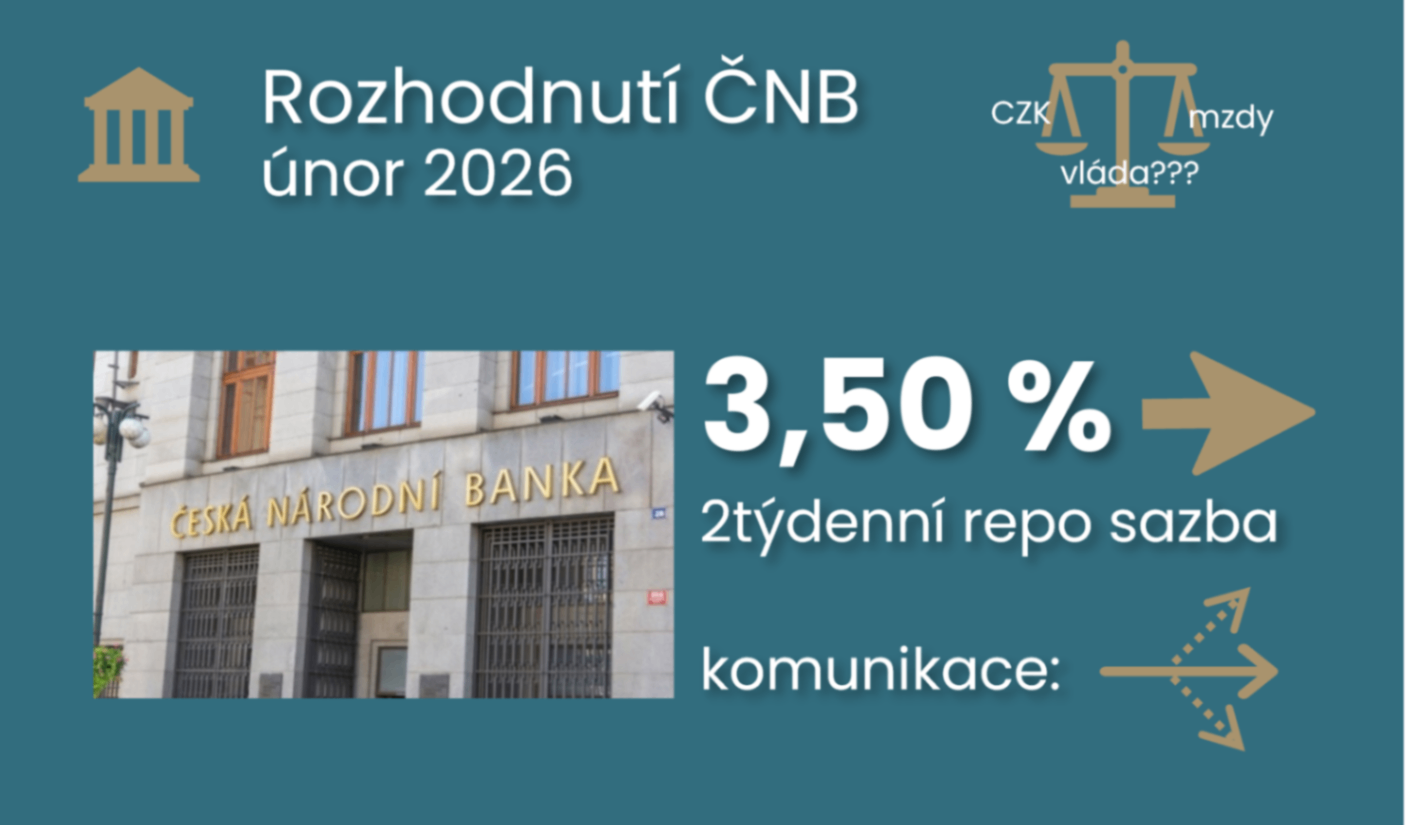
Comment by Jaromír Šindel, Chief Economist of the CBA: The January slowdown in consumer price growth to 1.6% (mainly due to fiscal intervention in regulated energy prices) was accompanied by a discussion of a possible slight reduction in the CNB interest rate in order to fine-tune the recent interest rate cycle. However, persistently higher momentum in core inflation has left its interest rate unchanged, and risks associated with service prices and fiscal policy leave all options open for the central bank to move its interest rate. This is also true in light of the central bank's new forecast outlook, which admittedly encourages a marginal short-term interest rate cut before rising to 4% as early as the end of this year. With its decision and the reiteration of both inflationary and disinflationary risks, the central bank has tempered the dovish expectations of some market participants and the outlook for a 3.5% rate still seems likely. The key is the reiteration of the thesis of the sustainability of a return to the inflation target through softer core inflation.
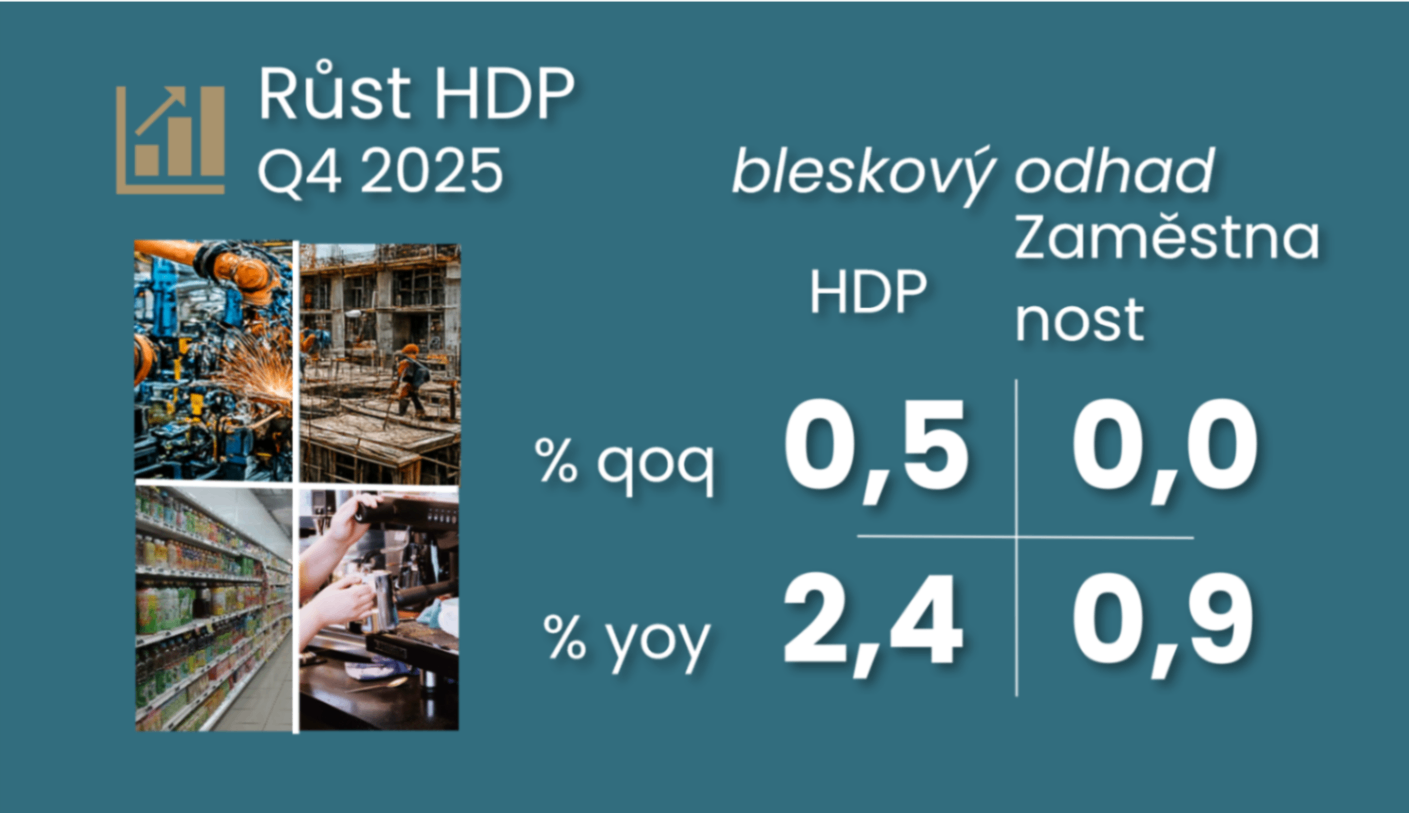
Comment by Jaromír Šindel, Chief Economist of the CBA: Economic growth slowed down at the end of last year, but still achieved solid 0.5% quarter-on-quarter GDP growth.The structure of growth has not changed significantly - consumption is dominant, which is probably not true of investment. This is in line with the latest sentiment data. A more positive sign is improving productivity. The outlook for this year is a repeat of last year's 2.5% growth, thanks to a better outlook for real wage growth and a change in fiscal policy. Conversely, weaker external demand, even given industrial sentiment, is likely to be a drag on stronger economic growth.
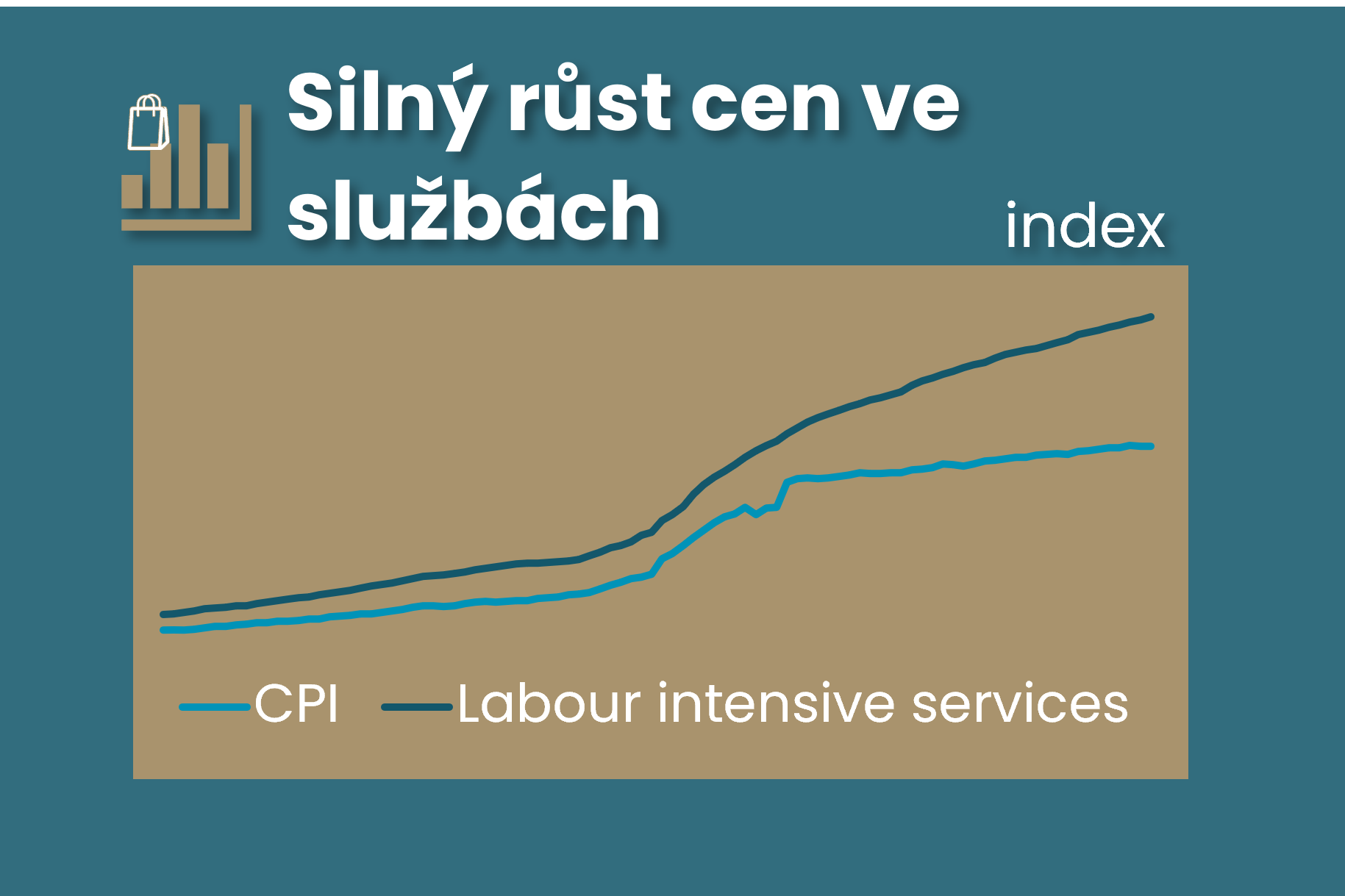
Comment by Jaromír Šindel, Chief Economist of the CBA: The analysis summarizes the government's regulatory steps that will further slow consumer price growth this year, probably well below 2%. What does this mean for the CBA, which seems to be starting to deflate the pigeon balloons, at least more than at the end of last year? Given its earlier communications, where inflation is headed in 2027 should be key, which will also indicate the direction of core inflation in the months ahead. And it is not just the case of still strongly rising services prices that are the focus of this analysis, the first part of the triptych ahead of the CNB's February board meeting.
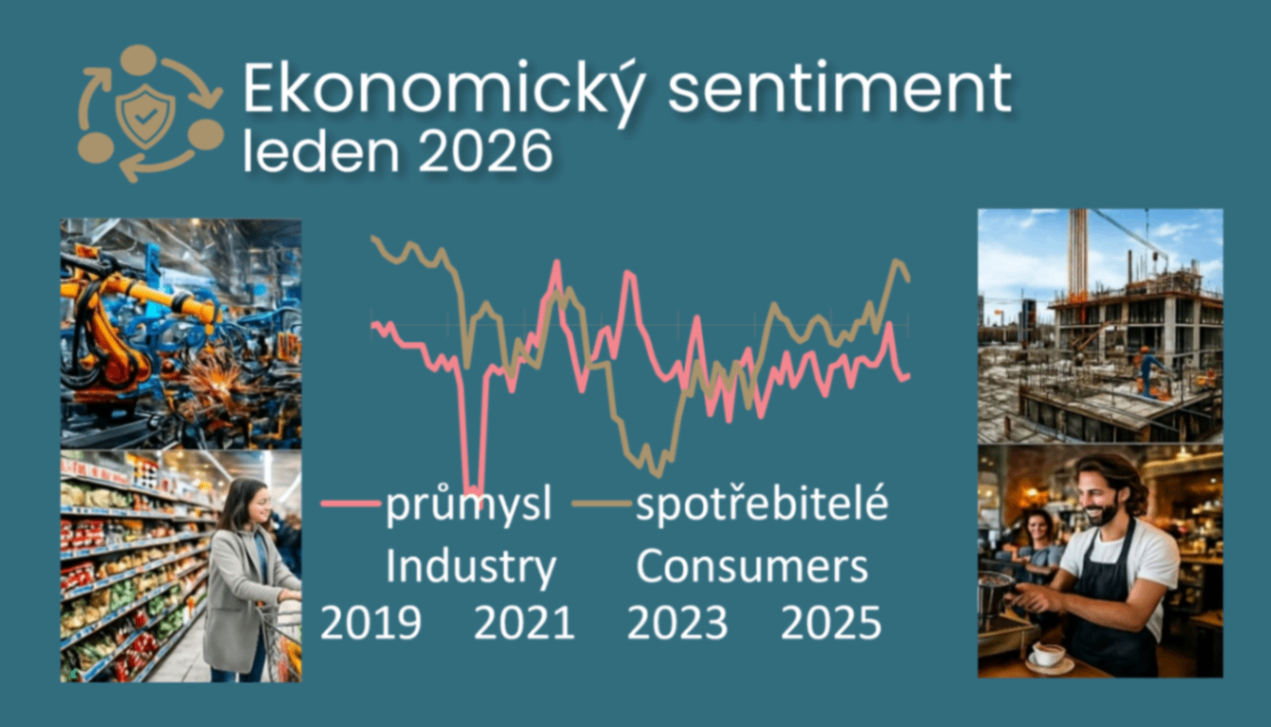
Comment by Jaromír Šindel, Chief Economist of the CBA: January show stable economic sentiment, but industry continues to be plagued by weak demand with negative consequences for investment. On the other hand, consumer purchasing plans remain full of optimism, also thanks to both lower price expectations, which are dampened by industry but not services, and better expectations on the labour market, where the service sector, which is lacking more workers, is making a positive contribution. Thus, it looks like continued solid economic growth this year with noticeably lower headline inflation. This combination is likely to shift the discussion at the CNB from rate stability or growth to rate stability or a possible decline, which is, however, not certain given the ongoing "services inflation" and the change in fiscal policy settings.
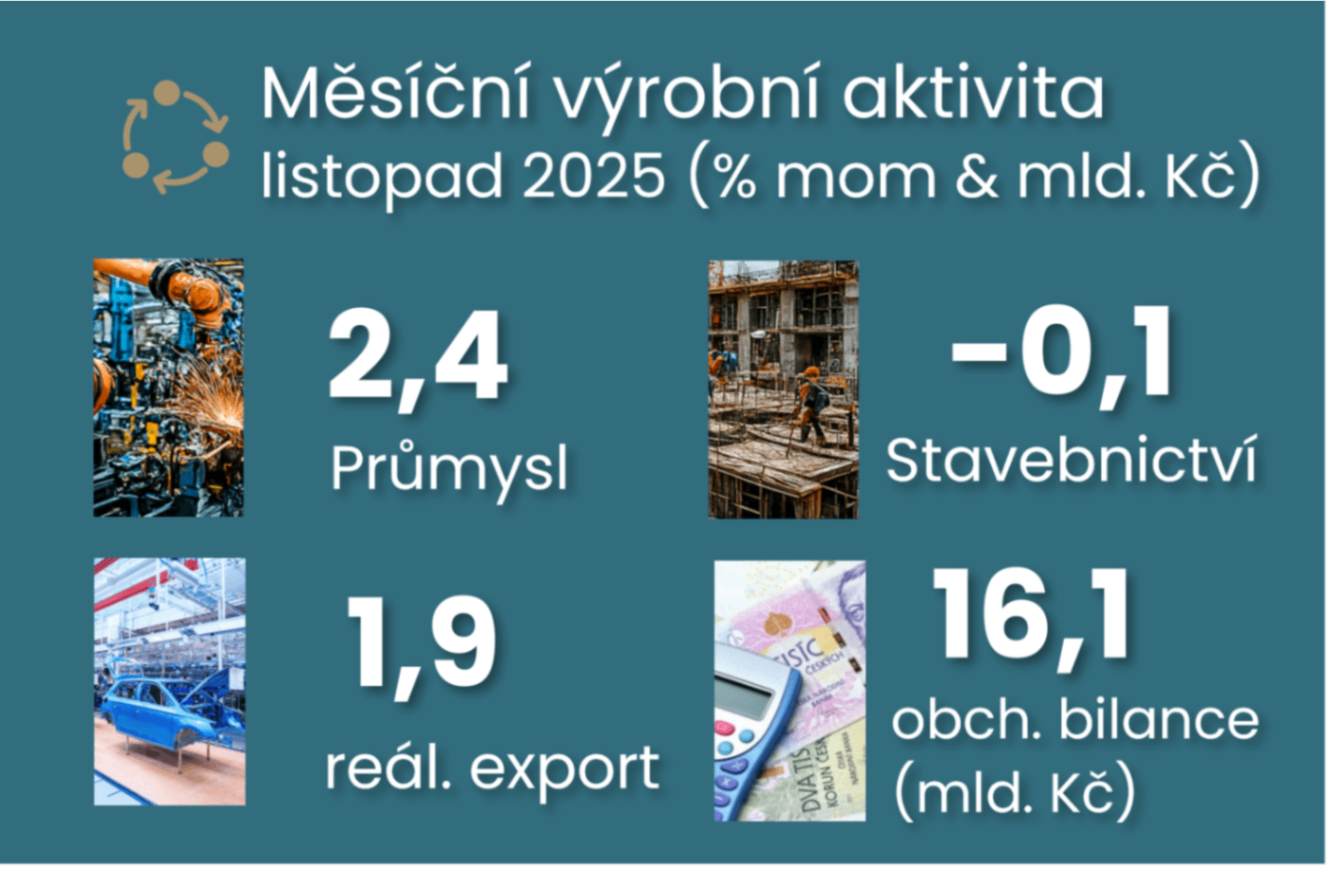
Comment by Jaromír Šindel, Chief Economist of the CBA: The November data confirm an acceleration in industrial activity, driven by the automotive industry and the recovery of energy-intensive sectors, which pushed annual industrial growth closer to 6%, the highest this year. However, further improvement may be hampered by the December decline in industrial sentiment and export expectations. Construction remains weak, and its high 7% y/y growth reflects the past rather than the current reality of limited public investment and weak building permits issued. The labour market has not yet cooled significantly despite a higher 3.3% selection unemployment rate, confirming continued solid wage growth of around 6% in industry. Quarter-on-quarter GDP growth will thus be underpinned by industrial production in Q4, probably also retail, but construction and the foreign trade surplus will rather take a bite out of it.
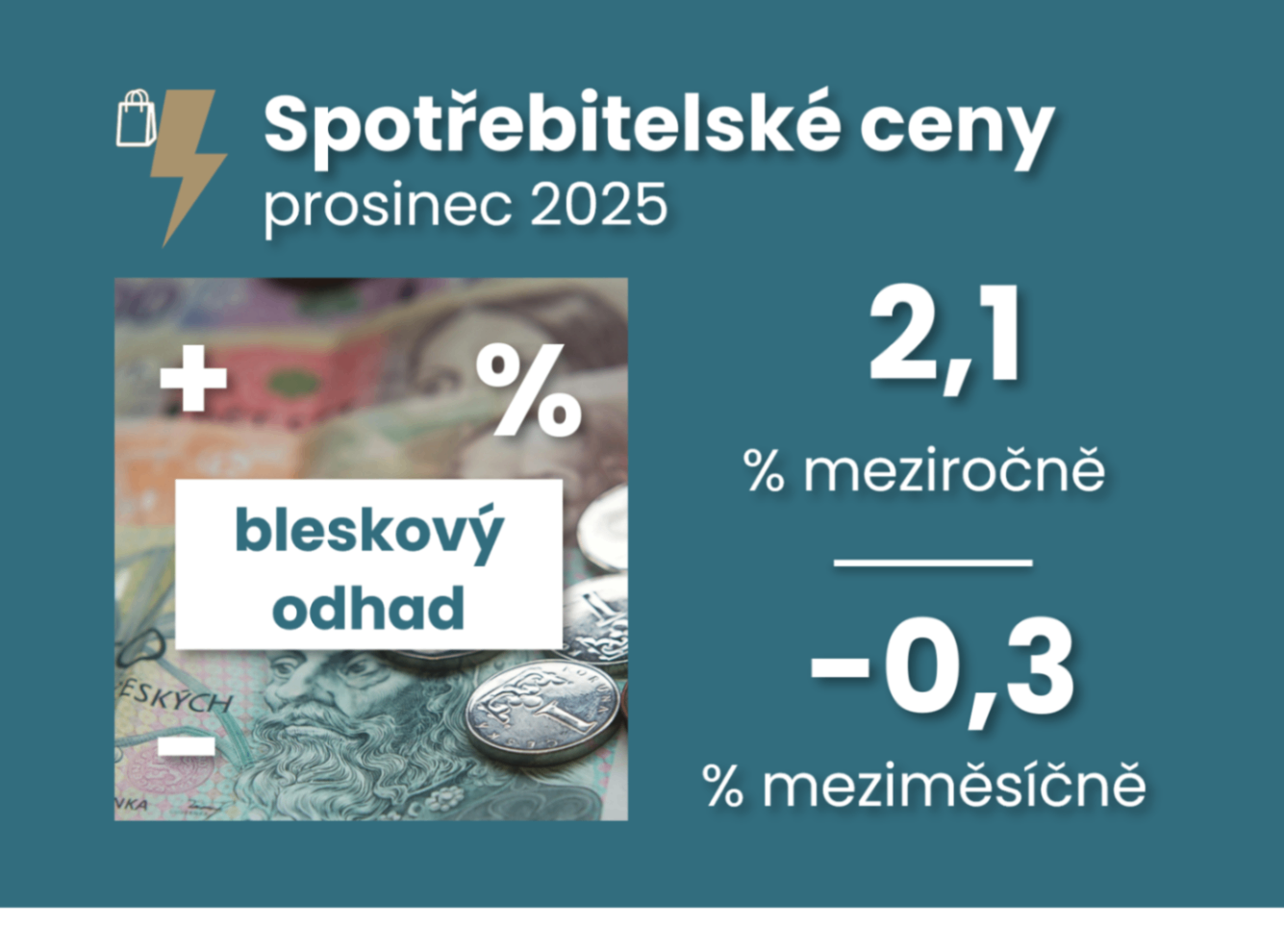
December inflation in the Czech Republic remained at 2.1% year-on-year and was lower than expected by the Czech National Bank and the market. Developments in food and energy prices helped keep headline inflation low, while core inflation is likely to have rebounded to 2.8% after a slowdown in November. However, both figures still missed the CNB's outlook, and this is likely to be repeated this year. This should dampen the upside risk to the central bank's interest rate, but it will remain impatient in waiting to see how fiscal policy affects the economy and inflation through 2027.
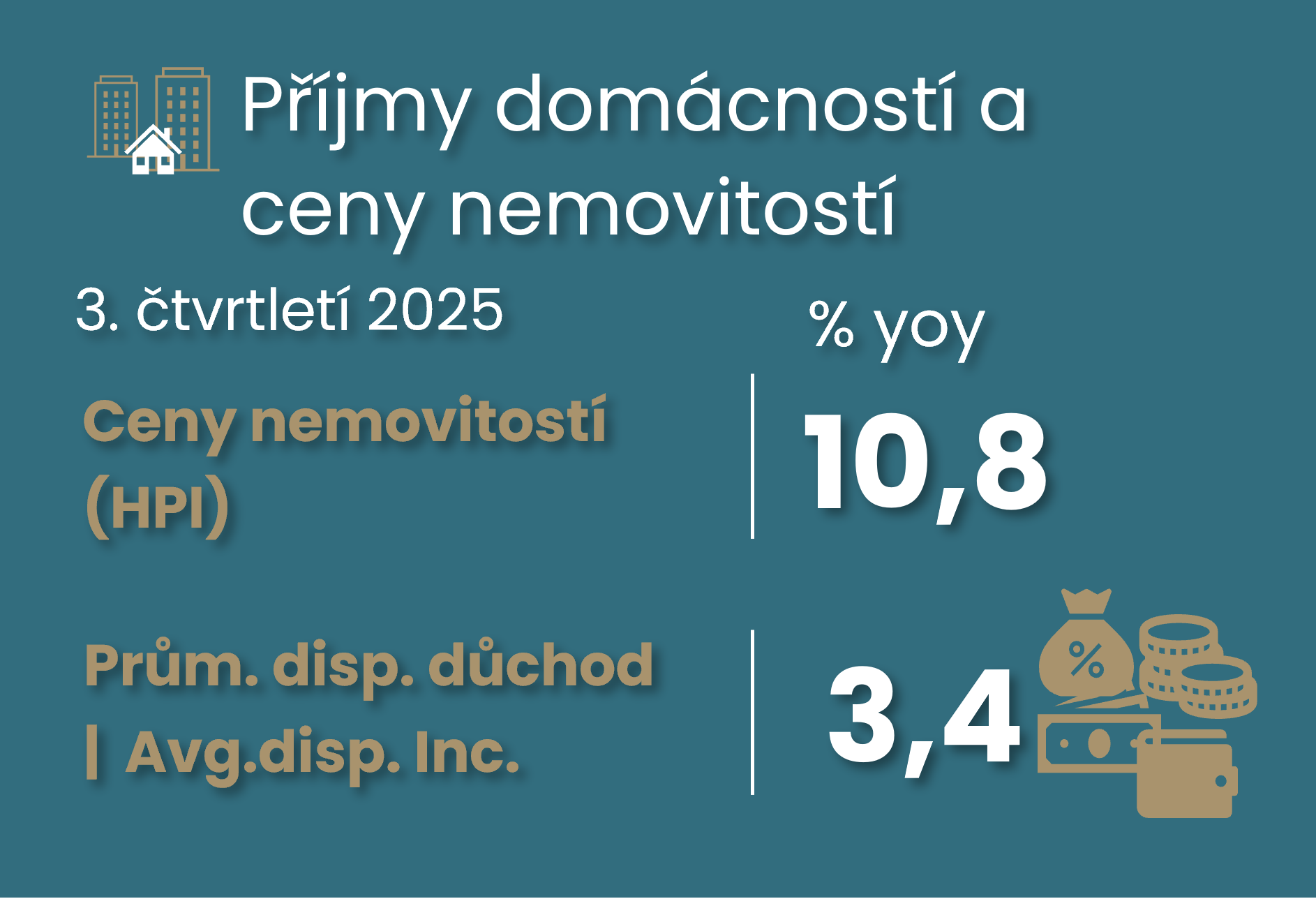
Comment by Jaromír Šindel, Chief Economist of the CBA: Even the third quarter of 2025 did not bring a significant recovery in household disposable income. Despite this, the household savings rate has been abnormally high for almost six years. In Q3, it was 18.4%. Weaker quarter-on-quarter growth in disposable income has not kept pace with house prices for six quarters in a row. On a year-over-year basis, we are comparing 3.4% growth in disposable income vs. a 10.8% increase in home purchase prices including land (HPI).
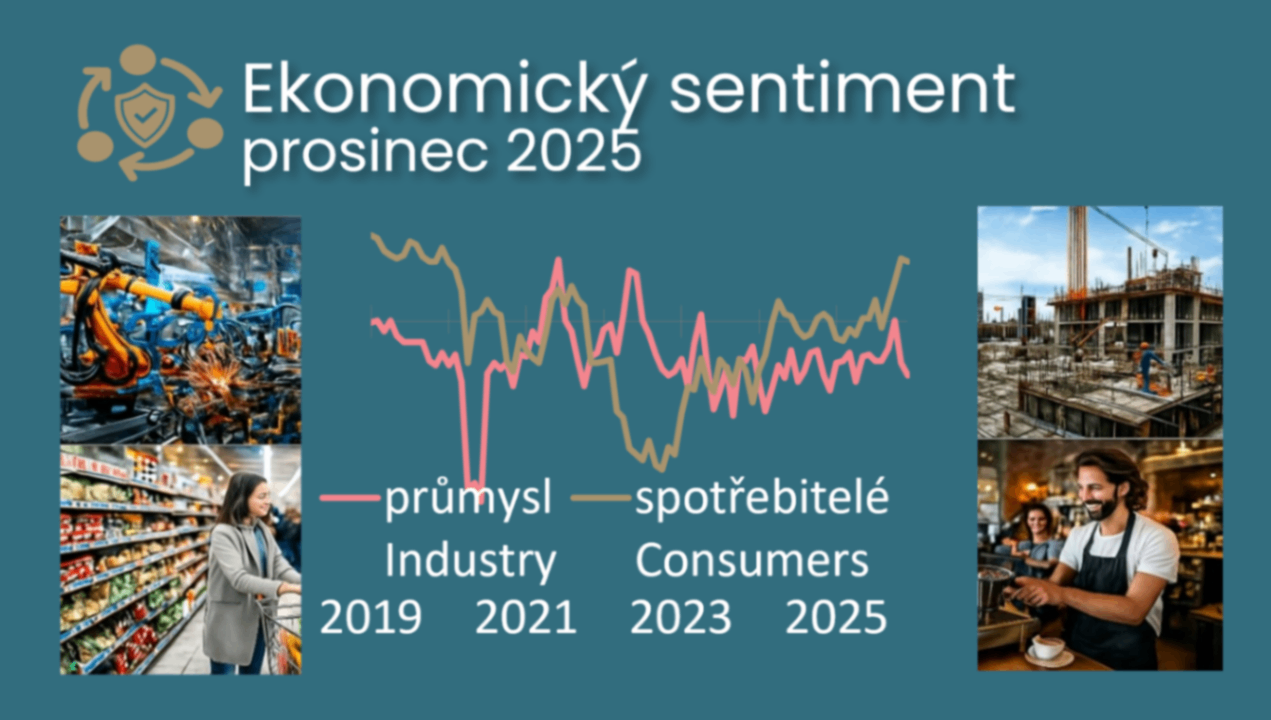
Comment by Jaromír Šindel, Chief Economist of the CBA: The deterioration in economic sentiment in December does not yet represent a turning point for the outlook for the Czech economic recovery, which anticipates a deterioration in dynamics at the end of the year 2025. Household consumption plans remain resilient, while industry and the labour market are sending rather cautious signals, which poses a risk to the expected recovery in investment activity and the early stabilisation of rising registered unemployment. The outlook for lower administered energy prices supports falling price expectations, but persistent pressures in construction and services continue to dampen disinflationary optimism, sending a neutral rather than dovish message to the central bank.
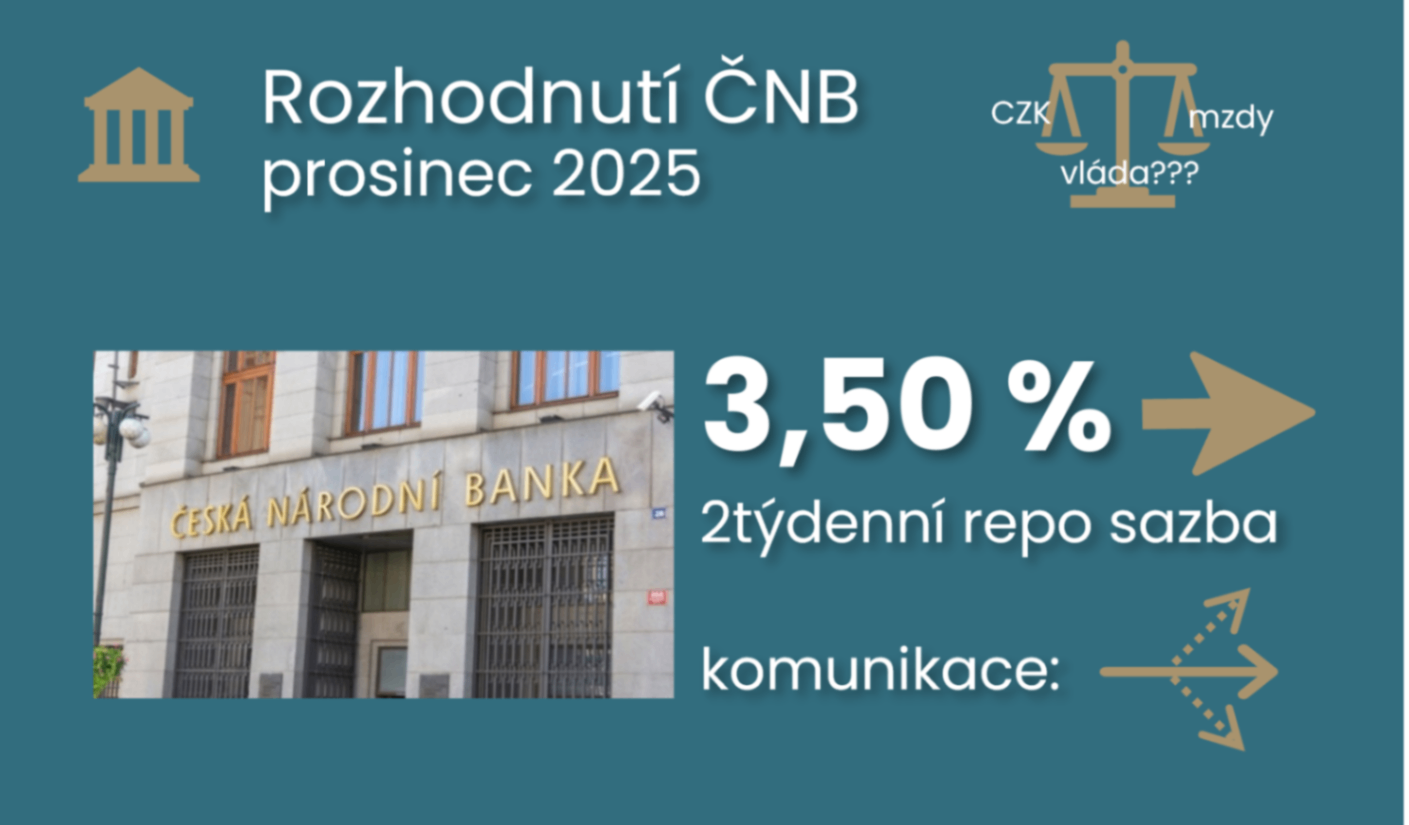
Comment by Jaromír Šindel, Chief Economist of the CBA: The central bank did not surprise by unanimously leaving interest rates unchanged, i.e. with the two-week repo rate at 3.50%, for the fifth meeting in a row after a 25bp cut in May. Although the Board did not change its view of the risks and uncertainties surrounding the CNB's November forecast, it did assess the risks to inflation as balanced, given the risks in financial markets and the removal of the renewable energy levy, following November's upside assessment.
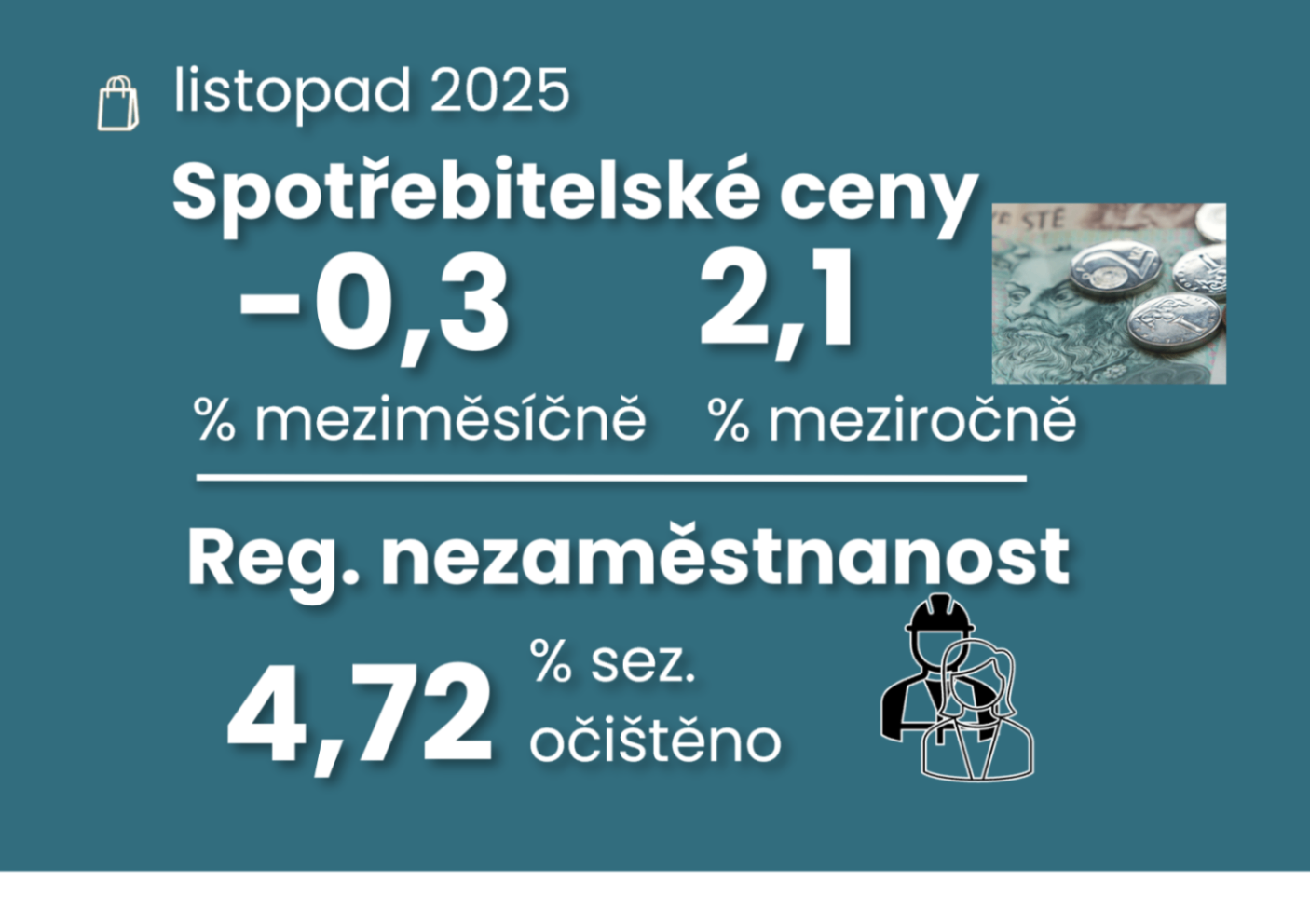
Comment by Jaromír Šindel, Chief Economist of the CBA: November consumer price growth did not slow to 2.1% year-on-year only thanks to volatile food prices, which were lower in November. The slowdown in core inflation to 2.6% was probably also due to lower prices for holidays, clothing, household furnishings, as well as lower prices in healthcare and energy. This, and November's move closer to the price inflation target for both headline and core inflation, eases hawkish pressures on the central bank. However, the continued brisk momentum in rent and food and other service prices will not allow the central bank to contemplate an interest rate cut.
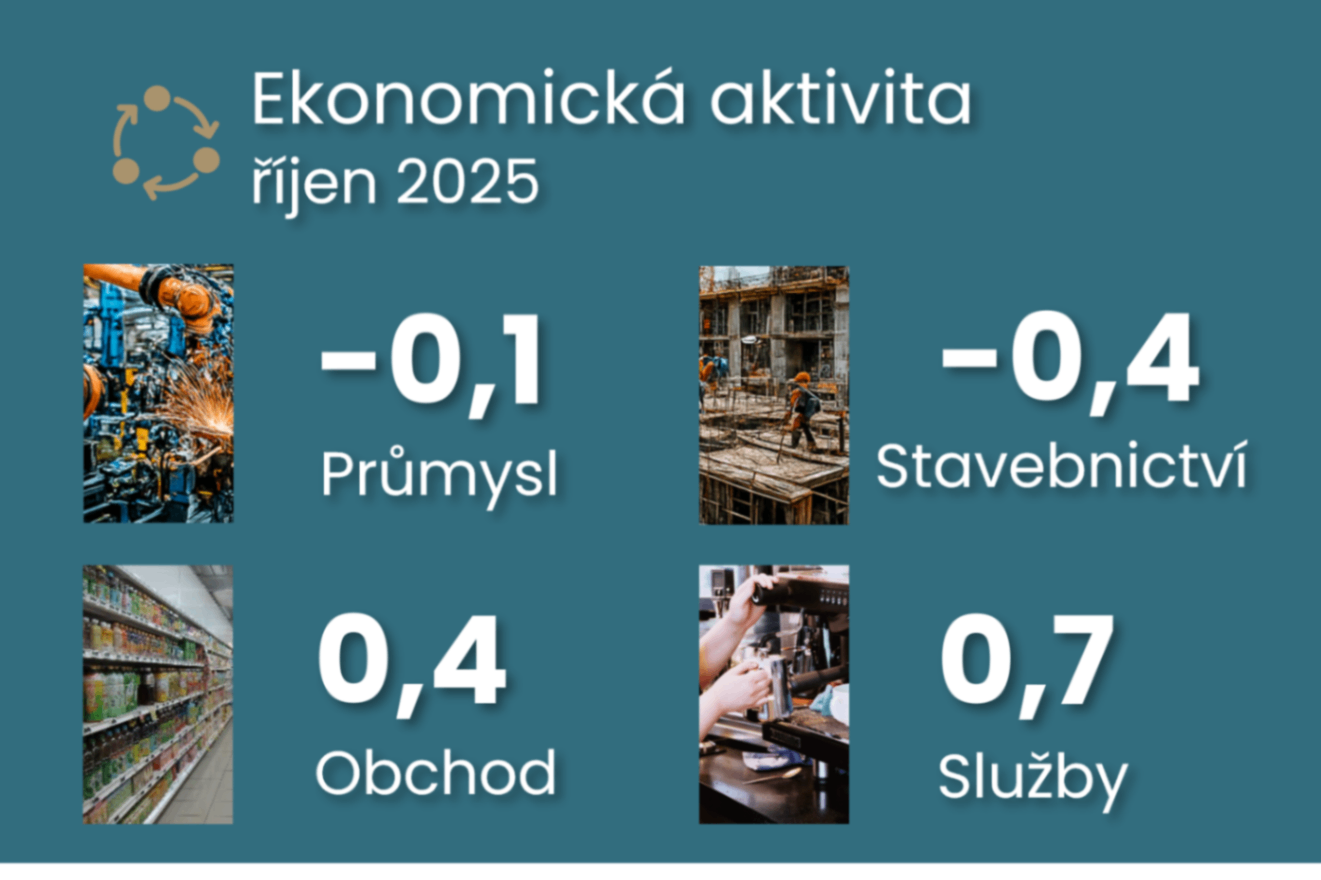
Comment by Jaromír Šindel, Chief Economist of the CBA: The manufacturing part of the Czech economy remained subdued in October, which supports expectations of weaker GDP growth at the end of this year. However, a post-covetous historical foreign trade surplus is supporting the crown, which, together with a persistently solid wage pace, supported October retail sales. This part of the recent Czech growth model thus remains unchanged, but this is no longer the case for the construction sector, where persistent weakness in building permits and uncertainty over investment financing pose downside risks next year.
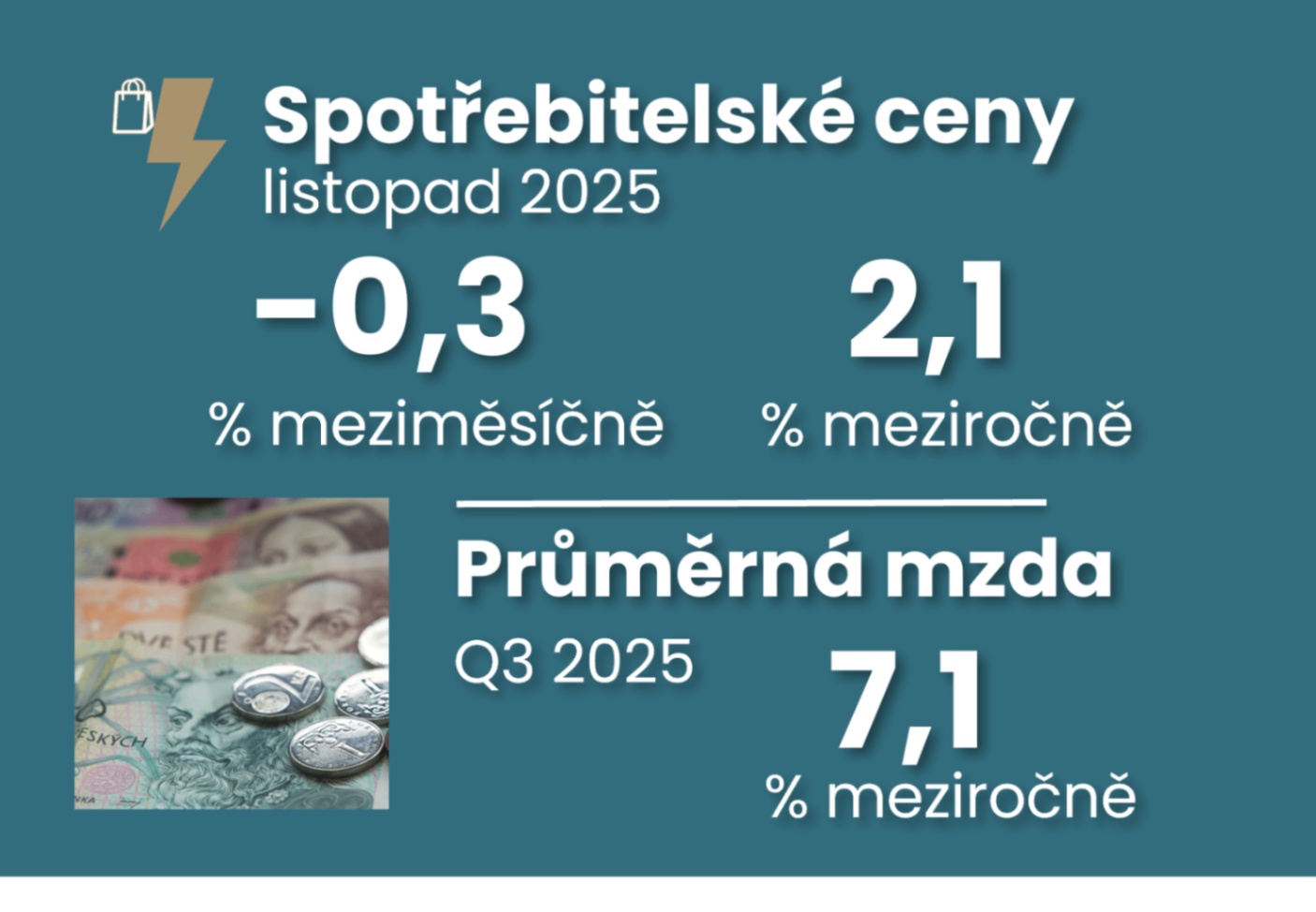
Comment by Jaromír Šindel, Chief Economist of the CBA: Consumer price growth slowed to 2.1% yoy in November. The main reason was a deeper decline in food prices, partly due to a slowdown in core inflation from the recent 2.8%. Thus, although inflation surprised positively, food price volatility and still strong rapid wage growth of 7.1% in Q3 will dampen the CNB's willingness to return to rate cuts. And the same reasons dampen the risks to the CBA's outlook for consumer inflation next year at around 2.2%. There remains a significant gap in the recovery in real gross wages between the market and non-market sectors.
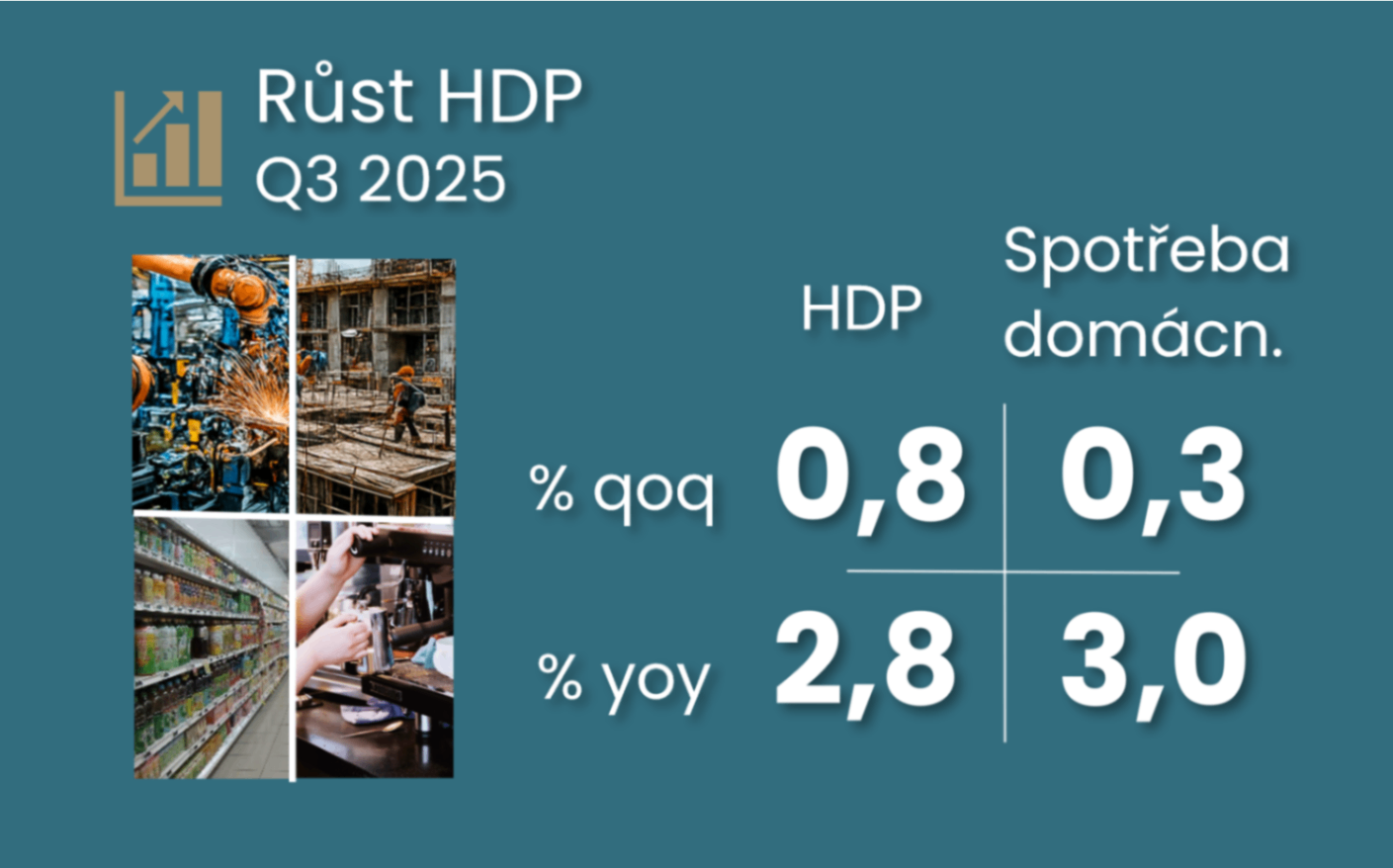
Comment by Jaromír Šindel, Chief Economist of the CBA: The stronger quarter-on-quarter GDP growth of 0.8% in Q3 mainly reflected foreign trade, while the contribution of domestic demand was not as strong as in the previous quarter. Moreover, there has been a continuous decline in fixed investment excluding construction investment, undermining the future potential of the economy and keeping productivity growth low and fuelling inflationary growth in unit labour costs (see five key points below).
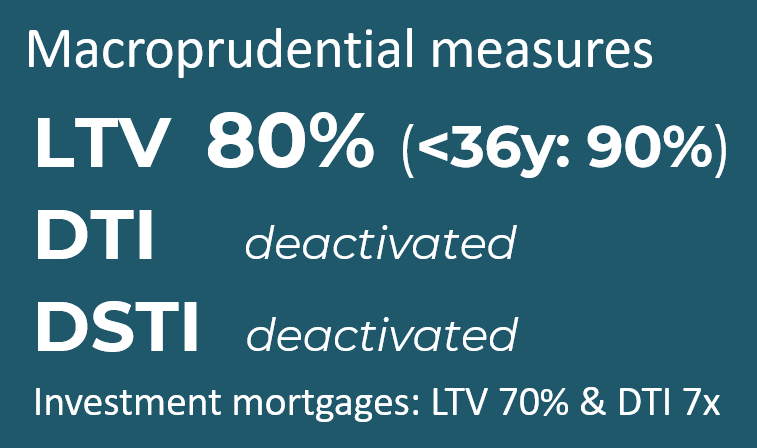
Comment by Jaromír Šindel, Chief Economist of the CBA: The Central Bank, through stricter requirements in the form of recommendations for investment mortgages, has decided to make a modest effort to correct mortgage demand on the real estate market, which remains very tight in terms of prices, mainly due to the supply side - see the drop in building permits.
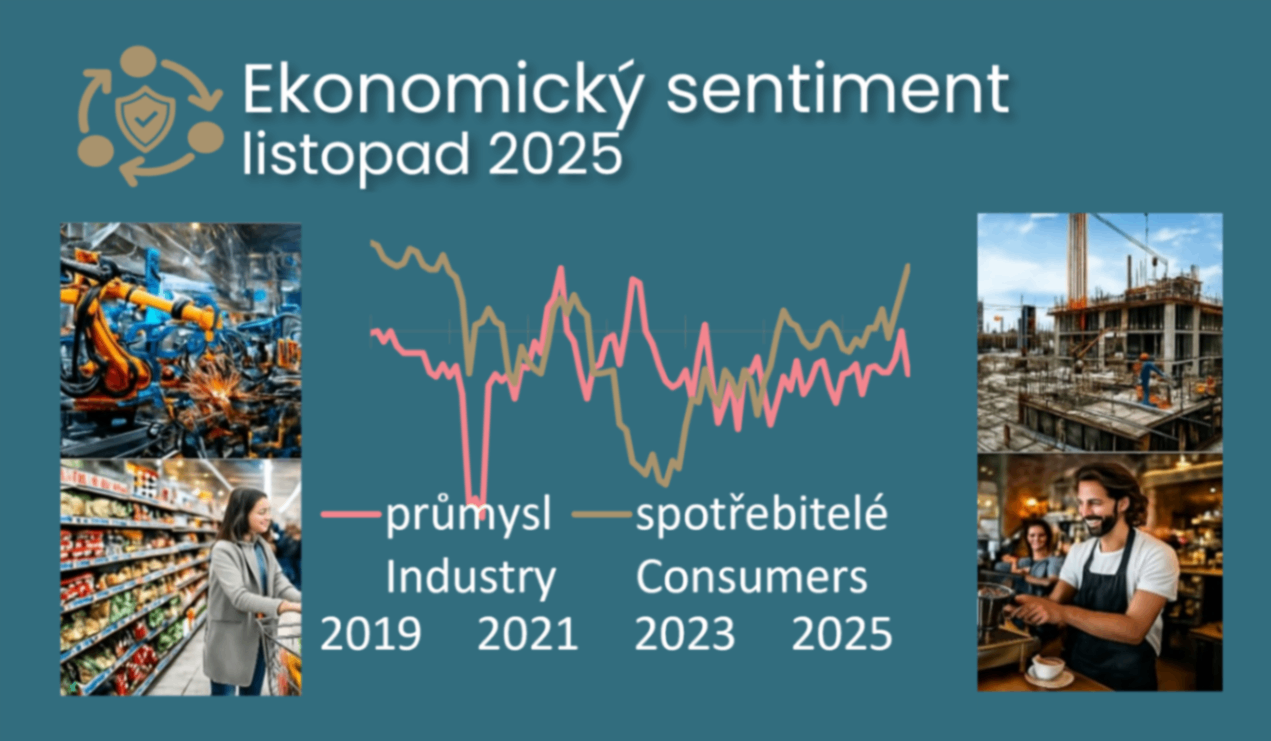
Comment by Jaromír Šindel, Chief Economist of the CBA: November's confidence in the Czech economy weakened slightly, but still suggests continued growth. However, there are significant differences across sectors, reflecting the looming change in economic policy after the elections. Households remain visibly more optimistic, thanks to rapidly rising wages and perhaps in response to the new government's plans, while industry is returning to earlier weakness. Services are again reporting rising price expectations, keeping the central bank in hawkish mode.
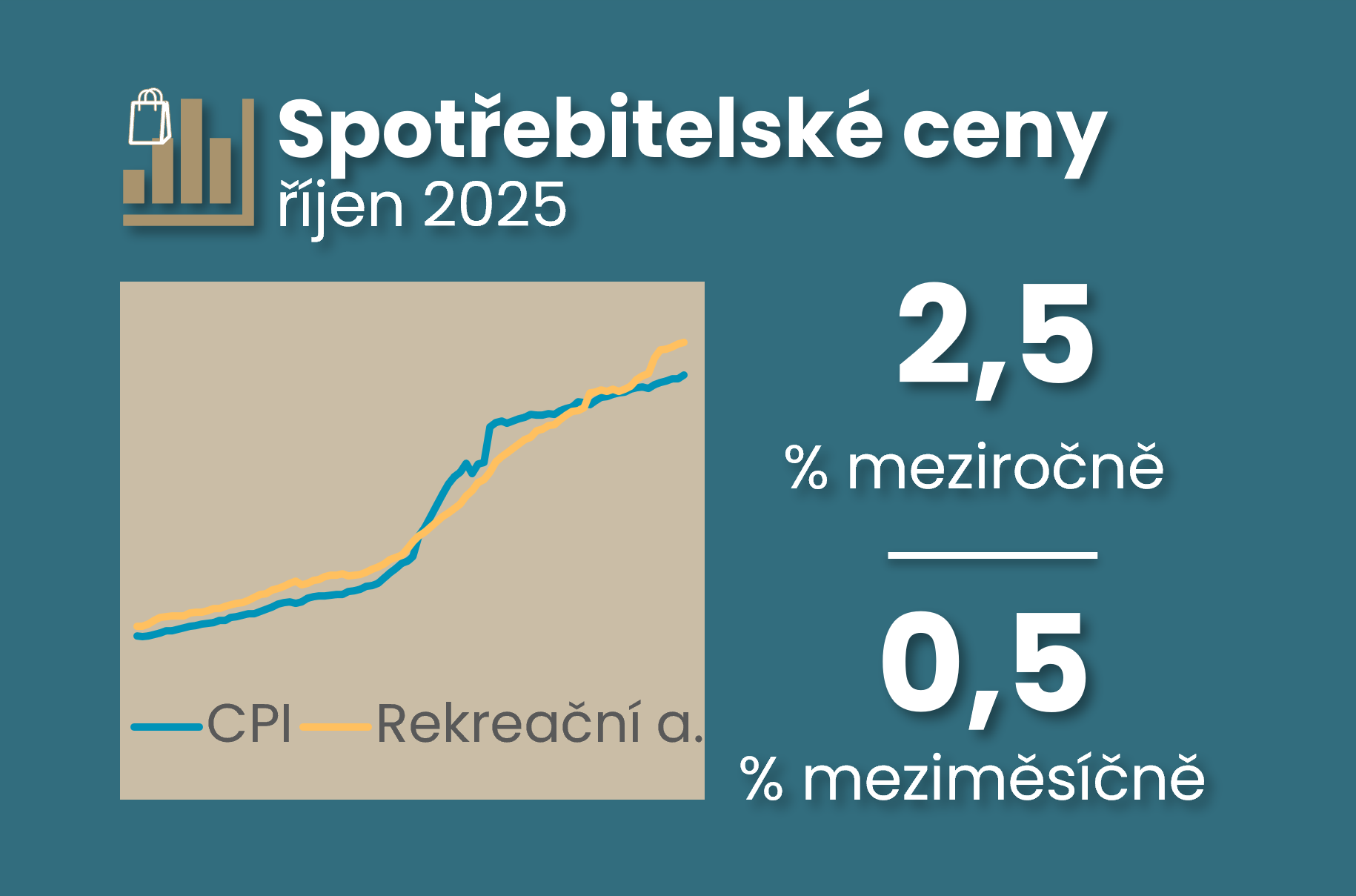
Comment by Jaromír Šindel, Chief Economist of the CBA: October consumer inflation not only confirmed a more pronounced shock from higher food prices, but also showed higher prices of transport services and prices of means of transport as part of core inflation. In the longer term, it is worth noting that imputed rental prices have already caught up with the previous inflation shock, and the same has been true for a few months for holiday prices. Thus, the higher October inflation and unemployment data will not help the central bank or the market resolve its dilemma of the next interest rate move.
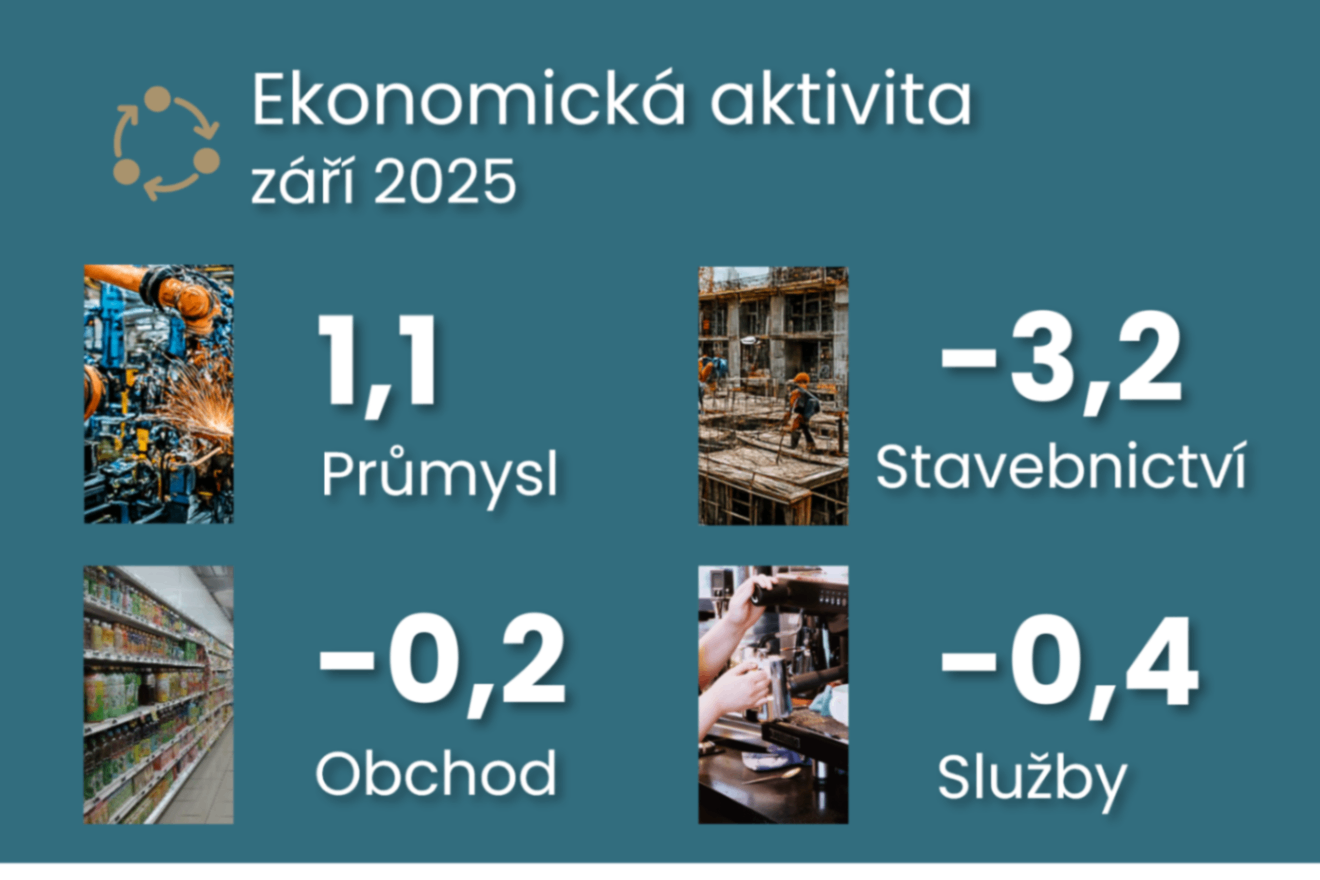
Comment by Jaromír Šindel, Chief Economist of the CBA: Retail and services sales disappointed in September despite solid wage growth, which was confirmed by September industrial wages. A gradual but steady rise in unemployment is likely to be in evidence here. Thus, the stronger GDP growth in Q3 was helped by September's industrial production, which complemented the strong construction output of the previous months. Given sentiment, things might not be different in October.
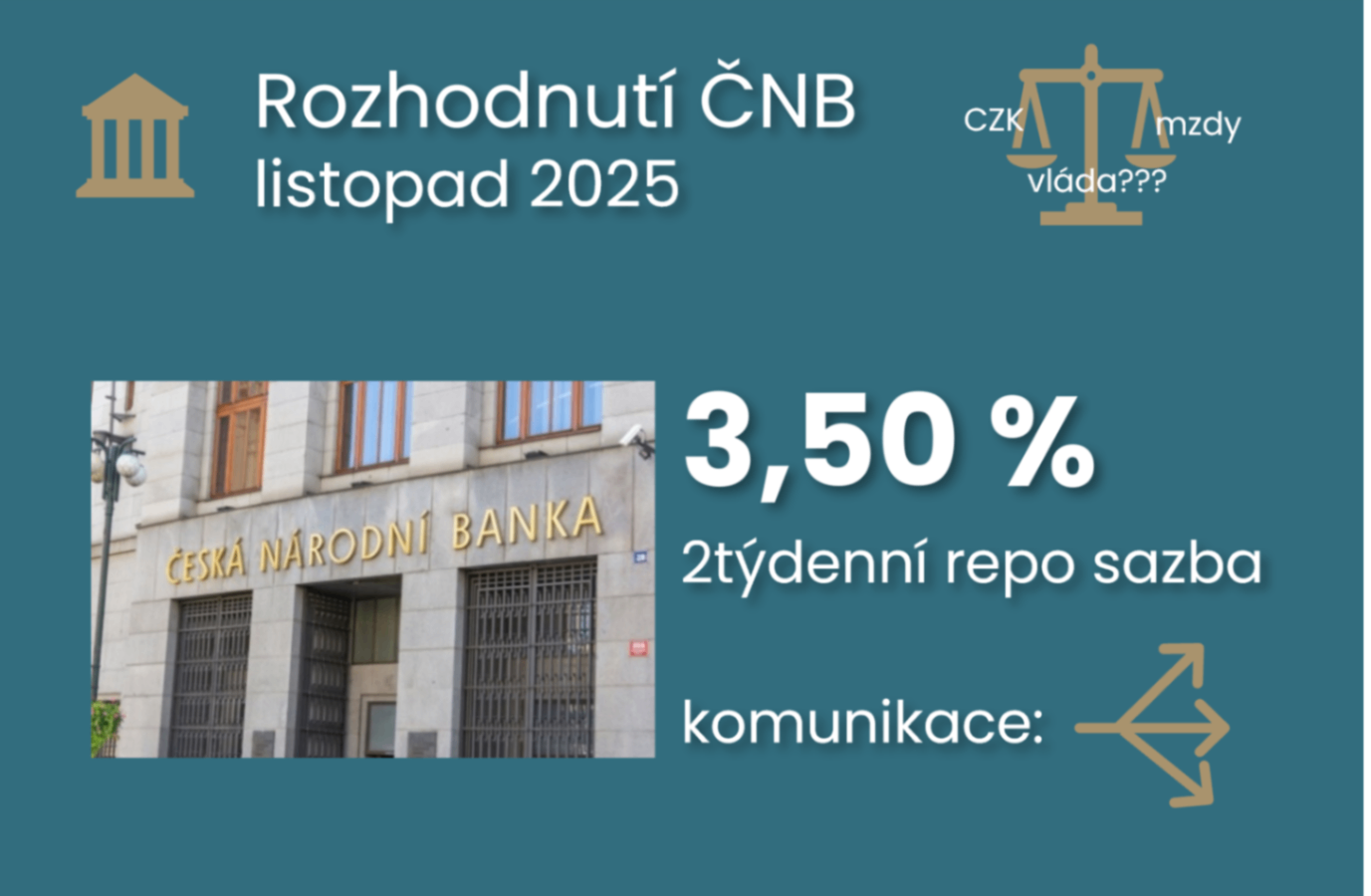
Comment by Jaromír Šindel, Chief Economist of the CBA: The CNB is waiting for a new impulse. The CNB is waiting for the new government to announce its plans, both from the data and from future analysis of the new government's upcoming plans. The CNB's own outlook, with more moderate consumer price growth at the end of the year and a stronger economy in real terms in Q3, opens up the possibility of more hawkish communication in the rest of the year. But I believe the CNB will wait to reassess its communication until the contours of the new government's policy are clearer.
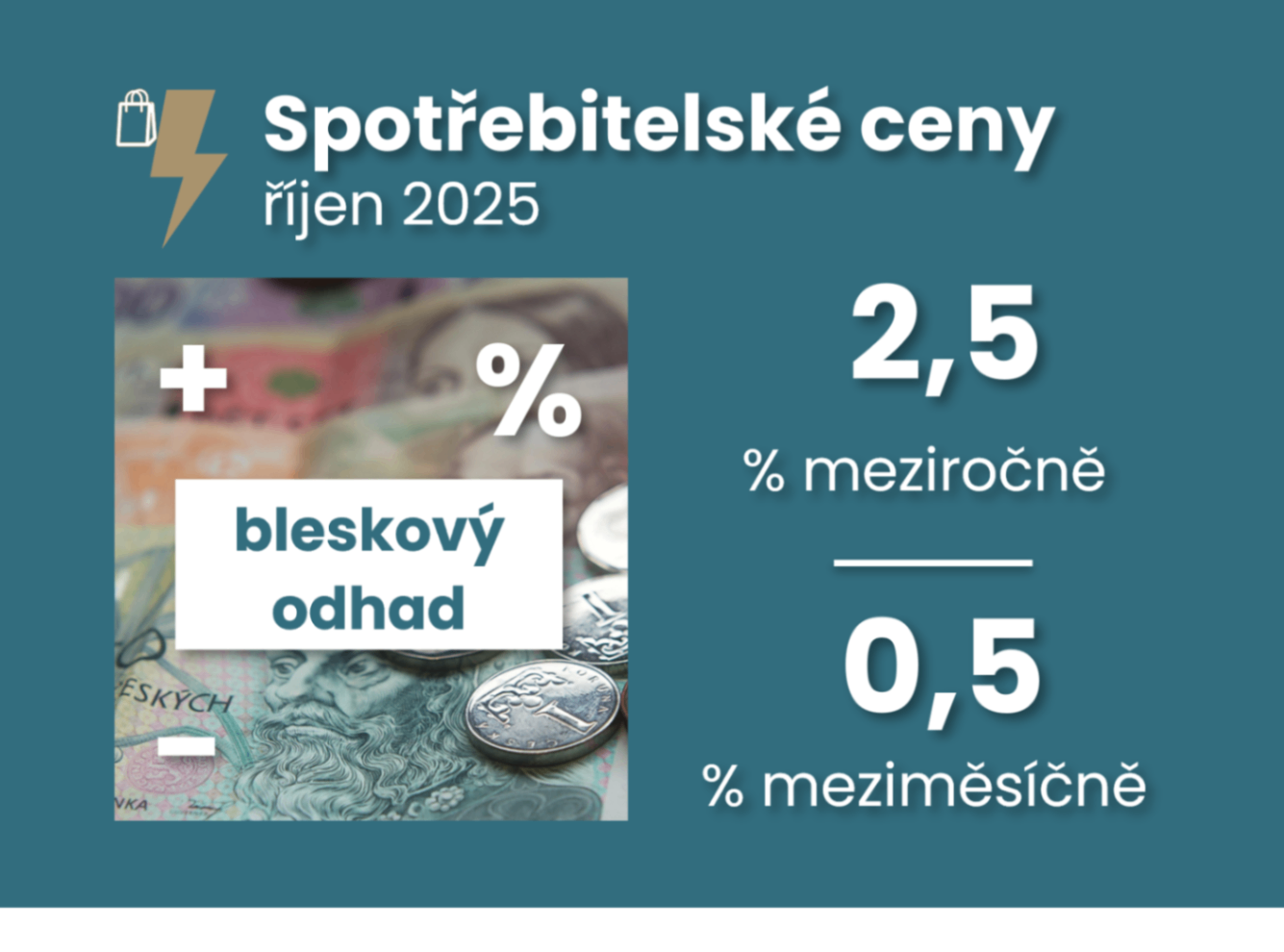
Comment by Jaromír Šindel, Chief Economist of the CBA: The return of consumer price inflation to 2.5% in October will keep the CNB vigilant. Although this was due to higher food prices, the current core inflation rate remains slightly above the inflation target, which will probably be evident next spring. Although selected plans of the new coalition will help to further tame price rises, others are more likely to maintain an inflationary undercurrent in the economy.
Comment by Jaromír Šindel, Chief Economist of the CBA: The stronger koruna, lower inflation, and the return of productivity growth give the central bank some relief, allowing it to monitor how wages and the post-election fiscal plans—often pulling in opposite directions—will play out.

Commentary by Miroslav Zámečník, Chief Advisor of the Czech Banking Association
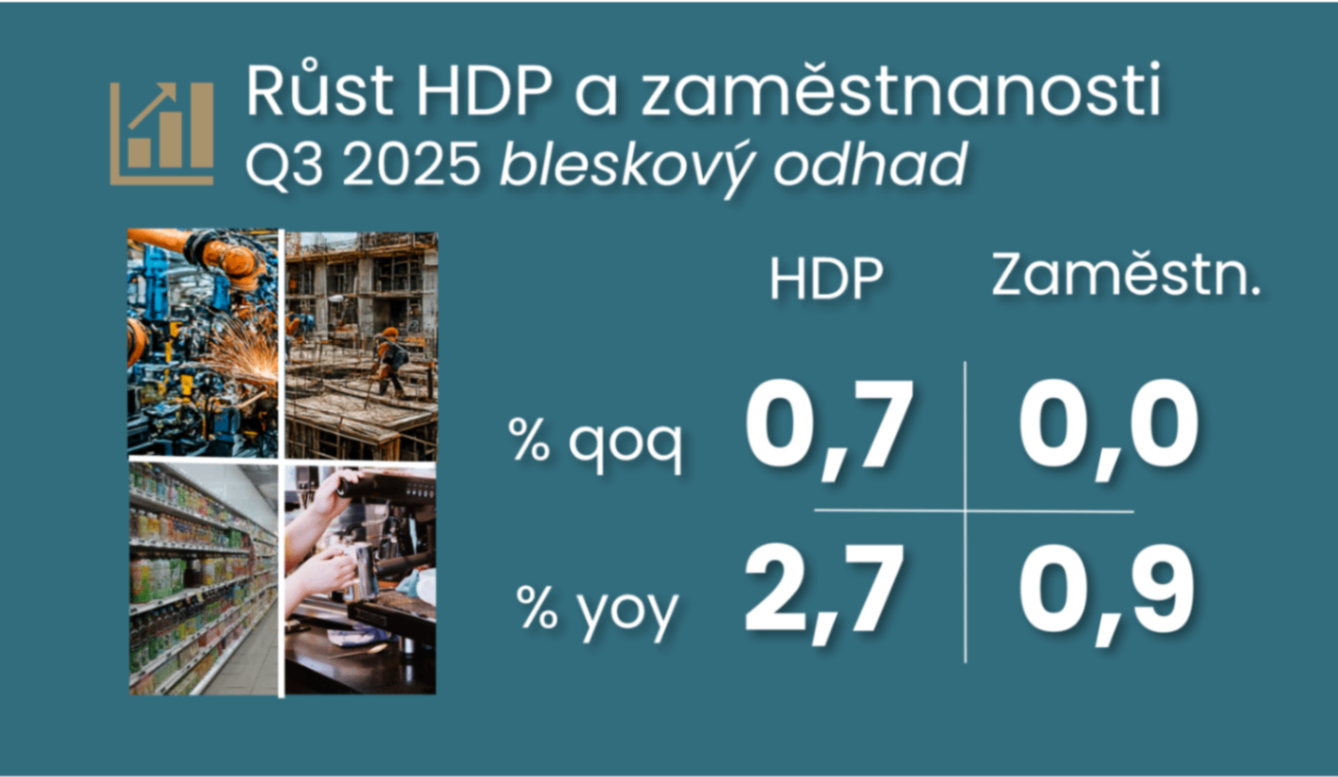
Comment by Jaromír Šindel, Chief Economist of the CBA: The return to stronger economic growth of 0.7% quarter-on-quarter in Q3 was a surprise, confirming the indications of stronger confidence in September. At the same time, stagnant employment added a welcome return to stronger productivity, which may partially dampen the hawkish impulse of stronger GDP for the CNB. The CNB will most likely leave interest rates unchanged at 3.5%, not only at the November meeting, but GDP details may set a more distinct tone to its communication later in November.
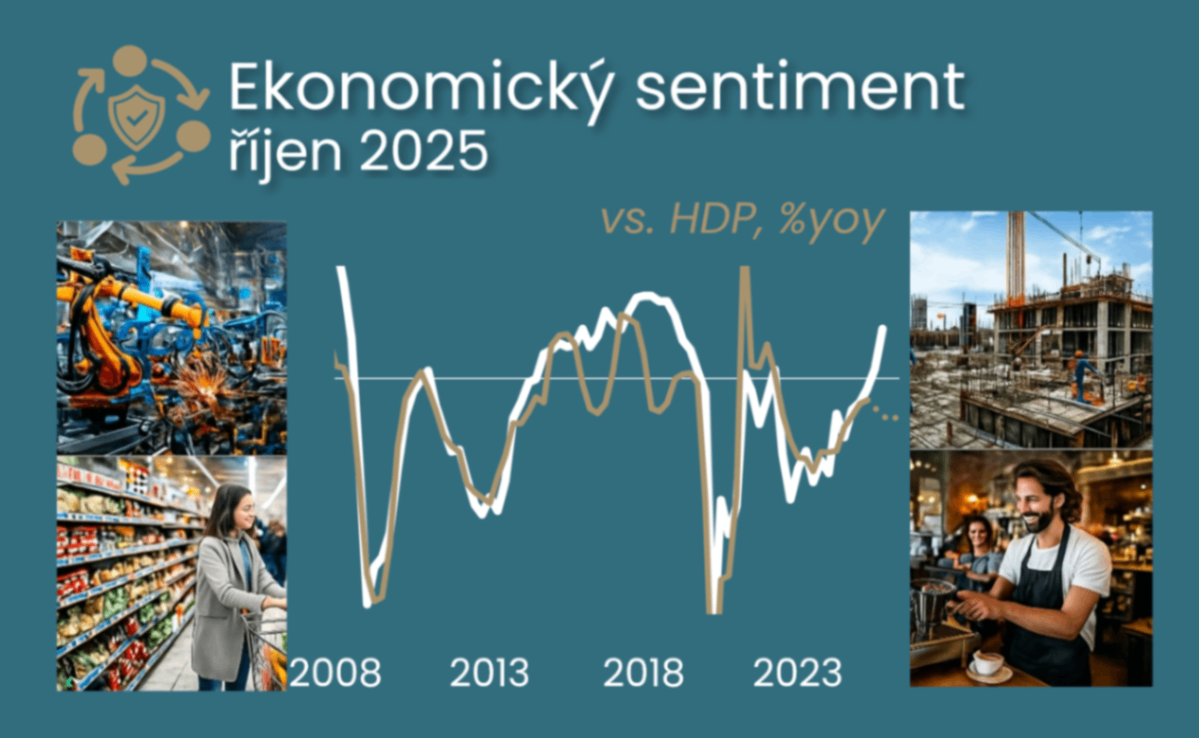
Comment by Jaromír Šindel, Chief Economist of the CBA: Stronger sentiment in October suggests a return to stronger GDP growth for the end of this year after a probably slightly worse result in Q3. Higher price expectations may delay the return of core inflation to the target.
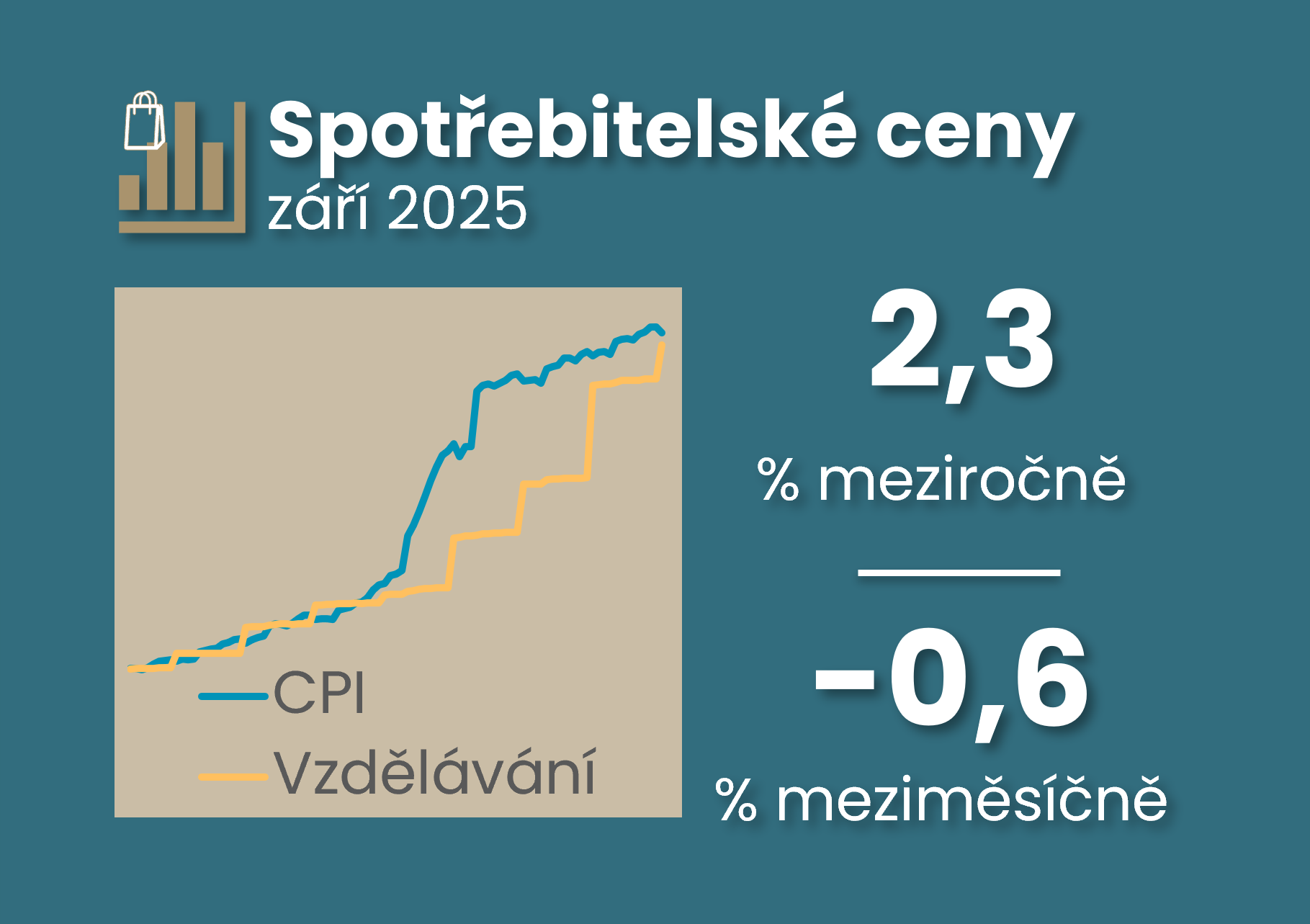
Comment by Jaromír Šindel, Chief Economist of the CBA: Lower food prices, a seasonal decline in holiday prices and a slight catch-up in education prices contributed to September's more moderate consumer price growth of 2.3%, which, however, reminds us of possible price catch-up in other segments next year as well (see Chart 4).
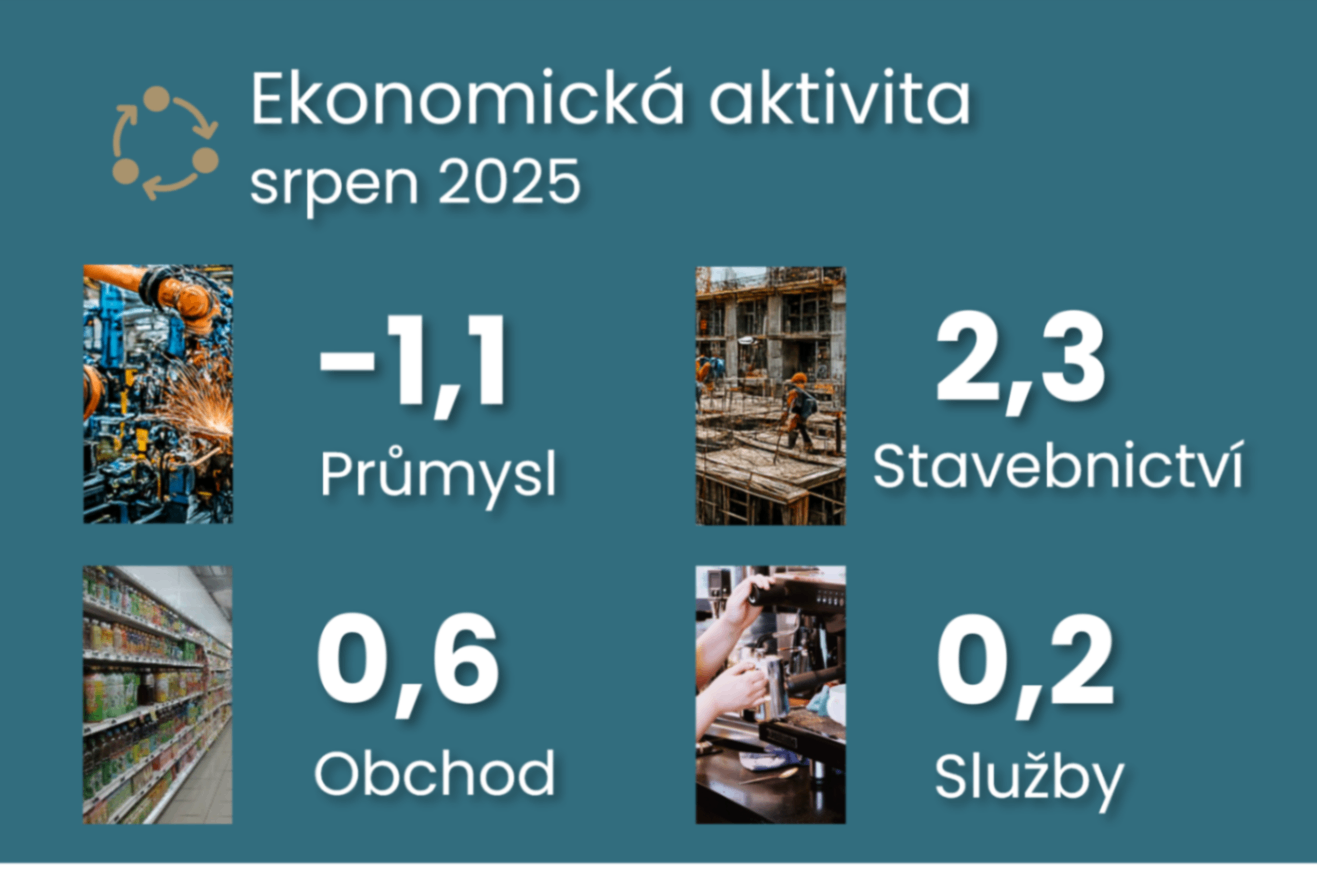
Comment by Jaromír Šindel, Chief Economist of the CBA: The continuation of the construction boom and the recovery in retail sales in August was dampened by the return of weaker industrial production, despite stronger exports. However, the positive sentiment in September suggests that the slowdown in GDP growth in Q3 may not be as pronounced as the July and August figures suggest.
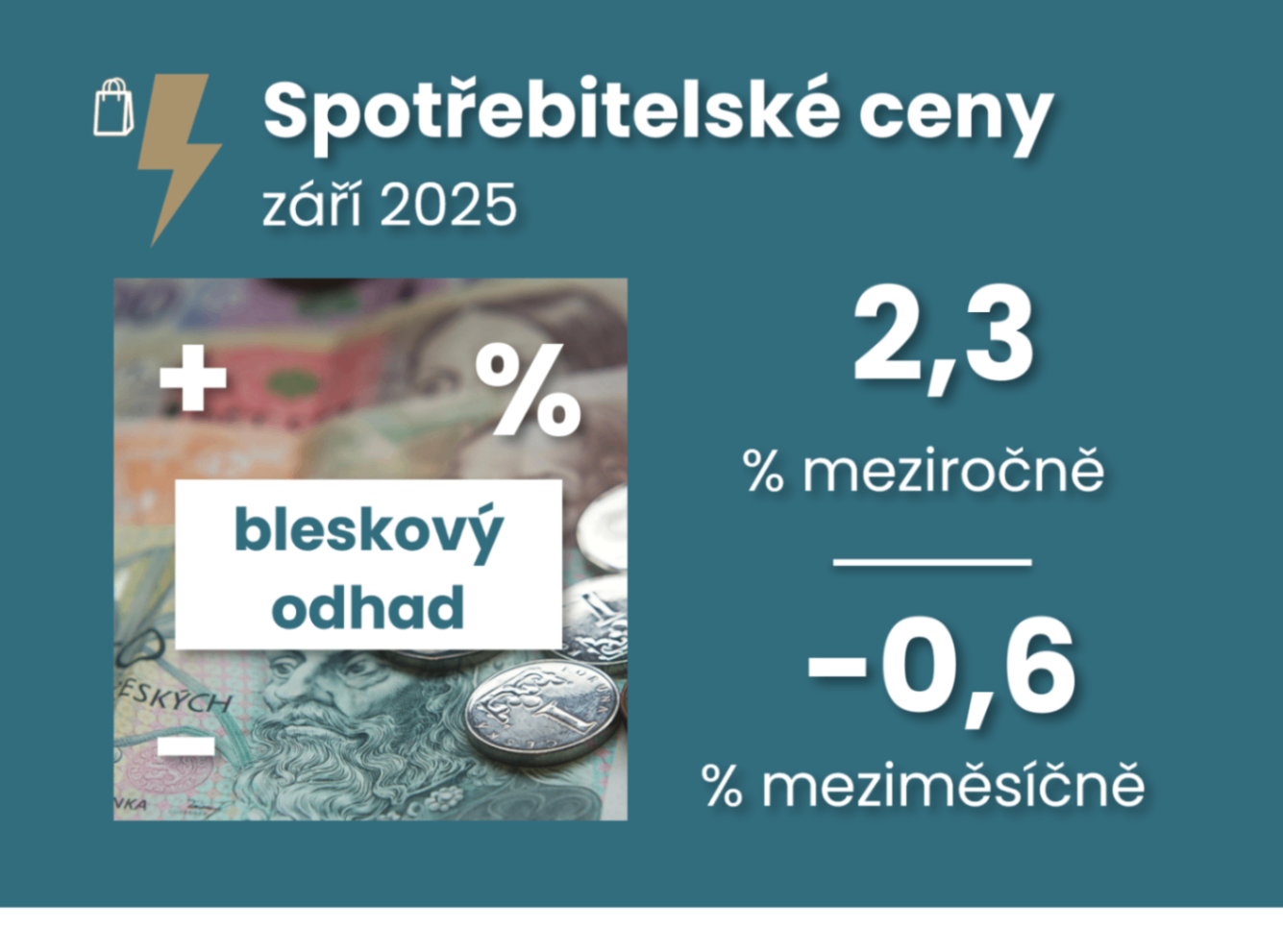
Comment by Jaromír Šindel, Chief Economist of the CBA: The more pronounced slowdown in September consumer price growth to 2.3% year on year reflects a decline in most components of the consumer basket. There are three messages for the CNB that are likely to leave the CNB's communication unchanged, i.e. open to all interest rate possibilities.
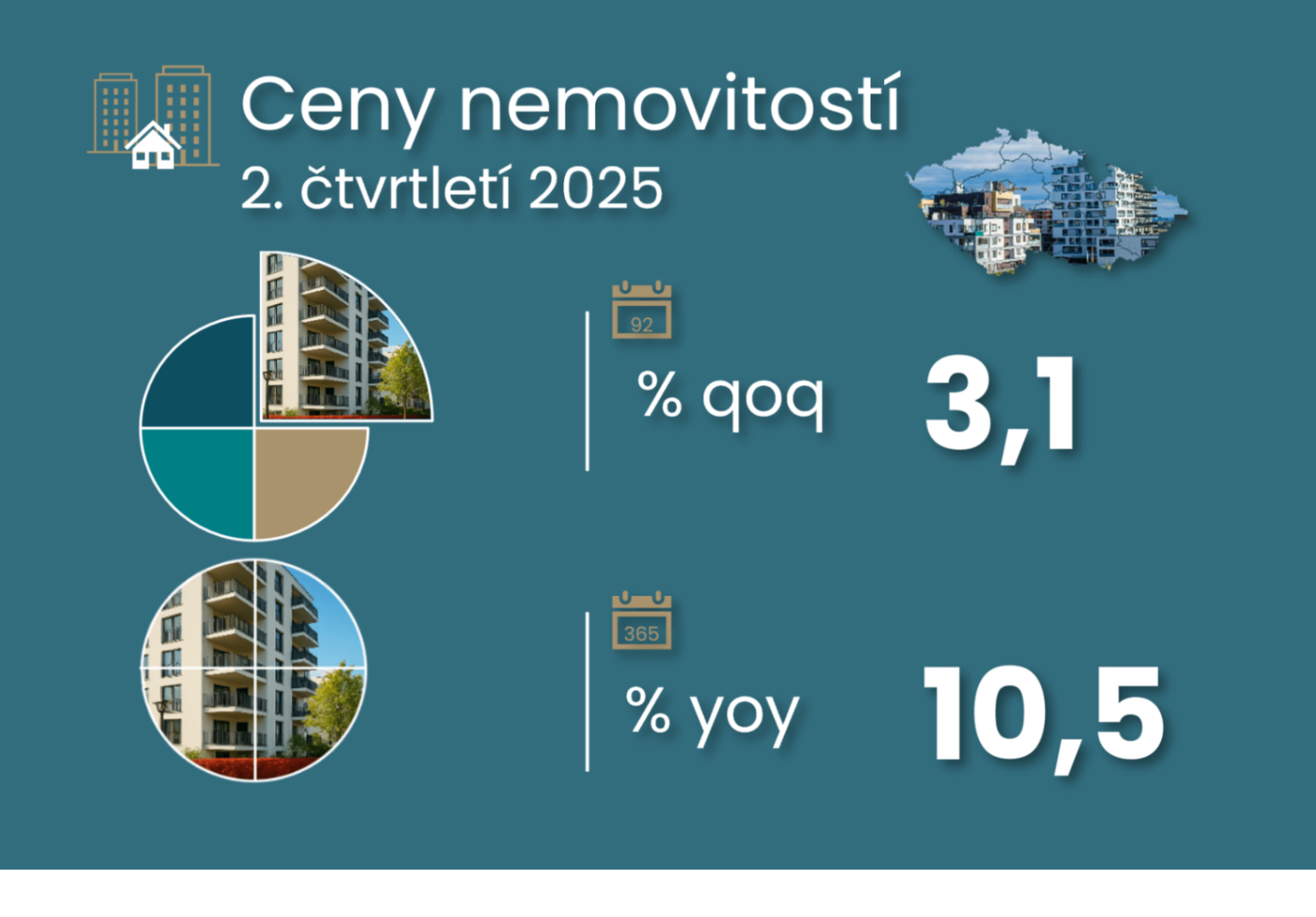
Comment by Jaromír Šindel, Chief Economist of the CBA: The recovery in disposable income in Q2 was still dampened by fiscal policy, so it remained weaker compared to the increase in wages and property prices. Nevertheless, households managed to increase both consumption and their savings.
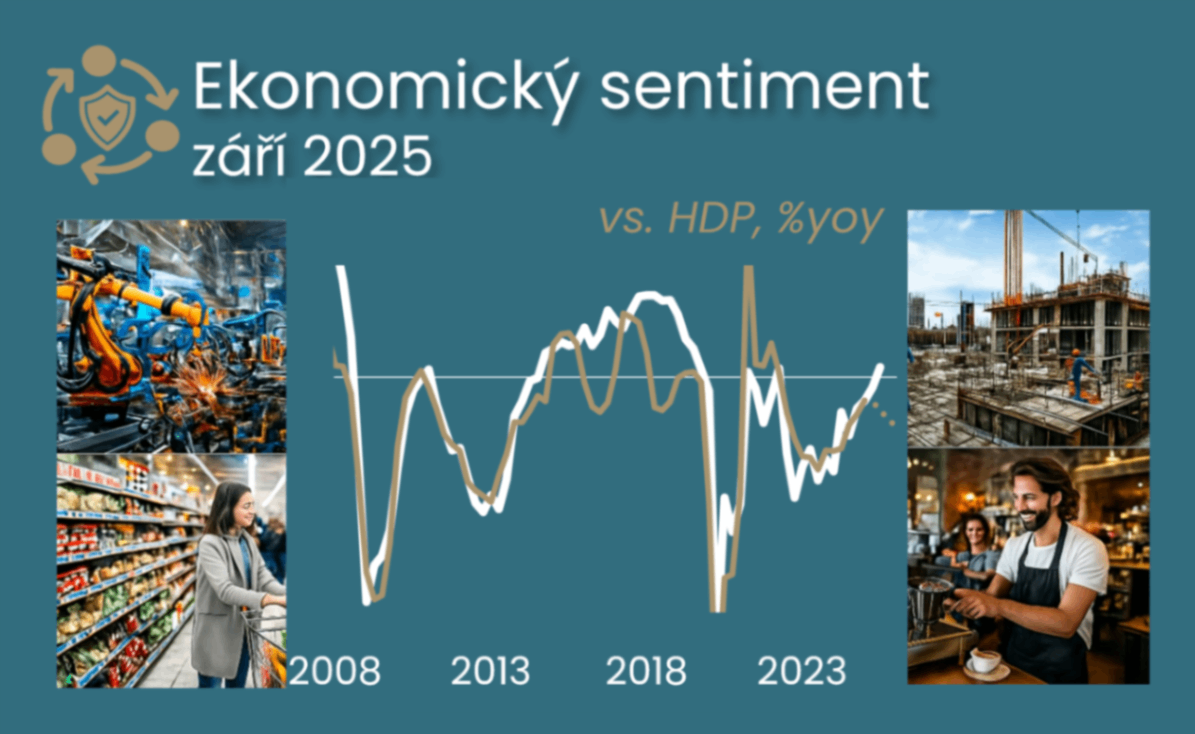
Comment by Jaromír Šindel, Chief Economist at the CBA: September sentiment brings a boost after weaker monthly data in July and thus better prospects for GDP growth - mainly thanks to retail trade and construction.
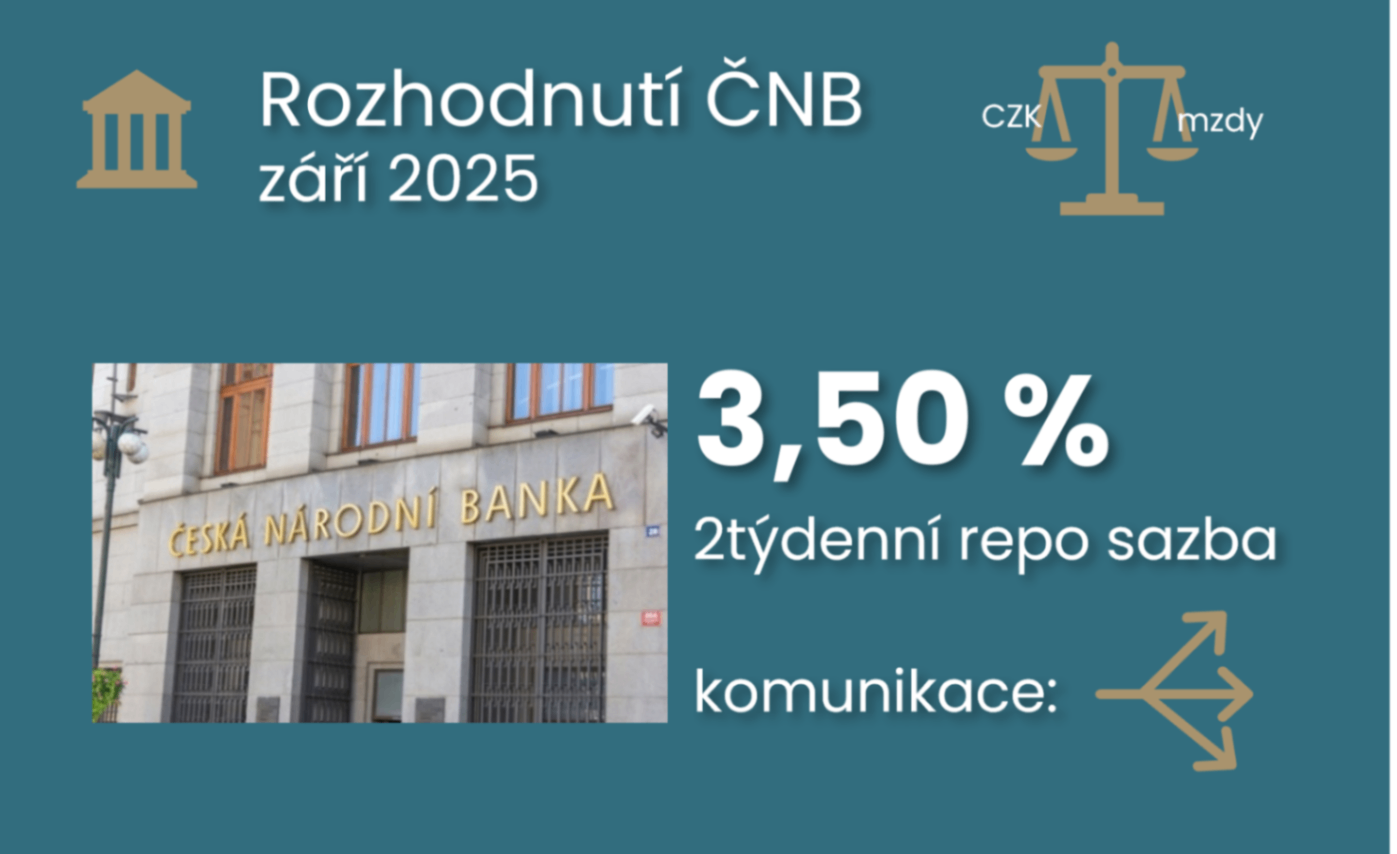
Comment by Jaromír Šindel, Chief Economist at the CBA: While the CNB unsurprisingly left interest rates unchanged with the two-week repo rate at 3.5%, the Board's statement on the monetary policy settings, however, was more surprising in its less hawkish tone, leaving open all possibilities for future monetary policy settings.
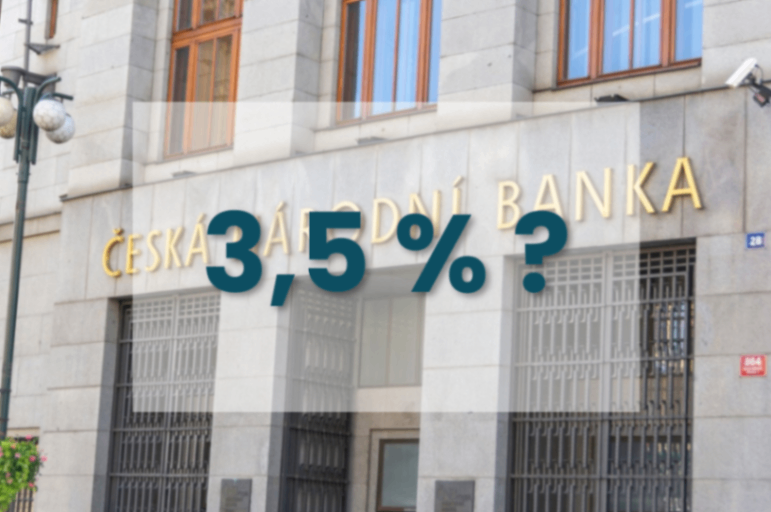
Commentary by Jaromír Šindel, Chief Economist of the CBA: Higher-than-expected wage growth will be the main, but not the only, reason for keeping the interest rate at 3.5% at the CNB's September meeting and for the intensification of the hawkish tone in the communication. The latter may indeed indicate a further upward movement in the interest rate, but rather in an unspecified distant horizon. A stronger koruna or tighter monetary policy through the longer end of the yield curve is unlikely to lead the CNB to a dovish mindset.

Economic commentary by Jaromír Šindel, Chief Economist of the CBA: CPI growth slowed to 2.5% yoy in August, but core inflation accelerated slightly to 2.8% in line with the CNB's forecast. The core services price segment, excluding imputed rent, accelerated month-on-month in August, but its three-month average remains well below the pace observed in H1-2025.

Economic commentary by Jaromír Šindel, Chief Economist of the CBA: Although the economy breathed a half-percent growth in the second quarter, the July figures were rather disappointing and suggest a cooling. However, the Czech economy is generating upside risks to inflation, which limits the room for manoeuvre of the CNB, which is likely to stick to the CNB's 3.5% terminal interest rate thesis. August's registered unemployment confirmed a worse trend, which, however, is not confirmed by other data.

Commentary by Miroslav Zámečník, Chief Advisor of the Czech Banking Association

Economic commentary by Jaromir Šindel, Chief Economist of the CBA

Economic commentary by Jaromir Šindel, Chief Economist of the CBA (adjusted for published data on core inflation from the CNB and registered unemployment data, 18:00 8 August)

Economic commentary by Jaromir Šindel, Chief Economist of the CBA

Economic commentary by Jaromir Šindel, Chief Economist of the CBA

Economic commentary by Jaromir Šindel, Chief Economist of the CBA

Economic commentary by Jaromir Šindel, Chief Economist of the CBA
Economic commentary by Jaromir Šindel, Chief Economist of the CBA

Economic commentary by Jaromir Šindel, Chief Economist of the CBA

Economic commentary by Jaromir Šindel, Chief Economist of the CBA

Economic commentary by Jaromir Šindel, Chief Economist of the CBA

Economic commentary by Jaromir Šindel, Chief Economist of the CBA

Economic commentary by Jaromir Šindel, Chief Economist of the CBA
Economic commentary by Jaromir Šindel, Chief Economist of the CBA
Economic commentary by Jaromir Šindel, Chief Economist of the CBA

Economic commentary by Jaromir Šindel, Chief Economist of the CBA

Economic commentary by Jaromir Šindel, Chief Economist of the CBA

Economic commentary by Jaromir Šindel, Chief Economist of the CBA

Economic commentary by Jaromir Šindel, Chief Economist of the CBA

Economic commentary by Jaromir Šindel, Chief Economist of the CBA

Economic commentary by Jaromir Šindel, Chief Economist of the CBA

Economic commentary by Jaromir Šindel, Chief Economist of the CBA
Economic commentary by Jaromir Šindel, Chief Economist of the CBA

Economic commentary by Jaromir Šindel, Chief Economist of the CBA

Economic commentary by Jaromir Šindel, Chief Economist of the CBA

Economic commentary by Jaromir Šindel, Chief Economist of the CBA

Economic commentary by Jaromir Šindel, Chief Economist of the CBA

Economic commentary by Jaromir Šindel, Chief Economist of the CBA

Economic commentary by Jaromir Šindel, Chief Economist of the CBA

Economic commentary by Jaromir Šindel, Chief Economist of the CBA

Economic commentary by Jaromir Šindel, Chief Economist of the CBA

Economic commentary by Jaromir Šindel, Chief Economist of the CBA
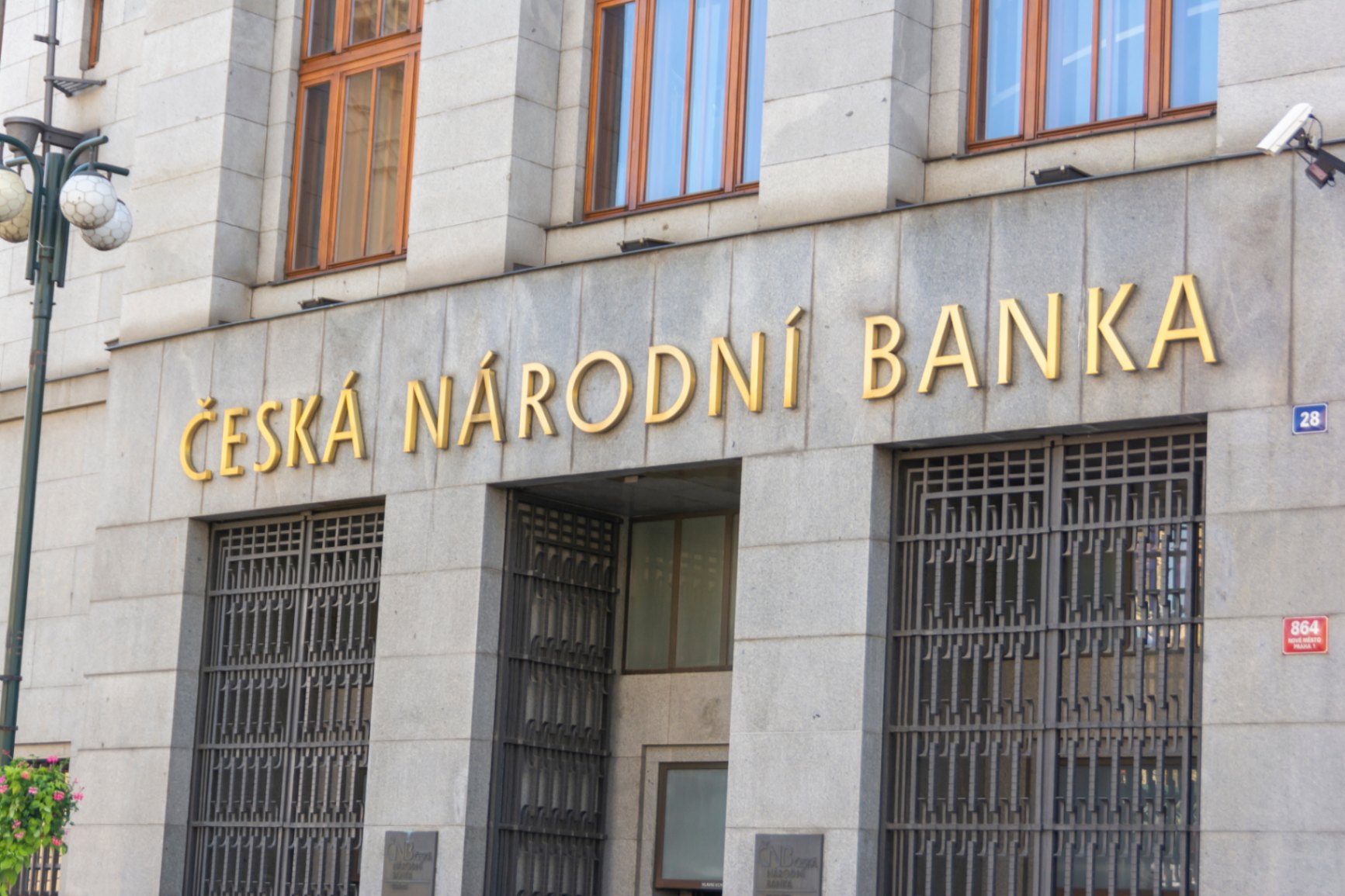
The CNB Bank Board left interest rates unchanged in March.

Economic commentary by Jaromir Šindel, Chief Economist of the CBA

Economic commentary by Jaromir Šindel, Chief Economist of the CBA

Economic commentary by Jaromir Šindel, Chief Economist of the CBA

Economic commentary by Jaromir Šindel, Chief Economist of the CBA

Economic commentary by Jaromir Šindel, Chief Economist of the CBA

Economic commentary by Jaromir Šindel, Chief Economist of the CBA
Economic commentary by Jaromir Šindel, Chief Economist of the CBA

Economic commentary by Jaromir Šindel, Chief Economist of the CBA

Economic commentary by Jaromir Šindel, Chief Economist of the CBA

Economic commentary by Jaromír Šindel, Chief Economist of the CBA
Economic commentary by Jakub Seidler, Chief Economist of the CBA

Economic commentary by Jakub Seidler, Chief Economist of the CBA

Economic commentary by Jakub Seidler, Chief Economist of the CBA

Economic commentary by Jakub Seidler, Chief Economist of the CBA

Economic commentary by Jakub Seidler, Chief Economist of the CBA

Economic commentary by Jakub Seidler, Chief Economist of the CBA

Economic commentary by Jakub Seidler, Chief Economist of the CBA
Economic commentary by Jakub Seidler, Chief Economist of the CBA

Economic commentary by Jakub Seidler, Chief Economist of the CBA
Economic commentary by Jakub Seidler, Chief Economist of the CBA

Economic commentary by Jakub Seidler, Chief Economist of the CBA

Economic commentary by Jakub Seidler, Chief Economist of the CBA

Economic commentary by Jakub Seidler, Chief Economist of the CBA

Economic commentary by Jakub Seidler, Chief Economist of the CBA

Economic commentary by Jakub Seidler, Chief Economist of the CBA

Economic commentary by Jakub Seidler, Chief Economist of the CBA

Economic commentary by Jakub Seidler, Chief Economist of the CBA

Economic commentary by Jakub Seidler, Chief Economist of the CBA

Economic commentary by Jakub Seidler, Chief Economist of the CBA

Economic commentary by Jakub Seidler, Chief Economist of the CBA

Economic commentary by Jakub Seidler, Chief Economist of the CBA

Economic commentary by Jakub Seidler, Chief Economist of the CBA

Economic commentary by Jakub Seidler, Chief Economist of the CBA
Economic commentary by Jakub Seidler, Chief Economist of the CBA

Economic commentary by Jakub Seidler, Chief Economist of the CBA

Economic commentary by Jakub Seidler, Chief Economist of the CBA

Economic commentary by Jakub Seidler, Chief Economist of the CBA
Economic commentary by Jakub Seidler, Chief Economist of the CBA

Economic commentary by Jakub Seidler, Chief Economist of the CBA

Economic commentary by Jakub Seidler, Chief Economist of the CBA

Economic commentary by Jakub Seidler, Chief Economist of the CBA

Economic commentary by Jakub Seidler, Chief Economist of the CBA

Economic commentary by Jakub Seidler, Chief Economist of the CBA

Economic commentary by Jakub Seidler, Chief Economist of the CBA

Economic commentary by Jakub Seidler, Chief Economist of the CBA

Economic commentary by Jakub Seidler, Chief Economist of the CBA

Economic commentary by Jakub Seidler, Chief Economist of the CBA

Economic commentary by Jakub Seidler, Chief Economist of the CBA

Economic commentary by Jakub Seidler, Chief Economist of the CBA
Economic commentary by Jakub Seidler, Chief Economist of the CBA

Economic commentary by Jakub Seidler, Chief Economist of the CBA

Economic commentary by Jakub Seidler, Chief Economist of the CBA
Economic commentary by Jakub Seidler, Chief Economist of the CBA

Economic commentary by Jakub Seidler, Chief Economist of the CBA

Economic commentary by Jakub Seidler, Chief Economist of the CBA

Economic commentary by Jakub Seidler, Chief Economist of the CBA

Economic commentary by Jakub Seidler, Chief Economist of the CBA

Economic commentary by Jakub Seidler, Chief Economist of the CBA