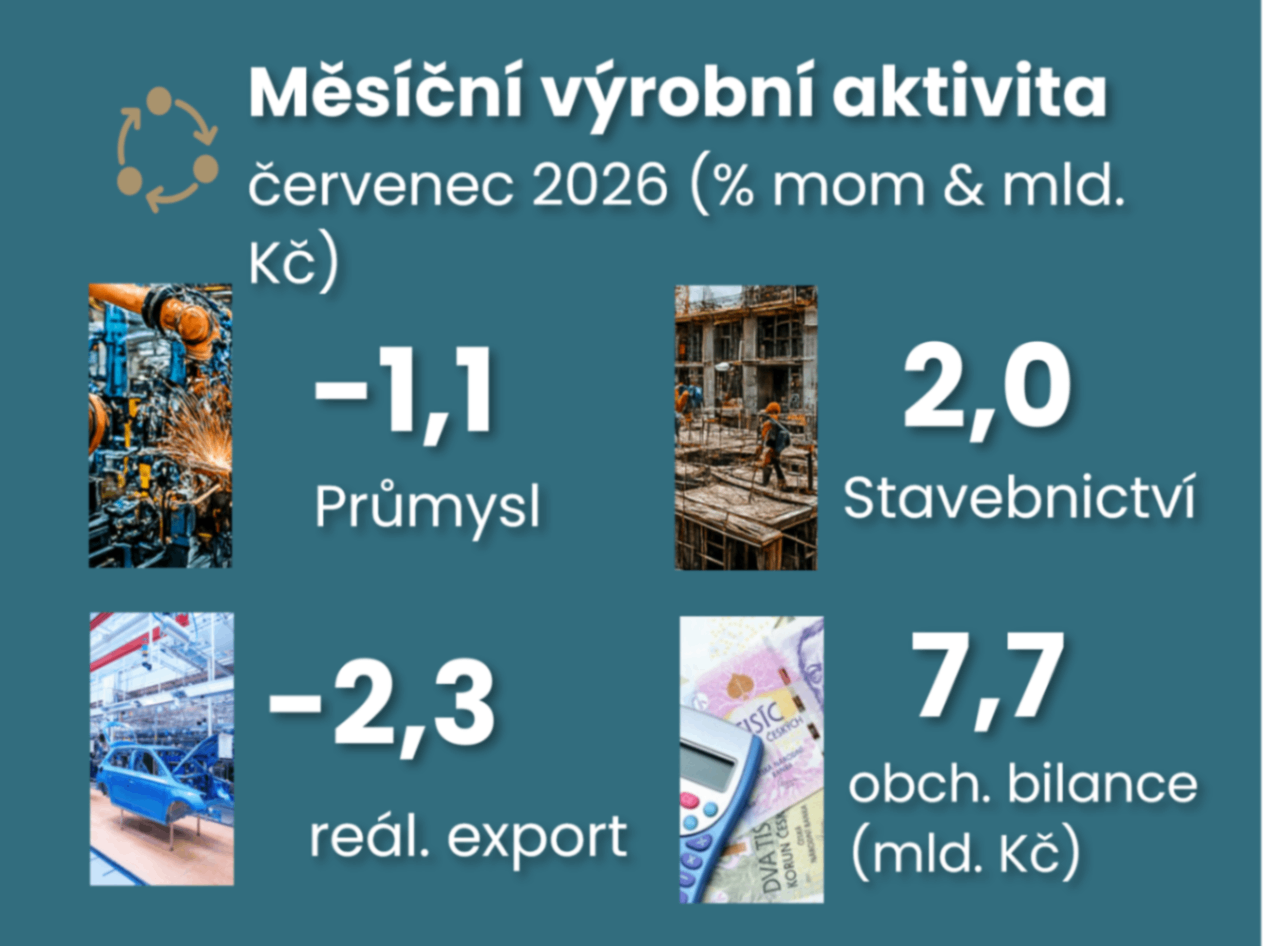
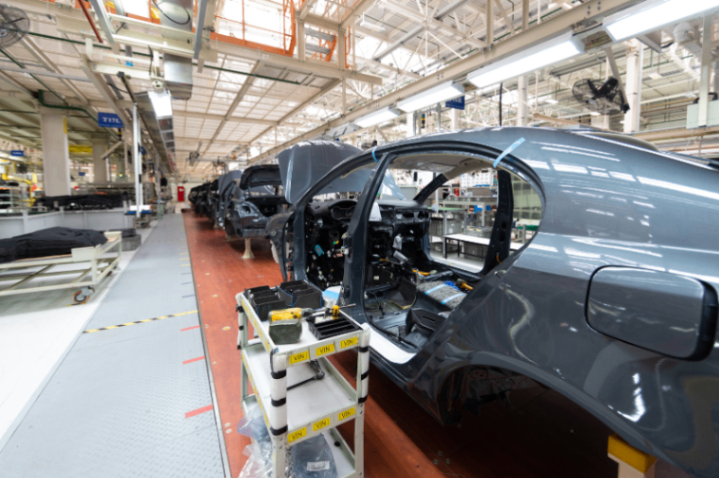
Industrial production has shown weak growth since the end of 2018. Based on July 2026 data, the volume of industrial production this year was 2.9% above the pre-COVID level of 2019, compared to 1% last year. In the manufacturing sector, production volume stands at 105.4% of the 2019 level (compared to 104% last year), and in the automotive industry, it stands at 121.6% (up from 119% last year). In July 2026, industrial production grew by 2.5% year-over-year (seasonally adjusted), and year-to-date growth this year reached 2% compared to 2.1% in the same period last year. These year-over-year changes amounted to 1.9% year-over-year for July in the manufacturing sector and 1.9% so far in 2026 (compared with 2.1% in the same period last year), while the automotive industry posted 1% year-over-year growth in July of this year and has grown by an average of 3.1% so far this year, compared to 0.6% last year.
Industrial Production
(year-over-year figures, % yoy)
CBA Monitor
You can hide a data set by clicking on the data set name in the chart legend.
Source of Primary Data
Czech Statistical Office
Category
Economy
Data Frequency
annual
Note
Historical annual average and year-to-date average for the current year,
data adjusted for seasonal variations and differences in the number of business days,
automotive industry - OKEČ/NACE 29.
July’s industrial and foreign trade figures pointed to a weaker start to the third quarter. The overall economic picture, however, remains mixed: weaker industrial output and exports contrast with more resilient construction, retail, and services. The data thus pose a certain risk to the expected modest recovery of the Czech economy in the third quarter, projected at 0.6% quarter-over-quarter. Moreover, the weakness in July’s industrial output was not across the board, and a solid trend in production outside the automotive sector and energy-intensive industries remains evident, as confirmed by export figures. Foreign trade remains under pressure from higher energy prices. Trends in residential construction remain favorable for both housing starts and completions, despite renewed weakness in building permits.
Jaromír Šindel
24. 07. 2026
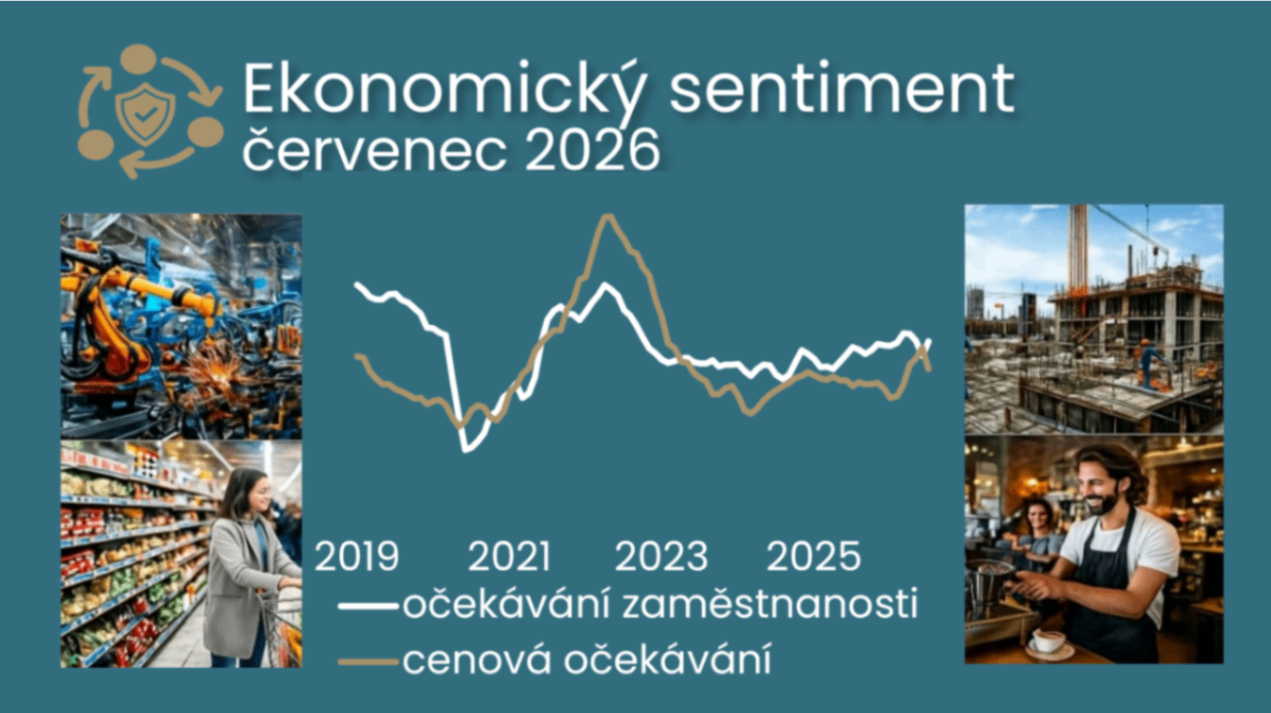
Although confidence in the Czech economy improved only slightly in July, it did so for the second month in a row, confirming its resilience despite heightened geopolitical uncertainty. Positive signals are coming mainly from the industrial sector, where assessments of demand and capacity utilization are improving, as well as from employment expectations. At the same time, declining price expectations are easing the CNB’s concerns about persistent inflationary pressures; however, the return of higher oil prices does not yet give the central bank a reason to deviate from its rather hawkish communication.
Jaromír Šindel
08. 06. 2026
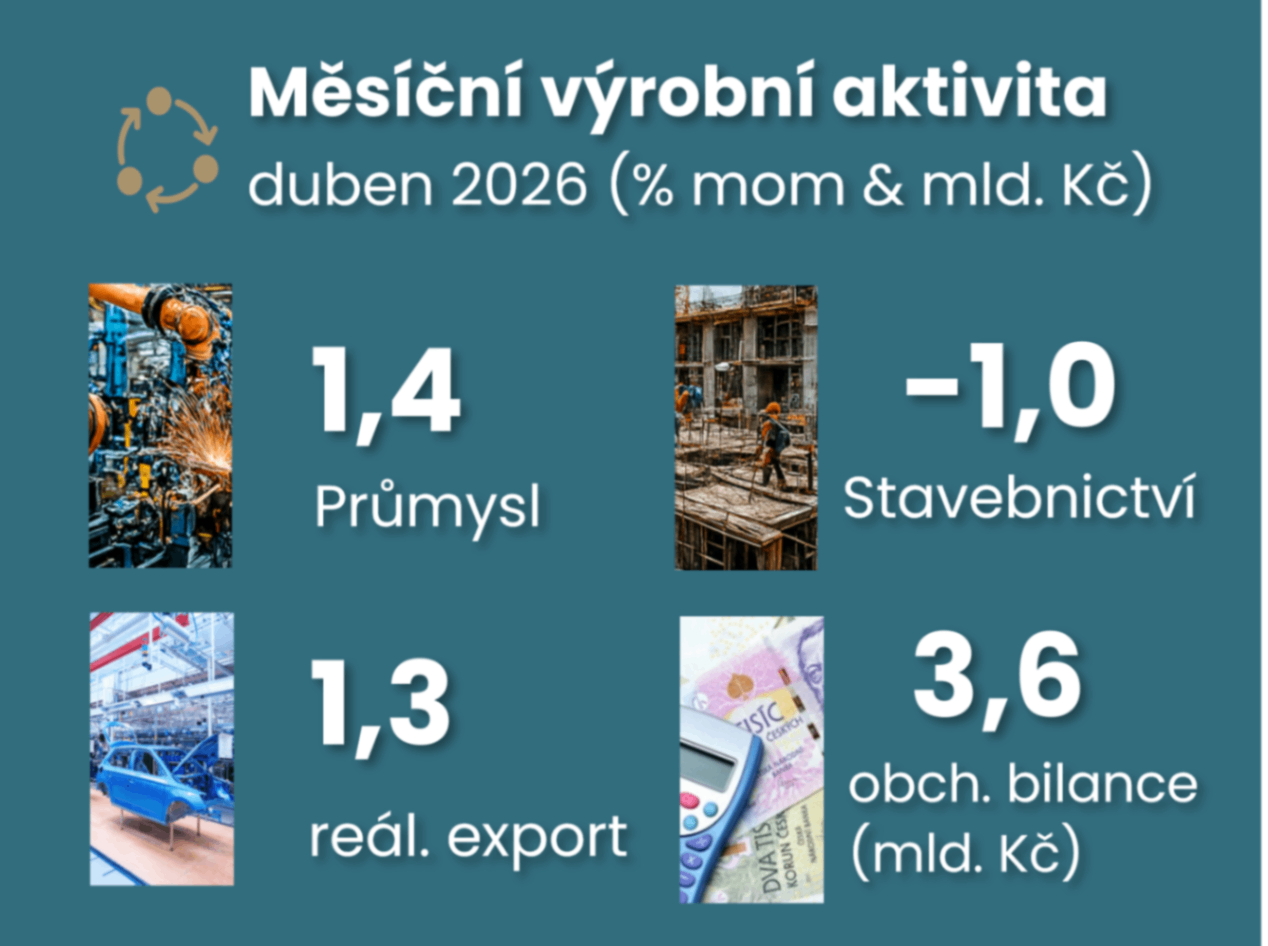
April's monthly figures open the way for stronger GDP growth in Q2 for now, after slowing to 0.2% q-o-q in Q1. The April industrial numbers are 1.8% above the first quarter average thanks to the April rebound. Despite a slight April decline, the construction sector is on an uptrend, thanks in part to strong housing starts, which rebounded from weaker building permits. Moreover, its sentiment does not suggest a change in trend. Foreign trade reached its lowest surplus below CZK4bn since the end of the energy crisis in 2022. However, this mainly reflects higher non-energy imports, while export activity also showed solid growth thanks to ICT. Thus, net exports are unlikely to drive GDP, similar to the first quarter when their weaker contribution was offset by stronger investment activity.
06. 02. 2026
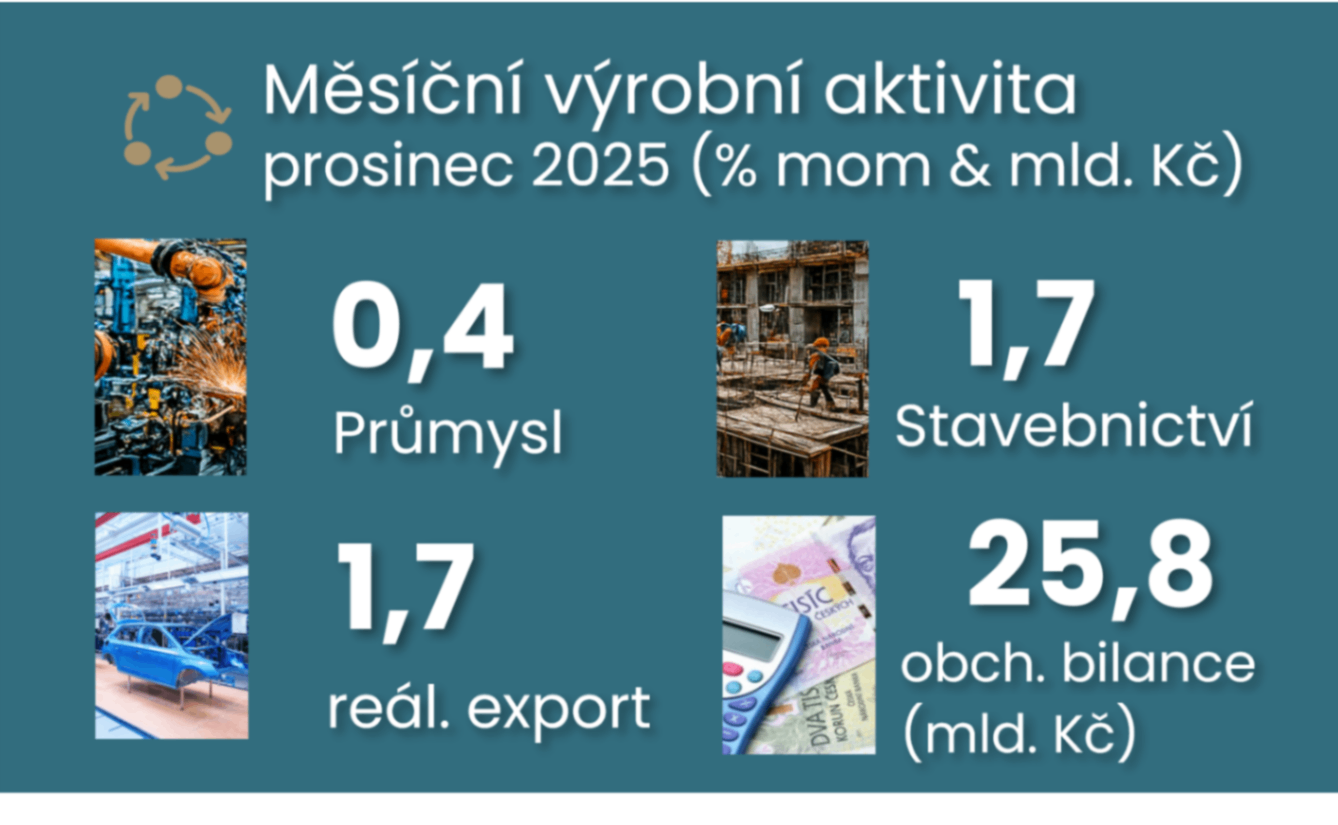
Comment by Jaromír Šindel, Chief Economist of the CBA: December data brought a positive end to the year with continued better-than-expected industrial production, including its structure. The same is true for construction output, which returned to a better performance, but the weaker number of building permits remains a drag. Foreign trade posted an improved surplus of over 25 billion kronor in December and nearly 220 billion kronor for the full year 2025. This is equivalent to 2.6% of GDP, down from 2.8% a year ago. While retail trade did not impress at the end of the year, this was not the case for industrial wages, which returned to double-digit annualized growth at the end of the year. Overall, the December data should not prompt more dovish rhetoric from the CNB, as it does not yet signal a disinflationary contribution from the real economy towards core inflation. However, in its new, stronger outlook, the CNB is also assuming an improvement in labour productivity, which, together with tighter monetary conditions, will bring inflation back towards its target.
08. 01. 2026
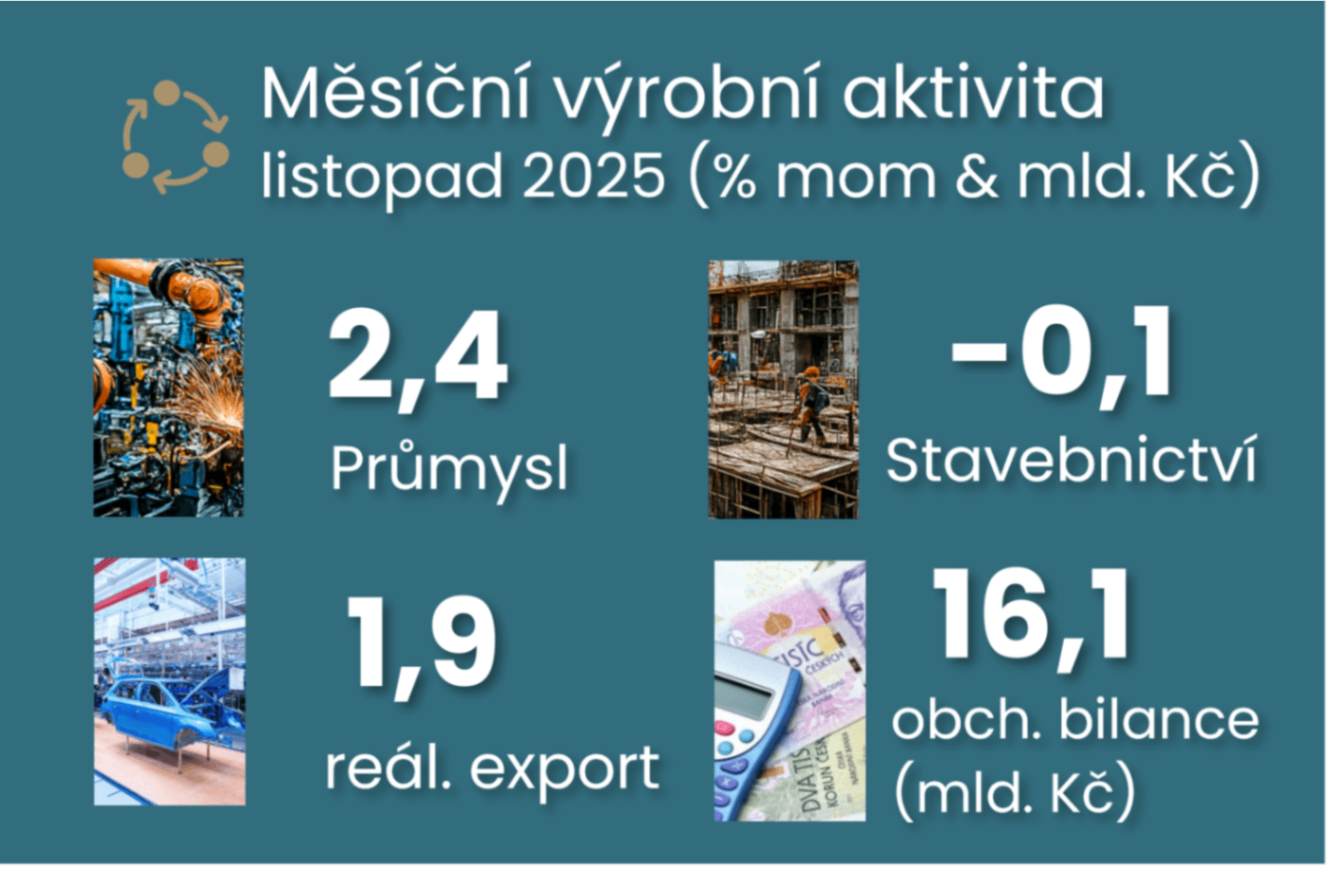
Comment by Jaromír Šindel, Chief Economist of the CBA: The November data confirm an acceleration in industrial activity, driven by the automotive industry and the recovery of energy-intensive sectors, which pushed annual industrial growth closer to 6%, the highest this year. However, further improvement may be hampered by the December decline in industrial sentiment and export expectations. Construction remains weak, and its high 7% y/y growth reflects the past rather than the current reality of limited public investment and weak building permits issued. The labour market has not yet cooled significantly despite a higher 3.3% selection unemployment rate, confirming continued solid wage growth of around 6% in industry. Quarter-on-quarter GDP growth will thus be underpinned by industrial production in Q4, probably also retail, but construction and the foreign trade surplus will rather take a bite out of it.
08. 10. 2025
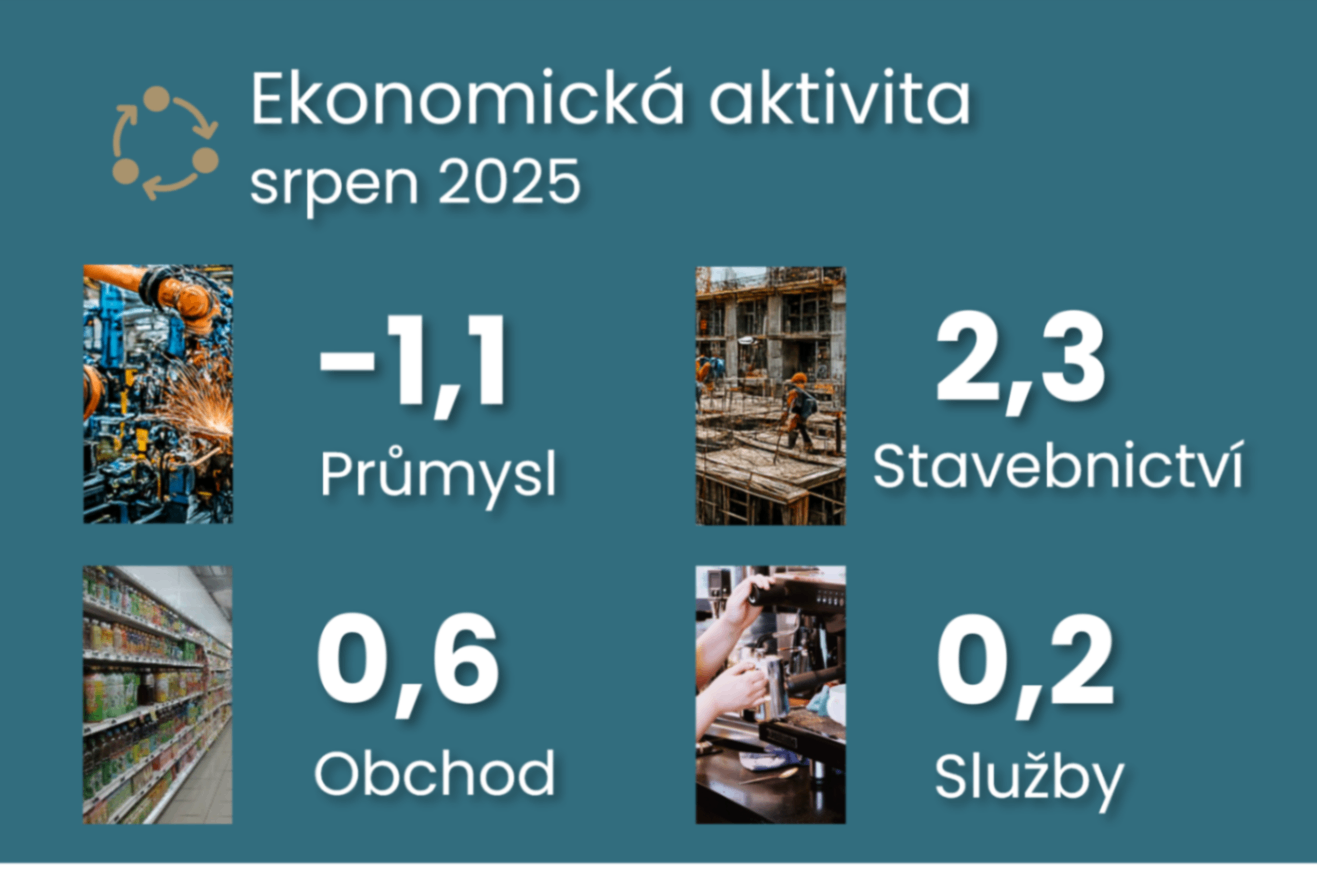
Comment by Jaromír Šindel, Chief Economist of the CBA: The continuation of the construction boom and the recovery in retail sales in August was dampened by the return of weaker industrial production, despite stronger exports. However, the positive sentiment in September suggests that the slowdown in GDP growth in Q3 may not be as pronounced as the July and August figures suggest.
08. 09. 2025
Economic commentary by Jaromír Šindel, Chief Economist of the CBA: Although the economy breathed a half-percent growth in the second quarter, the July figures were rather disappointing and suggest a cooling. However, the Czech economy is generating upside risks to inflation, which limits the room for manoeuvre of the CNB, which is likely to stick to the CNB's 3.5% terminal interest rate thesis. August's registered unemployment confirmed a worse trend, which, however, is not confirmed by other data.
06. 08. 2025
Economic commentary by Jaromir Šindel, Chief Economist of the CBA
11. 06. 2025
Economic commentary by Jaromir Šindel, Chief Economist of the CBA
12. 05. 2025
Economic commentary by Jaromir Šindel, Chief Economist of the CBA
25. 04. 2025
Economic commentary by Jaromir Šindel, Chief Economist of the CBA
07. 04. 2025
Economic commentary by Jaromir Šindel, Chief Economist of the CBA
06. 08. 2024
Economic commentary by Jakub Seidler, Chief Economist of the CBA
08. 07. 2024
Economic commentary by Jakub Seidler, Chief Economist of the CBA
08. 04. 2024
Economic commentary by Jakub Seidler, Chief Economist of the CBA
06. 02. 2024
Economic commentary by Jakub Seidler, Chief Economist of the CBA
01. 02. 2024
Economic commentary by Jakub Seidler, Chief Economist of the CBA