CBA forecast: CNB interest rate

3.50 %
forecast end 2026
3.50 %
forecast end 2027

CBA Commentary

May CBA Forecast: consumer inflation to settle at 2.7% next year increases the risk of a higher central bank interest rate. While 40% of forecast panel members expect this scenario, most see the key interest rate holding steady at 3.5%. The risk of a higher interest rate is reflected in the higher outlook for core inflation (2.6% in 2027) as well as longer-term global inflation risks, but also in the higher ECB interest rate, which in our outlook is only partly priced into a weaker crown.
Forecast risk: the May level of the CNB interest rate at 3.5% is consistent with the CBA's outlook for end-2026.

CBA forecast: CNB interest rate

% (average values, but forecast for the end of the period)

CBA Monitor
You can hide a data set by clicking on the data set name in the chart legend.

Source of primary data

CNB, CBA

Category

Forecast

Data frequency

annual

Note

This is the two-week repo rate. \The "Actual figures" are the full-year average and the "Actual ytd figures" are the average for the year to date, while the "CBA forecast" refers to the end of the period.
The dashed line "middle band of 25-75% forecasts" represents the middle half between the 25th and 75th percentile of all forecasts in the CBA consensus.

For download:

Comments

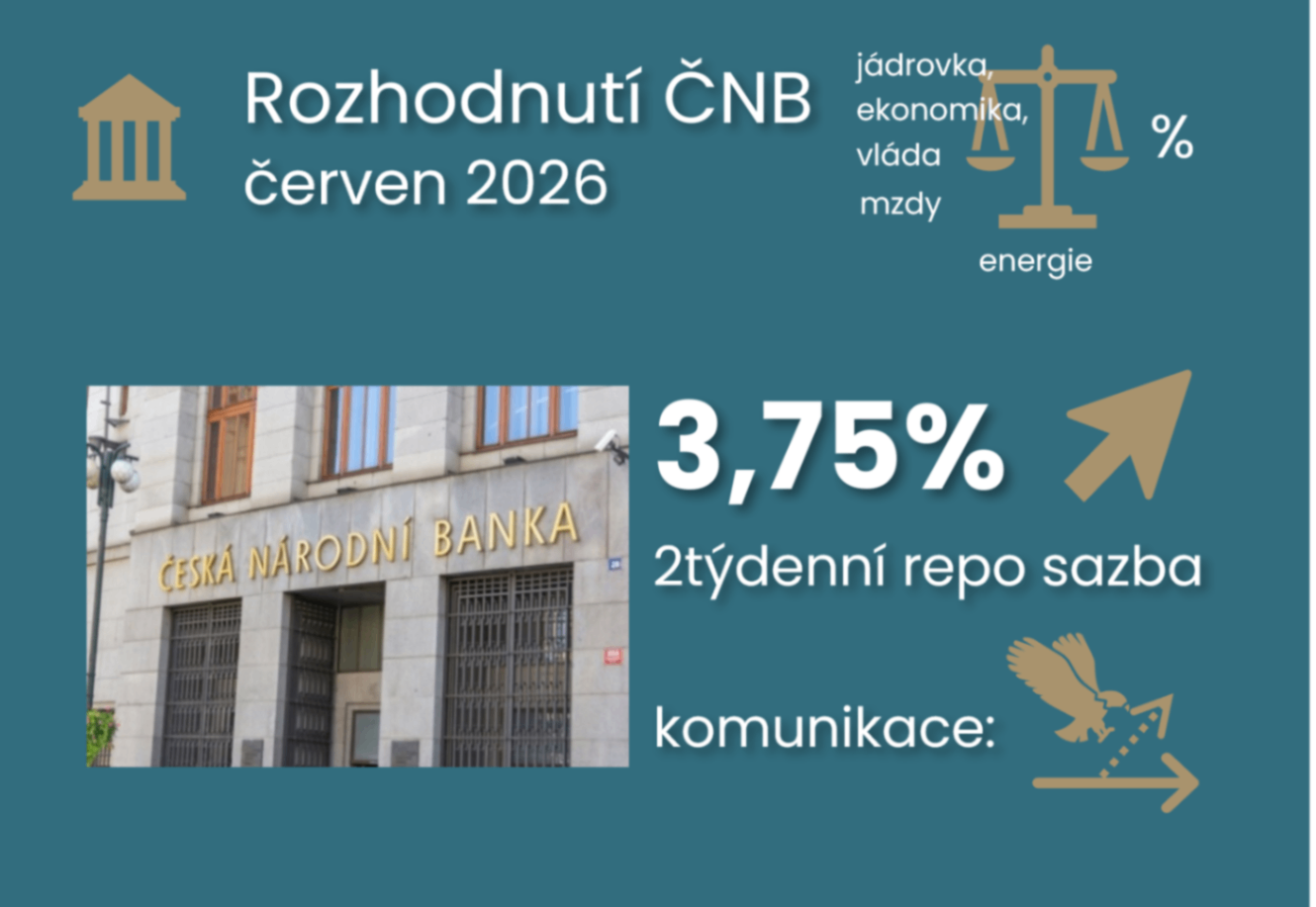
The CNB hiked the policy rate to 3.75% and will likely keep them there until the autumn

The Bank Board raised the interest rate by a quarter of a percentage point to 3.75%. Unsurprisingly, the main reason was the continued high growth in demand-driven, or “core,” inflation, which reflects stronger wage growth. However, the decision also reflects stronger credit growth and rising real estate prices. I view today’s decision as an effort by the central bank to keep consumer inflation in line with its inflation target over the longer term, which is not possible with core inflation hovering around 3%. Today’s decision reduces the risk premium—or rather, the uncertainty regarding the credibility of achieving the inflation target and the central bank’s independence. Below, I discuss further possible steps and their implications for the economy and the banking sector. If energy prices remain lower, this will reduce the likelihood of the CNB reaching a 4% interest rate. However, core inflation must lose momentum for the CNB to avoid reaching that level.

The domestic economy will grow by 2% this year. The CBA forecasting panel worsened the outlook due to the events in Hormuz. The forecast from the first quarter predicted growth of 2.6%. Consumer inflation should accelerate towards the upper limit of the inflation target at the end of this year.

May 2026: Economic growth slowing to 2% with risks on many fronts, 2.4% growth next year

The CBA's forecast panel expects the domestic economy to grow by 2.6% this year and to maintain the same pace in 2027. Inflation should slow to 1.7% this year and then accelerate to 2.3% next year. However, core inflation remains elevated and represents a key upside risk to inflation, especially in services prices.

The Czech economy is expected to grow by 2.6% this year and should maintain the same pace next year, according to the CBA forecasting panel. Inflation should slow to 1.7% on average in 2026 and accelerate slightly again to 2.3% in 2027. However, core inflation remains elevated and represents a key upside risk to inflation, especially in services prices.

February 2026: Growth outlook steady at 2.6% with low price growth

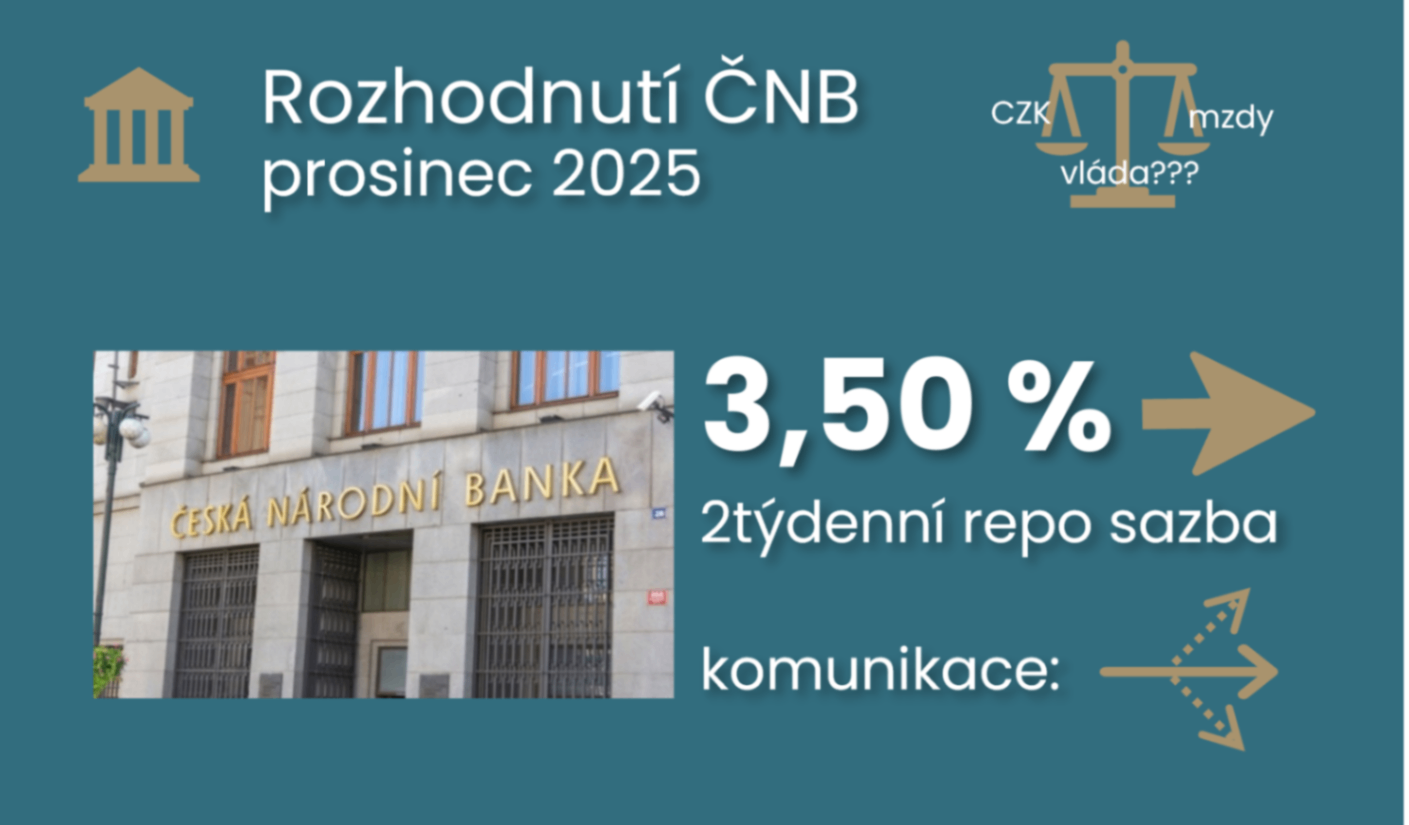
Is the unchanged CNB interest rate at 3.50% a sign of the coming bonanza or the calm before the storm?

Comment by Jaromír Šindel, Chief Economist of the CBA: The central bank did not surprise by unanimously leaving interest rates unchanged, i.e. with the two-week repo rate at 3.50%, for the fifth meeting in a row after a 25bp cut in May. Although the Board did not change its view of the risks and uncertainties surrounding the CNB's November forecast, it did assess the risks to inflation as balanced, given the risks in financial markets and the removal of the renewable energy levy, following November's upside assessment.