Prices of Single-Family Homes by Regional Capital Cities

6.51 (price per house in millions of CZK)
Average Price in the Czech Republic

Commentary by the Czech Bar Association

The average transaction price for single-family homes in the Czech Republic reached 6.5 million CZK in the second quarter of 2026, while in Prague it was 21.2 million CZK (325% of the average transaction price in the Czech Republic). The average transaction price in the Czech Republic rose by 2.8% year-over-year, and in Prague it was up by 8.6%. The highest year-over-year growth in the second quarter was recorded in Ústí nad Labem, at 43.9% year-over-year (representing 112% of the national average), while the weakest performance was a decline of 11.2% to 88% of the Czech Republic average in Ostrava. The range between the minimum and maximum of these average prices in other regional capitals reached CZK 5.8 million to 13.3 million (i.e., between 88% and 205% of the average transaction price in the Czech Republic), with these figures representing the cities of Ostrava and Brno.

Prices of Single-Family Homes by Regional Capitals

Q2 2026

CBA Monitor
You can hide a data set by clicking on the data set name in the chart legend.

Source of Primary Data

Flat Zone

Category

Real Estate Prices

Data Frequency

quarterly

Note

Average transaction price for the quarter.
The average price for the Czech Republic as a whole may fall outside the range for regional capitals, as it also includes data for cities outside the regions.

Příbuzné grafy
For download:

Comments

Transaction prices for apartments did not slow down much in the second quarter

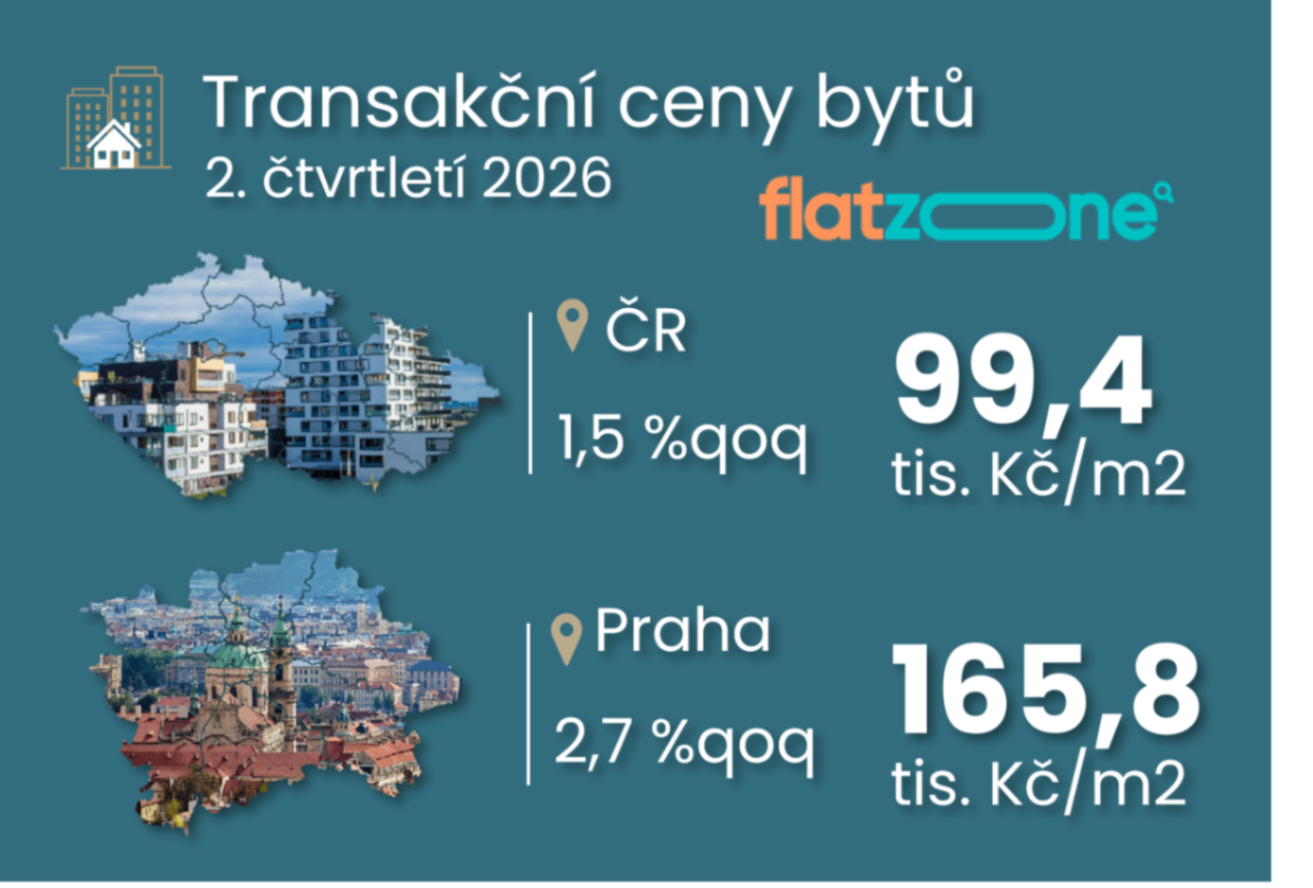
According to Flat Zone statistics, the price of apartments sold in the Czech Republic approached 100,000 crowns per square meter in the second quarter, while in Prague it exceeded 165,000. However, price growth remains stronger than the aggregate figures suggest, as these are dampened by a shift in transactions toward less expensive apartments and regions. Combined with more moderate growth in asking prices and higher market interest rates, this may contribute to a slowdown in the growth rate of actual prices over the course of a year. However, a more significant decline in price momentum will continue to be held back by supply-side constraints and stronger mortgage frontloading.

This continues to boost activity, although not at the rapid pace seen in 2023-2024.

Decline in transaction prices of flats in the second quarter is related to transactions rather than to a fall in prices

Economic commentary by Jaromir Šindel, Chief Economist of the CBA