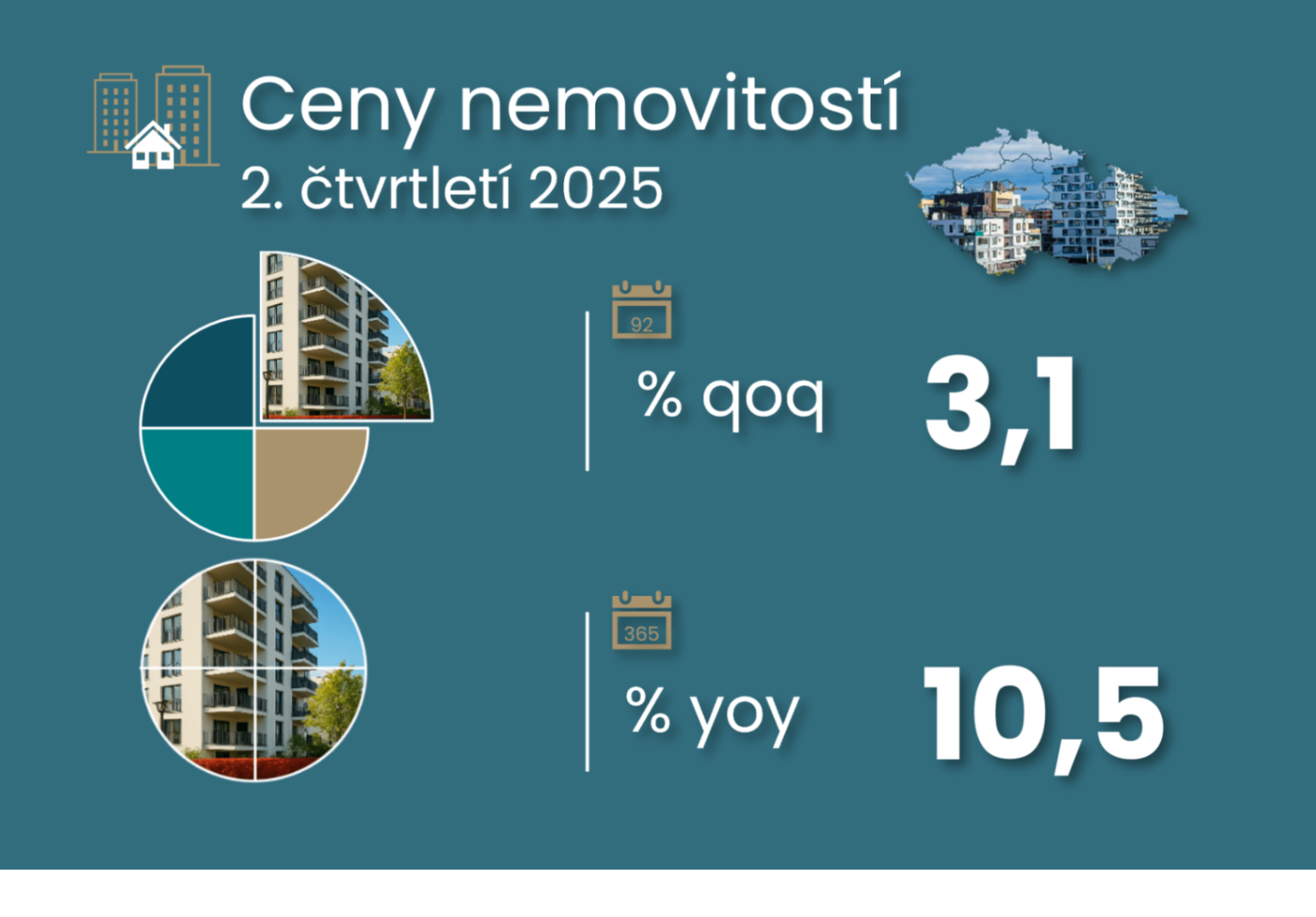
According to data from the Czech Statistical Office (ČSÚ), asking prices for new and older apartments in the Czech Republic rose by 2.1% quarter-over-quarter in the third quarter of 2026, following a 1.4% increase in the previous quarter.This growth rate thus fell short of the average quarterly growth of 2.4% recorded since the end of 2019. In Prague, these prices rose by 1.2% quarter-over-quarter, following a 1.6% increase; compared to the long-term average of 2%. Year-over-year, prices in the Czech Republic rose by 8.9% in Q3 2026, reaching 1.9 times the pre-pandemic level in the fourth quarter of 2019 and 3 times the level at the end of 2013. These ratios reached 1.7 and 2.9 in Prague, while in the rest of the country they were 2.1 and 3.1. In 2025, the Czech Republic saw an average year-over-year change in asking prices for new and older apartments of 16.8% (compared to 5.1% the previous year), of which prices in Prague rose by 15.9% (compared to 5.4%).
Trends in Real Estate Asking Prices
(% year-over-year)
CBA Monitor
You can hide a data set by clicking on the data set name in the chart legend.
Source of primary data
Czech Statistical Office
Category
Real Estate Prices
Data Frequency
quarterly
Note
Average asking prices for new and renovated apartments, as well as older apartments.
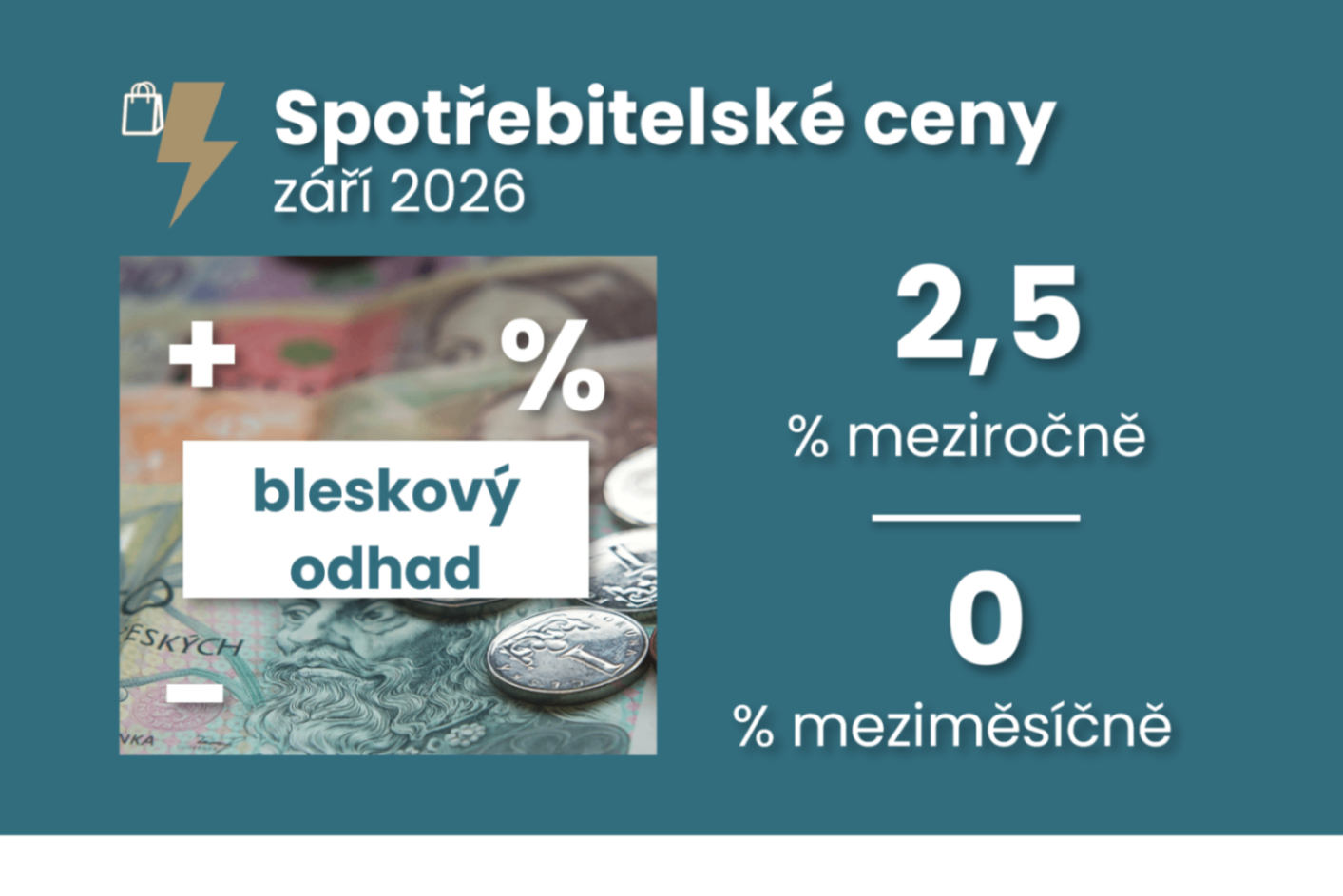
The acceleration in September inflation from 1.9 to 2.5 percent year-over-year is roughly half due to last year’s low base. Although consumer prices remained flat month-over-month in September, this still represents a stronger trend than is typical for this month. The structure of price growth also deserves attention. Food prices continue to have a disinflationary effect, but their decline was not enough to offset higher prices for alcohol, fuel, and energy, nor the persistent domestic price pressures. Real estate asking prices returned to a stronger pace in the third quarter, which is, however, consistent with a milder future 8 percent year-over-year growth. If detailed data confirm that domestic inflationary pressures remain elevated despite slightly higher suvbey-based unemplyoment, a hike in the CNB’s base rate from 3.75 to 4 percent at the November meeting will be a relevant option.
Jaromír Šindel
08. 04. 2026
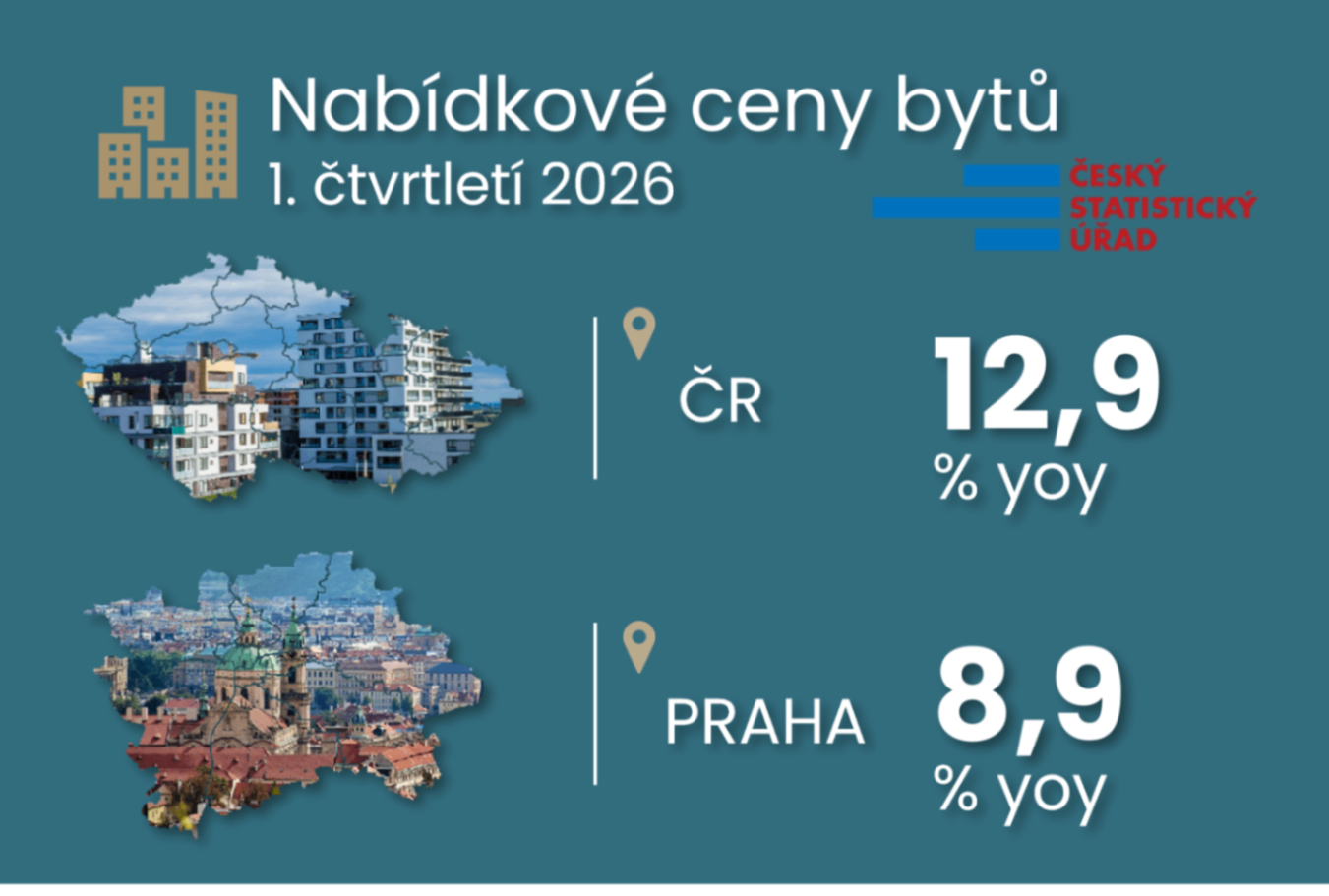
In Q1 2026, the offer prices of flats rose by 2.7% quarter-on-quarter. The housing market is slowing down slightly in terms of offer prices after last year's significant increase in prices, but price growth remains above average and is not sufficient to improve the ratio of housing prices to household incomes significantly. In the regions, prices continue to rise faster than in Prague and the year-on-year cooling is still evident in Prague. Overall annual growth in the supply side of house prices has slowed to 12.9% from the previous 16-18% during 2025. Higher supply side house prices have been heralded by continued growth in average mortgage rates.
05. 01. 2026
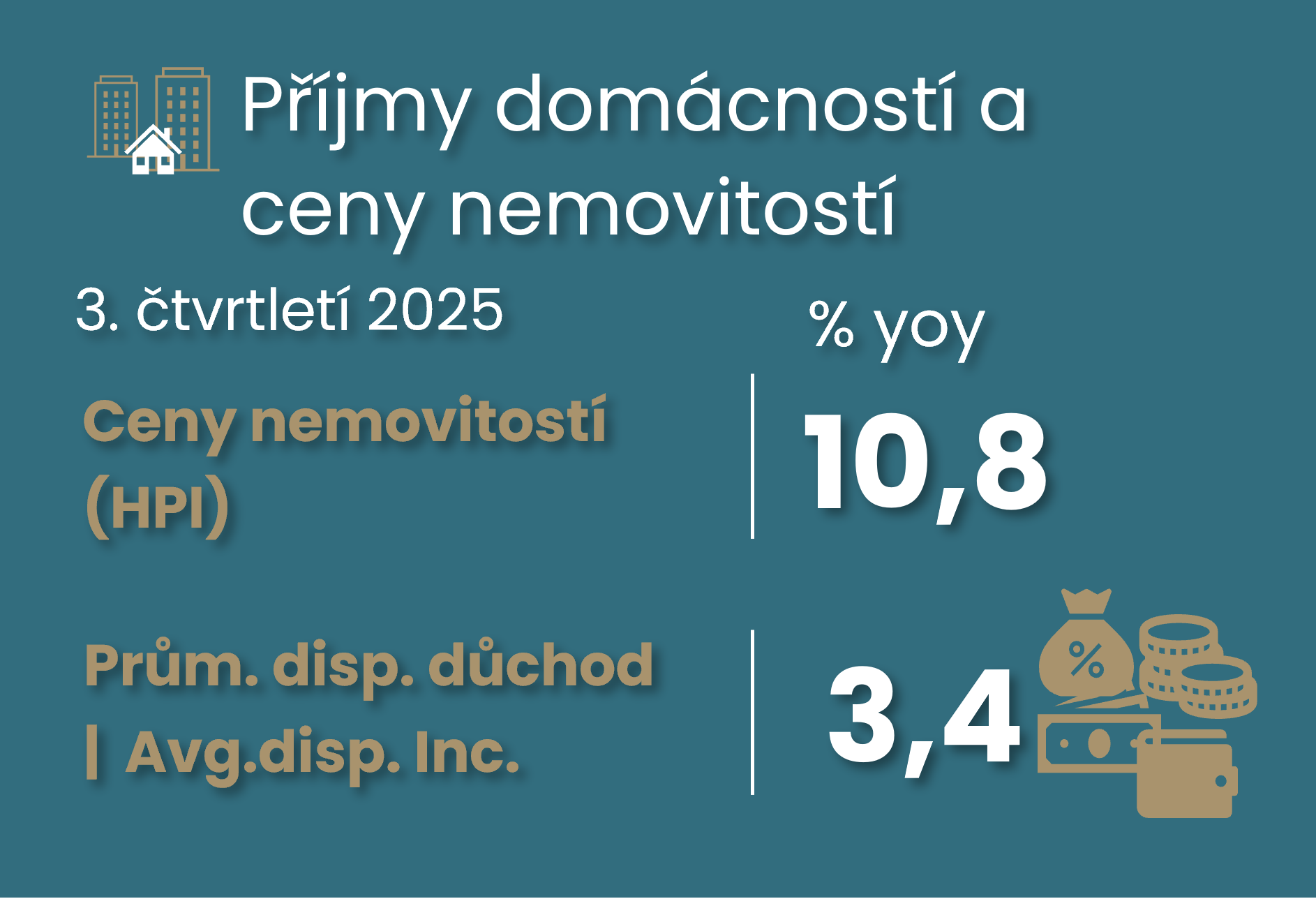
Comment by Jaromír Šindel, Chief Economist of the CBA: Even the third quarter of 2025 did not bring a significant recovery in household disposable income. Despite this, the household savings rate has been abnormally high for almost six years. In Q3, it was 18.4%. Weaker quarter-on-quarter growth in disposable income has not kept pace with house prices for six quarters in a row. On a year-over-year basis, we are comparing 3.4% growth in disposable income vs. a 10.8% increase in home purchase prices including land (HPI).
15. 12. 2025
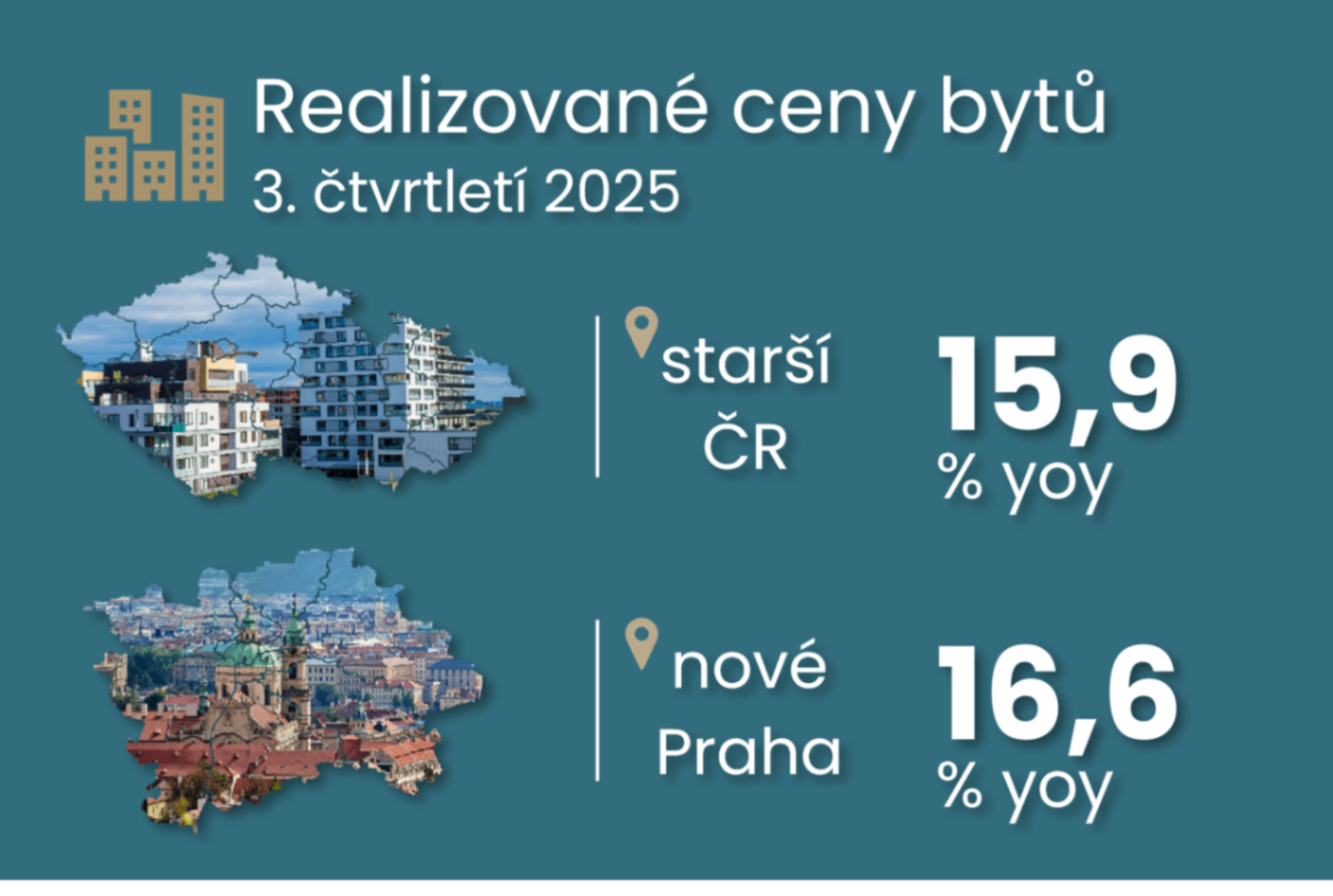
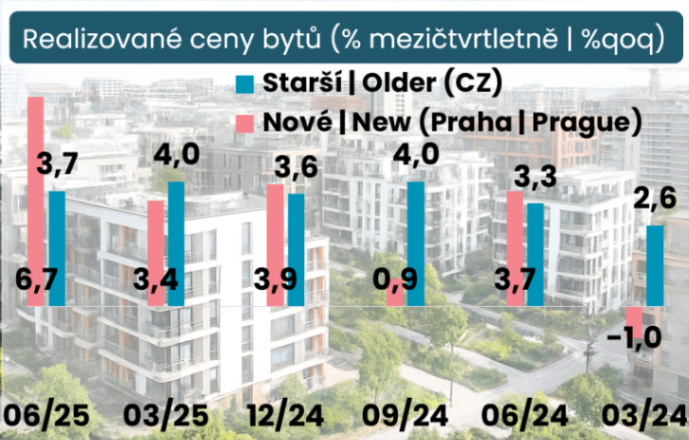
Comment by Jaromír Šindel, Chief Economist of the CBA: According to the Czech Statistical Office, realised prices of older flats in the Czech Republic rose by 3.7% quarter-on-quarter in the third quarter, which exceeds income growth for the seventh quarter already and maintains the too brisk annual pace of property prices at around 16%. Higher property prices are also making their way into the CNB's macroprudential capital policy settings, with discussion over the (arguably unscary) possible introduction of a sectoral systemic buffer, as well as less intuitive discussions over the role of investment activity by non-financial corporates in setting the countercyclical capital buffer.
01. 10. 2025
Comment by Jaromír Šindel, Chief Economist of the CBA: The recovery in disposable income in Q2 was still dampened by fiscal policy, so it remained weaker compared to the increase in wages and property prices. Nevertheless, households managed to increase both consumption and their savings.
14. 09. 2025
Economic commentary by Jaromír Šindel, Chief Economist of the CBA: I estimate overall growth in realised house prices of 4.2% quarter-on-quarter, which has outpaced wage growth for the sixth quarter in a row.
27. 08. 2025
Economic commentary by Jaromir Šindel, Chief Economist of the CBA
23. 07. 2025
Economic commentary by Jaromir Šindel, Chief Economist of the CBA
02. 07. 2025
Economic commentary by Jaromir Šindel, Chief Economist of the CBA
25. 06. 2025
Economic commentary by Jaromir Šindel, Chief Economist of the CBA