Current value (Czech Republic – Czech Statistical Office)
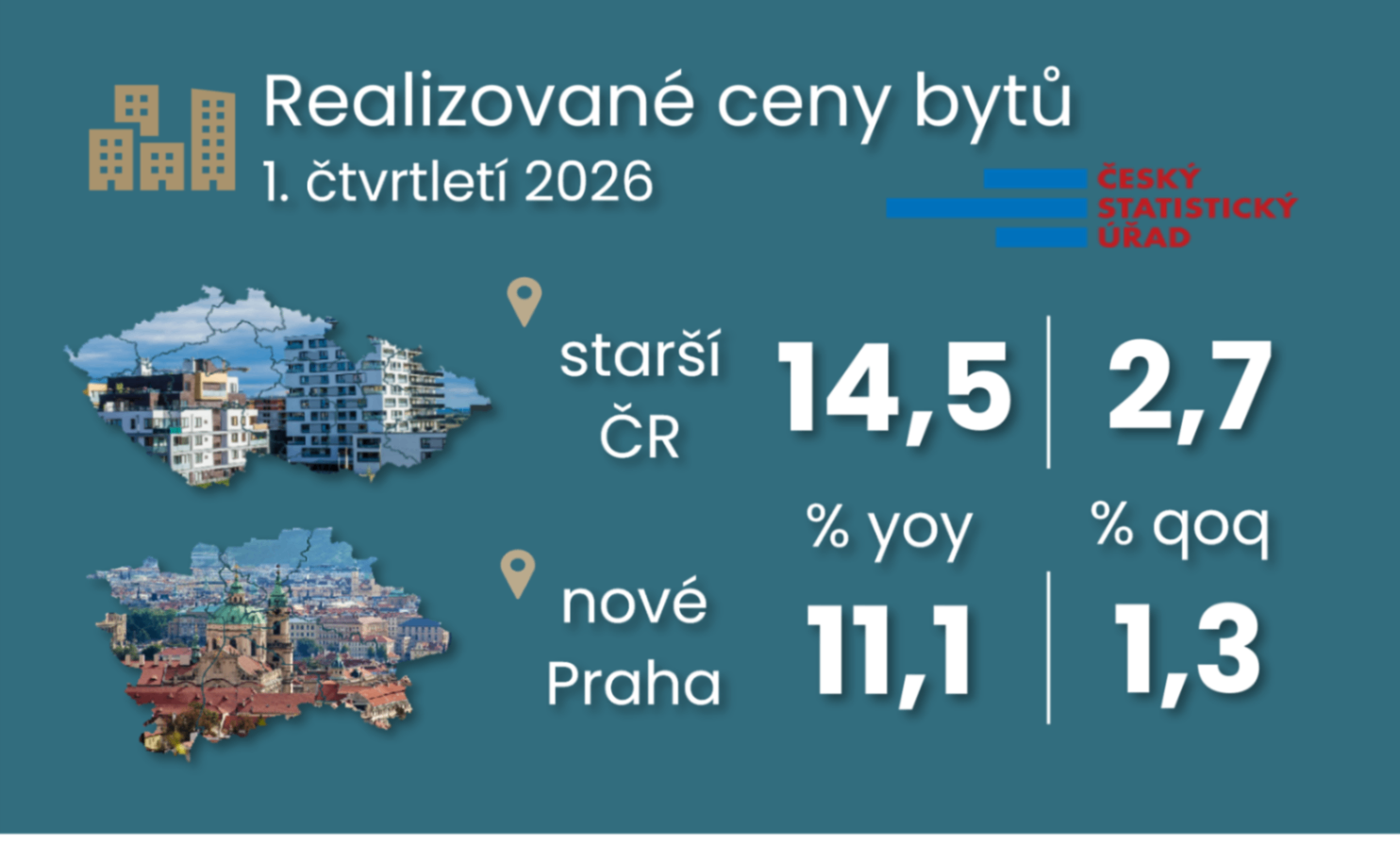
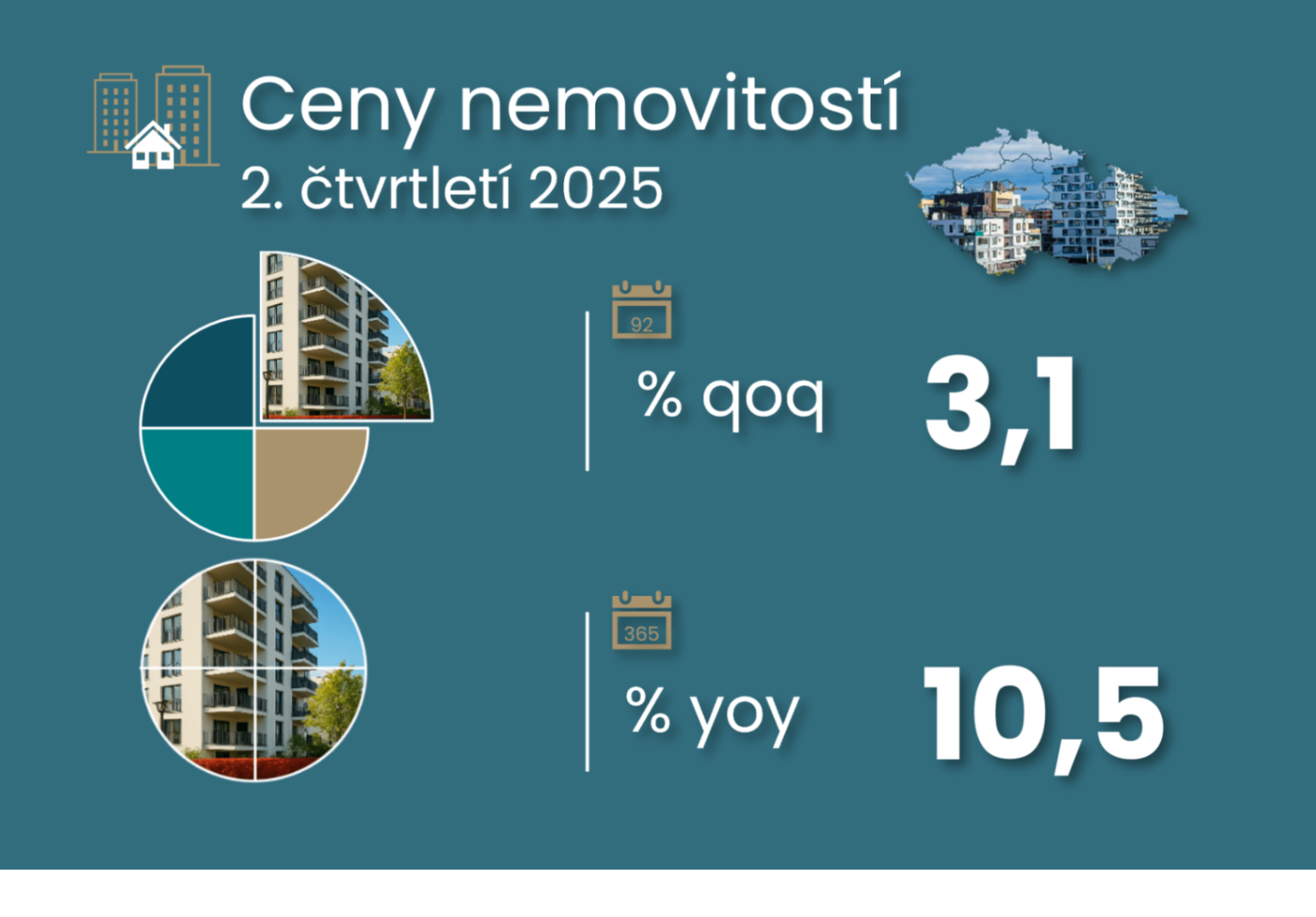
14.5
% year-over-year
Value for the Previous Quarter
Commentary by the Czech Bar Association
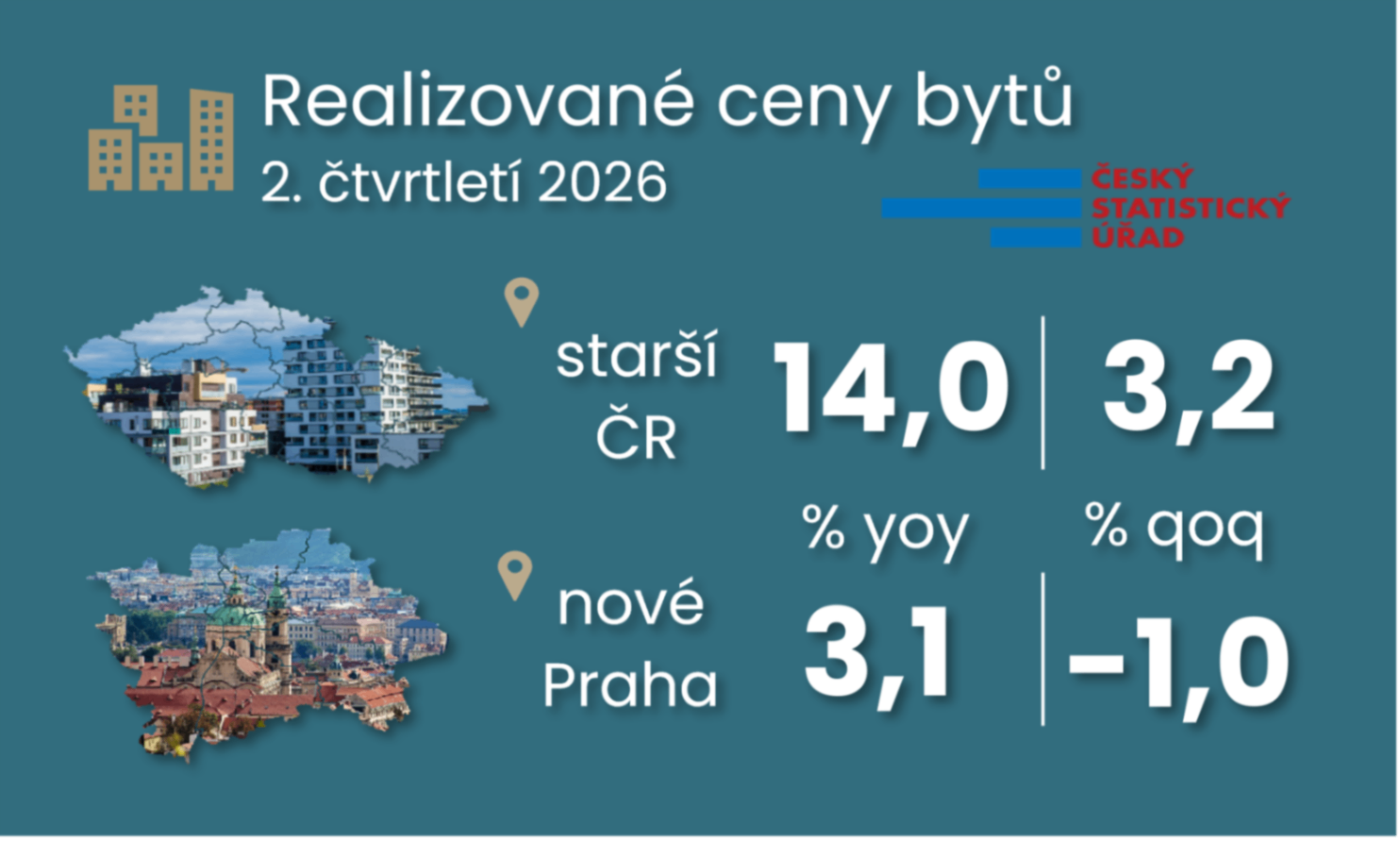
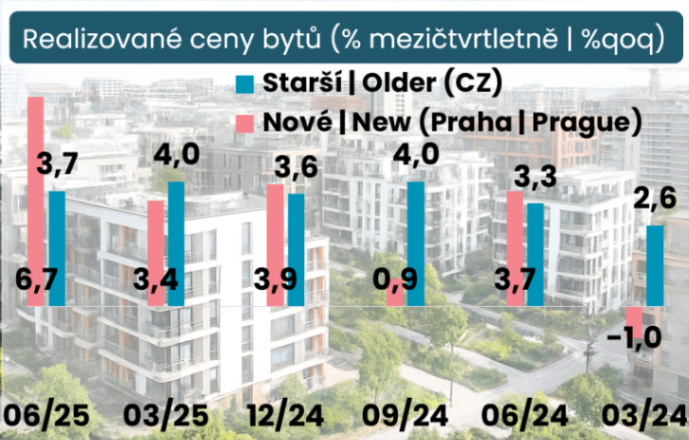
According to data from the Czech Statistical Office (ČSÚ), realized prices for older apartments in the Czech Republic rose by 3.2% quarter-over-quarter in the second quarter of 2026, following a previous increase of 2.7%. The growth rate thus exceeded the average quarterly growth of 3% recorded since the end of 2019. The following growth rates were recorded in the regions: in Prague, 2.6% following a 1.5% increase, compared to an average of 2.4%; outside Prague, 3.3% following a 3.1% increase, compared to an average of 3.1%. In the Czech Republic, prices of older apartments rose by 14% year-over-year, reaching 2.1 times the pre-pandemic level in the fourth quarter of 2019 and 3.8 times the level at the end of 2013. These multiples reached 1.9 and 3 in Prague and 2.2 and 4 in the rest of the country. In 2025, the average year-over-year change in actual prices for older apartments in the Czech Republic was 16% (up from 7.8% the previous year), with prices in Prague rising by 14.1% (up from 8.4%) and 16.5% in the rest of the country (up from 7.7%).
Trends in Actual Sale Prices of Older Apartments
(% year-over-year)
CBA Monitor
You can hide a data set by clicking on the data set name in the chart legend.
Source of Primary Data
Czech Statistical Office, Flat Zone
Category
Real Estate Prices
Data Frequency
quarterly
Note
Actual prices.
In the case of Flat Zone data, these are transaction prices for client-to-client resales of apartments at the time of registration in the real estate cadastre. According to Flat Zone’s methodology, the “older apartments” category includes resales of apartments built before 1995, while apartments built after 1995 fall into the “new/nearly new apartments” category.
The data methodologies therefore differ, which causes variations in the dynamics and levels of the time series, particularly in the short term.
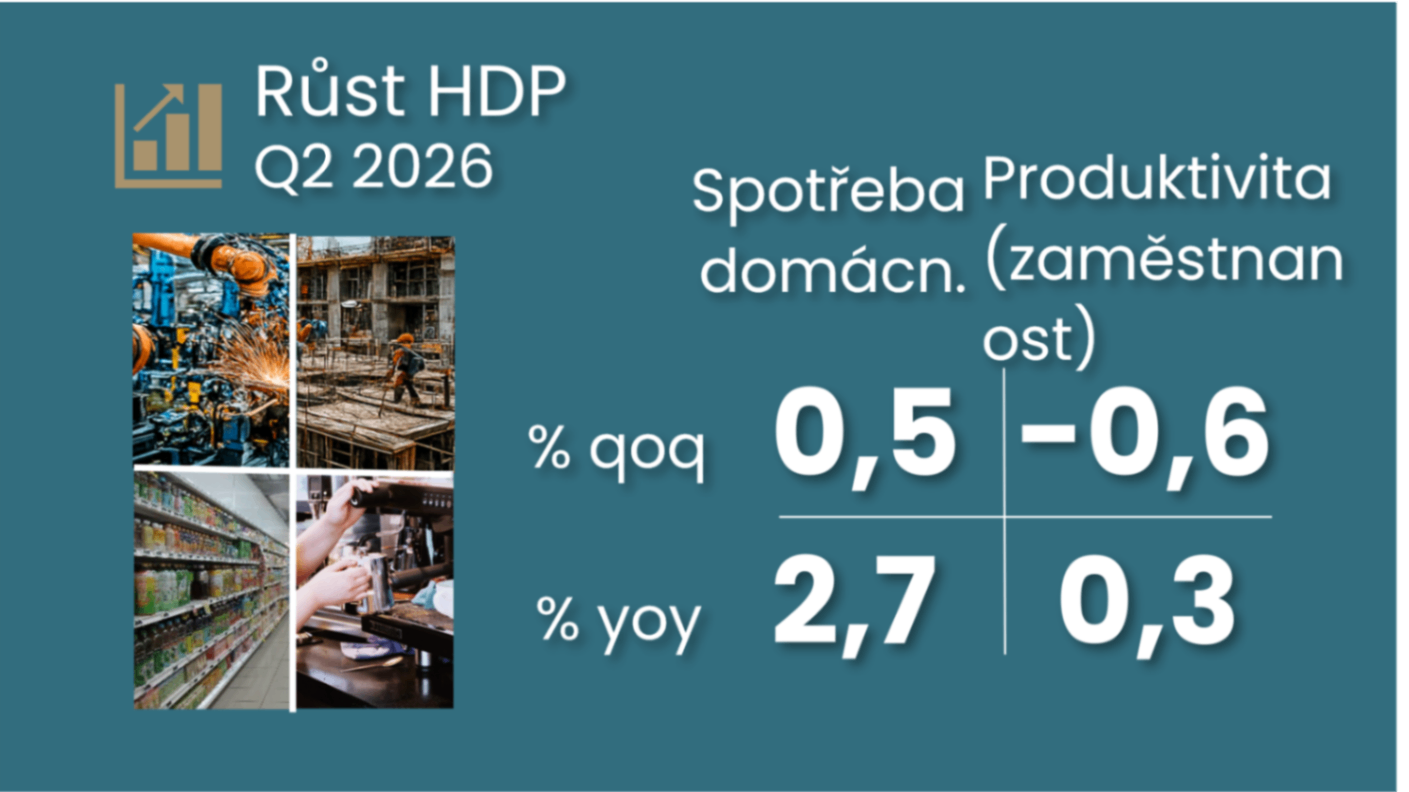
The Czech economy grew by 0.3% quarter-over-quarter and 1.8% year-over-year in the second quarter. This is a slower pace than before, and growth for the first half of the year stood at 0.6%. The weaker GDP growth is also consistent with slower growth in value added and productivity. The latter reflects continued employment growth, which is now contributing to high growth in unit labor costs. Meanwhile, households are maintaining a high savings rate, which returned to 19.9% in the second quarter. It also remains true that fixed investment is driven by the construction sector, while investment in ICT, machinery, and weapons declined in the second quarter, falling even below pre-COVID levels.
Jaromír Šindel
29. 09. 2026
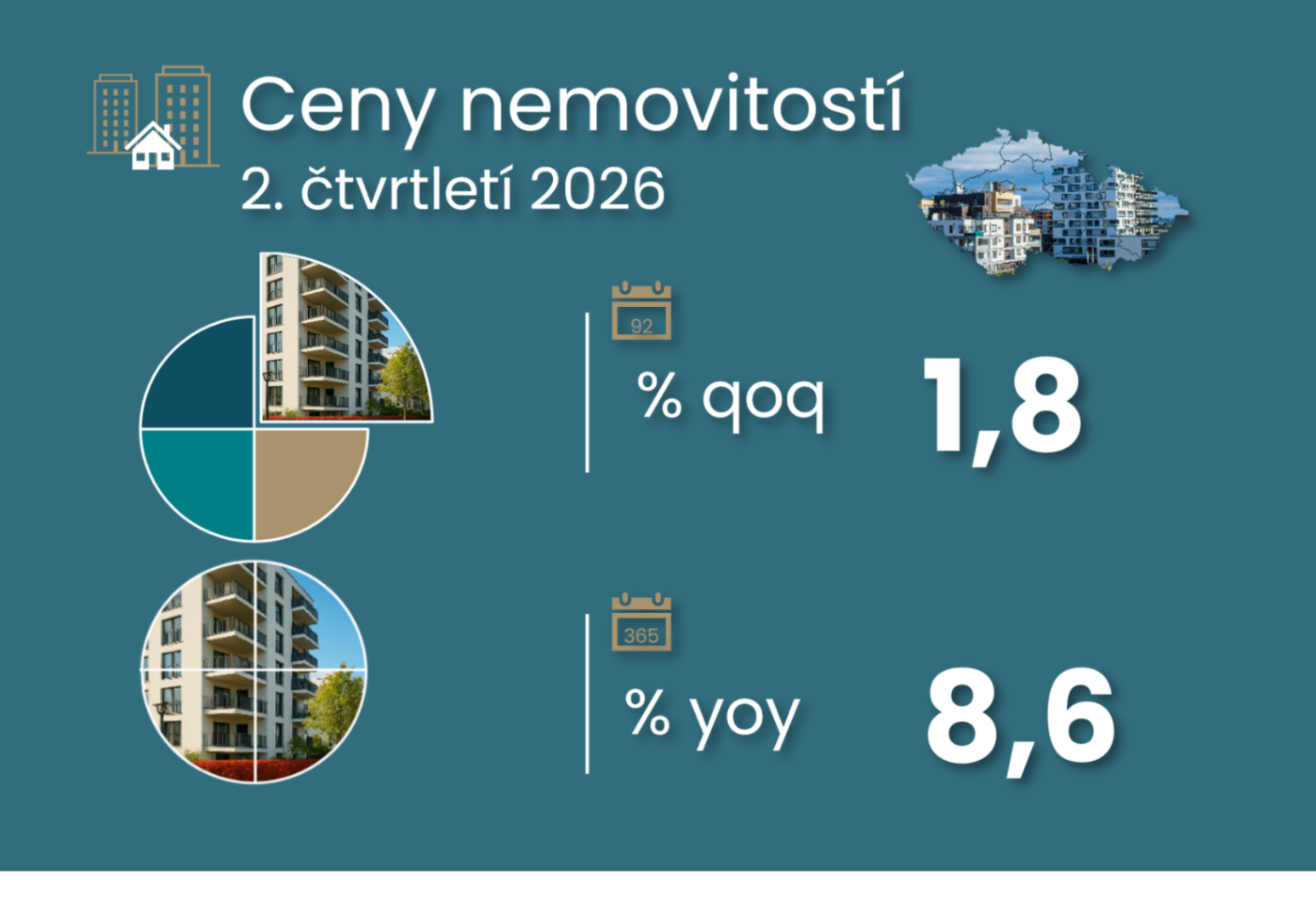
The growth in real estate prices slowed slightly in the second quarter. Year-over-year, real estate prices were up 8.6%, while in the first quarter they had risen by 10%. The slowdown is primarily due to a slight quarter-over-quarter decline in prices for new properties in Prague. Older housing, on the other hand, continues to maintain roughly 10% year-over-year and annualized growth. The price and cost index for owner-occupied housing traditionally showed a weaker pace, but the 1.6% increase ranks among the stronger ones over the past two years. Over the past fifteen years, the increase in the cost of acquiring real estate—including self-help construction and repairs (so-called “owner-occupied housing”)—has accounted for 51% of the increase in the real estate index, i.e., the house price index. While quarterly acceleration of disposable income fit the real estate price growth, its annual growth reamined weaker.
Jaromír Šindel
14. 09. 2026
According to my estimate, the overall year-on-year growth in realised residential property prices slowed from 14.0% to 12.3% in the second quarter. Prices of existing flats nevertheless continued to rise at a very strong pace, while prices of new flats in Prague fell by 1% quarter on quarter according to the Czech Statistical Office, leading to a marked slowdown in their annual growth rate. However, the surprising decline in Prague new-build prices is not broadly corroborated by transaction data from Flat Zone, and I would therefore not yet interpret it as the beginning of a more pronounced cooling of the housing market, although the gradual normalisation of the mortgage market should, with some lag, also be reflected in housing market developments. This should be transmitted through two channels – the CNB's macroprudential regulation and higher market interest rates.
Jaromír Šindel
30. 06. 2026
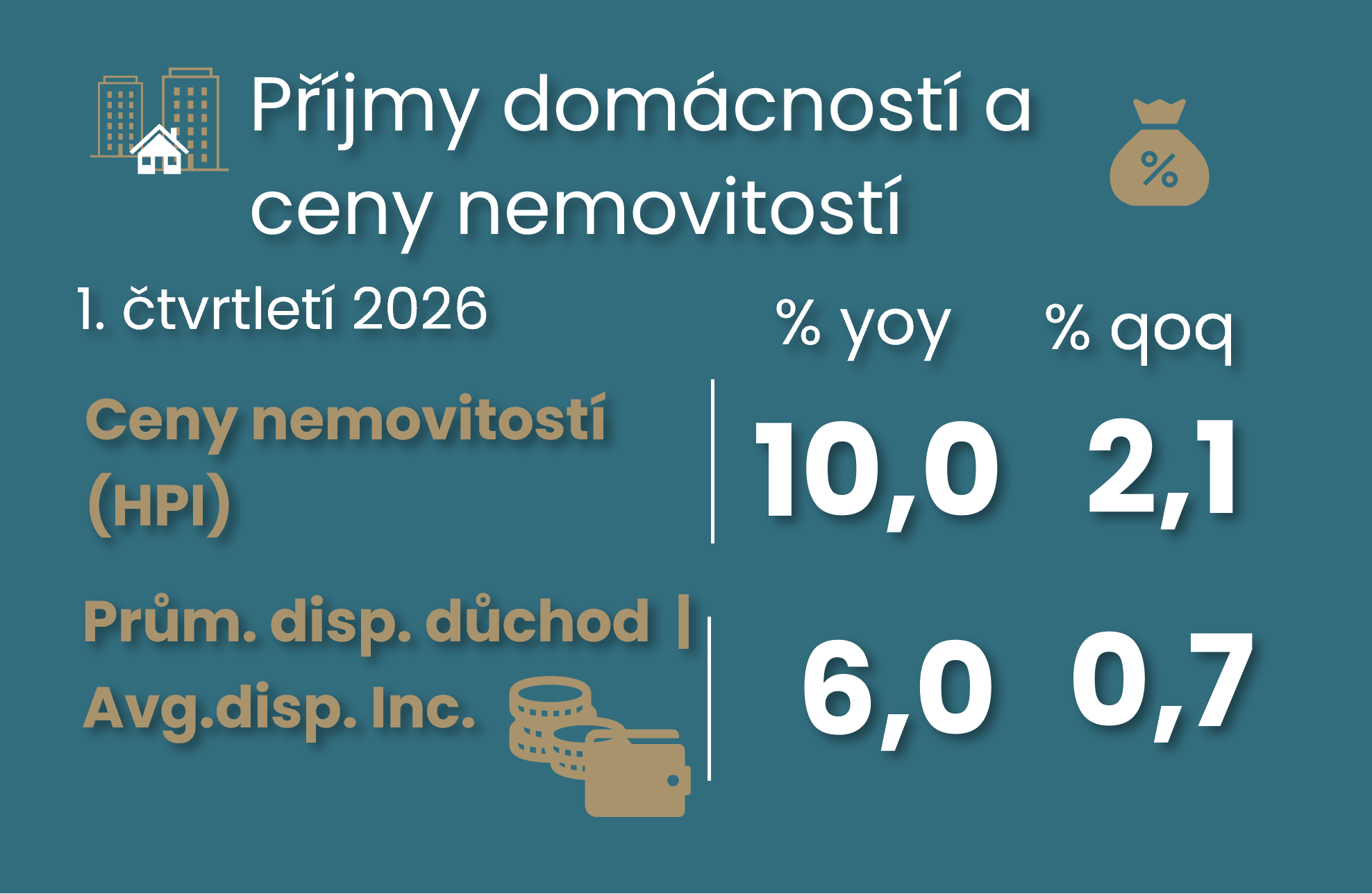
The Czech household savings rate remained at 20% in the first quarter of this year, still high even by international standards. Household disposable income slowed to 0.7% quarter on quarter, while property prices continued to rise by roughly 2%. The GDP revision showed weaker household consumption, but also a less negative productivity story thanks to stronger value added in industry. However, despite somewhat more moderate growth in the past, unit labour costs remain on a strong upward trend, which, together with high core inflation growth, is unlikely to bring a dovish turn at the CNB. That said, my interpretation of the new data from the Czech Statistical Office, especially for the first quarter, is significantly affected by the alignment of quarterly figures with the new annual data for 2025. The next quarterly release may therefore bring yet another story about the economy in the first quarter.
Jaromír Šindel
15. 06. 2026
While the growth in actual apartment prices slowed to approximately 2.5% quarter-over-quarter in the first quarter, with significantly different trends between Prague and the rest of the country, However, even the current milder growth does not yet suggest a significant slowdown in year-over-year apartment price growth this year. Asking prices do not indicate this yet. This is especially true if there is a shift of pent-up demand for more expensive Prague apartments to the regions. Data from Flat Zone show an average transaction price of CZK 98,000 per square meter for apartments in the first quarter. Stricter criteria for so-called investment mortgages, as well as higher mortgage interest rates, may further cool the real estate market; however, higher wage growth keeps real mortgage interest rates negative.
Jaromír Šindel
31. 03. 2026
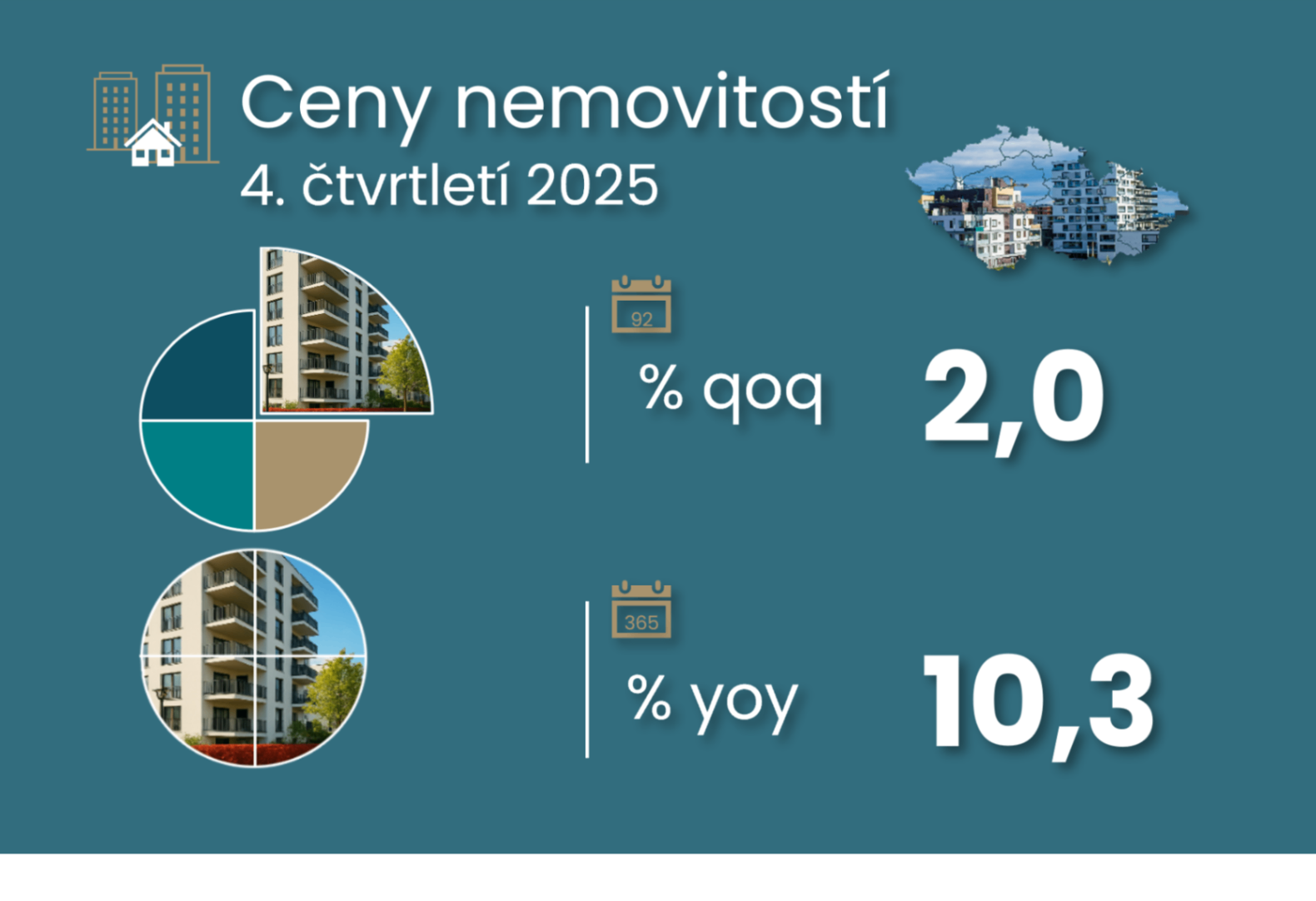
According to the CSO statistics, property prices, which include land and family houses, rose by 2% quarter-on-quarter in the final quarter of 2025. This slowed from the previous average 2.6% increase in the previous four quarters. Although the income side of demand is still lagging, real household incomes accelerated more sharply at 1.4% q-o-q (up nearly 3% in nominal terms) at the end of last year. And so did the household savings rate, which rose to 19.7%. Moreover, both figures were positively revised and there was a slight positive revision to GDP growth in the final quarter of 2025, albeit with more limited effects on the economic outlook.
05. 01. 2026
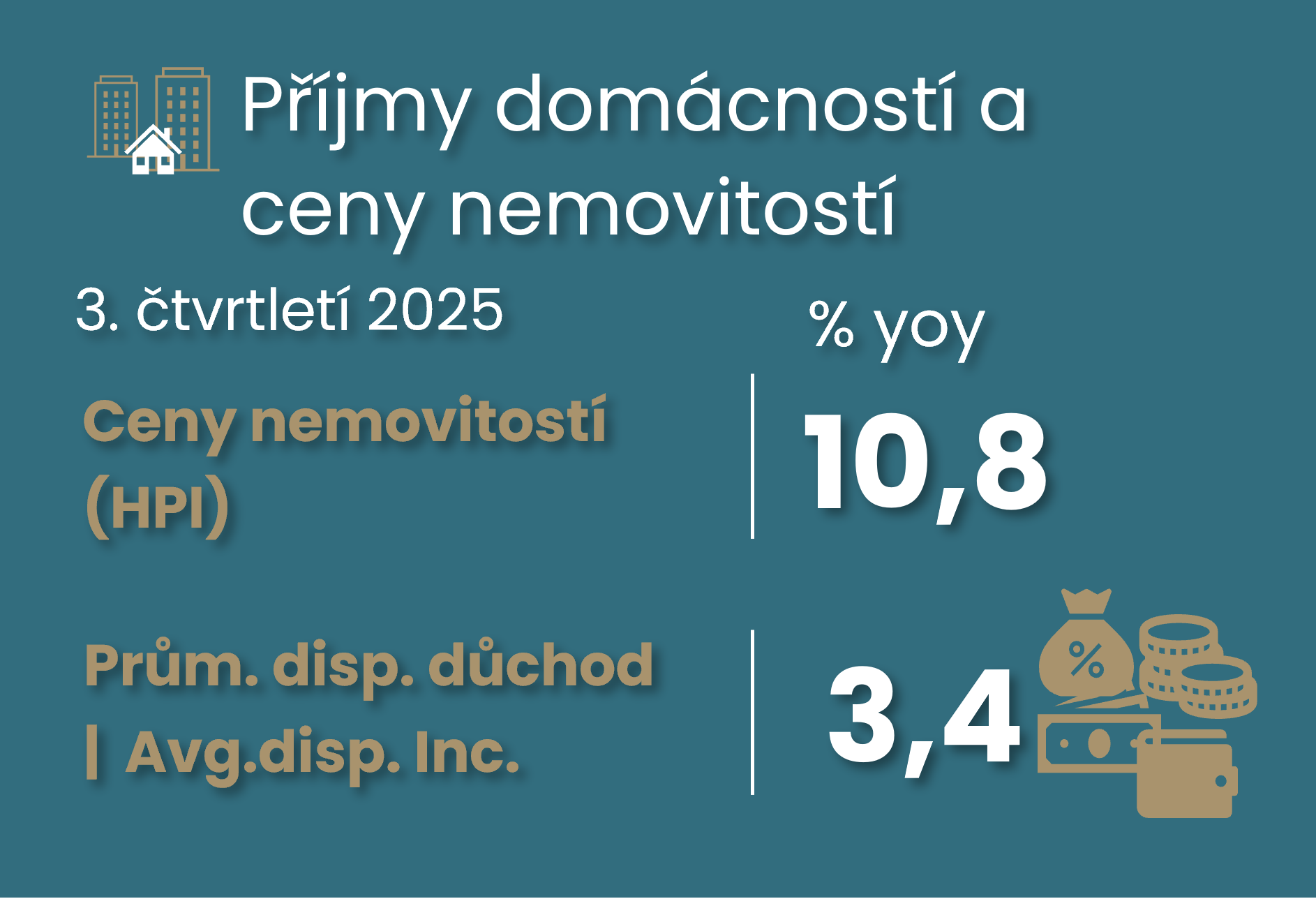
Comment by Jaromír Šindel, Chief Economist of the CBA: Even the third quarter of 2025 did not bring a significant recovery in household disposable income. Despite this, the household savings rate has been abnormally high for almost six years. In Q3, it was 18.4%. Weaker quarter-on-quarter growth in disposable income has not kept pace with house prices for six quarters in a row. On a year-over-year basis, we are comparing 3.4% growth in disposable income vs. a 10.8% increase in home purchase prices including land (HPI).
15. 12. 2025
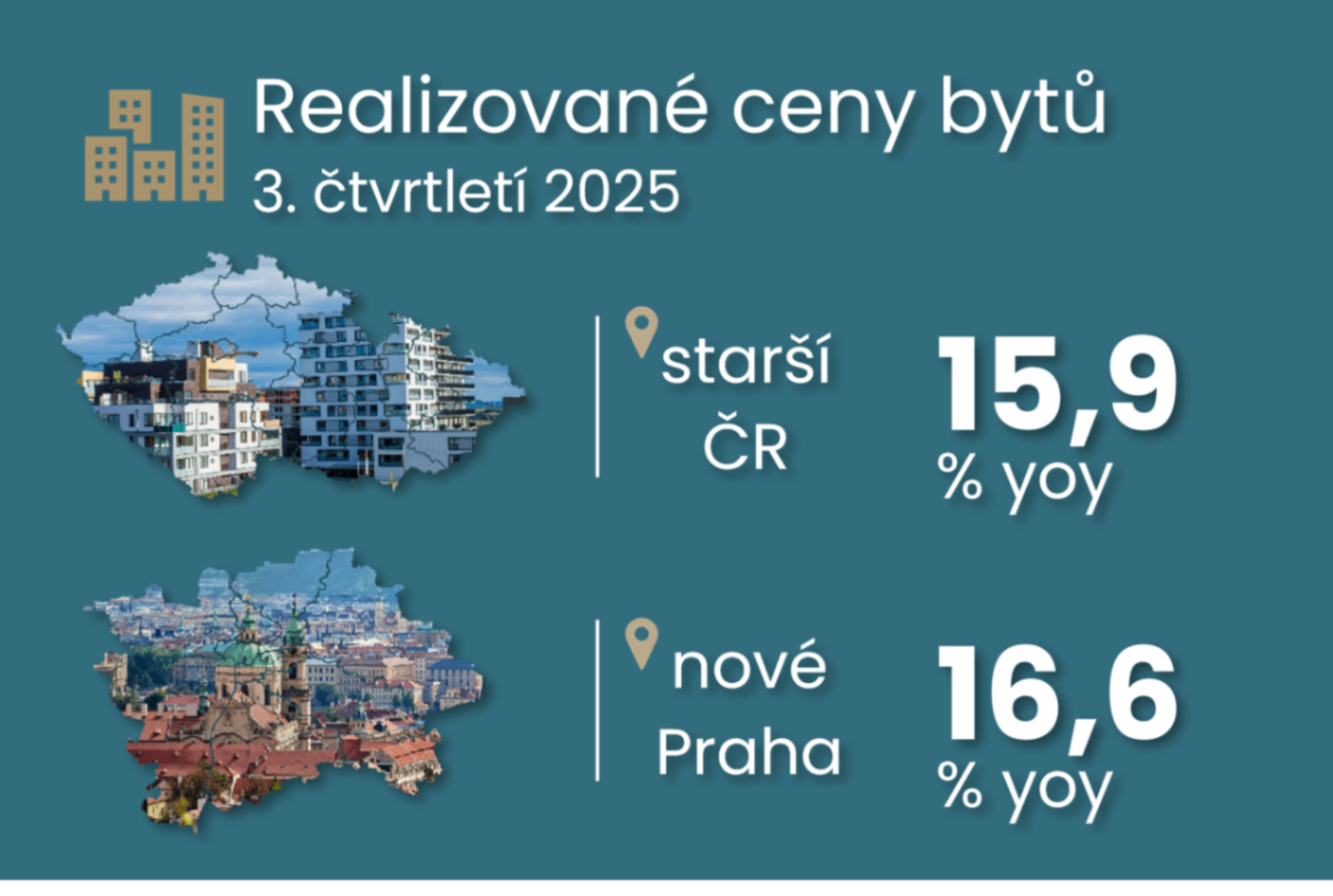
Comment by Jaromír Šindel, Chief Economist of the CBA: According to the Czech Statistical Office, realised prices of older flats in the Czech Republic rose by 3.7% quarter-on-quarter in the third quarter, which exceeds income growth for the seventh quarter already and maintains the too brisk annual pace of property prices at around 16%. Higher property prices are also making their way into the CNB's macroprudential capital policy settings, with discussion over the (arguably unscary) possible introduction of a sectoral systemic buffer, as well as less intuitive discussions over the role of investment activity by non-financial corporates in setting the countercyclical capital buffer.
01. 10. 2025
Comment by Jaromír Šindel, Chief Economist of the CBA: The recovery in disposable income in Q2 was still dampened by fiscal policy, so it remained weaker compared to the increase in wages and property prices. Nevertheless, households managed to increase both consumption and their savings.
14. 09. 2025
Economic commentary by Jaromír Šindel, Chief Economist of the CBA: I estimate overall growth in realised house prices of 4.2% quarter-on-quarter, which has outpaced wage growth for the sixth quarter in a row.
27. 08. 2025
Economic commentary by Jaromir Šindel, Chief Economist of the CBA
02. 07. 2025
Economic commentary by Jaromir Šindel, Chief Economist of the CBA