Commentary by the Czech Bar Association
According to the Czech Banking Association’s (ČBA) calculations, new loans in the economy (excluding refinancing) were granted in August 2026 at a weighted average interest rate of 5.1%, which is higher than this year’s previous average of 4.9%. This year, businesses financed their new loans at 4.4%, households financed housing at 4.8%, and consumer spending at 7.7%.
Last year, the economy was financed at an interest rate of 5%, which was higher than the previous five-year average of 4.7%. The pre-COVID five-year average interest rate on new loans was 2.9%.
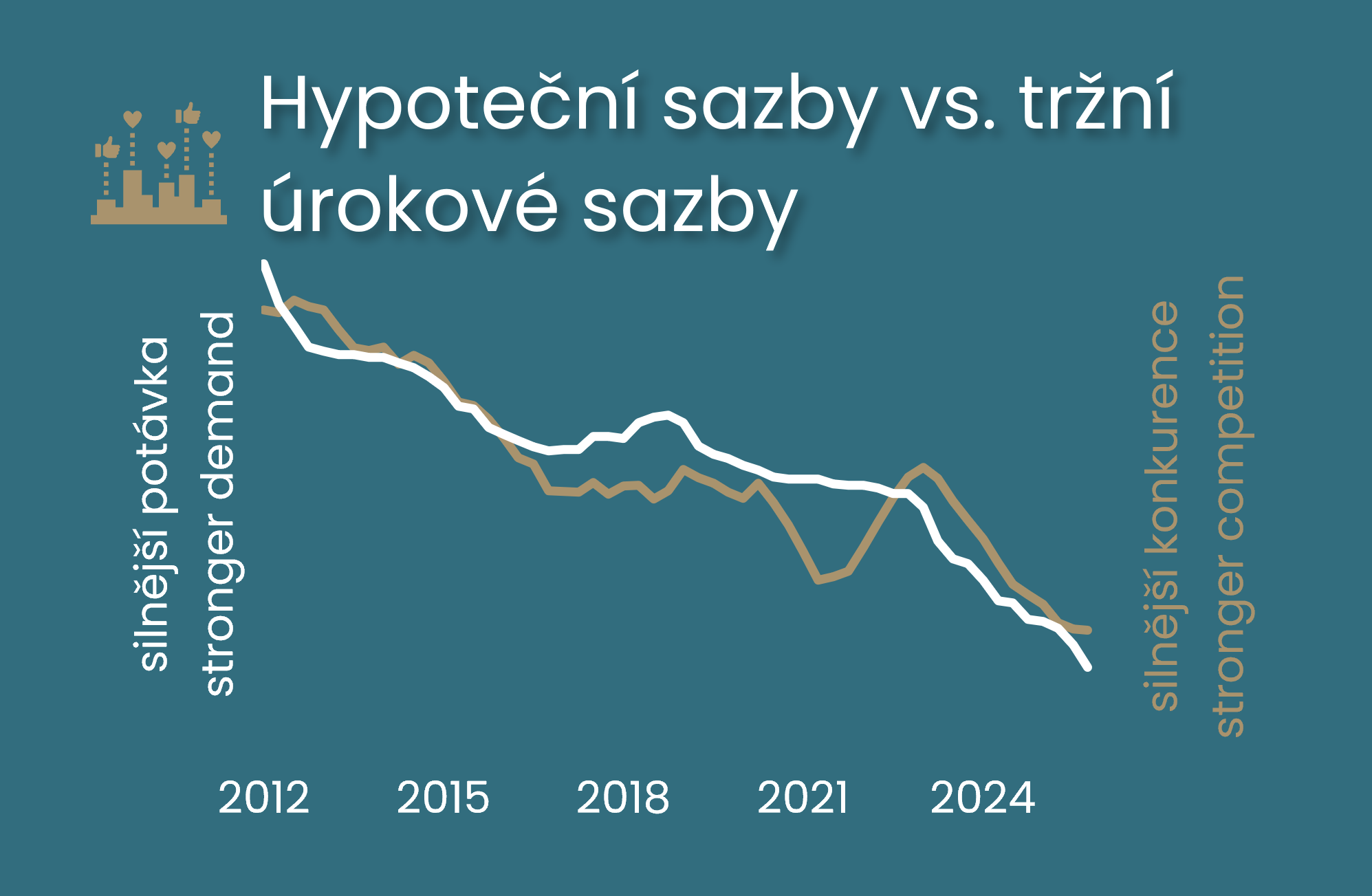
Bank lending rates roughly reflect sources of funding (liquidity, capital) and the risk associated with loan default. The spread between the interest rate on new loans and the average market interest rates—as represented by the 3M PRIBOR and the 5-year market interest rate (IRS), reached 1 percentage point this year, compared to 1.4 percentage points last year. Over the previous five years, this spread stood at 1.1%, which is less than the 1.9 percentage points recorded in the pre-COVID five-year period.
Why are interest rates on loans to households typically higher than those for businesses? Business loans usually have shorter maturities, and their rates are more closely tied to short-term market rates (this does not apply to investment loans). Furthermore, if Czech koruna rates are higher than those in the eurozone, some companies take advantage of the lower interest rates on euro-denominated loans. For households, on the other hand, long-term mortgages predominate, and their interest rates more closely reflect medium-term market IRS rates in the financial market. Furthermore, consumer loans are associated with higher credit risk. However, the spread between rates for households and businesses may narrow or temporarily reverse during the central bank’s interest rate cycle, particularly when longer-term market rates already factor in the expected decline in the central bank’s rates.
Interest Rates on New Loans
%
Source of Primary Data
CNB ARAD, CBA (total rate)Category
Loans and DepositsData Frequency
monthlyNote
Data not adjusted for calendar and seasonal effects.Total nonfinancial corporations = weighted average interest rate on new loans (CZK + EUR).
Total households = consumer loans, housing loans, other (including non-residential real estate).
The weighted average reflects the weights of new loans in these segments for the given month.