Interest Income and Expenses

46.22 billion CZK
Current value
45.65 billion CZK
Value for the Previous Quarter

Commentary by the Czech Bar Association

Net interest income in the second quarter of 2026 reached 46.2 billion CZK, up from 45.7 billion in the previous quarter. Net interest income averaged approximately 45.4 billion over the past four quarters and totaled 44.2 billion in 2025.
During the first two quarters of 2026, net interest income of CZK 91.9 billion reflects interest income of CZK 237.3 billion, which exceeded interest expense of CZK 145.4 billion. In contrast, during the same period a year ago, the net interest income surplus of CZK 86.9 billion reflected lower interest income of CZK 225.4 billion, albeit against the backdrop of lower interest expenses of CZK 138.5 billion at that time.
The ratio of interest income to interest expense in the second quarter of 2026 fell to 162%, compared with 164% in the previous quarter. It is thus below the average ratio of 164% from 2025, above the average ratio of 152% from the previous three years, but remains below the five-year pre-pandemic average of 363%.
The ratio of interest income to interest expense tends to decline during periods of higher central bank interest rates or, conversely, to rise (when income exceeds expenses by a greater margin) during periods of lower central bank interest rates.

Interest Income and Expenses

billion CZK, quarterly

CBA Monitor
You can hide a data set by clicking on the data set name in the chart legend.

Source of Primary Data

CNB ARAD

Category

Banking Sector

Data Frequency

quarterly

Note

Net interest income (quarterly figures) represents the difference between the interest income banks earn on their assets and the interest expense they pay on their liabilities.
The data also includes figures for banks and branches of foreign banks operating in the Czech Republic, as well as figures for branches of banks operating abroad.
For download:

Comments

Focus: Bank Profits: A Large Number Deserves a Broader Context

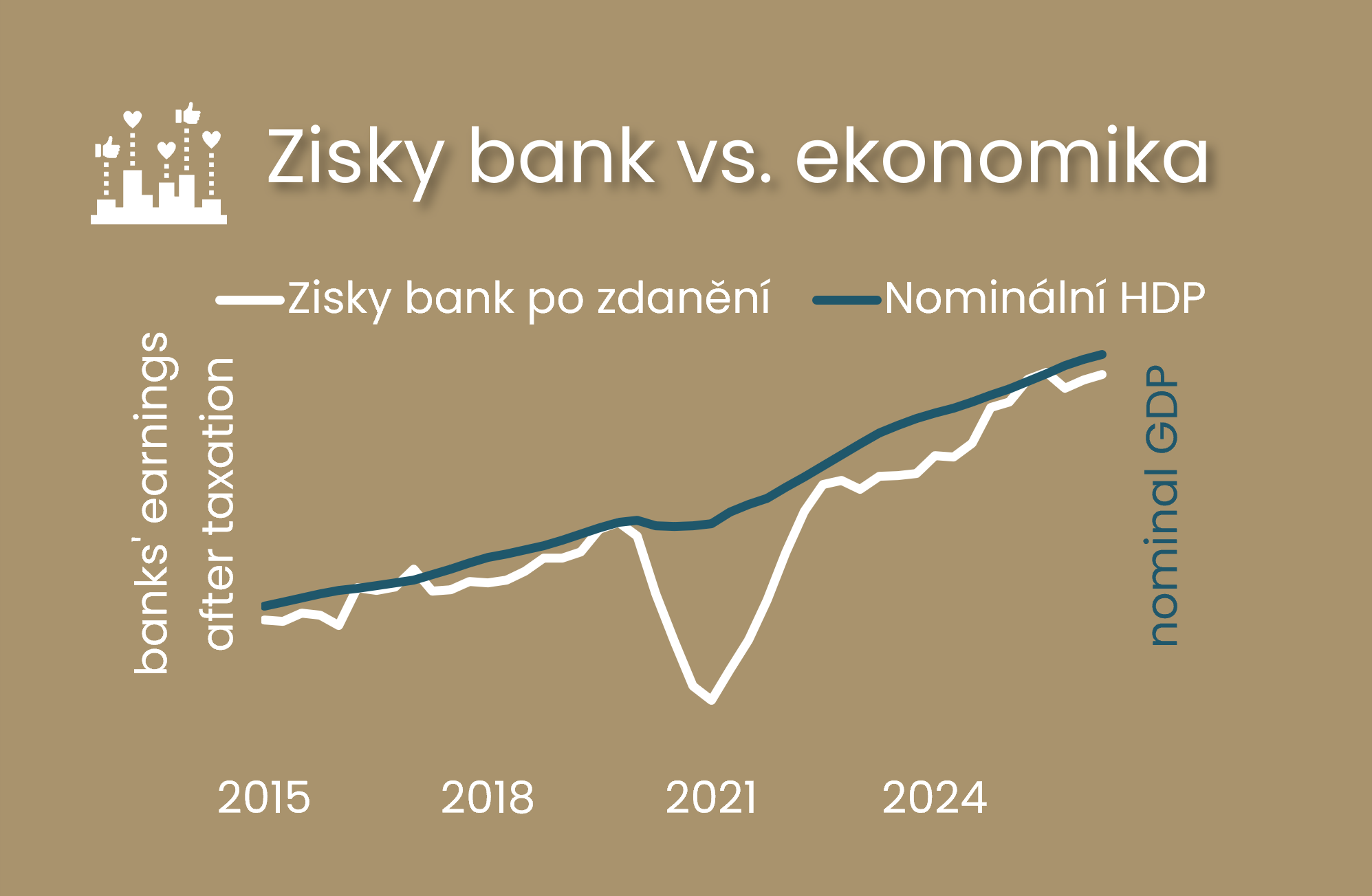
The growth in banks’ nominal profits must be viewed in the context of the overall economic trend. Compared with the pre-pandemic year of 2019, bank profits in previous years grew more slowly than nominal GDP, household wage income, and government tax revenues. This depends not only on the base year but also on whether we are comparing the current level or the average annual amount of bank profits over the entire period, in which case the gap relative to the rest of the economy is more pronounced. Nevertheless, it is true that the banking sector’s growing profits are not driven by net interest income, but rather by cost efficiency—thanks in part to the solid performance of the Czech economy.

Focus: Mortgage Rates: Not All Rates Are the Same

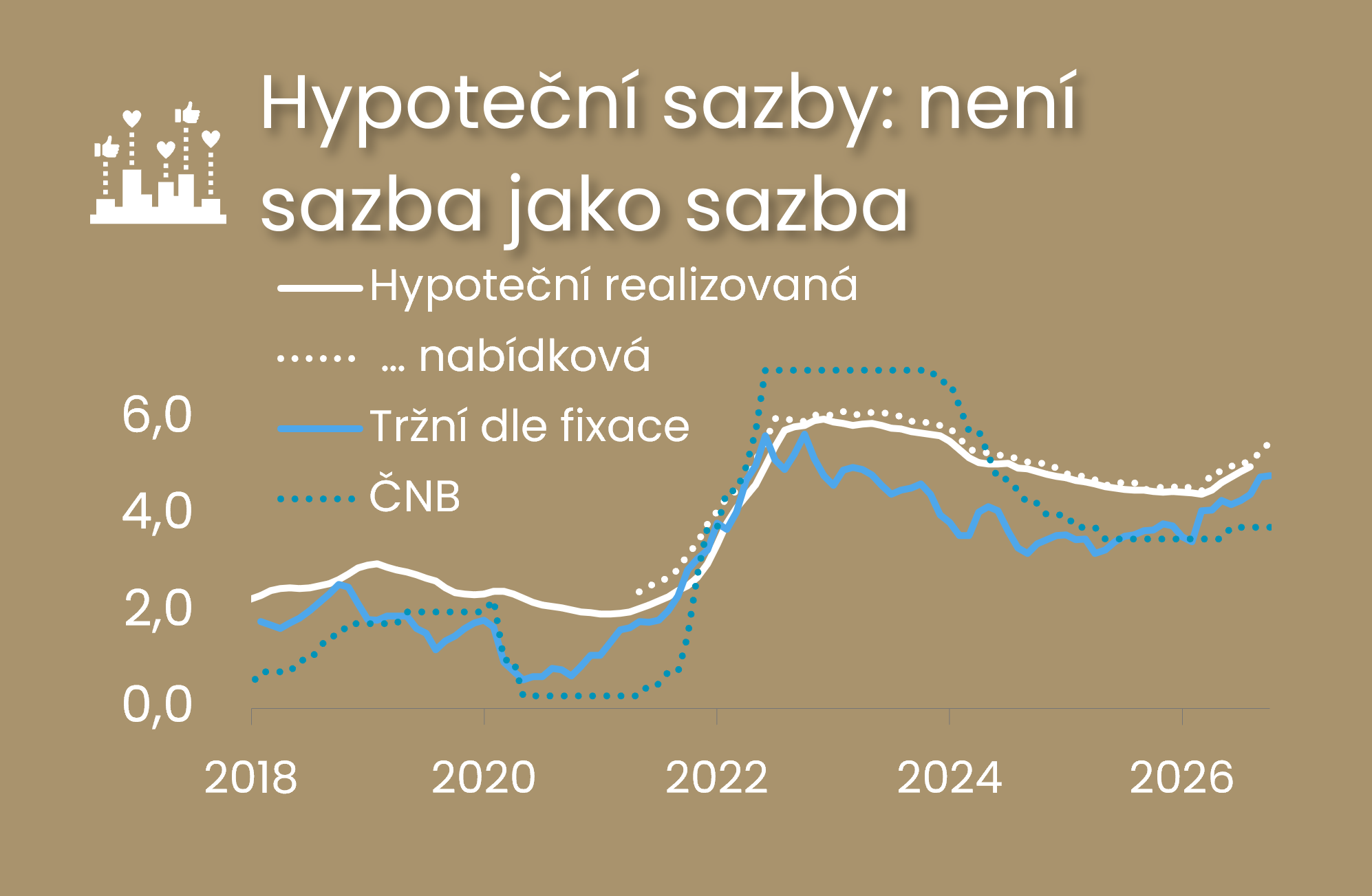
The market price of three-year funds has risen by approximately 1.4 percentage points since February, while mortgage rates have risen by roughly one point. The rise in market rates has thus been only partially reflected in mortgage rates so far. It is important to distinguish between the aggregate offered rate, the rate for the most commonly chosen fixed-rate term, and the interest rate that the client actually negotiates. The spread between mortgage and market rates—which should not be confused with net profit—has long been among the lowest in the EU for banks in the Czech Republic and has even fallen below its long-term average in recent years. This is also consistent with banks’ lower net interest margin, expressed as the ratio of net interest income to assets.

Banking statistics for March 2025

Commentary by Miroslav Zámečník, Chief Advisor of the Czech Banking Association