Volume of Newly Granted Mortgages, Including and Excluding Refinancing and Top-Ups
Volume of Newly Granted Mortgages, Including and Excluding Refinancing and Top-Ups
273.4
billion CZK; YTD
New This Year
369.0
billion CZK; YTD
This year's new issues, with refinancing and an increase
Comment by the Czech Bar Association (ČBA)
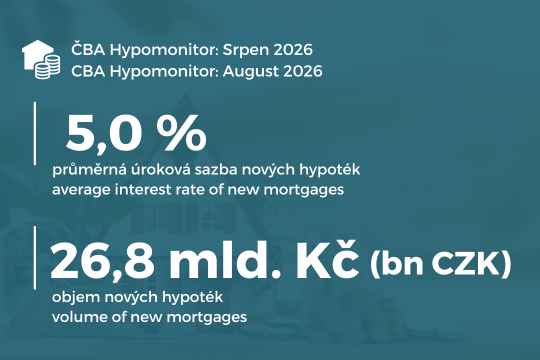
In August, banks and building societies actually provided new mortgage loans totaling 26.8 billion CZK. After seasonal adjustment, the August figures for new mortgages showed a decline (to approximately CZK 26.7 billion, compared with CZK 31.6 billion in the previous three months), reaching a level approximately 9% lower than in the first half of last year. Since the beginning of the year, the total has reached CZK 273 billion, which is CZK 68 billion more than a year ago. The volume of refinanced and increased loans (either internally or from another institution) fell to CZK 7.7 billion in August. This is 9% more than the average of 7.1 billion refinanced last year and 96% higher than the 3.9 billion refinanced in 2024. The share of refinanced loans in the total volume of mortgages granted then fell to 22.3%, which is above last year’s average of 21%. Overall, banks and building societies reported new unconsolidated business in August in the form of new and refinanced mortgages totaling CZK 34.5 billion, which is 14.6% less than a month ago. Year-over-year, the figure rose by 4%. Their total volume so far this year has reached CZK 369 billion, representing a 44% increase compared to January through August of the previous year.
Volume of Newly Granted Mortgages, Including and Excluding Refinancing and Loan Increases
billion CZK
CBA Monitor
You can hide a data set by clicking on the data set name in the chart legend.
Source of primary data
ČBA Hypomonitor
Category
ČBA Hypomonitor
Data Frequency
monthly
Note
This includes new loans, both with and without refinanced or increased loans.
A more detailed breakdown of the data from the ČBA Hypomonitor is available in its monthly data supplement; see: https://www.cbamonitor.cz/publicistika/soubory/cba-hypomonitor-data
Activity declined by 13 percent in terms of volume compared to July
Jaromír Šindel
14. 08. 2026
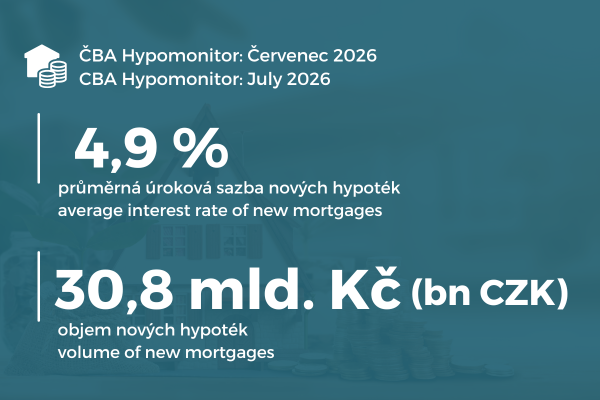
The average mortgage rate rose to 4.9%. The July mortgage figures reveal four main trends. First, both the number and volume of new mortgages have stabilized at lower, but still strong, levels. Second, the rise in actual mortgage rates remains gradual compared to market rates. Third, rates on refinanced mortgages no longer deviated downward as significantly as they did in May and June. And fourth, the likely lower share of investment mortgages contributed to a further decline in the average amount of new mortgages.
Jaromír Šindel
23. 07. 2026
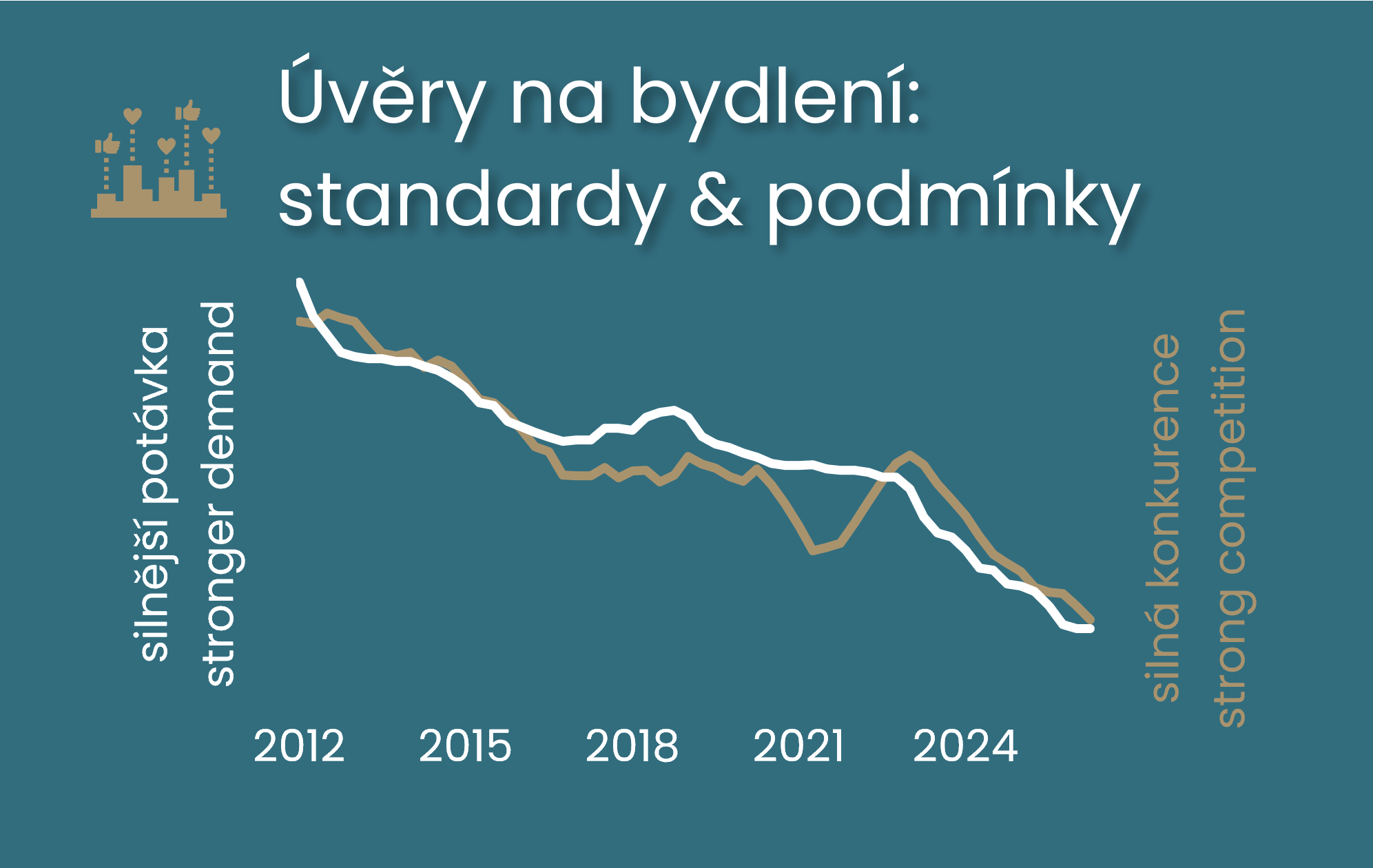
The CNB’s survey of banks’ lending conditions for the second quarter came as no surprise; the most significant change concerned housing loans. The central bank’s stricter criteria for investment mortgages tightened not only the banks’ lending requirements. In line with historical experience, this supported demand, likely temporarily. The impact on lending conditions was partially offset by lower bank margins and more favorable repayment terms. In an environment of continued strong competition, the stronger demand helped mitigate the impact of the spike in market interest rates on mortgage rates, which consequently rose more modestly. However, expectations of weaker demand for housing loans in the third quarter are changing this narrative. Surveys on consumer and business loans are also likely to keep the CNB’s outlook on the hawkish side.
Jaromír Šindel
17. 07. 2026
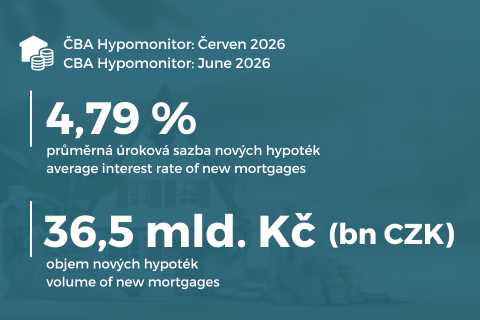
The average interest rate on new mortgages rose to 4.79%, while the average mortgage amount fell back below 4.7 million crowns. Banks and building societies issued new mortgages (excluding refinancing) totaling 36.5 billion crowns. After months of exceptionally strong mortgage activity, June saw a clear return to the robust normal levels seen in the second half of last year. In the first half of the year, the volume of new mortgages reached 216 billion crowns, which is 66 billion more than last year. Higher market interest rates and expensive real estate remain the main obstacles.
Jaromír Šindel
12. 06. 2026
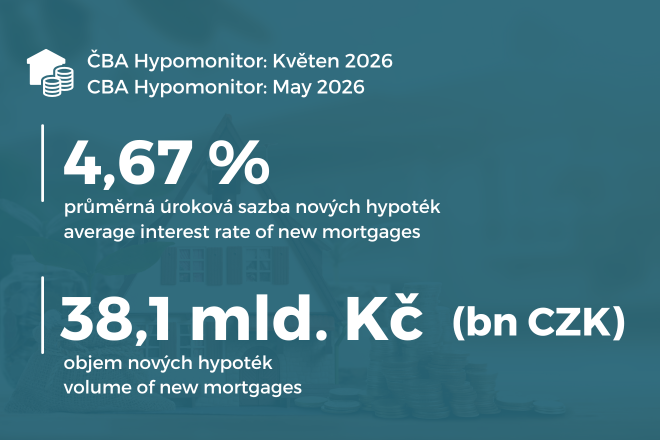
In May 2026, banks and building societies actually issued new mortgages (excluding refinancing) totaling CZK 38.1 billion.
Jaromír Šindel
04. 06. 2026
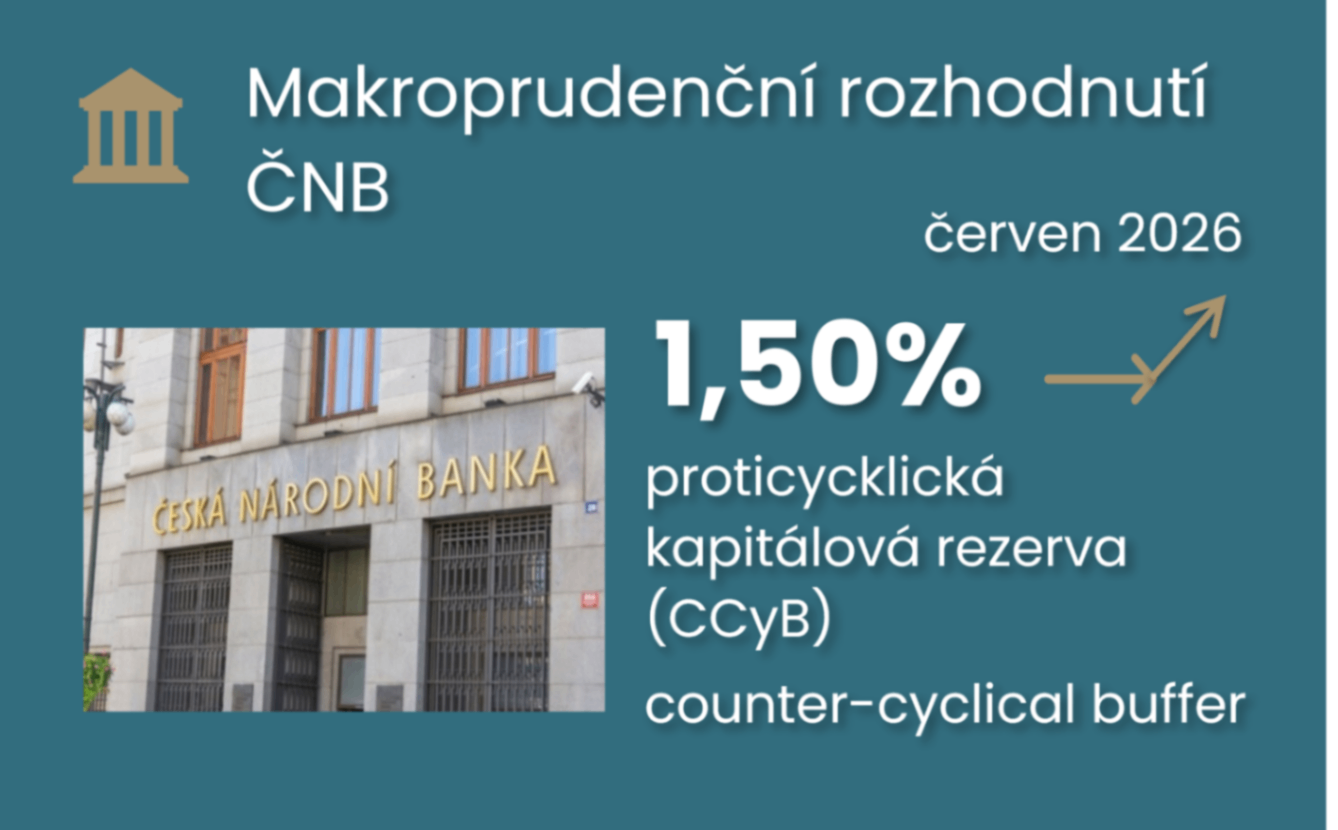
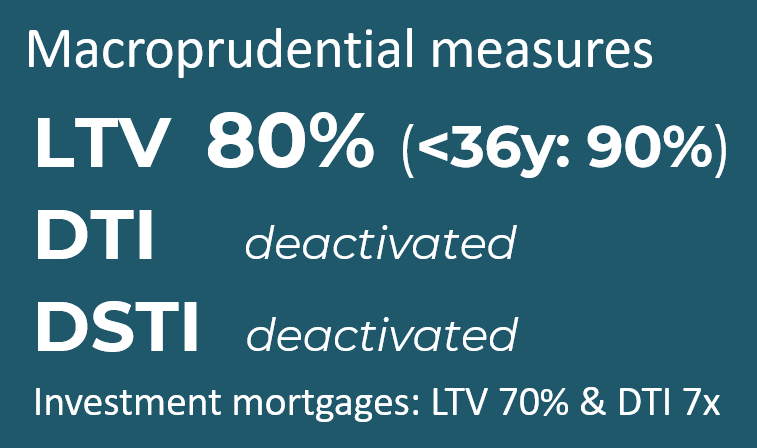
The countercyclical capital buffer should rise to 1.5% from July 2027, which will increase banks' total capital requirements to around 17% next year, in response to continued growth in lending to households and firms and lower perceived risks in the banking sector. Again, we are also seeing stronger wage growth outpacing productivity. In the case of rising investment credit, however, this is a dilemma for macroprudential policy. In addition to the financial cycle, the results of stress tests, including concerns about the interconnectedness of the banking and government sectors, are likely to have factored into the decision. It leaves mortgage rules unchanged.
Jaromír Šindel
18. 05. 2026
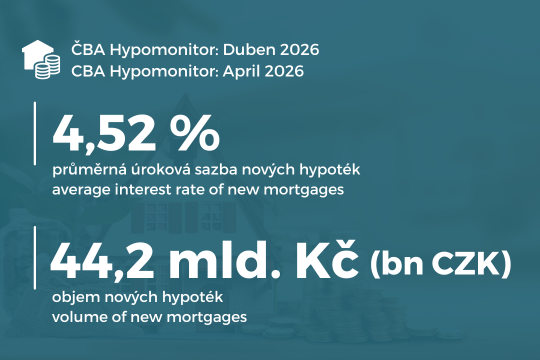
Average mortgage rate rises to 4.52%
Jaromír Šindel
13. 05. 2026
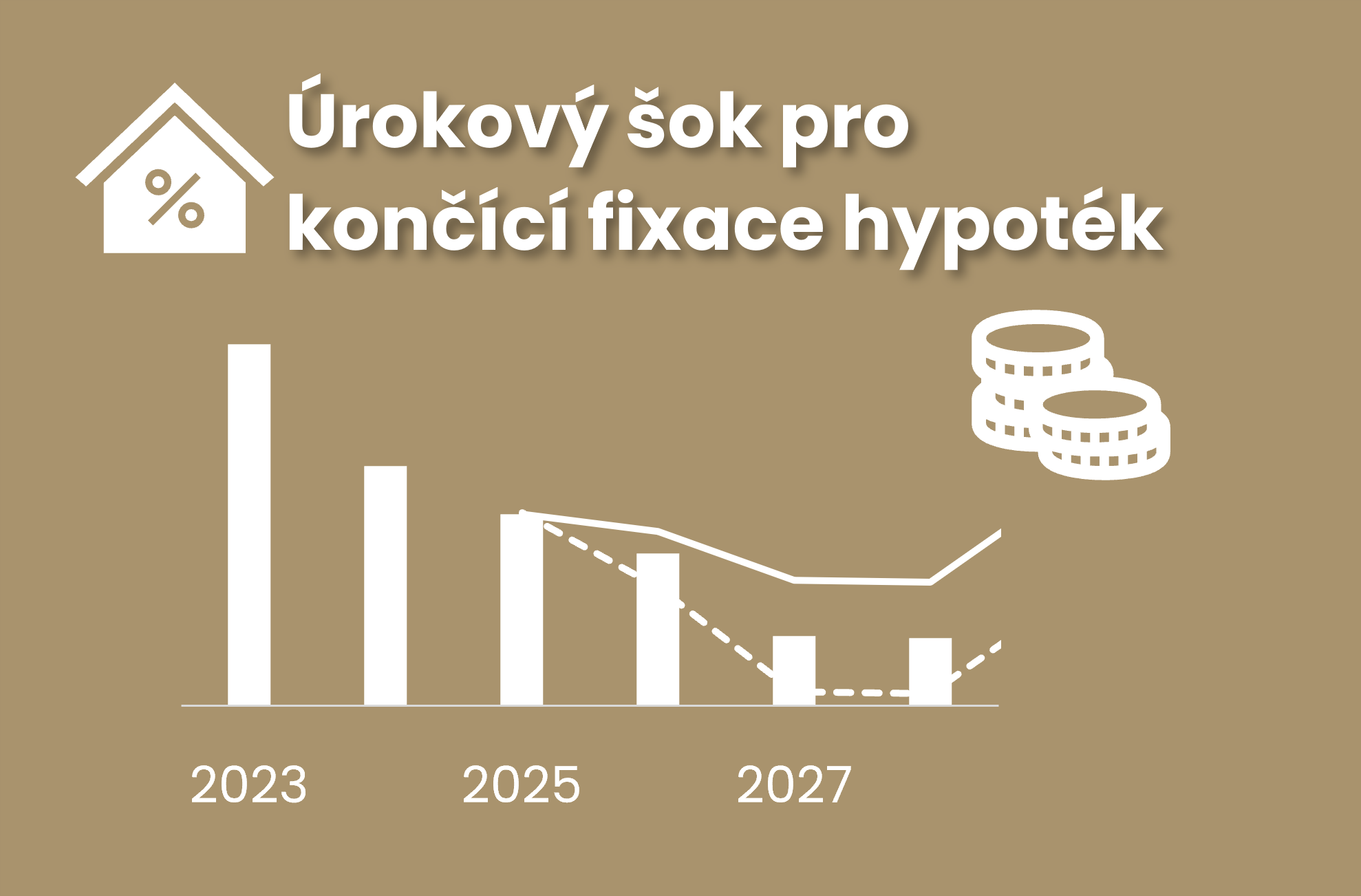
This year is bringing a strong wave of expiring mortgage rate fixations, while the shorter fixation periods agreed in recent years will further increase these volumes in the years ahead. Building on the central bank’s latest estimate that mortgage fixations worth an average of CZK 534 billion per year will expire between 2026 and 2028, we present alternative interest-rate shock scenarios depending on the path of mortgage rates. In 2027–2028, the negative interest-rate shock is expected to ease to 0.1–0.6 percentage points, down from 1.1–1.4 percentage points this year. However, we also outline a more adverse scenario involving a stronger interest-rate shock. This year, the negative interest-rate shock affecting expiring mortgage fixations from the low-rate period will amount to roughly 3.5% of the average household income of mortgage applicants, although across all households the average impact will be about half that level. In both cases, the expected real growth in wages and salaries should be sufficient to offset the shock.
Jaromír Šindel
16. 04. 2026
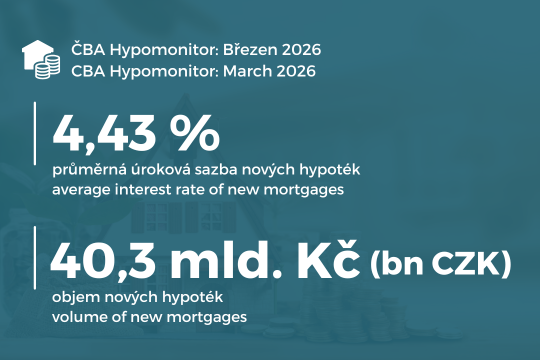
The average amount of a new mortgage exceeded CZK 4.8 million
Jaromír Šindel
13. 03. 2026
February ranked among the five strongest mortgage months ever in terms of volume in billions of crowns, but also with a continued strong number of new mortgage originations.
27. 11. 2025
Comment by Jaromír Šindel, Chief Economist of the CBA: The Central Bank, through stricter requirements in the form of recommendations for investment mortgages, has decided to make a modest effort to correct mortgage demand on the real estate market, which remains very tight in terms of prices, mainly due to the supply side - see the drop in building permits.
16. 05. 2025
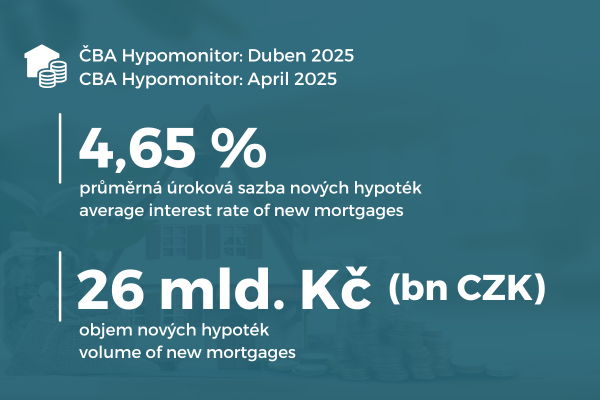
Despite the slight correction, April continued to see strong volumes of new mortgages supported by another slight decline in the average mortgage rate to 4.65%.
14. 04. 2025
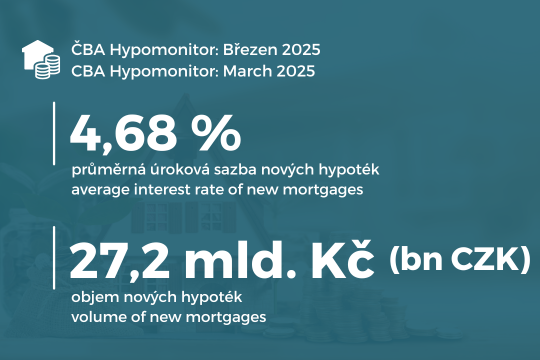
March continued to see strong new mortgage volumes supported by another slight fall in the average rate to 4.68%