Commentary by the Czech Bar Association
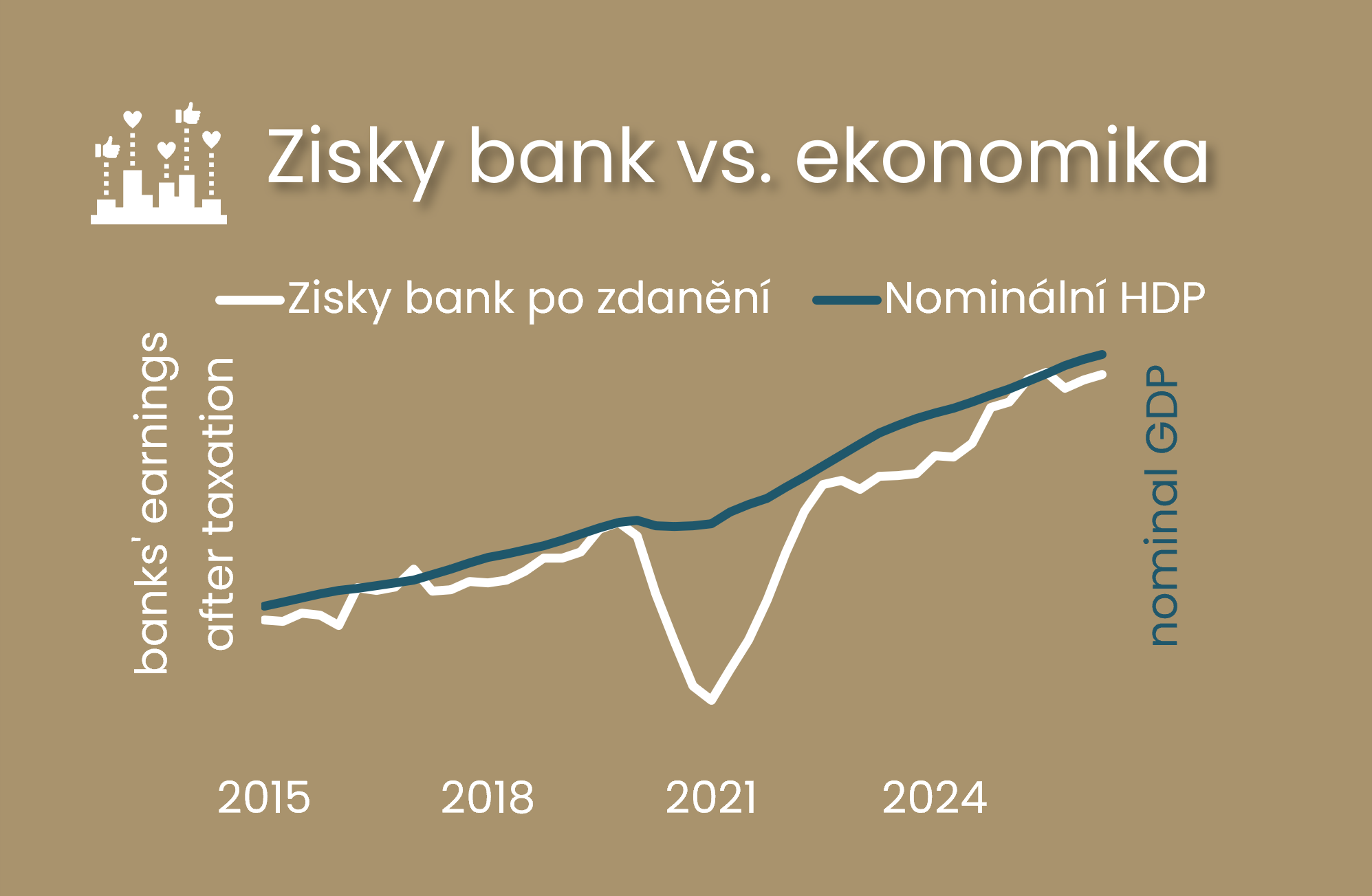
The annual profitability of banks in the second quarter of 2026 reached 1.1% of the banking sector’s average assets, and the seasonally adjusted profitability of banks excluding foreign branches reached 16% of their equity.
Annual bank profitability, as measured by return on assets, fell to 1.1% from 1.12% in the previous quarter and is below the 1.15% annual average achieved in the same period a year ago. Over the past five years—that is, since the second quarter of 2022—profitability has stood at 1.1% of assets. At the same time, profitability as measured by return on assets in the last quarter is below the pre-pandemic average of 1.16% from 2015–2019 (the long-term average for 2008–2019 was 1.24%).
In terms of banks’ return on equity, the return fell to 16% from 16.1% in the previous quarter. The return on equity is above the 15.9% recorded in the same period a year ago. Over the past five years—that is, since January 2021—return on equity has averaged 14.3%. Compared with previous trends, profitability relative to equity in the last quarter is above the pre-pandemic average of 13.9% (the long-term average from 2008–2019 was 14.9%).
Profitability of the Banking Sector
% of assets and capital
Source of Primary Data
CNB ARAD, calculations by the Czech Banking Association.Category
Banking SectorData Frequency
quarterlyNote
In the case of return on capital, this is the ratio of the estimated seasonally adjusted profit of banks without foreign branches (since they are not subject to regulatory capital requirements) to the average amount of equity capital during the given period.The central bank publishes the banking sector’s return on profits relative to Tier regulatory capital, whose share of total capital has been declining since 2022 (see chart here: https://www.cbamonitor.cz/statistika/role-zisku-bank-v-jejich-kapitalu ).
In the case of return on assets, this is the annual average of the quarterly after-tax profit of the entire banking sector relative to average annual assets.
The ROA figures also include data for banks and branches of foreign banks providing services in the Czech Republic, as well as data for branches of banks operating abroad.