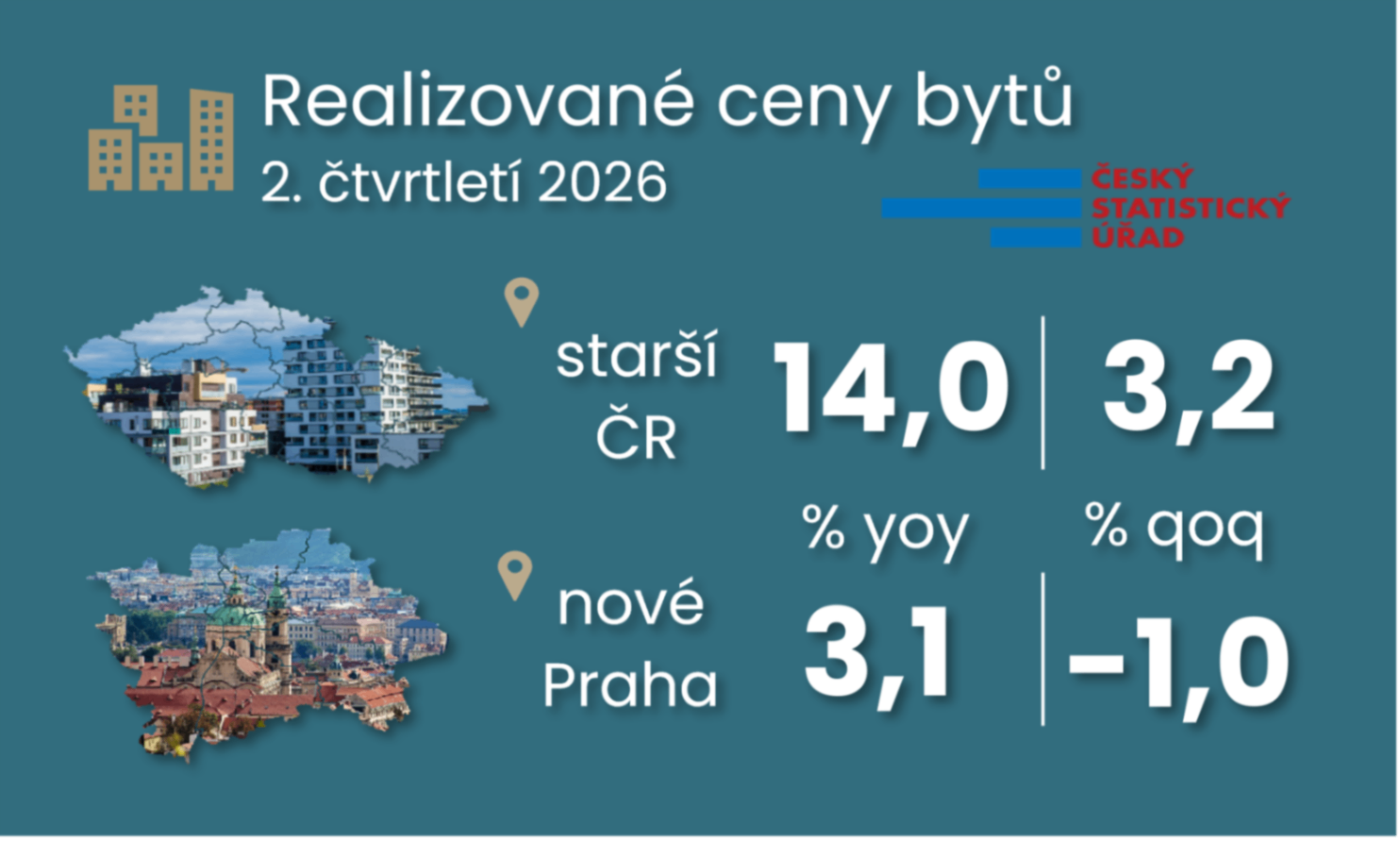
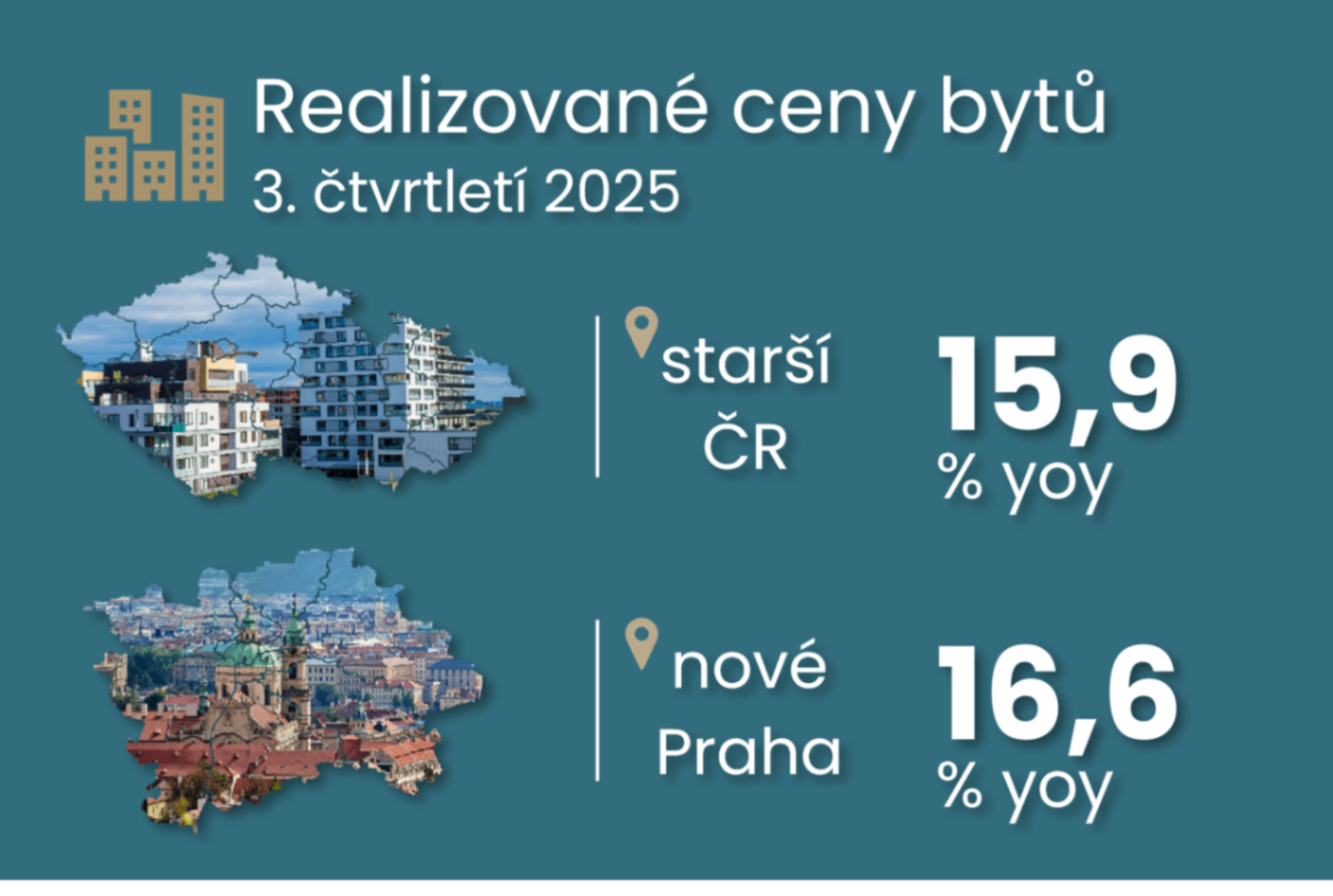
9.7
% yoy
Year-over-year growth
4 494.0
Number of transactions
Commentary by the Czech Bar Association
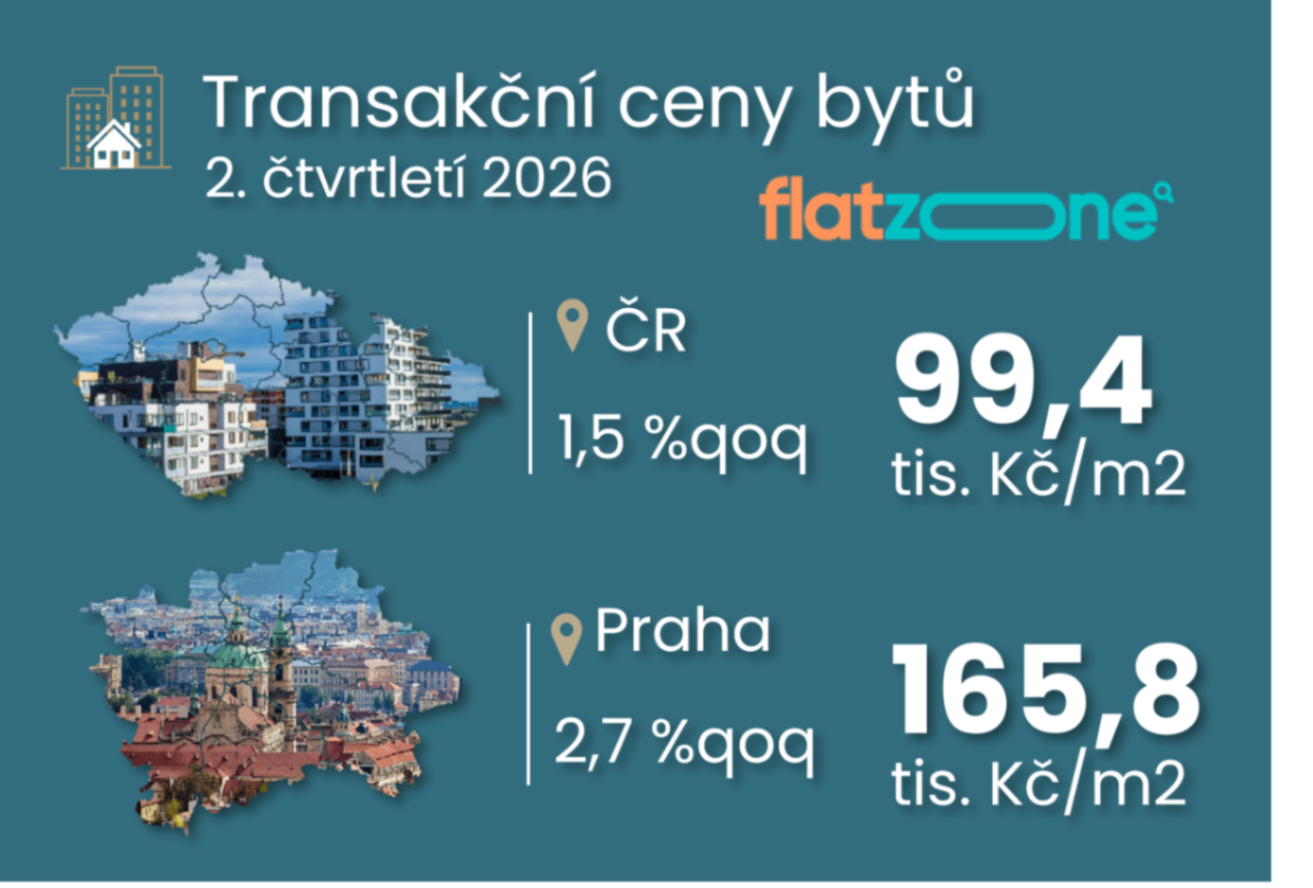
The average transaction price for new and nearly new apartments in the Czech Republic in Q2 2026 was 146,600 CZK per square meter. This represented 129% of the average price in 2022, while the ratio for 2025 was 118%. This occurred amid 4,494 transactions in Q2 2026, compared to an average of 5,494 transactions per quarter in 2025. In Q2 2026, the number of transactions reached 123% of the level in Q2 2022, and for the full year 2025, it reached 182% compared to 2022.
Prices of New and Nearly New Apartments and the Number of Transactions
CBA Monitor
You can hide a data set by clicking on the data set name in the chart legend.
Source of primary data
Flat ZoneCategory
Real Estate PricesData Frequency
quarterlyNote
Average transaction price per square meter.According to Flat Zone’s methodology, the “new and nearly new apartments” category includes first sales of new apartments (in the developer-client relationship; at the time of sale according to the price list) and resales of new apartments (so-called “nearly new” apartments in a client-to-client relationship; at the time of registration in the real estate cadastre) built since 1995. Apartments built before 1995 fall into the “older apartments” category.