Commentary by the Czech Bar Association
The total capital ratio in the second quarter of 2026 fell to 23% compared with 23.1% in the previous quarter. This is above the average ratio of 18.6% from the pre-COVID period of 2015–2019, and the average over the past five years was 22.8%.
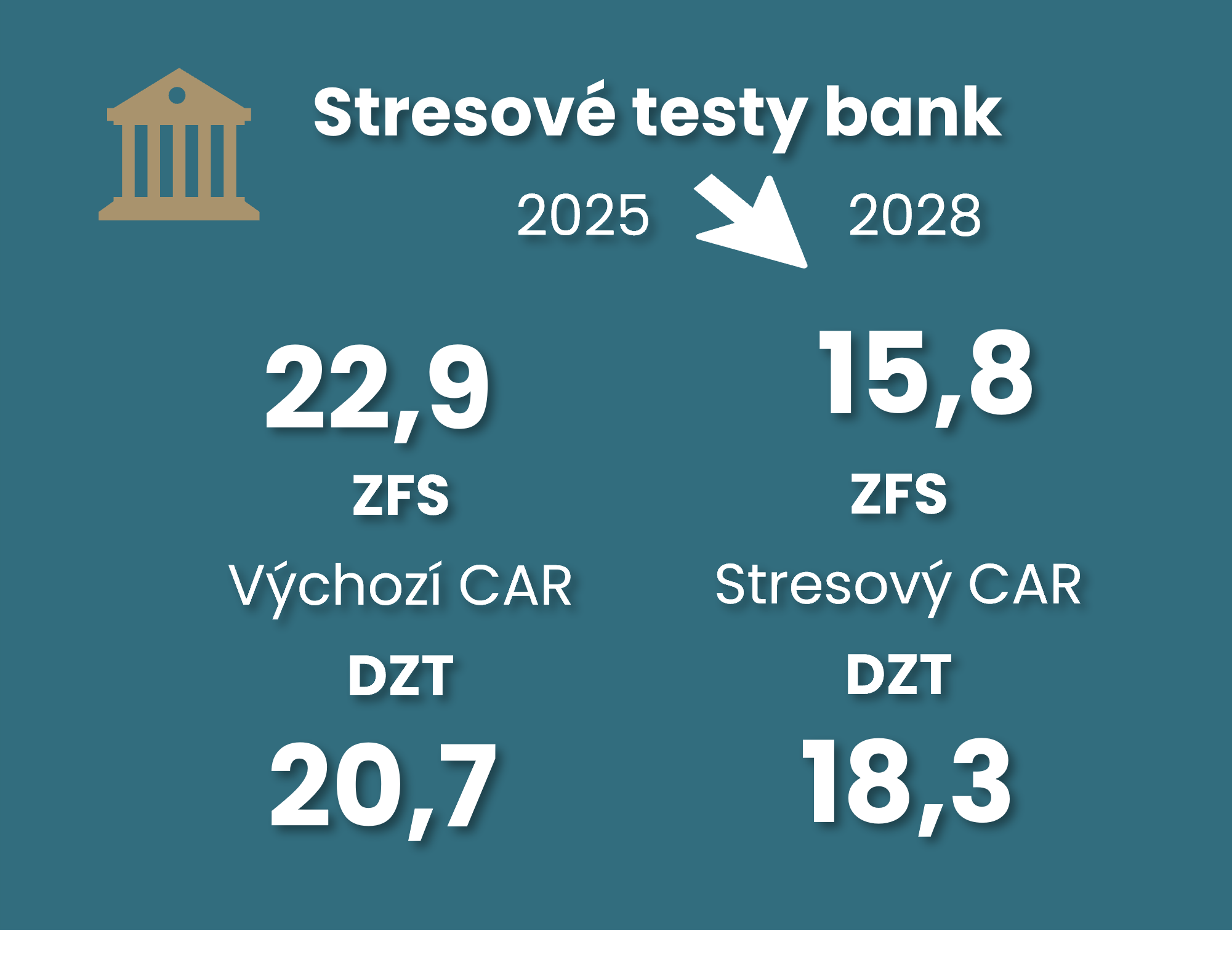
In the case of the highest-quality CET1 capital, the banking sector’s capital ratio relative to risk-weighted assets stands at 20.7%, compared to 21% in the previous quarter, and is thus above the 17.7% ratio from the pre-pandemic period of 2015–2019. Over the past five years, the average was 20.9%.
Banks’ retained earnings (a component of CET1 capital) of CZK 440 billion represent 56% of total bank capital, which reached CZK 781 billion in the second quarter of 2026. Retained earnings accounted for 52% of total capital during the pre-COVID five-year period, while this share stood at 57% over the past five years.
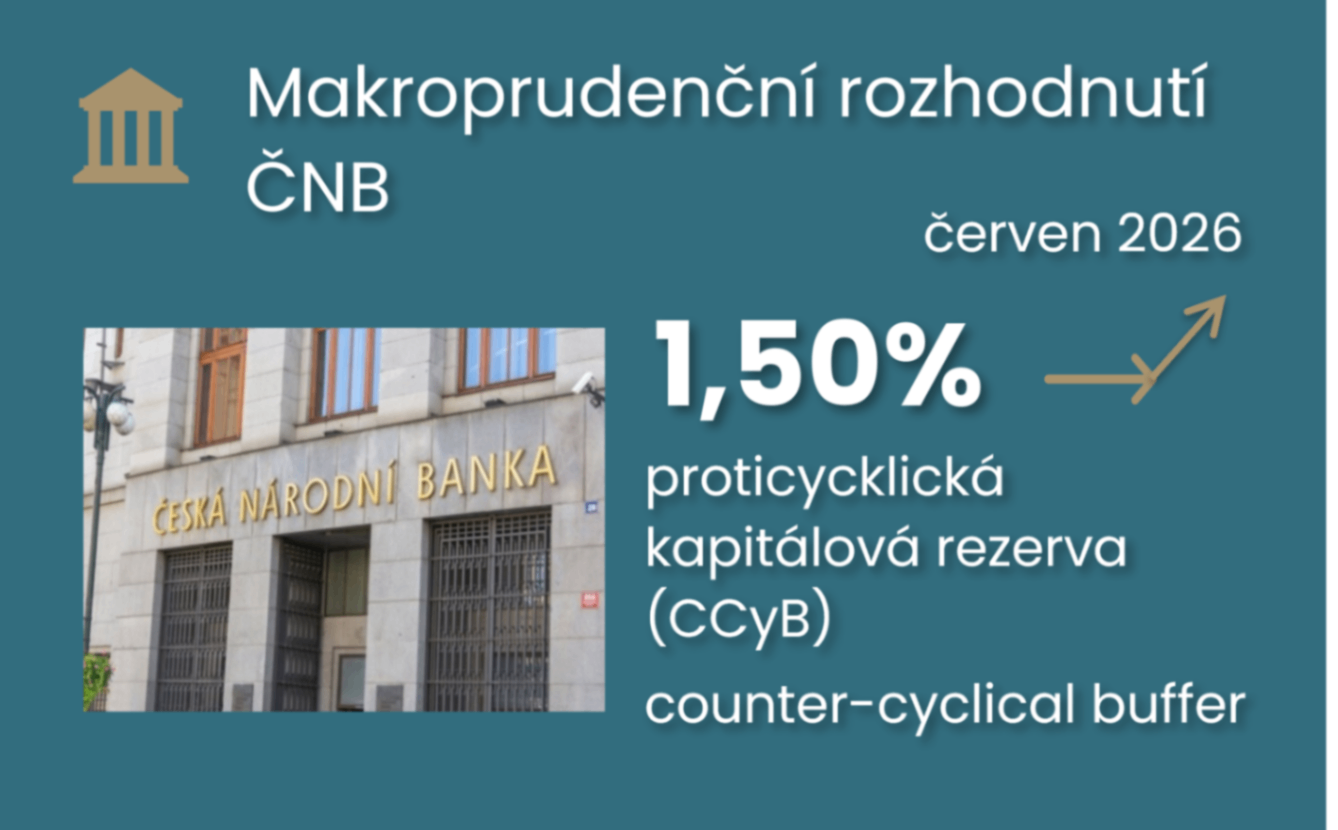
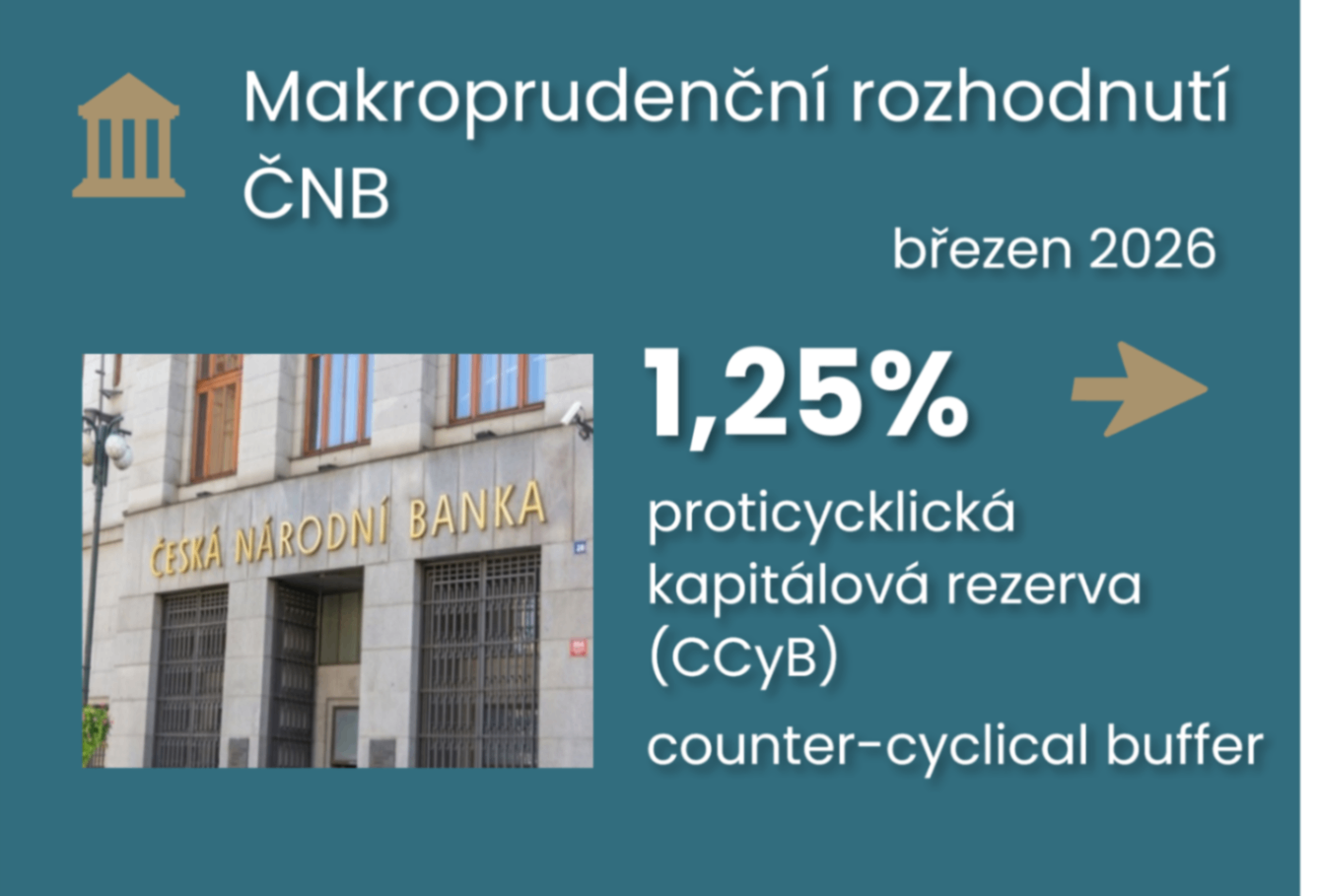
While in 2018 the central bank’s capital requirements stood at 15.3% of risk-weighted assets (RWA)—or CZK 384 billion in absolute terms—by the end of 2025, they had reached 16.6% of RWA, or CZK 526 billion, an increase of CZK 142 billion.
Capital Adequacy and the Role of Profit in It
% of risk-weighted assets
Source of Primary Data
CNB ARADCategory
Banking SectorData Frequency
quarterlyNote
Total Capital = Tier 1 (CET1 + AT1) + Tier 2.Tier 1 capital is better able to absorb losses; it primarily consists of CET1 capital (composed of equity, retained earnings, and reserves) and AT1 debt capital (which can absorb losses more easily than Tier 2 capital).
The data also includes information on banks and branches of foreign banks providing services in the Czech Republic, as well as data on branches of banks operating abroad.
Related Charts
Banking Sector AssetsProfitability of the Banking Sector