Transaction prices for apartments did not slow down much in the second quarter
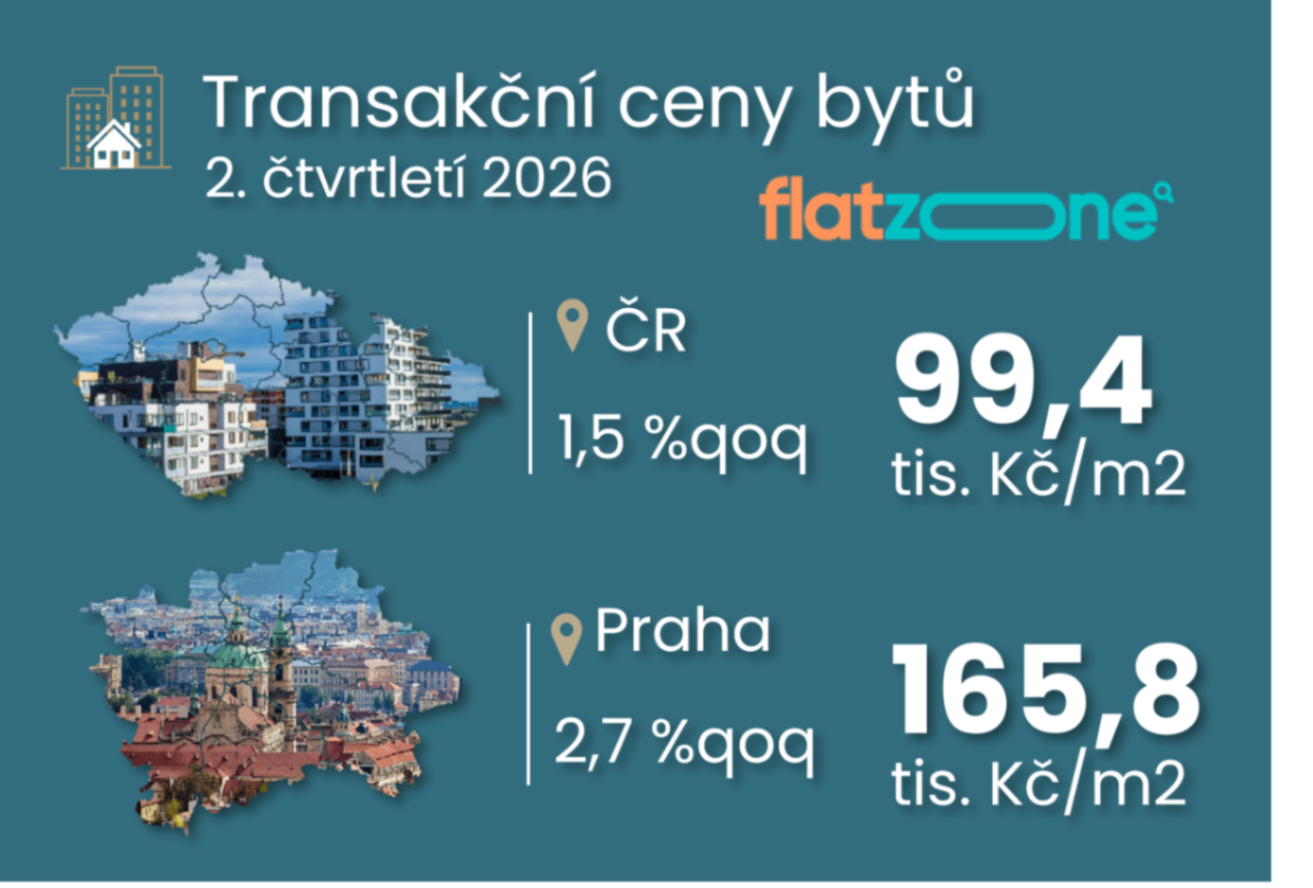
According to statistics from Flatzone, the transaction price of apartments sold in the second quarter rose to nearly 100,000 crowns per square meter, exceeding 165,000 in Prague. That is 8.3% and 9.7% higher, respectively, than a year ago. In regions outside Prague, the transaction price rose by more than 10%. These increases reflect stronger quarter-over-quarter growth of over 1.5% in the Czech Republic, 2.7% in Prague, and 3.6% in the regions. Transaction prices thus continued to rise and were 20% higher than the average in 2024. However, this trend must be interpreted not only through the price indices of individual segments but also through changes in the structure of completed transactions.
The average price grew more slowly in the second quarter, partly due to the composition effect of transactions. If we consider only the change in price per square meter, it rose by an average of about 3.8% quarter-over-quarter in the core segments (see the breakdown of transaction prices in the charts below). However, the composition effect (i.e., the fact that, for example, the number of transactions or the average size of more expensive apartments declined) put downward pressure on the average transaction price. For example, transactions declined for brick apartments in Prague and for first-time sales in regional areas, and in these segments, a decrease in the average size of apartments sold also had a minor impact.
Transaction data point to a shift in transactions toward less expensive regions, and asking prices for apartments also showed more moderate growth than in recent quarters. This is consistent with the view that year-over-year growth in real estate prices (i.e., not just apartments) is slowing. In the first quarter, this growth remained around 10%, but quarterly growth may indicate a slowdown to 8% on an annual basis. Growth of realised flat prices eased to 14 % yoy in the first quarter and transaction prices envisage to me their furhter slowdown below 12 % in the second quarter.
This is likely due to a slower growth in disposable income, the CNB’s stricter criteria for so-called investment mortgages, as well as higher mortgage interest rates resulting from persistent inflationary pressures, which are pushing market interest rates higher—a trend to which the market is only partially responding through a higher CNB interest rate. However, the supply side—given higher prices for construction materials, a weak recovery in building permits, and a labor shortage—will limit this slowdown in prices, even though the number of new construction starts continues to surprise this year (see the charts and table below). Also, the strong demand for mortgages caused by the two rounds of frontloading in the first half of this year will continue to support demand for real estate for some time.
For more details on transaction prices, see below or the data on the CBA Monitor: Real Estate Prices
Further data on actual apartment prices from the Czech Statistical Office (CZSO) will be available in mid-September, and for other real estate, at the end of September.
The average transaction price of apartments continued to rise

Quarter-over-quarter growth remained strong, particularly outside Prague

Transactions involving new apartments were weaker in Prague for older apartments, while demand for them grew in the regions

The average price rose more slowly in the second quarter, partly due to the composition effect of transactions ...

... these figures declined for Prague brick buildings and regional primary sales, and in these regions as well—to a lesser extent—due to a decrease in the average square footage of apartments sold.

Source: Czech banking association, Flat Zone
Asking prices for apartments in the second quarter showed a slightly weaker pace than the long-term average for the second time

... which led to a slowdown in the year-over-year growth rate of asking prices to closer to 10% ...

... which may also be an indicator of actual apartment prices, which rose 14% year-over-year in the first quarter, though the annualized quarterly growth rate was closer to 10% ...

... which could pave the way for the overall real estate price index to slow to below 10%
