July's inflation figures and June's retail sales give the CNB time, but not peace of mind
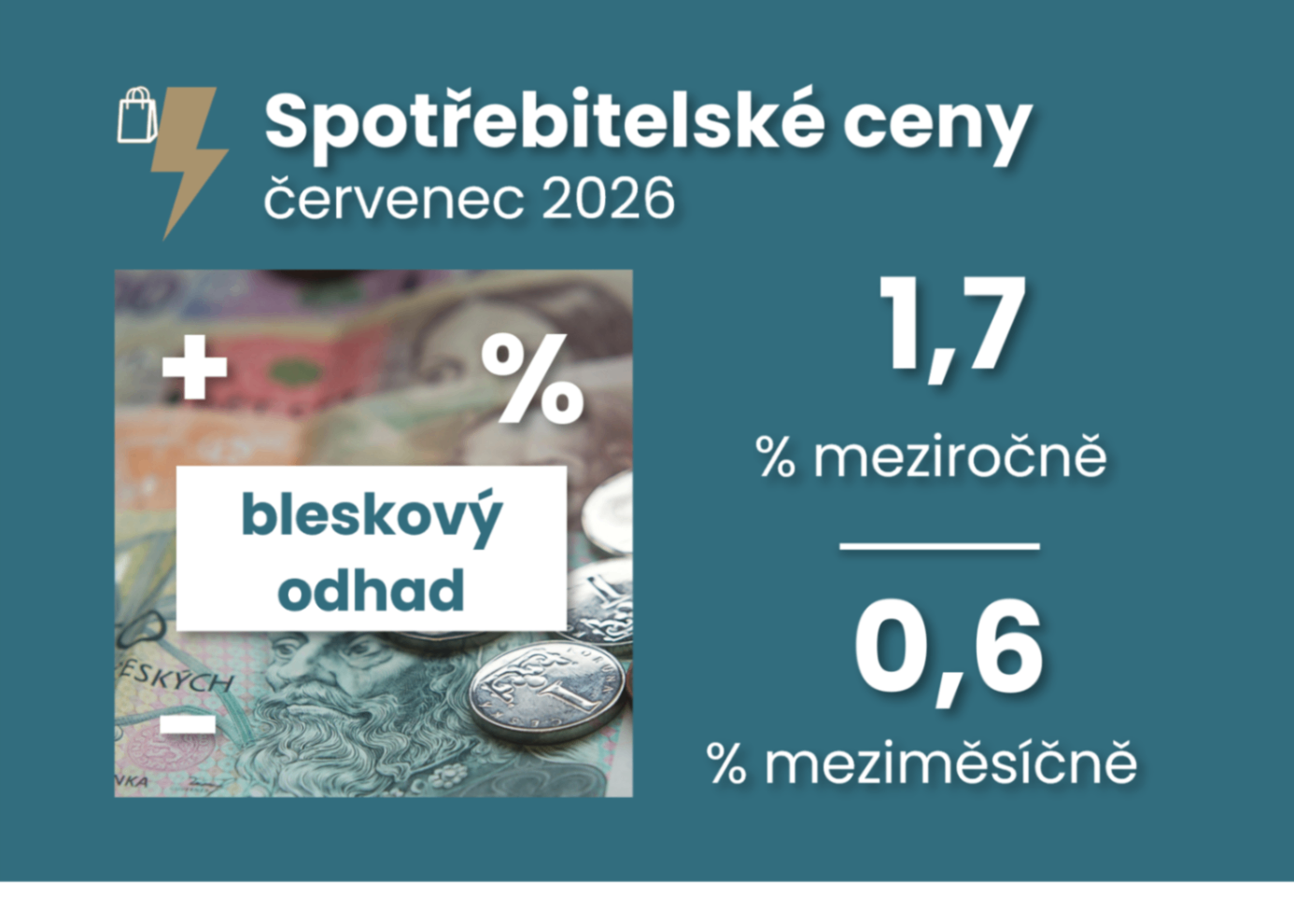
According to a preliminary estimate by the Czech Statistical Office (CZSO), year-over-year consumer price inflation in July 2026 accelerated slightly to 1.7% from 1.5% in June. This result is in line with analysts’ consensus but fell short of the CNB’s forecast (2.3% for the third quarter) after missing it by 0.6 percentage points the previous month. The CZSO will publish final data on July inflation on August 11, when the CNB will announce its core inflation estimate at 1:00 p.m. CET.
For the central bank, the likely return of core inflation growth to 2.9% is important. This would be in line with the CNB’s forecast for the third quarter. Moreover, this is occurring amid a relatively modest month-over-month increase of 0.2% after seasonal adjustment. This brings the three-month annualized average down to 2.6% from 2.9%. However, this would still remain above the midpoint of the CNB’s inflation target and above its forecast of 2.1% year-over-year core inflation for the third quarter of 2027. At first glance, this appears to be a return in July to stronger growth in core services following their surprising slowdown in June. This will keep the CNB on guard, and its caution may increase further if this trend is confirmed and intensifies in August. More on the CNB’s monetary policy here: The CNB’s decision to keep rates steady in August comes as no surprise, but a September hike to 4% remains on the horizon
On a month-over-month basis, consumer prices rose by 0.6% in July, which was approximately 0.1 percentage points less than the average over the previous five years. This primarily reflects the continuing decline in food prices, as well as a steeper-than-usual drop in currently volatile fuel prices. Similar to last month, however, higher fuel prices in August will add about 0.3–0.4 percentage points to inflation. Conversely, likely higher energy prices have already contributed to higher inflation, compounded by the now-usual rise in core inflation.
Consumer inflation trends over the past two months signal a risk of weaker growth (closer to 2% after 2.5% last year) than projected by the CBA Forecast, which anticipates 2.5% for this year, followed by 2.7% in 2027.
Retail sales in June declined slightly following stronger growth in May. The correction also affected the core segment (i.e., excluding food, cars, and fuel). However, the annualized growth rate of its month-over-month dynamics over the last three months—around 5.6%—remains solid and is stronger than last year’s year-over-year growth of 4.3%. In the first half of this year, it has so far grown by 5.9% year-over-year, while retail sales excluding cars rose by just under 4% and, including cars, by 3.3%.
July’s sentiment survey revealed two supportive factors: households’ continued solid plans for major purchases and improved employment expectations. These may bea positivesign for stabilizing the unemployment rate, which has been rising steadily in recent months. July’s industrial wages may provide some insight into wage dynamics.
Despite higher unemployment, household consumption will likely remain the key driver of economic growth, which probably also accounted for the slightly faster GDP growth in the second quarter (0.4% quarter-on-quarter). This year’s GDP growth is on track for a 2% year-over-year increase, with household consumption rising by 2.7%. Household consumption remains constrained by the persistently high household savings rate (20% in the first quarter of this year, compared with the long-term pre-COVID rate of 12%).
According to a preliminary estimate by the Czech Statistical Office, year-over-year consumer price inflation in July 2026 accelerated slightly to 1.7% from 1.5% in June

Core retail sales declined in June, but the year-over-year growth rate remains solidly above 5%, and household spending plans continue to be supportive

We observe assymetric trends in consumer prices

The biggest differences are in food and fuel prices

However, core inflation appears to be relatively stable, having likely returned to a year-over-year rate of 2.9%, albeit with lower momentum

Higher service prices are bad news for the CNB and the interest rate outlook, but August’s growth figures will be more important

Local production and supply chains are consistent with lower food prices, but this is no longer the case with global prices

Oil prices remain volatile, but are likely to contribute to higher fuel prices in August
