With core inflation rising by 3 percent, hawkish pressure on the CNB shows no signs of easing
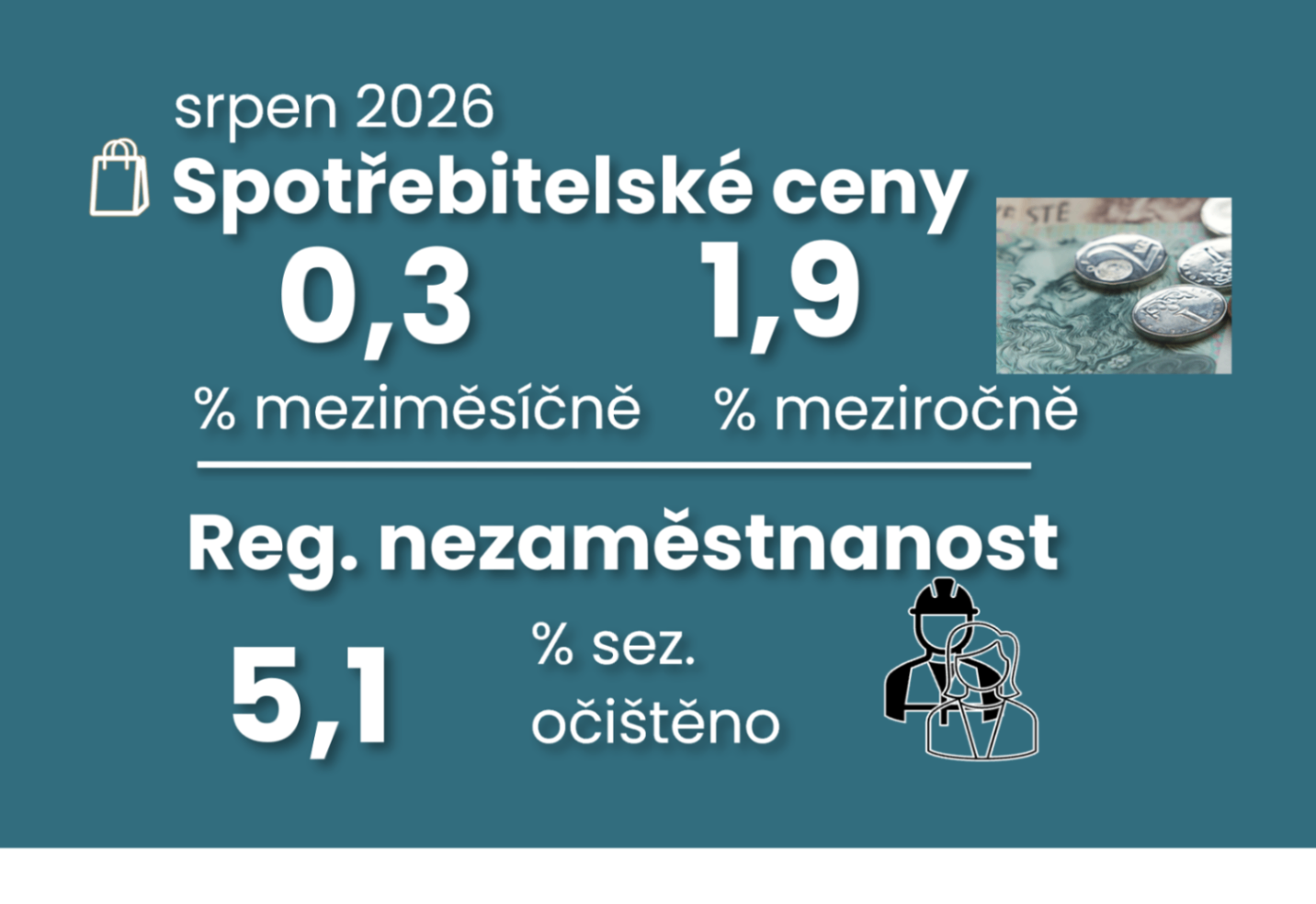
Unsurprisingly, the Czech Statistical Office confirmed a slight acceleration in consumer price growth to 1.9% in August. The main driver of this acceleration was fuel prices, partly due to the return of the excise tax on diesel to a higher level. Conversely, lower food prices continued to help dampen consumer price growth. Energy prices, excluding fuel, remain neutral for now.
However, more detailed data showed that core inflation remained at 3%, the same as in July. This means that, on a month-over-month basis and after seasonal adjustment, it maintained a brisk growth rate of 0.24%, the same as in the previous three months. Annualized growth (i.e., what the year-over-year growth in core inflation would look like for the year if the month-over-month pace of the last three months were to continue) eased slightly in August to 2.8% from 3.1% in July. This is slightly above the CBA’s forecast of 2.7% year-over-year for next year, but significantly above the CNB’s outlook of 2.4%.
Moreover, the structure of core inflation remains unfavorable.
Prices of tradable goods jumped in August. This may be a temporary fluctuation. But even though the strong koruna is helping to dampen growth in this segment, still-strong household consumer demand and the accumulation of pressures from higher fuel prices (and, with fall approaching, higher energy prices as well) pose an inflationary risk.
Imputed rent prices in August partially corrected July’s spike in response to the spring increase in construction material prices.
After two months of slowing growth, core service prices returned to a stronger pace, and their annualized growth of around 5% in August is likely to maintain a brisk year-over-year pace in this segment.
By contrast, the labor-intensive services segment saw its growth slow in August, but this was primarily due to a (likely) temporary decline in prices for other housing-related services.
Labor market data represent a more moderate pro-inflationary risk than a disinflationary risk. Persistently strong inflation in the services segment does not confirm that the downward revision of year-over-year wage growth has had an impact on core inflation. And although the higher registered unemployment rate in August poses a downside risk to economic growth—and thus to the inflation outlook—the strength of this risk is currently mitigated by stable survey-based unemployment and persistently low productivity growth in the economy.
The CNB Bank Board will likely opt to keep the two-week interest rate at 3.75%, but inflationary risks are by no means disappearing, as confirmed by August’s core inflation figures. Although the average wage figure for the first quarter was revised downward, wage growth remained strong in the first half of the year. Combined with weak productivity, this continues to put pressure on unit labor costs and drive higher core inflation. Added to this are persistently higher energy prices. However, following the revision of wage data, the Bank Board may prefer to wait for the November forecast, which will show the strength of these pressures more precisely. While the central bank can use tighter monetary policy (through expectations) to dampen interest rate growth at the longer end of the yield curve, it may also decide to signal to the market that its expectations are excessive —it currently signals three increases of 0.25 percentage points each, bringing the rate to 4.5%.
However, financial conditions are tightening despite the CNB’s unchanged rate. This is occurring due to higher long-term market rates, which are pushing mortgage rates higher. Furthermore, higher volumes of retail bonds are mitigating the impact of larger government deficits on debt financing.
The rise in the consumer price index is being held back mainly by falling food prices and energy prices that have remained stable so far

Year-over-year growth in core inflation is showing an unfavorable trend

Higher month-over-month growth in core inflation segments in August ...

... is likely to boost three-month annualized growth, particularly in core services

From a seasonal perspective, August inflation was significantly influenced by: 1) lower food prices, which were offset by further increases in fuel prices in response to higher oil prices, 2) an adjustment to imputed rent; 4) conversely, vacation prices this year are behaving in line with seasonal trends of recent years, and therefore September is likely to bring a more pronounced decline of approximately one-fifth.


Charts on the Unemployment Rate
Higher registered unemployment vs. stable sample unemployment ...

... and rising employment
