However, slower wage growth maintained strong momentum in the second quarter as well
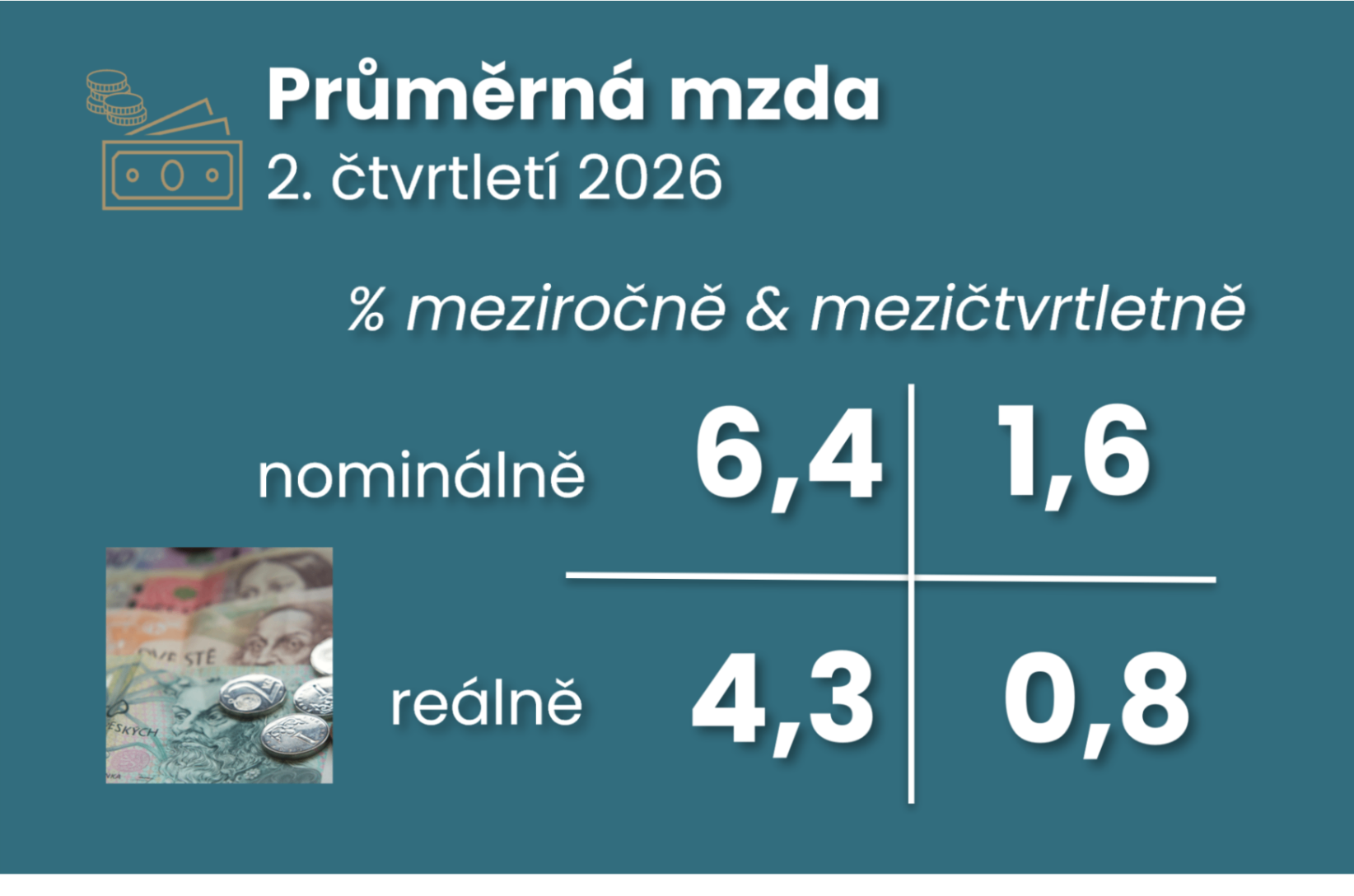
Slower year-over-year wage growth after revision in the first quarter. Although the average wage in the second quarter accelerated year-over-year to 6.4% from 6.1% in the first quarter, but the first-quarter figure was significantly revised downward by 2 percentage points from the originally reported 8.1% growth. The revision is due to missing data sources at the Czech Statistical Office (CZSO) resulting from the transition to the JMHZ system, combined with an adjustment to the wage estimate based on the annual figures now available to the CZSO.
However, real wage growth remains solid. A 6.4% year-over-yearincrease in the average wage, coupled with 2% consumer price inflation, implies a more moderate pace of real wage growth. Real wages rose by 4.2% and continued to make up for the previous decline in purchasing power at a relatively brisk pace, albeit slightly slower compared to the 4.4% growth in the first quarter and the 4.7% growth a year ago.
And with still-strong quarter-over-quarter growth momentum. However , if we look at the trend in seasonally adjusted average wage growth, it remains at a brisk pace with continued quarter-over-quarter growth of 1.6%. This marks nearly the fourth consecutive quarter at this pace and is in line with the average growth seen last year and the year before, though it was only one-tenth of a percentage point slower than the 1.7% growth in 2023.
Non-market sectors showed significantly stronger growth this time, with wages rising by approximately 3.8% quarter-over-quarter and 3.0% in real terms, likely in connection with the New Year’s provisional budget. In market sectors, growth amounted to approximately 1.7% (vs. an average of 1.6% in 2025), or 0.9% in real terms. The difference is also evident on a year-over-year basis: wages in the non-market sector rose by 8.1% and by 5.9% in real terms, while in the market sector they rose by 6.0% and 3.9%, respectively.
From a longer-term perspective, the real average wage has risen to only about 1% above the level seen at the end of 2019. In market sectors, it is already 2.4% higher, while in the non-market sector it remains approximately 3% below the pre-COVID level. Real disposable income per capita, had it grown at the same rate as wages, would be roughly 8% above the end-2019 level (following a 7.3% increase in the first quarter).
Milder year-over-year growth may temper the hawkish sentiment at the CNB, but the still-strong quarter-over-quarter momentum in both wage growth and core inflation will likely keep the central bank in hawkish mode. It is precisely the August consumer price data that will contribute to the decision on a possible interest rate hike on September 17, although the revision of wage data may prompt the Bank Board to postpone a more decisive decision until the new November forecast is released. Year-over-year wage growth of 6.4% fell short of the central bank’s forecast (7.3%) by nearly 1 percentage point, primarily in the market sector. However, the central bank viewed the wage data with caution (see its presentation at the Meeting with Analysts on wage revisions).
Nevertheless, for the central bank, strong and sustained quarter-over-quarter wage growth above 1.2%, combined with the planned stronger wage growth in the public sector, will likely keep the message hawkish. This is especially true when combined with persistently strong momentum-driven growth in labor-intensive services. Although core inflation in services, excluding imputed rent, remained around a more favorable 0.13% month-over-month growth in June and July. However, this followed a notable swing from 0.5% growth in the previous two months. August’s core inflation may thus send a new signal on September 10. The potential impact of the new wage statistics on unit labor cost growth—which remained close to the central bank’s forecast in the second quarter (see Figure 5 in the report: Weaker consumption, business investment, and productivity hindered a stronger economic recovery) will become clearer only in the revised sectoral accounts for the second quarter, which will be released on October 30.
Year-over-year wage growth accelerated to 6.4% in the second quarter ...

... though following a downward revision in the first quarter, which ultimately caused it to fall short of the CNB's forecast for Q2

Wage growth accelerated mainly in non-market sectors

... while the market sectors fell short of the CNB's forecast.

However, quarter-over-quarter wage growth remained stronger than the inflation-neutral level ...

... and this is still true for about two-thirds of the workforce

Despite stronger growth, gross wages in the non-market sectors remain below pre-COVID levels ...

... however, this may no longer apply when the figures are expressed in net wages.

Services did not dominate the list of sectors with the strongest quarter-over-quarter wage growth in the second quarter

Regional comparison of average gross wage
