The industrial sector got off to a slow start in the third quarter, though not across the board. Infrastructure bolstered the resilience of the construction industry
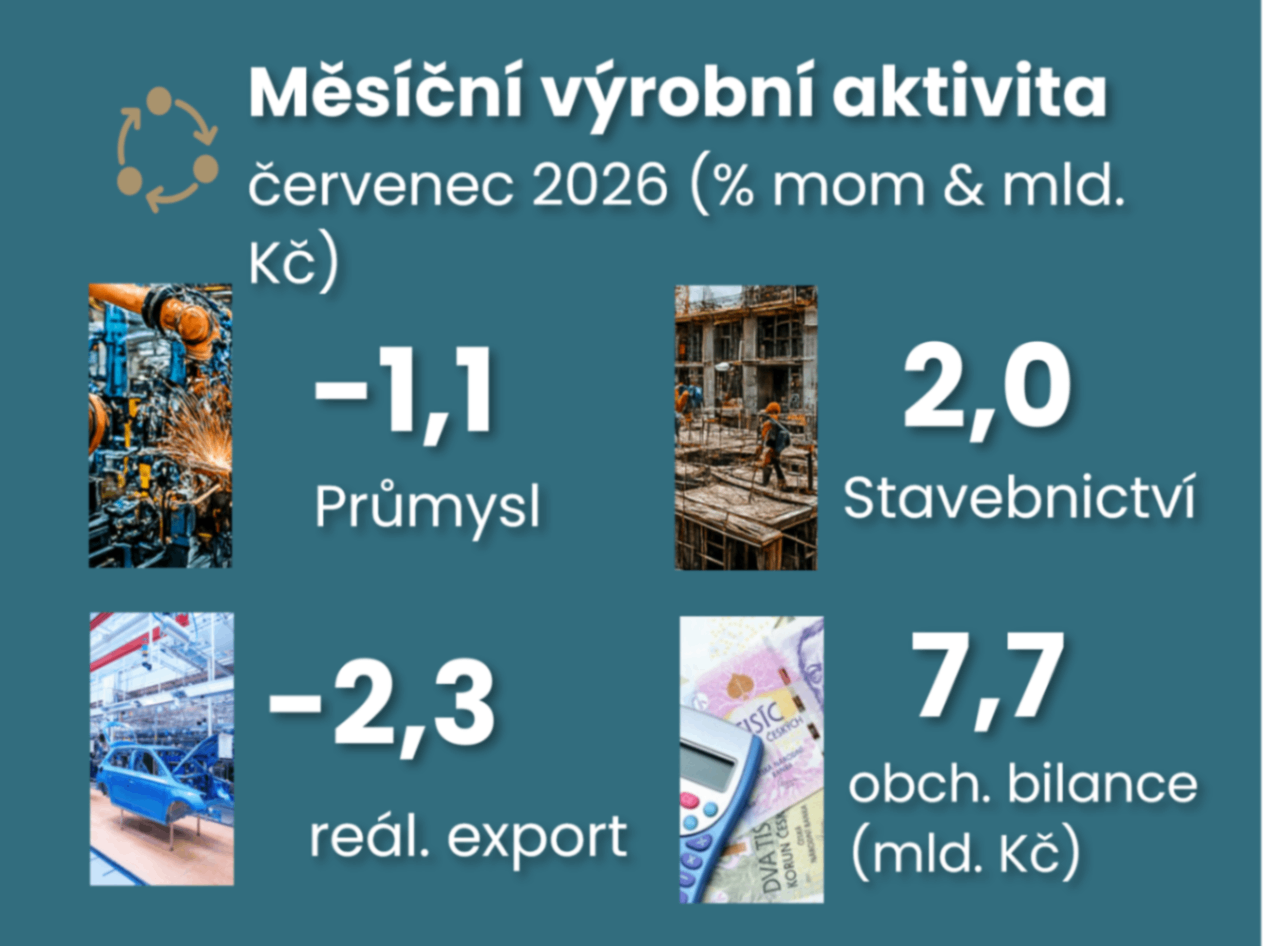
July data point to a weaker start to the third quarter for industry and foreign trade, but this does not paint an entirely negative picture of Czech industry. Industrial production fell by 1.1% month-over-month, primarily due to—unsurprisingly, given energy prices—energy-intensive sectors and the volatile output of the automotive industry in recent months. The trend in the rest of the manufacturing sector is more favorable; I estimate that it grew by 0.3% month-over-month.
So far this year, industrial growth has been driven by production excluding the automotive and energy-intensive sectors. Automotive production slowed to 1% year-over-year in July, a weaker pace than the 2.5% for the overall industrial sector. This growth rate slowed from 4.6% in June and has so far averaged 2% year-over-year growth this year, essentially the same as last year. In contrast, according to my calculations, the sector excluding the automotive and energy-intensive industries maintained solid 3% year-over-year growth; however, so far this year, it has grown (again, similarly to last year) by 2.3% year-over-year.
August’s sentiment and leading indicators, which have improved significantly abroad, offer some hope for the coming months. However, the recent performance of Czech industry has actually outperformed these sentiment indicators (see the figure below). Conversely, the weak situation in the German automotive industry remains the main external risk.
Export trends largely mirrored industrial activity, with a still-solid trend in most key sectors. Following a previous solid result, exports corrected on a month-over-month basis; however, they still maintained year-over-year growth of around 4%. Within the export structure, a correction is evident in automobiles and electrical equipment, while the ICT sector continues its strong growth trend. Machinery exports remain weaker, still hovering below the 2023 highs.
Higher energy imports have been weighing heavily on the trade balance in recent months. Since May,these imports have hovered around 20 billion crowns per month. As a result, the energy deficit has widened to approximately 3% of GDP, whereas at the beginning of the year the deficit stood at around 1.5%. Excluding energy, however, the Czech economy continues to post a substantial trade surplus of around 4% of GDP, primarily thanks to the automotive industry. The current deterioration in the trade balance therefore cannot be interpreted as a general decline in export performance.
The construction sector continues to show more favorable trends, benefiting from a revival in infrastructure projects and robust building construction. Overall, the construction sector grew by 2.2% year-over-year in July, and housing starts nationwide remain at relatively high levels. On the other hand, the renewed decline in building permits and higher prices for energy-intensive materials pose a certain risk, although price expectations in the construction sector stagnated in August at a lower level than in the spring (see the second-to-last chart here: A slight deterioration in economic sentiment is not a signal for lower interest rates).
The overall picture from the July data is mixed:
Industry and exports entered the third quarter with weaker figures, although this was not the case for the construction sector ...

... nor retail and services

Industry
This year's weak industrial performance reflects ...

... stagnation in the automotive industry and ...

... and a decline in energy-intensive industries

Foreign and domestic sentiment indicators are supportive of the industry, although the industry may have gotten ahead of itself

Foreign Trade
The energy balance has shifted due to increased imports ...

... results in a smaller overall foreign trade surplus ...

... thanks to the continued strong trend in key export items ...

... in contrast to energy-intensive exports

Construction Industry
Construction output is returning to its previous peak ...

... while the July data on approved, started, and completed apartments did not significantly alter previous trends

In other words, strong figures for housing starts and a solidly strong trend in completed housing units, despite the long-term weakness in building permits

