March inflation held back by food, but core prices continue to push retail prices
March inflation accelerated to 1.9% year-on-year in March, mainly reflecting higher fuel prices. However, the acceleration was somewhat milder than expected, helped by lower food prices. However, preliminary data suggest an acceleration in core inflation to 2.8%, which is not surprising given the still strong growth in retail sales. Although these did slightly correct the previous strong increase in January in the core segment in February. However, the strength of demand is relatively limited given the rather sluggish sales in services in the first two months of the year. The central bank will monitor the dynamics of these demand pressures, wages and core inflation, which will determine the speed and extent of its interest rate hikes in the coming months. Stronger demand is also translating into more robust imports, shrinking the foreign trade surplus that has not yet been affected by the energy price shock.
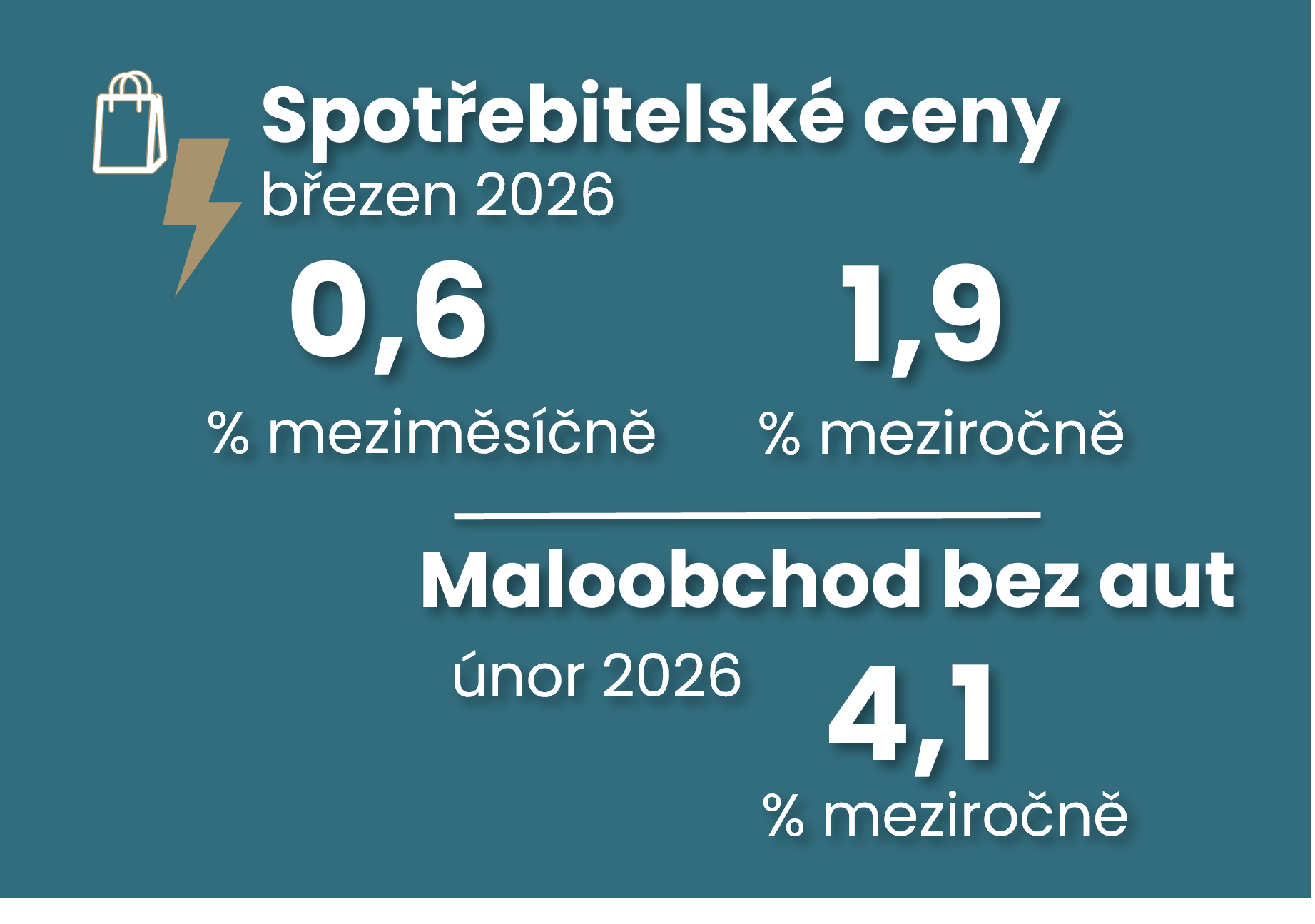
The milder acceleration in consumer prices was caused by a more pronounced decline in food prices. According to the preliminary estimate of the CZSO, annual consumer price growth accelerated to 1.9% in March 2026 from 1.4% in February. While this result slightly missed the analysts' consensus (2%), it came in above the CNB's forecast (1.6%), which in turn had been missed by two tenths in February. On a month-on-month basis, consumer prices rose by 0.6% in March, which was around 0.5 percentage point higher than had been the norm over the previous five years. This mainly reflected a stronger-than-usual rise in fuel prices (the reverse was true in February), while food prices helped to cushion the price shock, which in the case of petrol prices will continue in April.
Momentum in core inflation remains an upside risk to the CNB given the energy shock. According to my preliminary estimate, core inflation is likely to have accelerated to 2.8% yoy from 2.7% in February (which would be in line with the CNB's forecast). This estimate assumes a slightly milder 0.6% month-on-month increase in non-energy administered prices. If this is correct, then seasonally adjusted month-on-month core inflation would have accelerated to 0.39% in March from a slower average increase of 0.23% in the previous three months (the current three-month annualized average is 3.1%).
However, the CNB will take a more robust view here with the final March inflation data on April 10, when the CNB will announce its estimate of core inflation at 13:00 CET.
Retail sales maintained solid momentum in February despite a stumble in the core segment, but services have stagnated as the year has begun. Retail sales maintained a solid year-over-year pace in February, with sales up 3.3% y/y, with non-auto sales up 4.1% and core retail up 6.2%. This confirms that consumer demand remains relatively resilient, driven mainly by segments outside the auto market. However, momentum slowed month-on-month, with total retail sales up just 0.5% m/m, while core components fell slightly (-0.2% m/m), suggesting some cooling after a stronger January. Services, on the other hand, showed weaker y/y momentum, with growth slowing to 1.2% y/y from 1.3% in January. Month-on-month, the sector increased by only 0.1%, indicating sluggish activity. The short-term trend (3MMA SAAR) for services slowed to 2.9%, while retail held a more robust pace of around 3.0% overall and over 5% for core segments. Overall, the data thus suggest a continued but uneven recovery in consumption, with retail remaining the driver while services lag.

The acceleration in consumer prices caused a more significant increase in fuel prices ...

... which was dampened by falling food prices.

Services are stagnating as the year begins.

Retail sales maintained solid momentum in February despite the stumble in the core segment.

Stronger demand is also translating into more robust imports, which are shrinking the foreign trade surplus ...

... which has not yet been affected by the energy price shock.

