Geopolitics weakened the koruna in the first quarter, rates remained its support
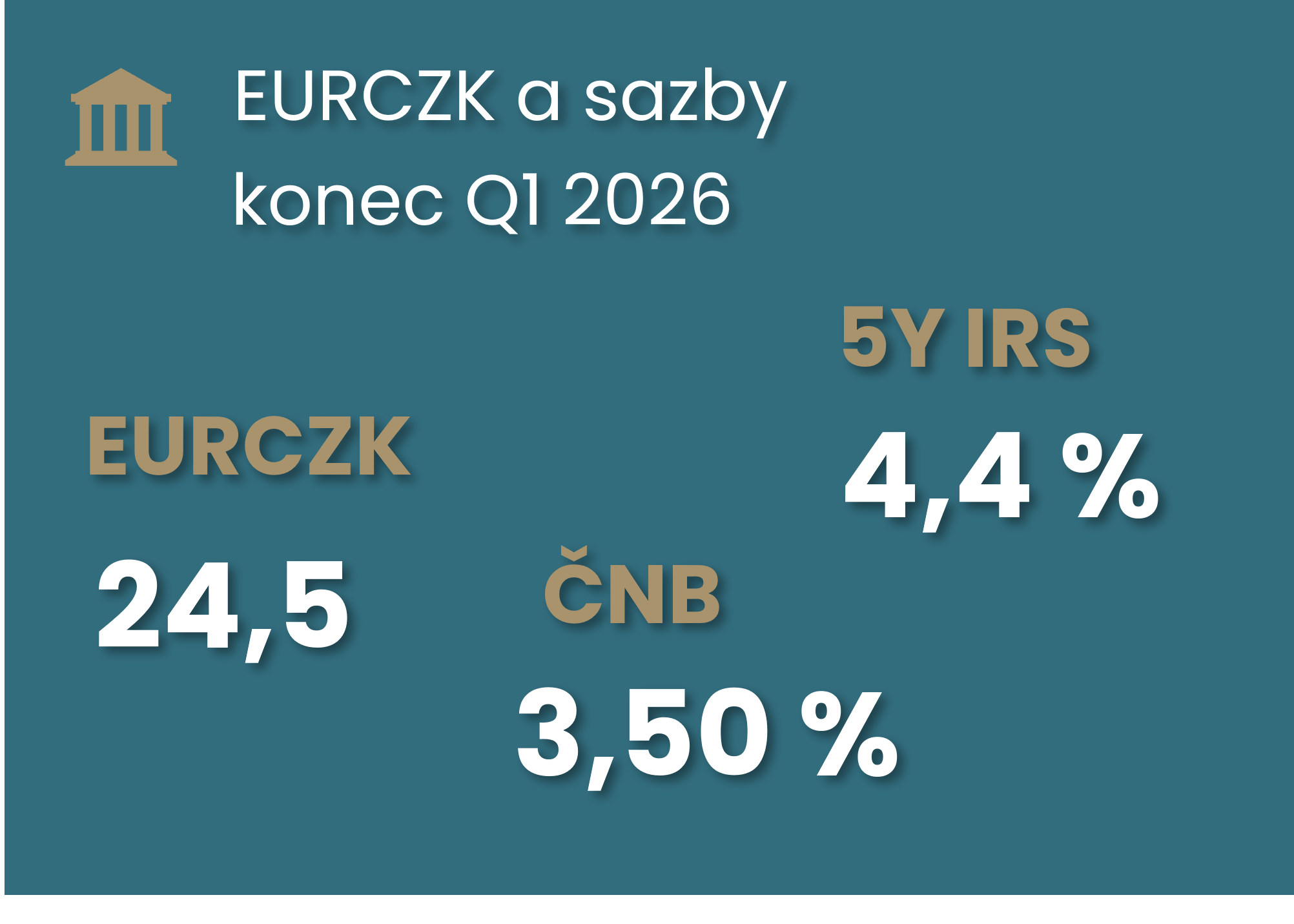
The Iranian war was reflected in a slightly weaker koruna at the end of the first quarter of this year, which was supported by higher market interest rates.
The relatively modest depreciation of the koruna, which is still at significantly stronger levels than at the beginning of last year, is being cushioned by the current energy price shock. Should the koruna start to weaken more significantly, the central bank could assess this as an impetus for foreign exchange intervention. These would help to limit the energy inflation shock, and hence upward pressure on interest rates from the current 3.50%.
At the end of March, markets were pricing in a double hike in the ECB's interest rate to 2.50%, although it was as much as a triple hike in the second half of March. A similar shift was seen in Czech rates, which suggested a double to triple hike from the third quarter.
The interest rate differential, i.e. the difference between domestic and foreign rates, remains supportive for the koruna, although less so than in the second half of last year. At the same time, however, the crown has been weakened by higher risk aversion, such as the decline in equity markets, as well as a higher risk premium associated with concerns about the impact of more expensive energy, as in 2022. Although we are far from there, especially with gas and electricity prices, which have significantly worsened both the external trade balance and the fiscal outlook.
Compared to the region, the koruna moved similarly to the Polish zloty against the euro, as the interest rate differential still dominates the relationship. The Hungarian forint was significantly more volatile. In its case, the Iranian war essentially erased January and February's gains. This was despite the Hungarian central bank cutting its rate by a quarter of a percentage point to 6.25% after about a year and a half (vs. the CNB at 3.50% and the Polish central bank at 3.75%). Moreover, the forint's exchange rate is also reflecting the upcoming parliamentary elections in April, which may bring a reset in relations with the EU, including the release of European funds.
The koruna depreciated by more than one percent against the euro in the first quarter of this year, mainly in March. In January and February, it stood at around 24.3 per euro. Even so, it remained less than three per cent stronger than at the end of 2024, when it was around 25 per euro. The geopolitical shock increased risk aversion and boosted the US dollar closer to 1.15 against the euro, compared to January and February levels of around 1.17 and 1.18. This translated into a March depreciation of the koruna against the dollar of around 50 cents to 21.5. However, the Czech currency is still significantly stronger against the dollar than it was at the beginning of 2025, when it was around 24.


