April's decline in retail sales does not change the outlook for consumption. However, risks are increasing in the second quarter
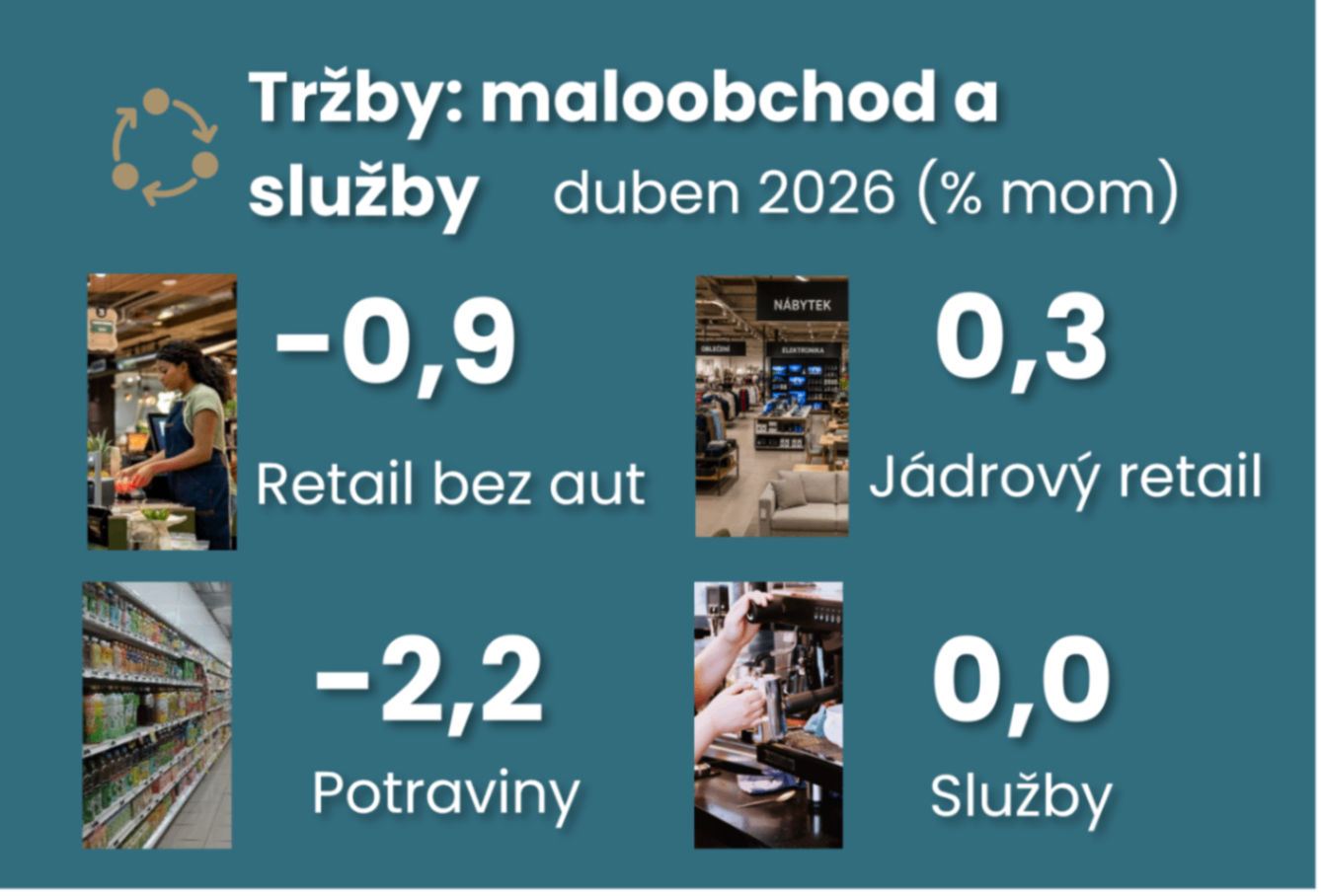
Explained asymmetry in weaker April retail sales. These fell by 0.7% month-on-month and by almost 1% excluding autos. This reflects the lagged impact of higher fuel prices, as they still maintained a strong pace in March. Food also corrected its strong March increase. In contrast, sales in core retail trade, i.e. excluding autos, fuels and food, maintained their positive pace in April, although they slowed their month-on-month growth to 0.3%. This, however, follows March's strong 1.2%. For a closer look at the dynamics, see the summary table below.
The three-month annualized growth rate for core retail sales is 4.6% and quarter-on-quarter growth is 1.0% so far, confirming the continued willingness of households to spend. This is supported by both strong quarter-on-quarter real wage growth and rising credit activity. So far this year
However, there will be more factors limiting household consumption growth in the second quarter.
1) Momentum in real wage growth is likely to slow in Q2, both in nominal terms after a strong 2% jump in average wages in Q1 and due to higher inflation, which is likely to bite off 1% more quarter-on-quarter. Thus, if real wages rose 1.9% quarter-on-quarter in Q1, they may add around 0.5% in Q2. Real wages have risen 1.2% on average over the past four quarters
2) Lending activity has picked up significantly in the first four months of this year, reflecting the decline in interest rates. But in part, the front-loading effect may also have led to greater use of the U.S. mortgage, which is a loan secured by real estate for non-residential purposes. Interest rates are not likely to fall further.
3) The program to issue Treasury bonds to households will be about triple the original plan. The latest report from the MoF at the end of May is that interest has exceeded CZK 50 billion. If it reaches CZK 60 billion, it will be close to three-quarters of one per cent of nominal GDP. What will be important for consumption is whether it is a repositioning of households' existing financial assets, i.e. from deposits with banks or other financial institutions, or an additional increase in the household savings rate. As payments can be made up to 7 July at the latest, we will not see this partly in the figures until the end of August.
These factors are in line with growing household nervousness, which is supported by the continued impact of higher energy prices on economic activity. This was reflected in a decline in households' plans for major purchases in May, and retail confidence has also deteriorated and remains below its long-term average. This poses a risk to the outlook for continued growth
In contrast, services maintained sentiment above the long-term average, consistent with continued growth in their sales. Services grew by 2.3% year-on-year in April. Sales were flat month-on-month, but trend indicators continue to point to continued growth in activity. The three-month annualized growth rate remains above 3% and quarter-on-quarter growth is 0.6%.


Regional comparison


