Four Stories from June's Data: Energy, Exports, Wages, and Housing Starts
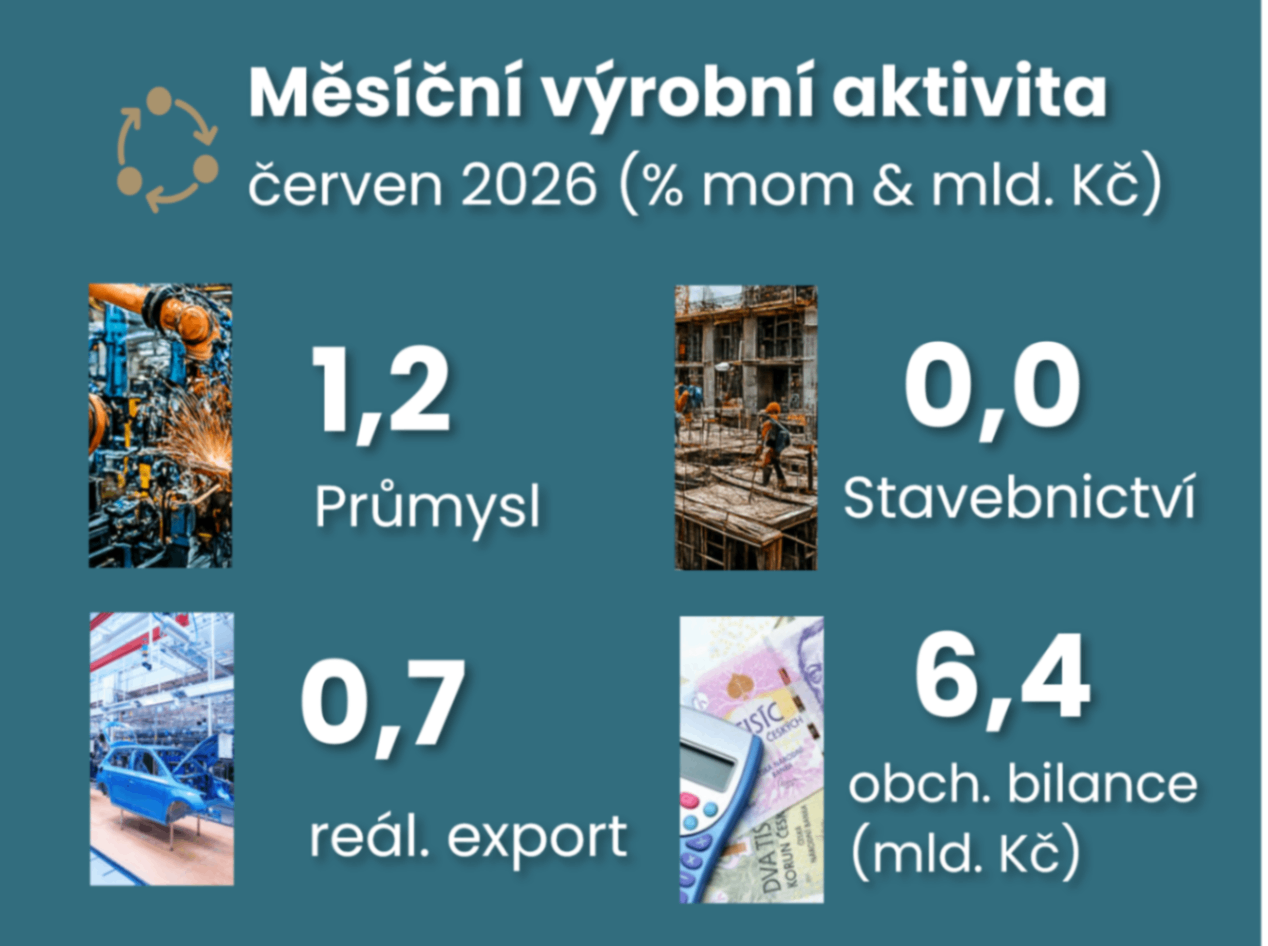
Summary: Strong growth in industrial production in June was largely driven by a temporary uptick in the energy sector and stabilization in the automotive sector. Export data also surprised on the upside and resumed its growth trend. However, imports over the past two months were impacted by a 10-billion-crown increase in the cost of raw materials. This helped reduce the trade surplus by more than one percentage point to approximately 1% of GDP. Construction output continued to post weak figures, a trend that also held true for building permits, though to a slightly lesser extent for completed apartments in the regions. On the other hand, the number of completed apartments in Prague is rising, as is the nationwide number of housing starts. This could put downward pressure on real estate prices in the future, provided that the weak building permit figures do not turn out to be a warning sign. The CNB, however, is unlikely to breathe a sigh of relief just yet, as growth in industrial wages continues to support the view of strong wage growth.
Industrial production posted solid figures in June with 1.2% month-over-month growth, but this was largely driven by a rebound in energy production. The manufacturing sector posted weaker growth of 0.8% due to a leveling off of production in the automotive segment, while energy-intensive industries slumped in June and the rest stagnated.
Export activity strengthened in June, although imports of goods grew even more, due in part to energy imports, which rose by just under 10 billion crowns per month compared to pre-war levels. The June data, together with the new May figures on foreign trade prices, confirm the positive contribution of foreign trade to slightly better GDP growth in the second quarter, at 0.4% quarter-on-quarter. This time, the growth is driven by slightly stronger goods exports amid stagnant imports. Exports continue to be driven by electronic equipment, ICT, and machinery, while the momentum in the automotive sector has leveled off at a higher level.
The deteriorating energy balance is beginning to have a more significant impact on the weaker foreign trade figures (by approximately 1 percentage point of GDP to −3.1% of GDP, annualized over the last three months, compared to −2.1% in 2025).
Industrial wage growth in June returned to a stronger pace (approximately 8% on an annualized basis, with 7% year-over-year seasonally adjusted growth), thus supporting the view of continued strong wage growth in the economy.
Construction output continued to post weak figures, this time unchanged from May due to a decline in civil engineering, while building construction posted its first increase after two months of declines. However, momentum remains negative in both cases. This is not a good sign for the current 4% average growth in construction output this year, following a 10% rebound last year.
Housing figures continue to show relatively strong results. Although the number of building permits remains weak and below long-term averages, the number of completed apartments—based on initial permits—remained roughly 4 percent below last year’s level. This is not the case in Prague, however, where the number of completed apartments in the first half of the year jumped by one-third year-over-year. Data on the nationwide number of housing starts also remains encouraging, with a 40% increase, particularly in the regions, while Prague is performing worse year-over-year but still significantly above previous years.
The robust recovery of the Czech economy continued, although it has been excluding the construction sector for the past three months

The second quarter was driven by industry, including manufacturing; construction remained at its strong March level; and retail was solid but did not surprise

Industrial production posted solid figures in June , with 1.2% month-over-month growth, but much of that was due to a rebound in energy production

Wage growth in June returned to a stronger pace

The foreign trade surplus has narrowed ...

... due to higher energy imports ...

... but key export items—particularly electronics, ICT, and machinery—are showing a solid trend

Car production relies mainly on the growing Škoda

Infrastructure projects provided less support to the construction industry in June, but output levels remain steady

And it is supported by consistently strong data on housing starts

