Consumer inflation slowed slightly in October to 2.4%, but this will not reassure the CNB given the higher core inflation
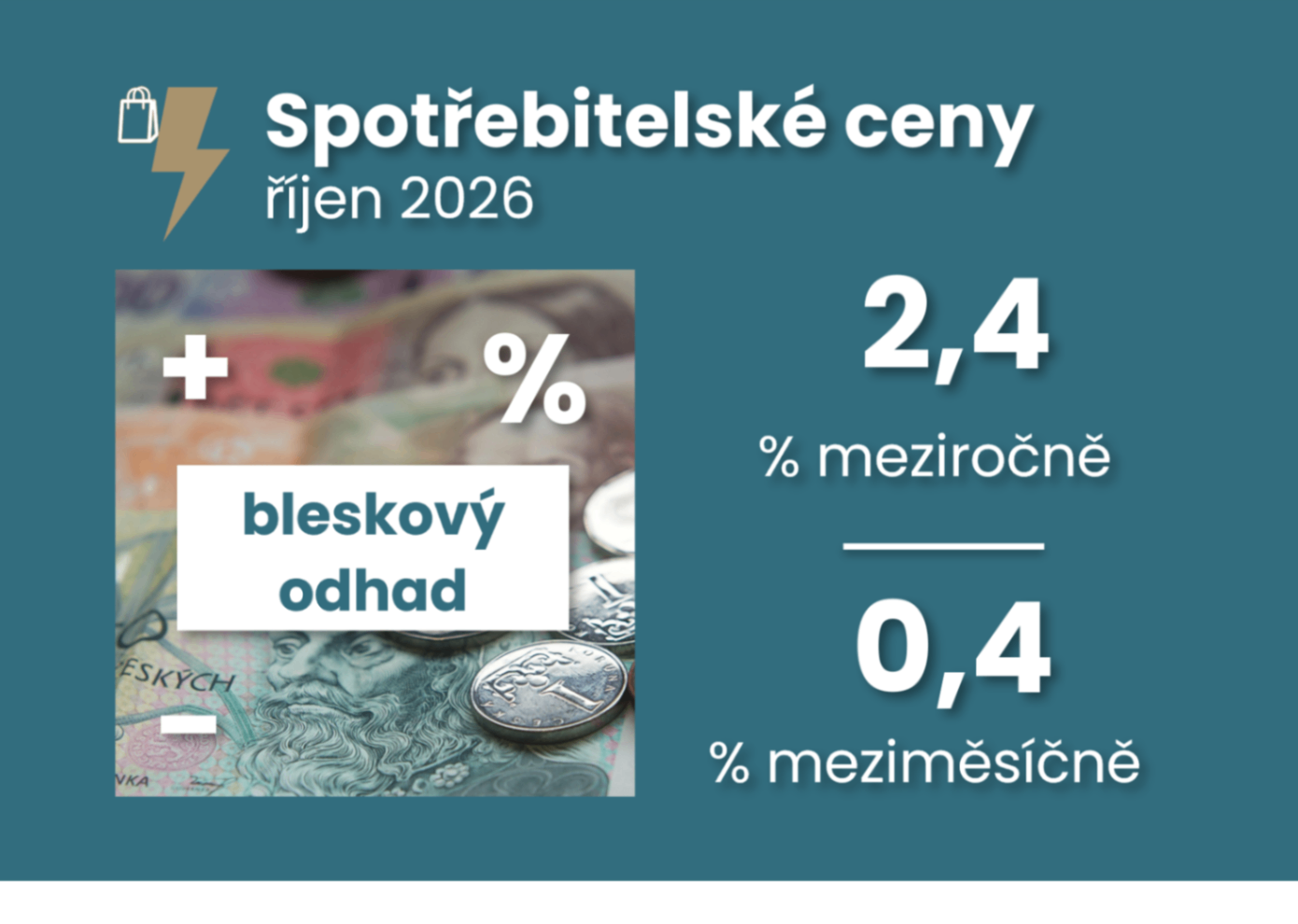
The October slowdown in inflation to 2.4% from 2.5% in September yielded a slightly more favorable result than analysts had expected, but only temporarily. Beneath the surface of overall inflation, heightened domestic price pressures continue to persist. Added to this, based on available data, is a renewed slight acceleration in core inflation to above 3% year-over-year, and the outlook for the coming months suggests that consumer price growth is likely to pick up again.
One important indicator is the trend in food prices, which rose by 0.6% month-over-month in October, breaking their previous disinflationary trend, as this increase was somewhat more pronounced than is typical for October. The favorable impact that food prices have had on overall inflation so far may thus gradually fade. By contrast, fuel prices have halted their previous sharp rise. However, energy prices excluding fuels appear to have developed less favorably; according to available preliminary data, they likely rose slightly again. And this pass-through of earlier increases in wholesale energy commodity prices to the Czech consumer basket is likely to gradually strengthen in the coming months.
Therefore, for the remainder of this year, I expect year-over-year inflation to accelerate again toward 3%, and it will likely exceed this threshold at the beginning of 2027. In addition to the likely reversal in food and energy price trends, the base effect will also contribute to this. At the end of last year, food prices fell surprisingly sharply, and in January 2027, the artificial, temporary slowdown in inflation—resulting from the transfer of renewable energy fees to the state budget—will also begin to fade.
For the Czech National Bank, however, the development of core inflation will be of paramount importance; according to available partial data, it has likely accelerated slightly again and remains above 3% year-over-year. Persistent domestic price pressures indicate that the Czech economy has still not been able to adequately address the risk of more persistent inflation. Particularly unfavorable is the combination of increased business costs and demand that remains strong enough to allow these costs to be passed on to final prices. From the CNB’s perspective, it will also be crucial whether higher mortgage rates will further cool the mortgage market and overall demand in the real estate sector—that is, how significantly they will slow the growth of real estate prices.
In my view, the preliminary data on October inflation thus support the expectation that the CNB will raise the key interest rate by a quarter of a percentage point to 4% at its November meeting. Such a move would represent a response not only to current price developments in the energy sector but, above all, to the continued rise in core inflation. More detailed October data, to be released on November 10, will subsequently allow for a more precise assessment of core inflation trends and their implications for future monetary policy decisions. See our outlook here: Higher core inflation is pushing the CNB to raise interest rates to 4% in November
However, raising interest rates alone cannot be the sole remedy for the Czech Republic’s persistently high core inflation. This inflation reflects deeper structural problems in the Czech economy, which have been manifesting more prominently since at least 2018. Monetary policy can dampen demand and curb inflation expectations through higher interest rates, but it cannot, on its own, remove the structural obstacles that have been increasing the cost structure of the Czech economy and limiting its growth potential over the long term. Without structural reforms, therefore, one cannot automatically expect a sustainable return of the CNB’s interest rates to significantly lower levels in the future.
The slowdown in inflation in October to 2.4% from 2.5% in September yielded a slightly better-than-expected result, but only temporarily.

Based on the available partial data, core inflation likely accelerated slightly again and remains above 3% year-over-year

Core inflation remains a strong driver of Czech consumer prices

The available data suggest a slight change in the structure of core inflation

One important indicator is the trend in food prices, which rose by 0.6% month-over-month in October, thereby breaking their previous disinflationary trend (chart at the bottom left)
