January stability in economic sentiment hides four clearer signals for growth and inflation
Comment by Jaromír Šindel, Chief Economist of the CBA: January show stable economic sentiment, but industry continues to be plagued by weak demand with negative consequences for investment. On the other hand, consumer purchasing plans remain full of optimism, also thanks to both lower price expectations, which are dampened by industry but not services, and better expectations on the labour market, where the service sector, which is lacking more workers, is making a positive contribution. Thus, it looks like continued solid economic growth this year with noticeably lower headline inflation. This combination is likely to shift the discussion at the CNB from rate stability or growth to rate stability or a possible decline, which is, however, not certain given the ongoing "services inflation" and the change in fiscal policy settings.
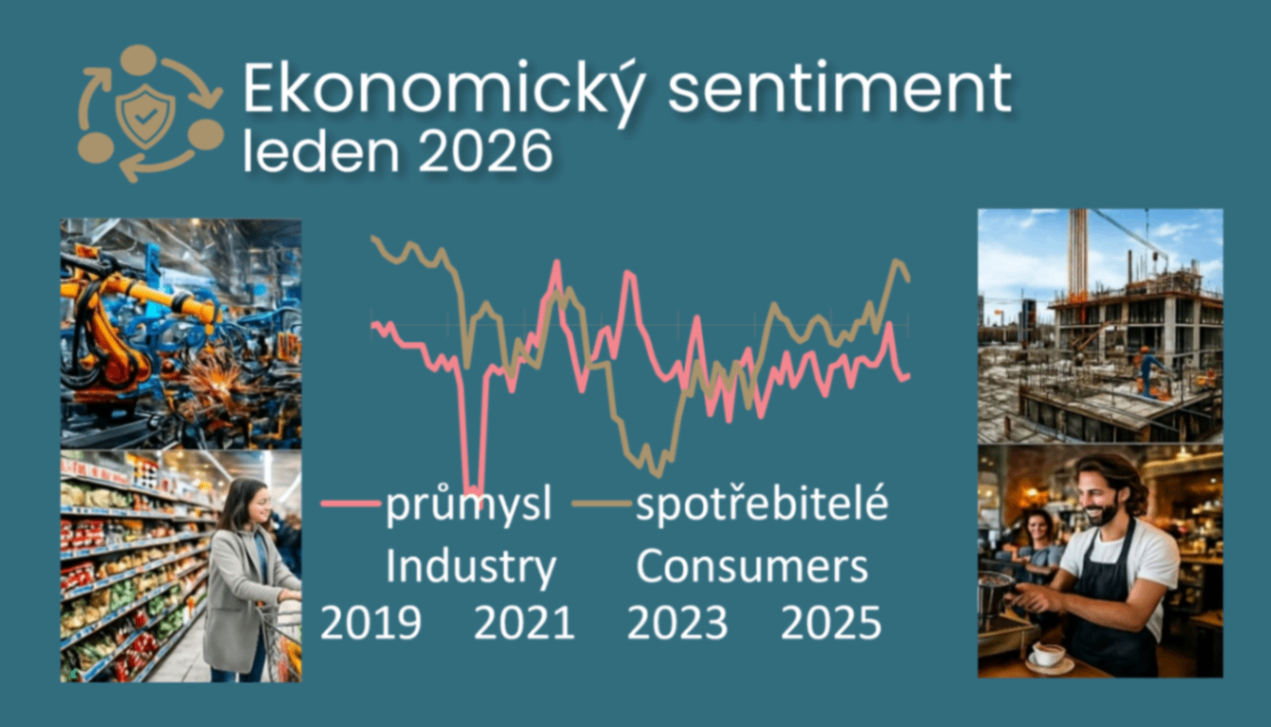
Economic sentiment remained close to its long-term average in January. Although both the consumer and construction sectors remain at above-average levels, sentiment in both sectors deteriorated slightly in January. This is likely related to a correction in "post-election optimism" among consumers, although this was not reflected in households' continued low price expectations and their optimistic plans for major purchases. Uncertainties about the government's financing capacity for this year's infrastructure projects, as well as weak building permit numbers compared to the usual numbers of housing starts and completions (see chart here), are likely to be reflected in the lower sentiment in the construction sector. In the case of services, there has been a positive correction after previous weaker months. This was compounded by a slight improvement in sentiment in trade and industry, but both remain relatively sceptical of a return to normality.
Economic sentiment remained close to its long-term average in January

Worse household sentiment did not dampen their optimistic plans for bigger purchases

While economic sentiment had deteriorated slightly in recent months, this did not represent a significant risk to GDP (see chart on the left). However, the CNB's leading indicator is not brimming with optimism very early in the year, after having already indicated a more pronounced slowdown in quarter-on-quarter GDP growth to 0.3% at the end of last year. This is slightly below the CBA's forecast of 0.4% and contrasts with stronger November activity in industry and retail trade, but offset by weaker construction and net exports (see analysis here).


The industry remains in continued weakness despite January's improvement in sentiment. The slightly better January industrial sentiment mainly reflects a decline in inventories, while both current demand assessments and production expectations fell in January (Note: export expectations have stopped being published, which may raise question marks, but not fundamental ones, especially in the case of a small open economy where their strong correlation with overall expected output was evident).


Weak demand is starting to translate into lower capacity utilisation, which is not good news for the expected recovery in private sector investment activity. Looking at the quarterly survey, demand weakness remains a limiting factor in industry, where - in terms of growth barriers - it is unfortunately above normal, while in services (slight deterioration) and construction (slight improvement) it is below. Weak sentiment in industry was reflected in lower capacity utilisation, with capacity still sufficiently rated relative to orders. This is not encouraging news for the expected rebound in investment activity, which has disappointed in recent quarters, especially after excluding investment in construction (see analysis here). However, this signal contrasts with the CNB's credit conditions survey, which showed an improvement in the investment activity factor in the assessment of non-financial corporate demand for bank loans.


The solid sentiment was also reflected in a slight improvement in labour market expectations, which could dampen the recent negative trend in rising unemployment (see analysis here). The modest rebound in services confidence is associated with improved employment expectations, which are also reflected in more perceived labour shortages in this sector (see chart above left). Here, then, the government's plan to increase public sector pay from April may also pose an upside risk to inflation. Conversely, weaker sentiment in the construction sector has been reflected in softer employment expectations, although staff shortages continue to be a key constraint in this sector. This may reduce the chances of the "non-inflationary" feasibility of the government's plans to kick-start housing construction more quickly.
Employment expectations are at odds between sectors, which is now most evident in services and construction

The solid sentiment was also reflected in a slight improvement in labour market expectations, which could dampen the recent negative trend of rising unemployment

Price expectations continue to fall as the government's plans for the regulated part of the electricity price are implemented, supporting a path towards more moderate consumer price growth of around 1.6% y/y this year (instead of the 2.2% originally expected) to 2.5% in 2025. The January fall in price expectations is mainly related to consumers and industry, but also to services, but these are more likely to dampen the persistent price pressures in the services sector rather than suggesting a significant slowdown.
Government policy has knocked down price expectations of both households and industry

Lower price expectations look consistent with a more modest than 2% rise in consumer inflation this year

Price expectations in services dropped steam rather than signaling significant disinflation

Weakness in the construction sector is not yet reflected in price expectations
