The Easing of November consumer inflation to 2.1% is not just about food
Comment by Jaromír Šindel, Chief Economist of the CBA: November consumer price growth did not slow to 2.1% year-on-year only thanks to volatile food prices, which were lower in November. The slowdown in core inflation to 2.6% was probably also due to lower prices for holidays, clothing, household furnishings, as well as lower prices in healthcare and energy. This, and November's move closer to the price inflation target for both headline and core inflation, eases hawkish pressures on the central bank. However, the continued brisk momentum in rent and food and other service prices will not allow the central bank to contemplate an interest rate cut.
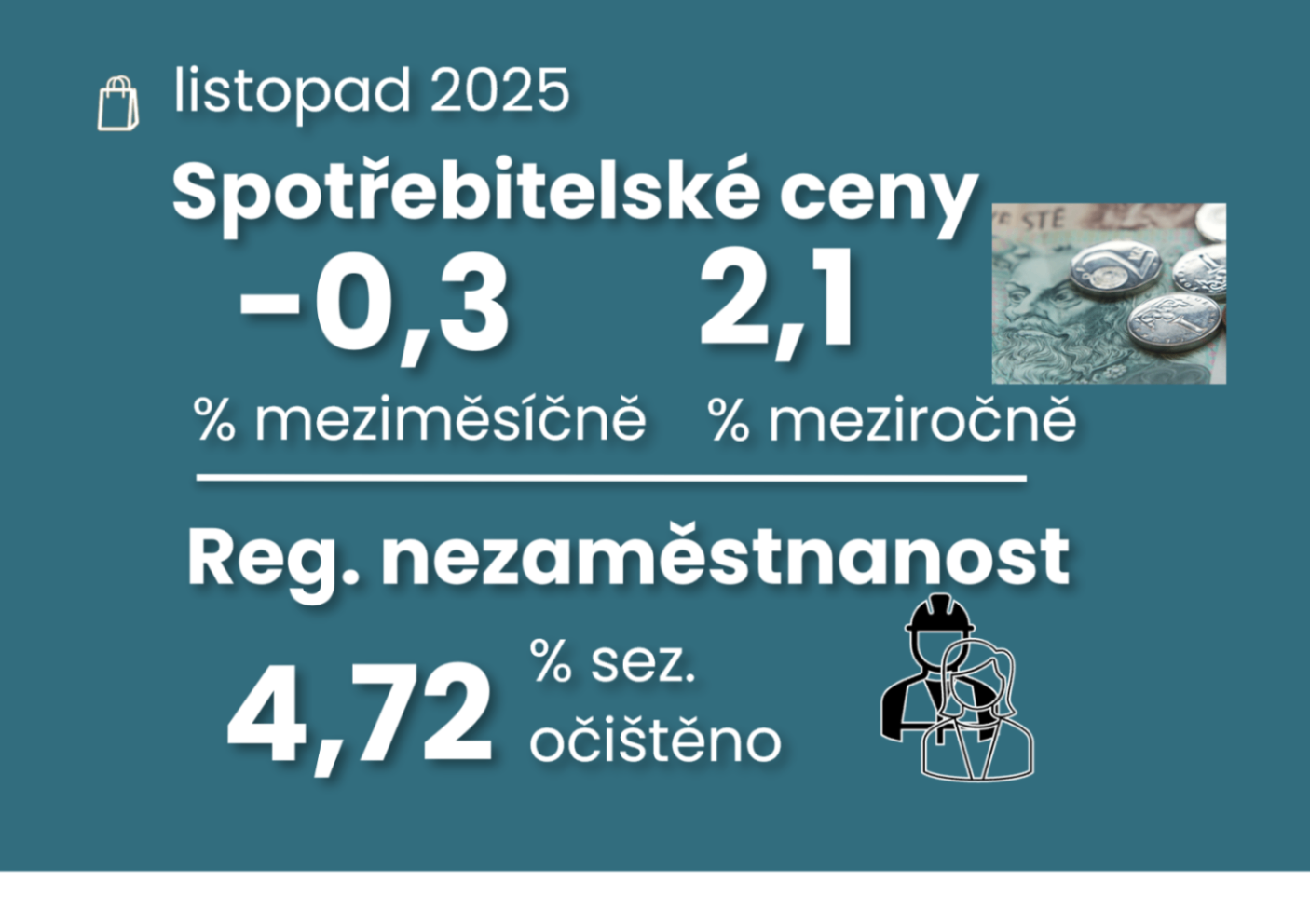
Although the October production figures made the expected temporary slowdown in GDP growth at the end of this year more likely, this should be a temporary phenomenon ahead of the expected better economic growth in the following years. Added to this is continued strong wage growth combined with weaker productivity, which is keeping the labour market inflationary - despite higher unemployment, which in the case of the registered share in November slightly edged above 4.7%, the highest since February 2017. At the same time, the subdued supply side of the property market (materials, labour, construction) will also keep price pressures tight. Thus, we are in an environment where the central bank has limited room to cut interest rates, especially if we do not see a(n) disinflationary combination of structural and budgetary policies from the incoming government.
The CNB showed core CPI growth at 2.6% YoY, negligibly below my estimate of 2.7%. However, the annualised momentum remains uncomfortably high for services, although imputed rents have slowed in recent months. However, weaker core CPI growht mainly reflected a decline in the tradable component. The koruna’s recent appreciation may still contribute some disinflation, but strengthening purchasing power and persistent wage-growth pressures without matching productivity will remain an obstacle at the very least. Year-on-year growth in core inflation slowed from October’s 2.8%, marking the weakest pace in the past six months. The next two months should show growth around 2.6–2.7%, and 2026 could see core inflation fall below 2.5%—a figure currently embedded in our CBA Forecast for 2026.
However, November's consumer price numbers dampen these risks to the CBA's outlook, which sees inflation rising around 2.2% next year but still accompanied by slightly higher core inflation of 2.5% y/y.
Note: Part of the text was adjusted after the publication of the more moderate core inflation figure by the CNB, at 2.6% year-on-year, which came slightly below my initial estimate of 2.7%, but remained within the indicated 2.6–2.7% range following the preliminary CPI estimate.
November annual consumer price inflation returned closer to the inflation target, although core inflation remains higher than in 2024

In the past two years, food prices have been a major determinant of inflation dynamics, and lower housing prices have led to more moderate CPI growth despite higher core inflation

The CNB showed core CPI growth at 2.6% YoY, negligibly below my estimate of 2.7%, which implies a zero month-on-month change.
However, the annualised momentum remains uncomfortably high for services, although imputed rents have slowed in recent months, as lower core CPI growth has mainly reflected a decline in the tradable component.
Momentum in headline and core inflation in November is favourable from the perspective of meeting the inflation target


November's slowdown in consumer price growth was not just about food ...

... but other key segments - clothing, housing, home furnishings, health and holidays - also contributed lower (dark blue squares) than usual growth (red dots)

Registered unemployment is the highest since February 2017 ...

... but vacancy dynamics remain relatively stable

Employment indicators slowed in Q3 and unemployment shows no sign of improvement
