Cheaper electricity has distorted the inflation picture, while core remains strong
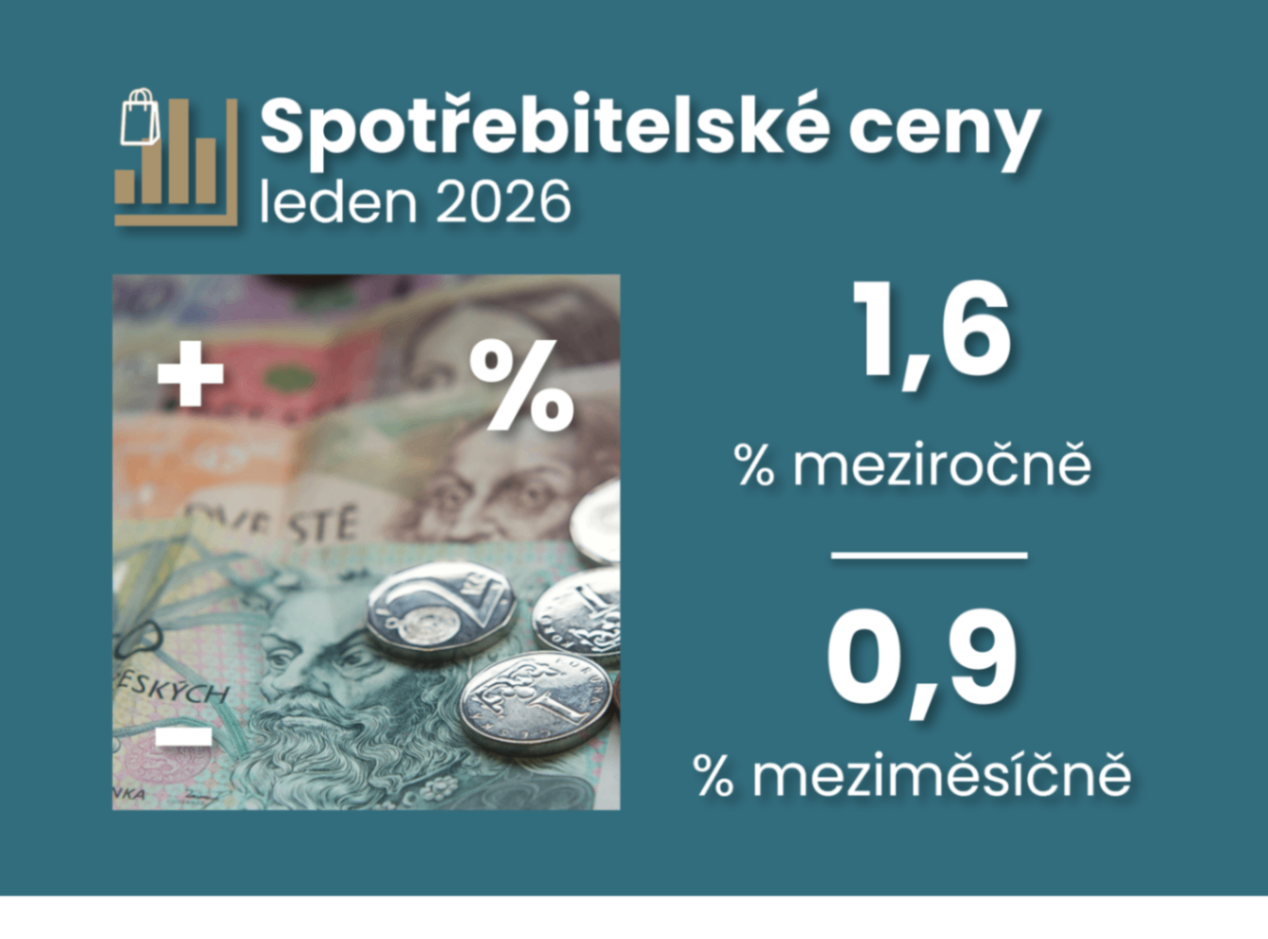
Comment by Jaromír Šindel, Chief Economist of the CBA: January's significant slowdown in consumer prices to 1.6% year-on-year mainly reflected the transfer of contributions for renewable energy from household invoices to the state budget. By contrast, core inflation eased slightly to 2.7% y/y from 2.8% at the end of last year. Food prices, which had contributed significantly to the moderation of inflation at the end of last year, rose in January, but less than would have been seasonally consistent. Consumer price growth is expected to reach around 1.7% yoy this year, following a 2.5% rise in 2025, but with core inflation still rising at around 2.5%, this will also require a disinflationary impulse, which is not yet coming from the property market segment, for example. Higher core inflation should keep the CNB interest rate steady at 3.5%, although the market is pricing in a slight cut, as are half of the CBA forecast panelists.
The article was revised to reflect comments on core inflation following the release of data by the central bank.
The CZSO confirmed a slowdown in January inflation to 1.6% year-on-year from 2.1% at the end of last year, mainly due to the transfer of the SOEs from household invoices to the state budget. According to the CSO, this factor reduced annual consumer price growth by 0.4 percentage point, which helped electricity prices to fall by 8.4% month-on-month. While this implies a slight decline in the power electricity CPI, natural gas prices rose slightly by 1.3% month-on-month, accompanied by a nearly 4% increase in water and sewerage prices, while heat prices rose marginally by 0.6%. Higher excise duties on tobacco added marginally to inflation and this effect is likely to continue in the coming months. Higher alcohol prices also contributed to January inflation, while the month-on-month increase in food prices was more modest than usual. In contrast, prices in the health segment rose slightly more.
The CBN showed a slight slowdown in core inflation to 2.7% y/y, slightly below the 2.8% seen late last year and slightly below my initial estimate of "at least 2.8%". This implies a seasonally adjusted 0.2% y/y growth month-on-month, but this momentum over the past three months is still consistent with future core inflation growth of around 2.7% y/y. The 1.1% month-on-month rent growth is only marginally lower than the 1.3% a year ago. Imputed rents also maintained their brisk January pace, accelerating to 5.1% y/y. My view on the price of services, and especially labour-intensive ones, is more of a reason for the stability of central bank interest rates.
Market rates partially corrected their previous decline after the central bank's February meeting, but have returned lower in recent days. Prior to the central bank's February meeting , FRA markets were pricing in a decline in the CBR rate to around 3.15% in late summer/early fall. However, the meeting did not confirm expectations of the onset of dovish communication. Nevertheless, the prospect of an interest rate cut began to be reflected in the consensus of economists. Although the CBA's new macroeconomic forecast is looking for interest rates to hold steady at 3.5% over this year and next, due to higher core inflation and looser fiscal policy, half of the CBA's forecast panelists expect one cut to 3.25% over this period.

