February inflation surprised with a slowdown to 1.4% mainly due to food
Comment by Jaromír Šindel, Chief Economist of the CBA: February consumer inflation pleasantly surprised the consensus and the central bank by slowing to 1.4% year-on-year. The inflation was mainly helped by a further decline in food prices, but also by a slightly milder rise in services prices. However, the energy shock due to the Iran war, together with still higher core inflation, is likely to pull annual consumer price growth back to an average 1.7% for the rest of the half-year. Details on core inflation, and hence services prices, will be important for both the inflation outlook and the central bank's interest rate outlook in the context of continued wage and unit labour cost growth (see charts below for market developments).
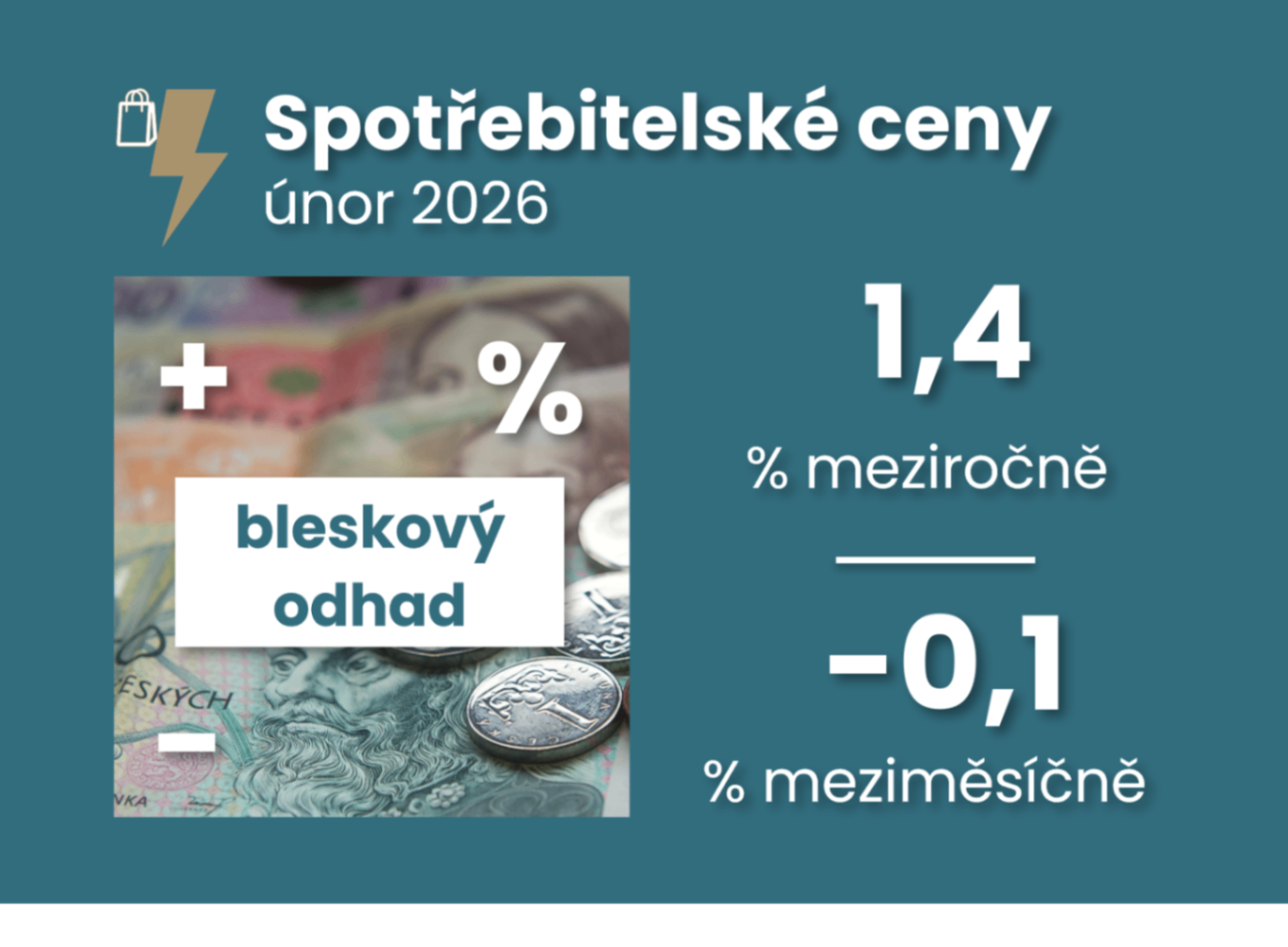
According to the preliminary estimate of the CZSO, annual consumer price inflation slowed to 1.4% in February 2026 from 1.6% in January. This result is below the analysts' consensus (1.6%) and also below the CNB's forecast (1.6% after its fulfilment in the previous month). On a month-on-month basis, consumer prices fell by 0.1% in February, which was around 0.4 percentage points lower than has been the norm over the previous five years. This difference was mainly due to a further decline in food prices, but also to a more moderate rise in core inflation.
February's developments therefore risk lower price growth than the CBA's forecast for consumer inflation of 1.7% for this year, followed by 2.3% in 2027 (possibly closer to 2% due to the abolition of concession fees). However, this risk is more than offset by the higher oil price, which exceeds the CBA's forecast of around $65.
According to my preliminary estimate, core inflation is likely to slow slightly to 2.6-2.7% y-o-y from 2.7% in January (the CBA was expecting 2.8%). This estimate assumes a slightly milder 0.6% month-on-month increase in non-energy administered prices.If this is correct, then seasonally adjusted month-on-month core inflation growth would have slowed to 0.1% in February from an average increase of 0.22% in the previous three months.
And the current three-month annualized average thus slowed to 2.4% from 2.7% in the previous three months, which, while looking favorable from the perspective of the CNB's inflation target, remains above the CNB's 2.1% y/y core inflation forecast for the first quarter of 2027. At the six-month horizon, i.e. for June-August 2026, due to still high wage growth and unit labour costs, I am looking for an annualized momentum of core inflation at 2.4%, above the CNB's inflation target and its forecast. The CBA forecast envisages a slowdown in the rate of core inflation to 2.3% in 2027 from 2.5% this year.
The CSO will publish the final February inflation data on 10 March, when the CNB will announce its core inflation estimate at 13:00 CET.
Food in particular contributed to slower consumer price growth in February


The fall in food prices reflects developments in the production ...

... but has been slightly stronger in previous months than in the region

Milder services prices represent a downside risk core services prices

The services prices have recently showed a milder increase compared to region

Conversely, rising unemployment may be a drag on still strong growth in services prices

Higher oil prices, on the other hand, represent an upside risk to inflation

Pushing fuel prices back over 35 crowns


The latest developments were also hectic for the valuation of the koruna, which weakened to more equilibrium values

Higher Czech interest rate swaps reflect fears of an inflationary oil shock and risk (FX) premia in the region. A lower level of Czech swaps would require a stronger offsetting "alpha" factor in similarly lower inflationary pressures from the economy
